Artwork
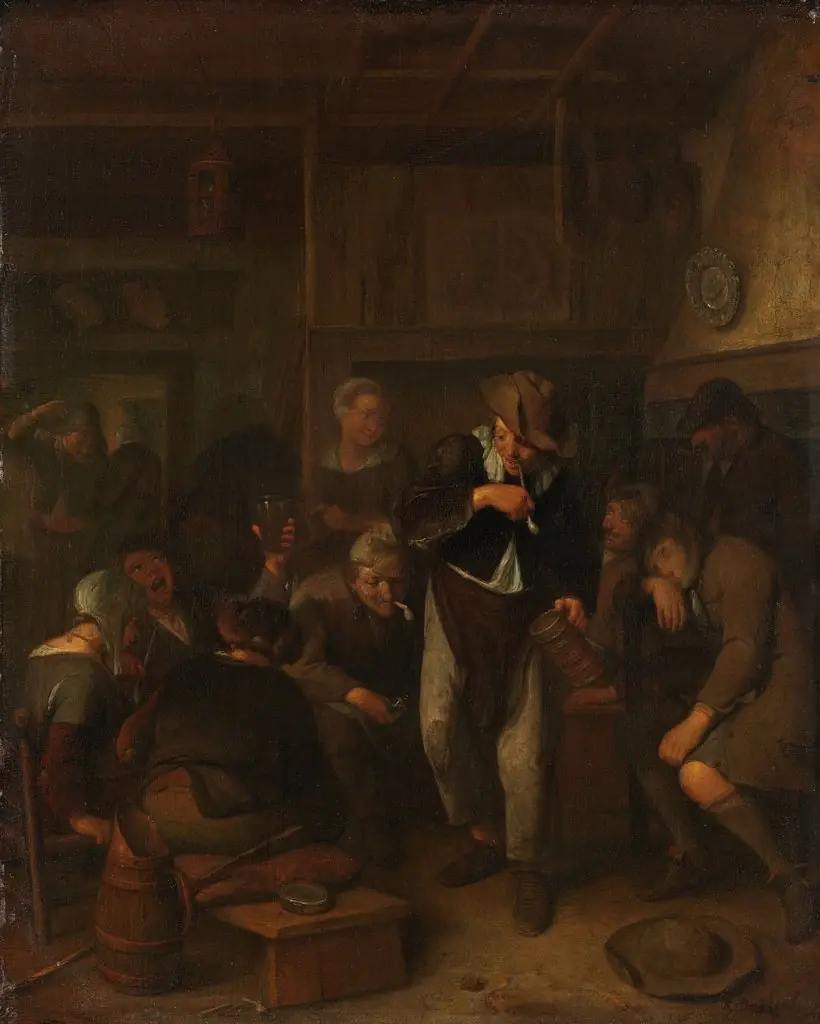
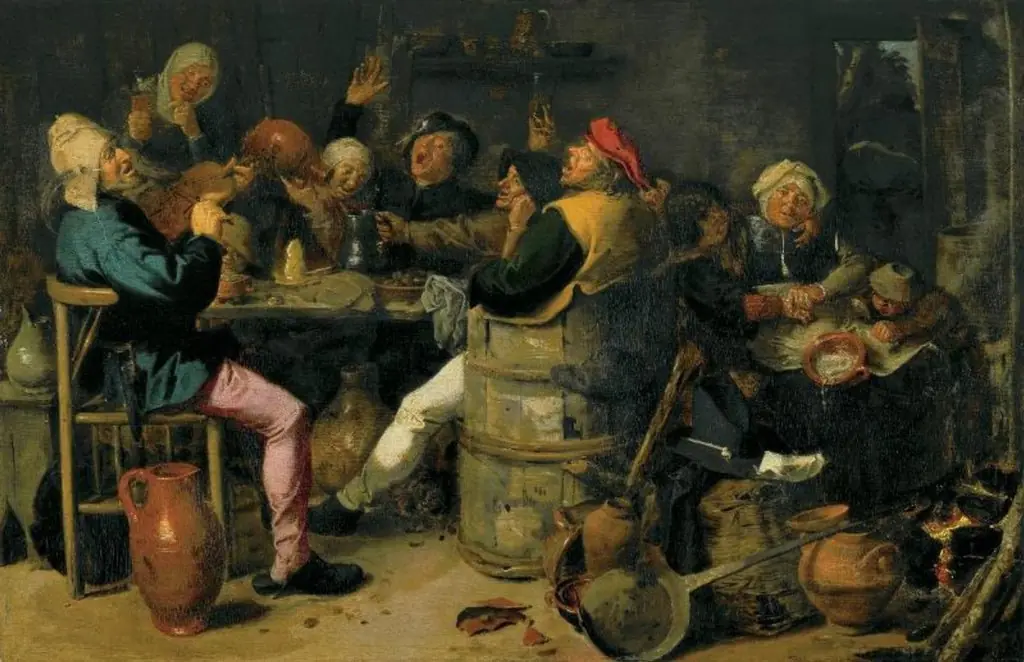
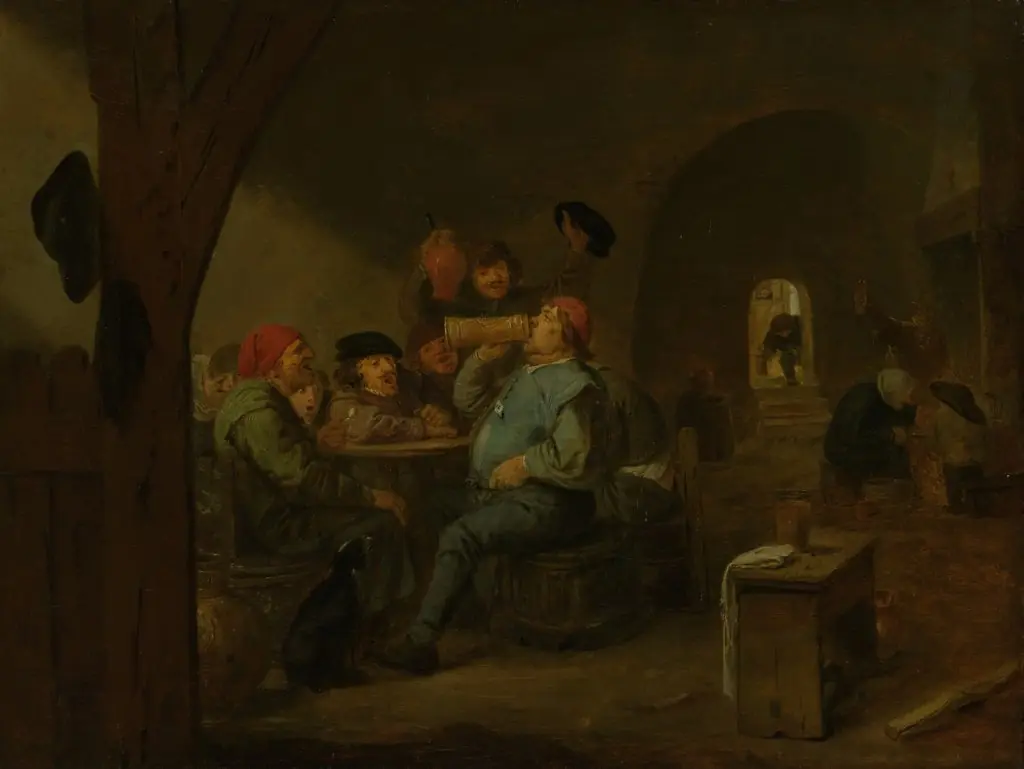
The Merry Drinkers
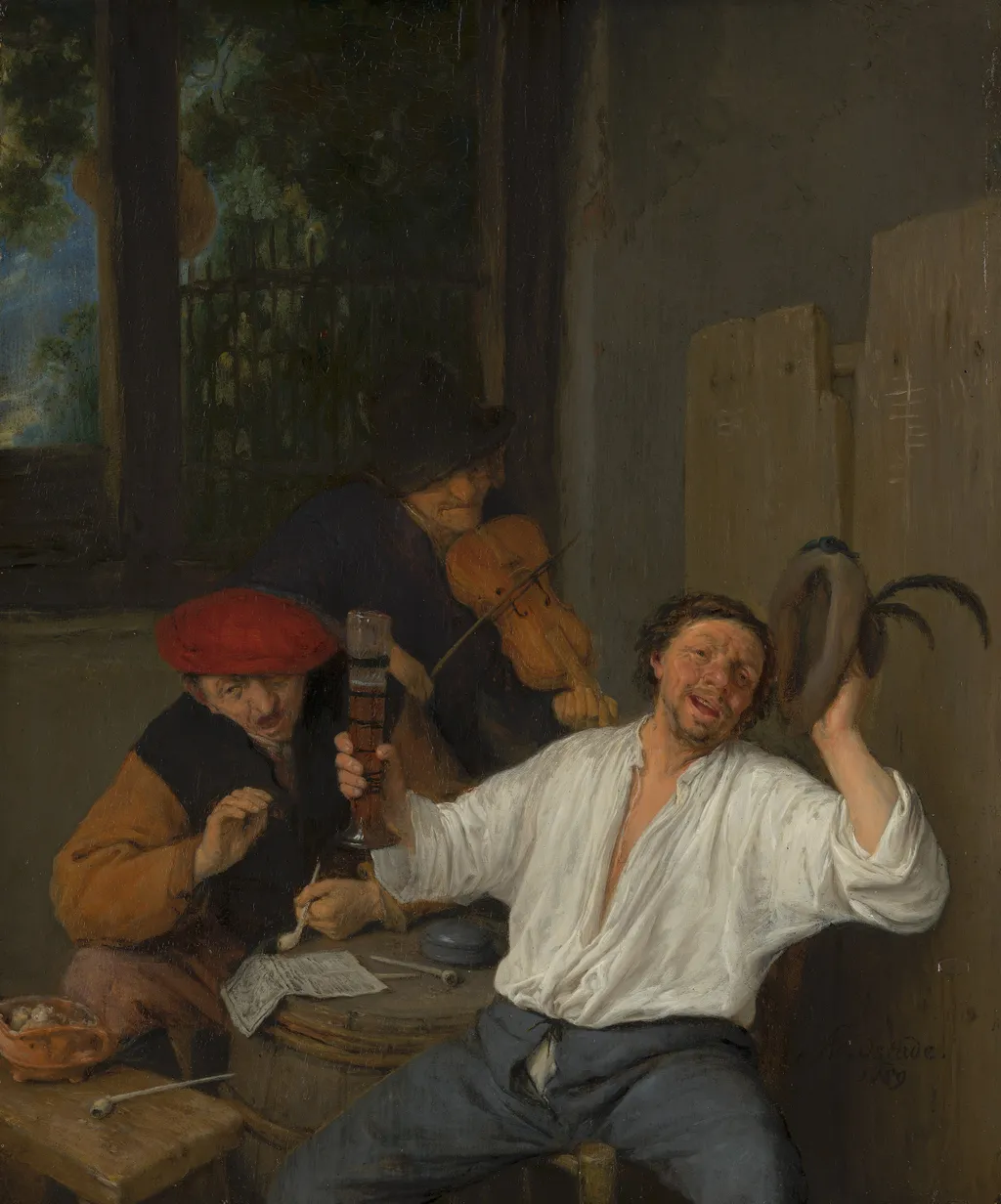
The Merry Drinkers is an oil painting by the Dutch Golden Age artist Adriaen van Ostade. It dates from 1659 and is held in the collection of the Mauritshuis.
About this work
Overview
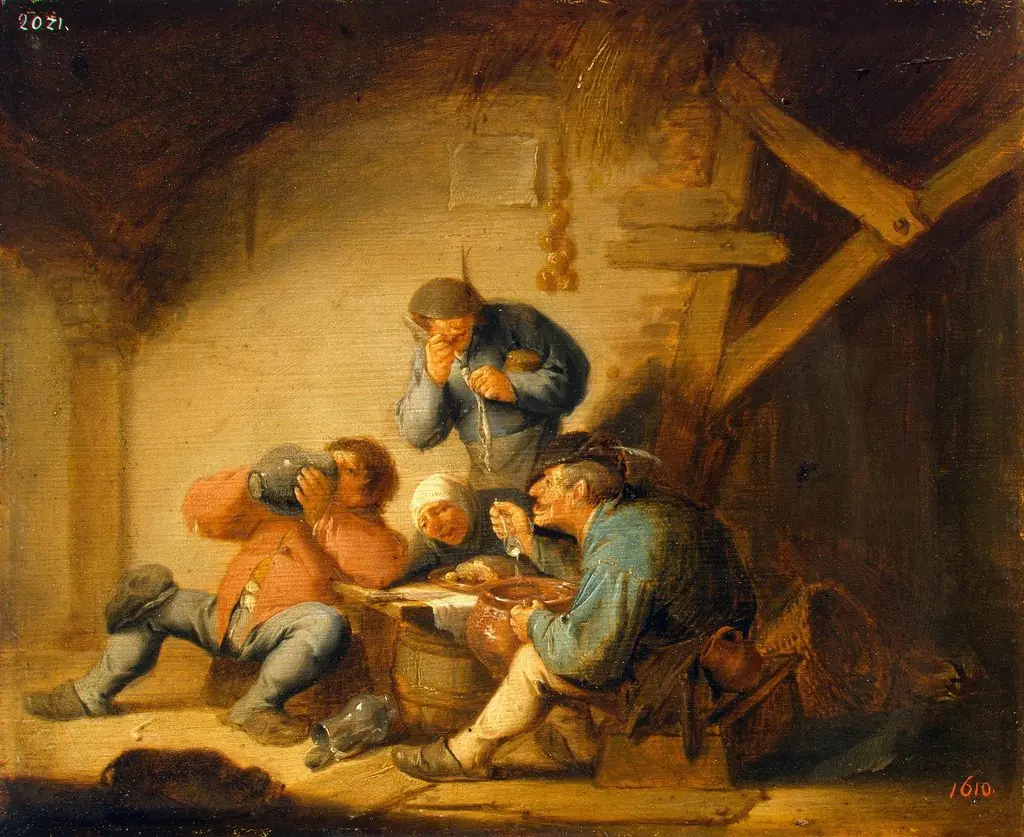
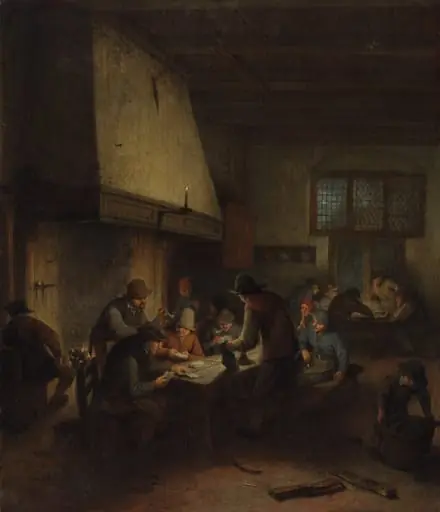
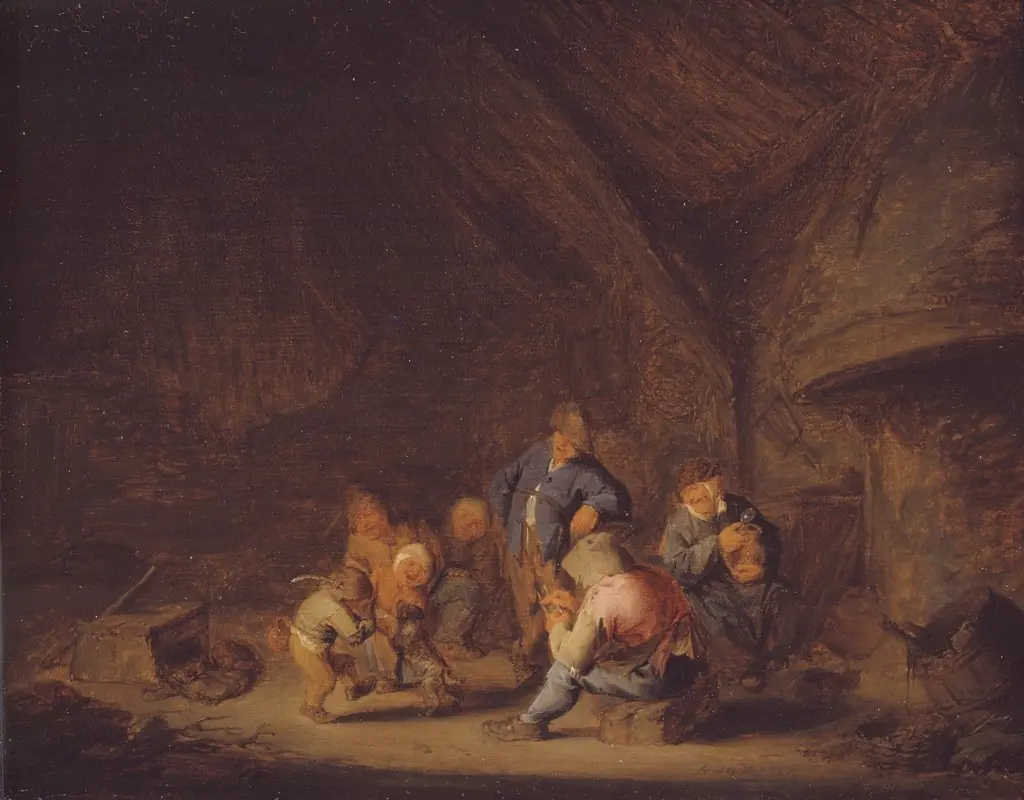
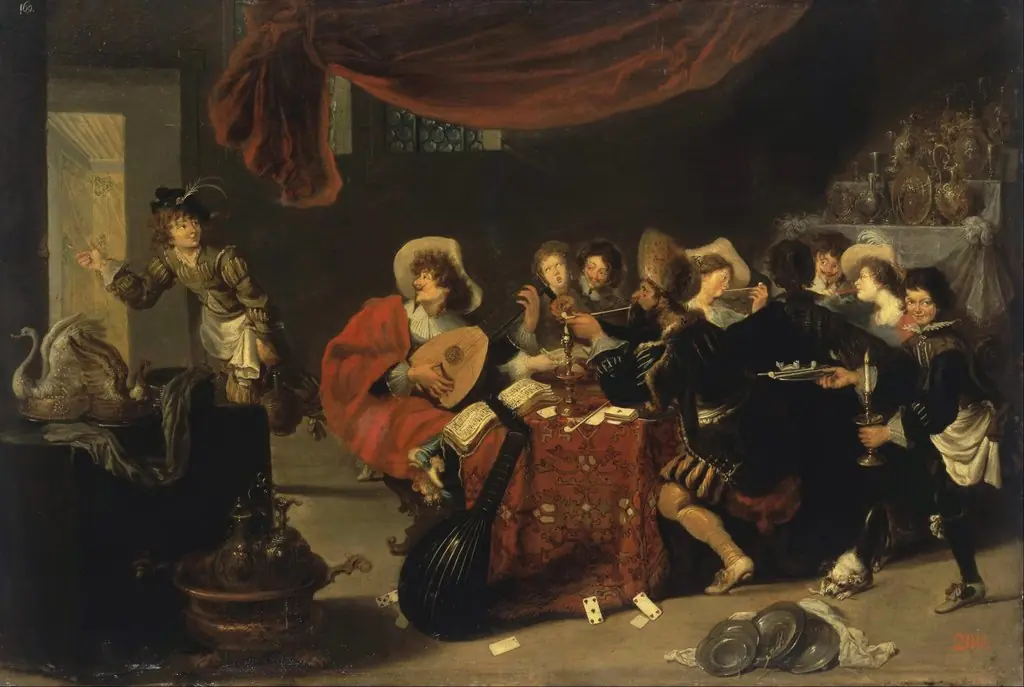
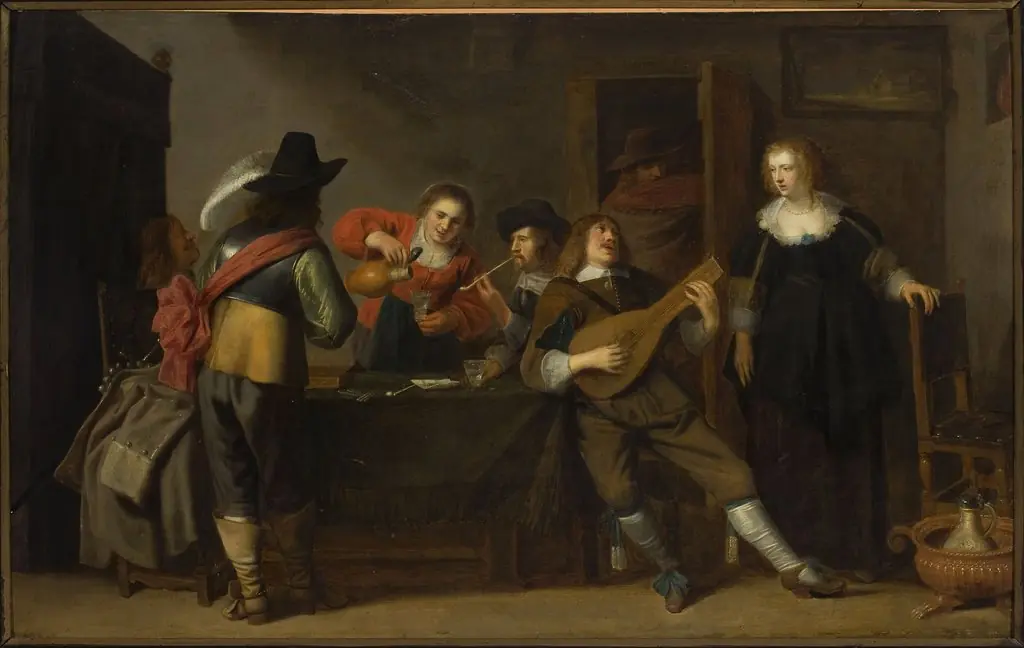
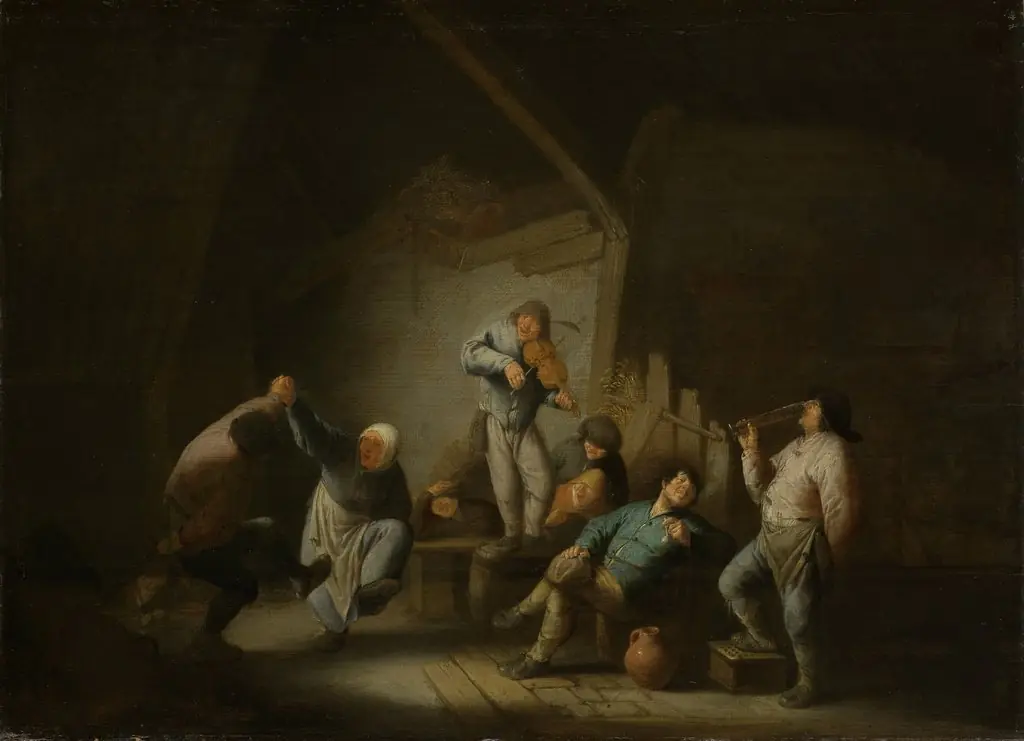
Adriaen van Ostade’s 1659 oil painting, titled The Merry Drinkers, presents a bustling interior where a group of men share food, drink, and music. The composition centers on a lively gathering around a table, capturing a moment of convivial celebration typical of Dutch genre scenes of the mid‑seventeenth century.
Subject & Meaning
The work portrays working‑class figures immersed in a night of revelry: a man in a white shirt and dark breeches raises a large glass, while a companion in a feathered hat prepares to join him. In the rear, a violinist and a vocal participant add musical accompaniment, underscoring the social bonds formed through shared indulgence and merriment.
Technique & Style
Van Ostade employs a warm palette of ochres and browns, applying paint with fluid, loosely brushed strokes that convey movement and immediacy. Fine attention to textile folds and facial expressions contrasts with the broader handling of the background, creating depth while maintaining the informal, spontaneous atmosphere of the scene.
History & Provenance
Completed in 1659, The Merry Drinkers entered the collection of the Mauritshuis in The Hague, where it remains on display. Its acquisition reflects the museum’s focus on Dutch Golden Age works, and the painting continues to serve as an example of van Ostade’s contribution to genre painting during that period.
Own this work as a print
Artist & collection
Artist
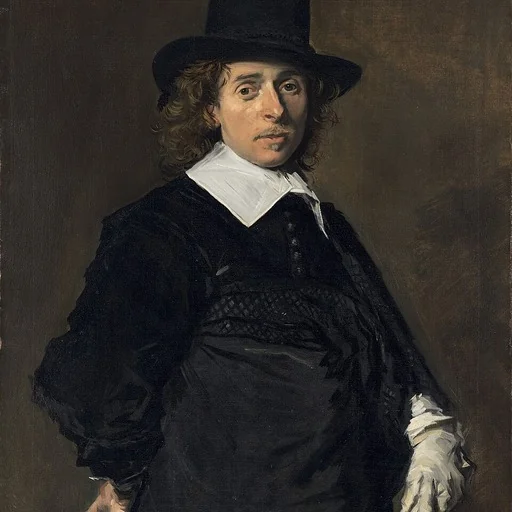
Adriaen van Ostade (baptized as Adriaen Jansz Hendricx 10 December 1610 – buried 2 May 1685) was a Dutch Golden Age painter of genre works, showing the everyday life of ordinary men and women.