Artwork
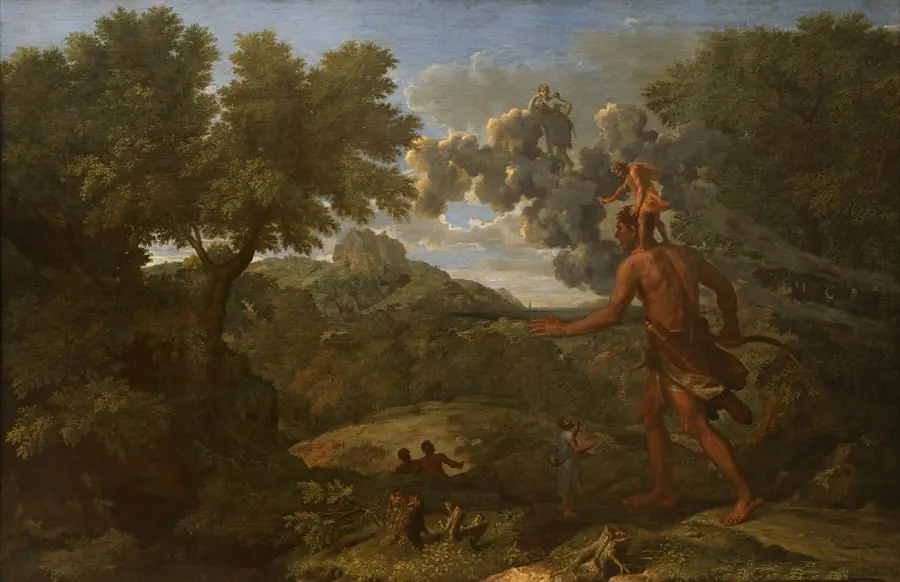
Landscape with Polyphemus
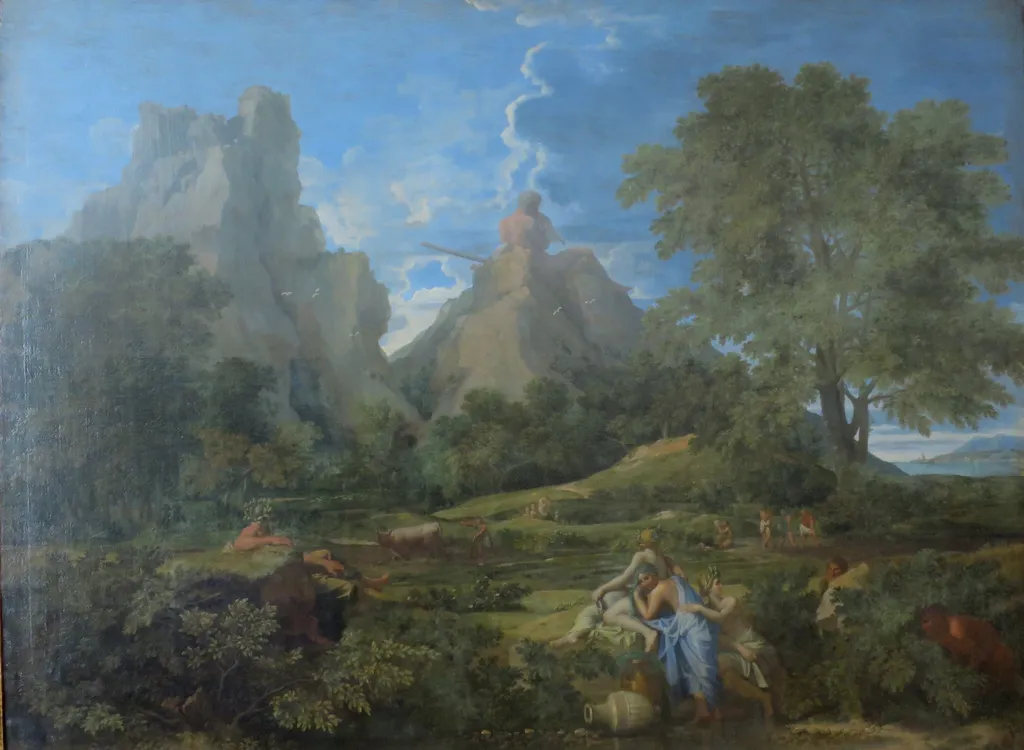
Landscape with Polyphemus is an oil painting by the Flemish Baroque painting artist Nicolas Poussin. It dates from 1649 and is held in the collection of the Hermitage Museum.
About this work
Overview
Landscape with Polyphemus is a 1649 oil painting by the French artist Nicolas Poussin, currently held in the Hermitage Museum in Saint Petersburg.
Landscape with Polyphemus is a 1649 oil painting by the French artist Nicolas Poussin, currently held in the Hermitage Museum in Saint Petersburg. The work illustrates the mythological episode from Ovid's Metamorphoses in which the cyclops Polyphemus plays his reed pipes to woo the nymph Galatea, who is depicted fleeing with her lover Acis. Poussin constructs the composition as a classical landscape, organizing the scene with rigorous geometric clarity and balanced proportions characteristic of his mature style. The foreground features the dramatic interaction between the figures, while the background unfolds into an idealized, pastoral vista of rolling hills and distant architecture under a luminous sky. Painted during the artist's later period in Rome, this work exemplifies Poussin's synthesis of narrative drama and harmonious natural order. It stands as a significant example of his exploration of mythological themes within a structured landscape format, reflecting his commitment to intellectual rigor and the primacy of line over color. The painting demonstrates the artist's ability to convey complex literary sources through a serene and composed visual language, solidifying his reputation as a master of French classical painting.
Subject & Meaning
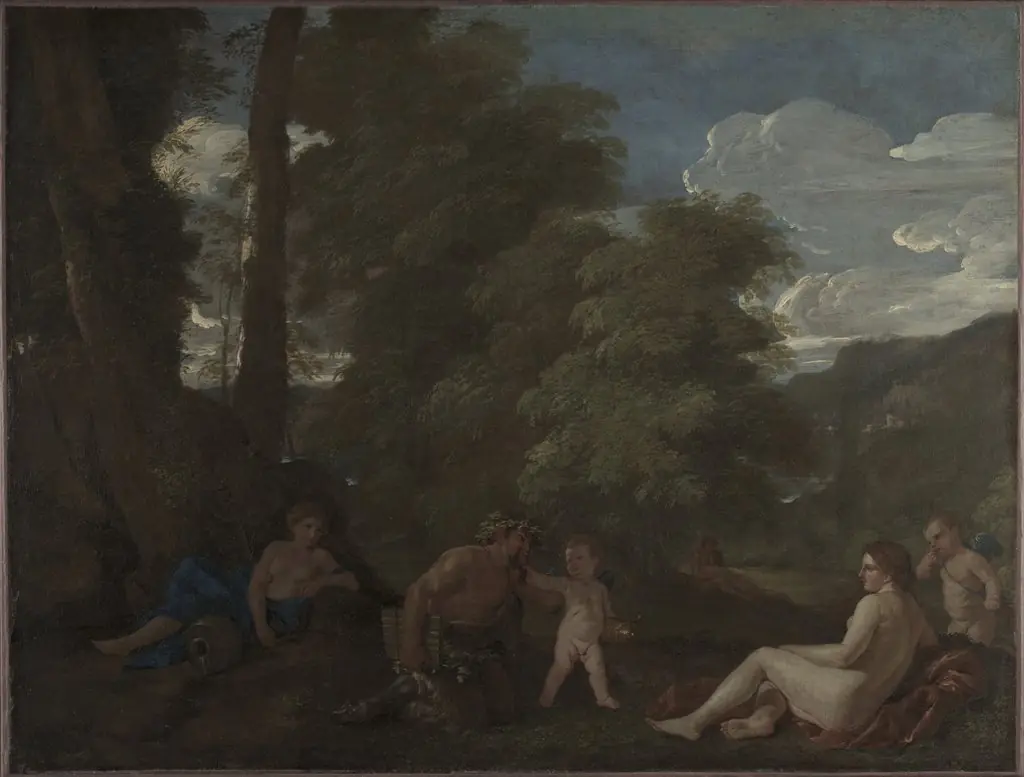
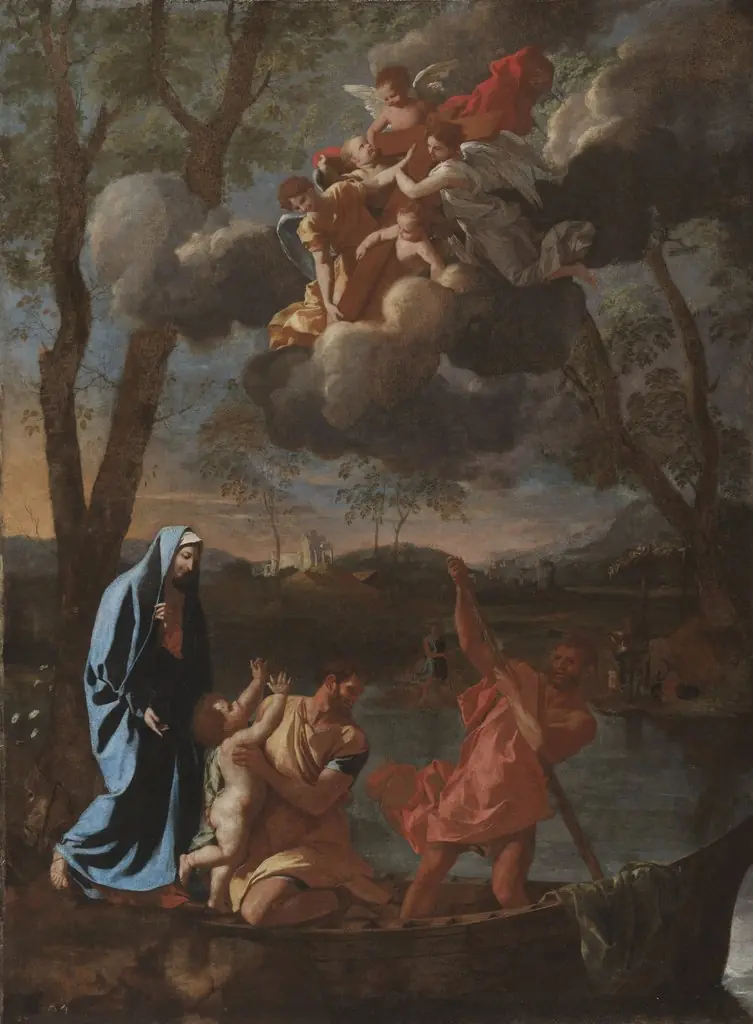
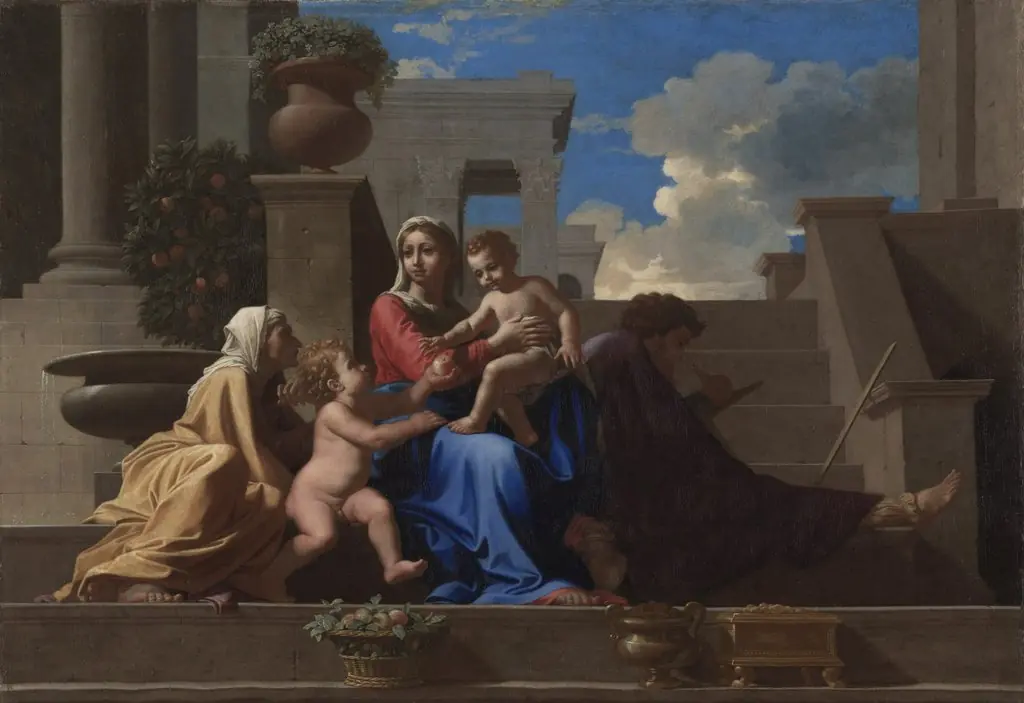
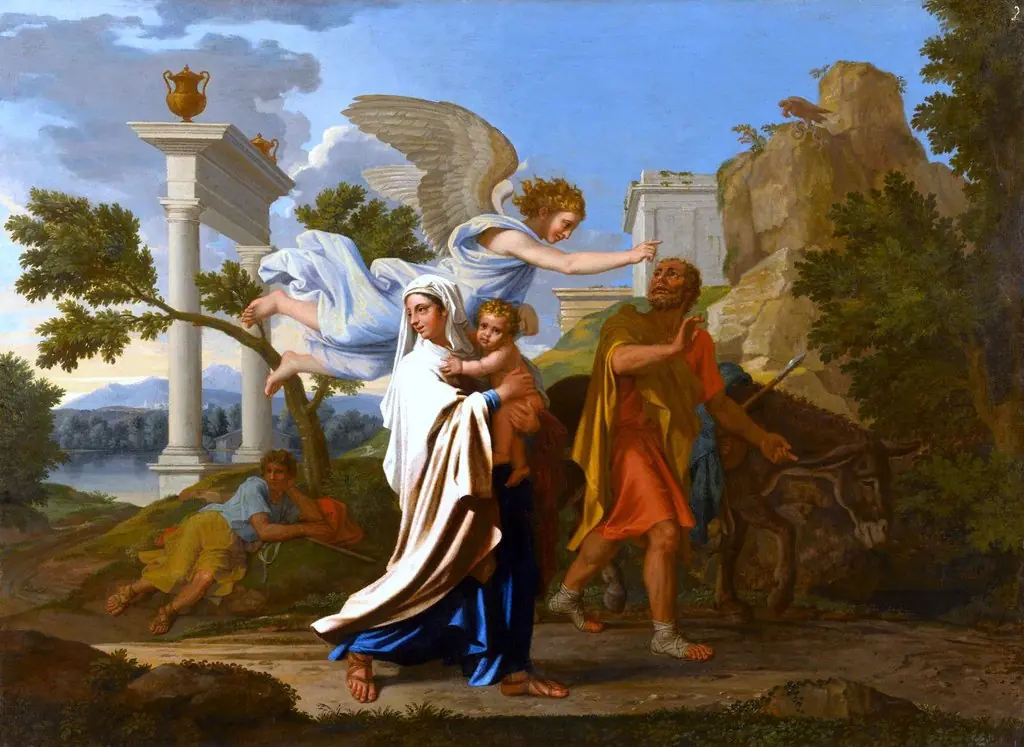
At the centre of the scene a woman dressed in a blue robe is clasped by a male figure, while another individual lies prostrate nearby. The arrangement suggests a narrative moment drawn from classical mythology, likely referencing the giant Polyphemus, though the precise story remains ambiguous, inviting contemplation of love, loss, or mythic encounter.
Technique & Style
Poussin employs a restrained palette for the figures, using soft, muted tones that contrast with the richer greens and earth tones of the surrounding foliage. Careful modulation of light and shadow creates atmospheric depth, guiding the eye from the foreground figures to the distant rocky outcrop and water horizon.
History & Provenance
After its completion, the painting entered private collections before being acquired by the Hermitage Museum, where it has been on display since the 19th century. Its presence in the Russian imperial collection reflects the broader European interest in Poussin’s classical landscapes during that era.
Context
The work belongs to Pousnin’s later phase, when he increasingly integrated mythological subjects into expansive, pastoral settings. This synthesis of narrative and landscape aligns with the 17th‑century French classicist tradition, which sought to harmonize human drama with the order of nature.
Artist & collection
Artist
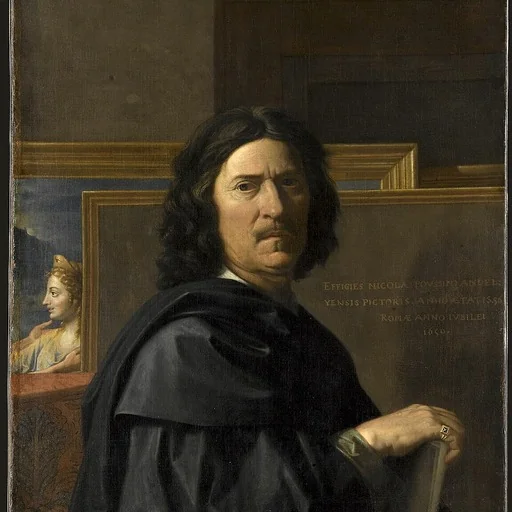
Nicolas Poussin (UK: , US: , French: ; June 1594 – 19 November 1665) was a leading painter of the classical French Baroque style, although he spent most of his working life in Rome.