Artwork
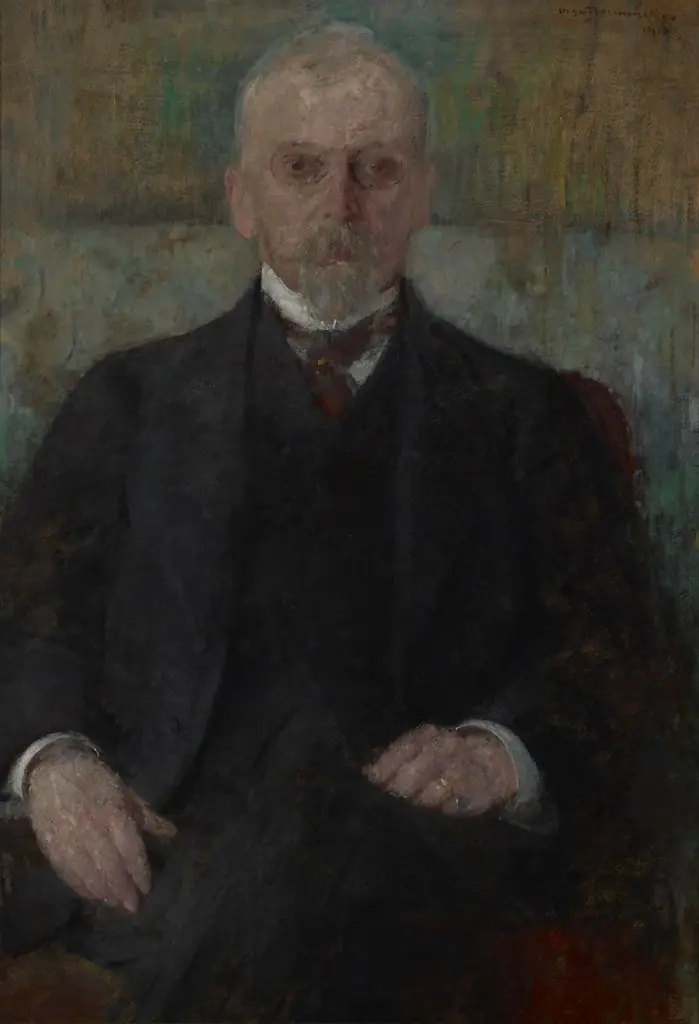
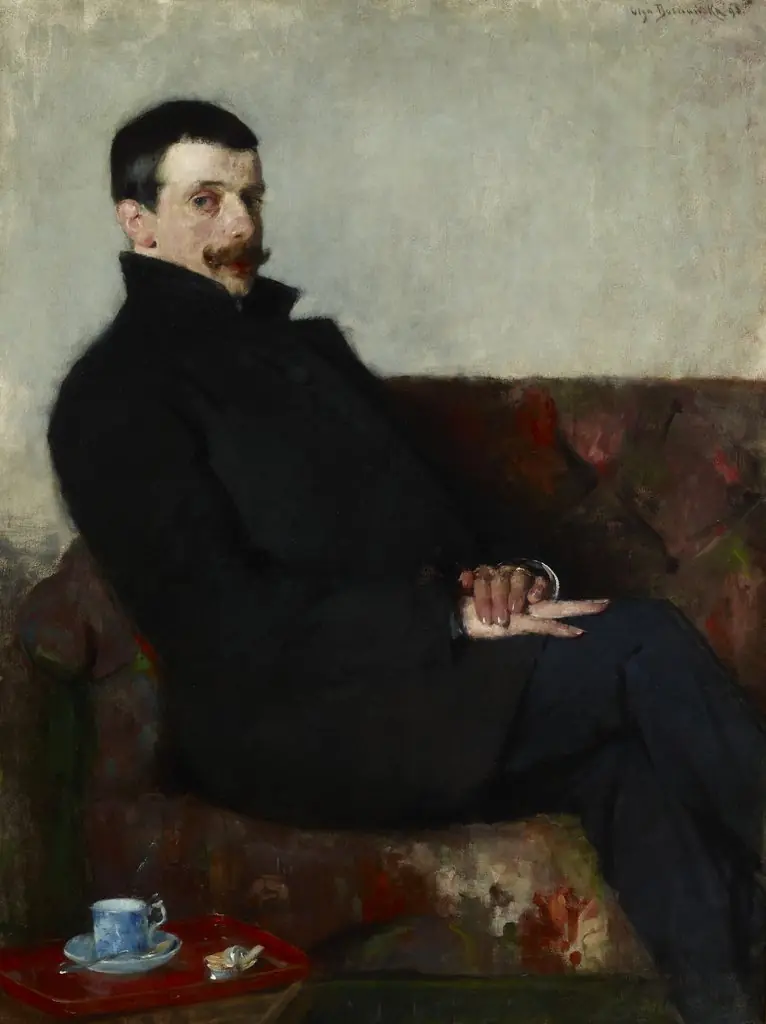
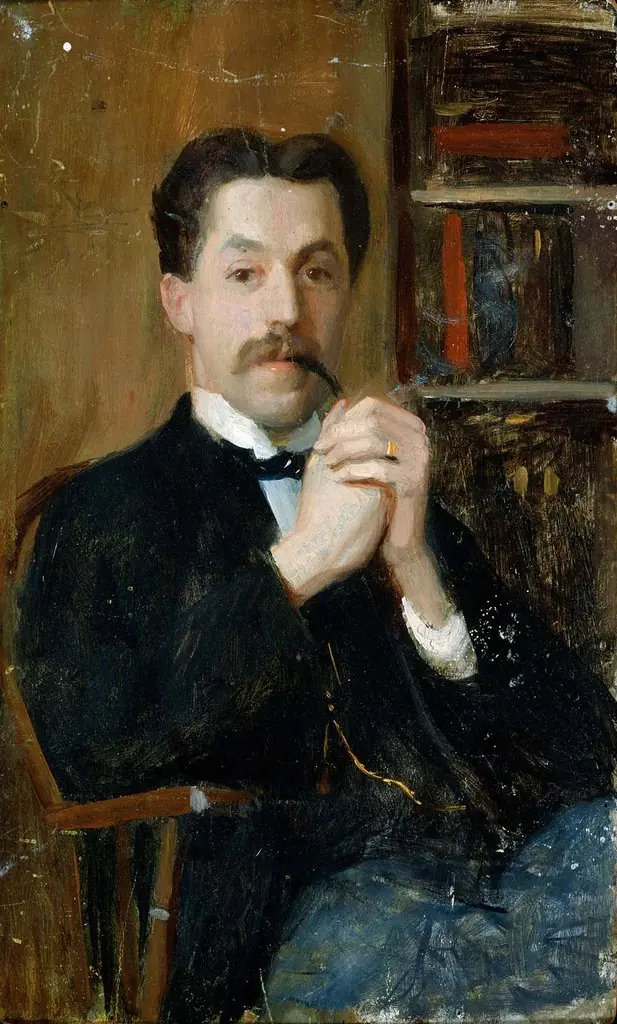
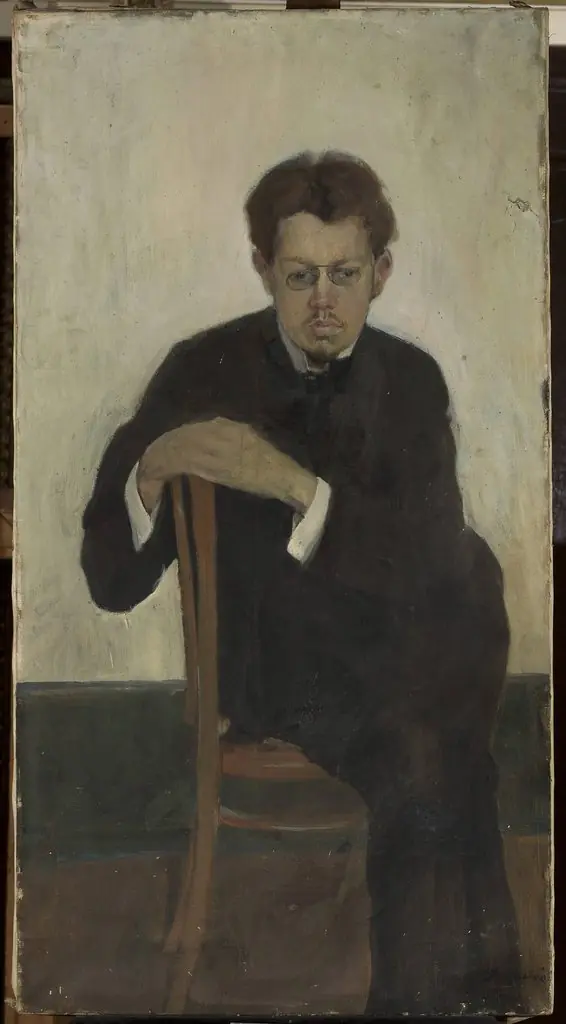
Portrait of Józef Czajkowski
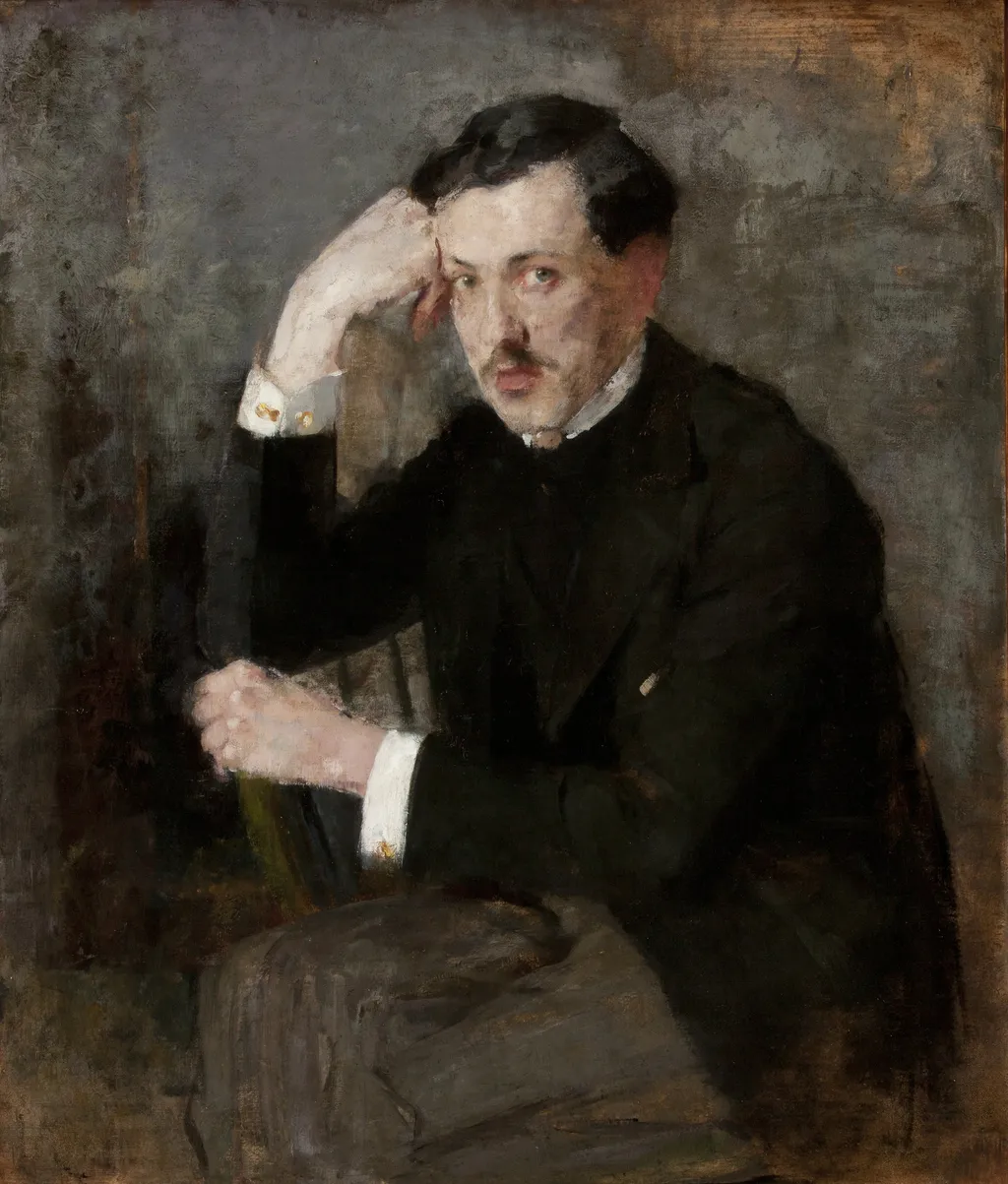
Portrait of Józef Czajkowski is an oil painting by the Post-Impressionist artist Olga Boznańska. It dates from 1898 and is held in the collection of the National Museum in Kraków.
About this work
Overview
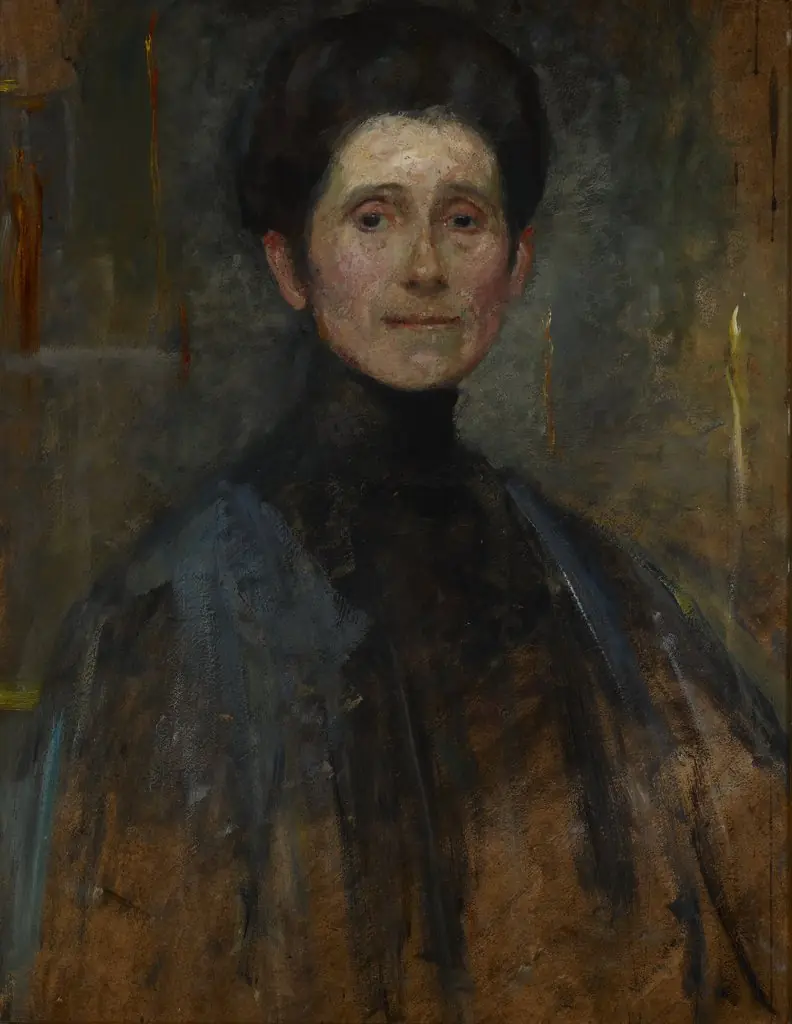
This double-sided oil painting by Olga Boznańska, dated 1898, features a portrait of Józef Czajkowski on one side and a sketch of a young girl on the reverse.
This double-sided oil painting by Olga Boznańska, dated 1898, features a portrait of Józef Czajkowski on one side and a sketch of a young girl on the reverse. Executed in oil on panel, it reflects the artist’s interest in intimate, unidealized portraiture. The work is part of the National Museum in Kraków’s collection, where it is displayed as a single object with two distinct compositions, each revealing Boznańska’s nuanced approach to capturing character.
Subject & Meaning
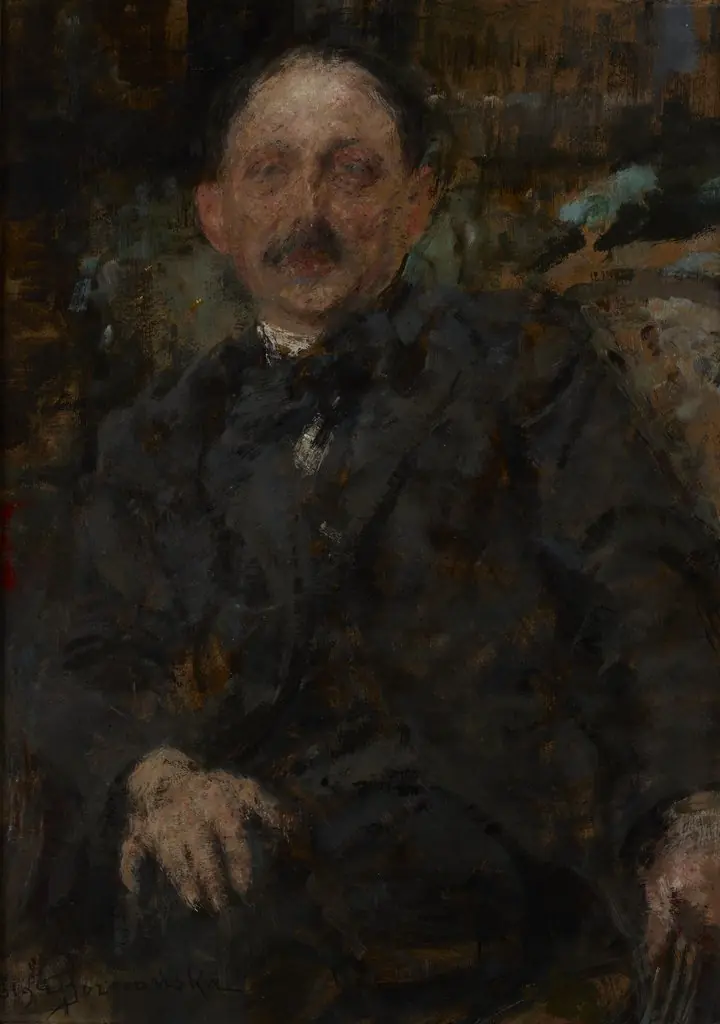
The front panel depicts Józef Czajkowski, a Polish cultural figure, seated with a calm, introspective demeanor. His right hand rests lightly on his head, while his left arm lies relaxed across his lap. The blurred facial details and muted expression suggest psychological depth rather than formal representation. The neutral posture and plain gray background emphasize inner presence over external grandeur, aligning with Boznańska’s preference for psychological realism.
Technique & Style
Boznańska employed loose, atmospheric brushwork to render both figures, avoiding sharp definition in favor of tonal gradations. The man’s black jacket and white shirt are suggested with economical strokes, while the gold buttons are hinted rather than detailed. The background is a flat, neutral gray, drawing focus to the figure’s subtle gestures. The reverse side’s sketch of a girl uses similar softness, reinforcing Boznańska’s signature style: quiet, intimate, and emotionally restrained.
History & Provenance
Painted in 1898, the work remained in the artist’s possession until her death in 1949. It entered the National Museum in Kraków’s collection shortly thereafter, preserved as a single panel with both portraits intact. Its dual-sided nature reflects Boznańska’s practice of reusing supports and exploring multiple subjects within one object, a method consistent with her economical and experimental approach to painting.
Context
Created during the height of Boznańska’s career, this painting aligns with late 19th-century European trends favoring psychological portraiture over academic idealism. While contemporaries like Sargent emphasized polish, Boznańska pursued subtlety and ambiguity. The work’s quietness resonates with the Symbolist and Impressionist currents in Polish art, where inner life was valued above spectacle, and the domestic or private moment held artistic weight.
Legacy
The painting endures as an example of Boznańska’s distinctive voice in Polish modernism. Its two-sided format has drawn scholarly attention for its efficiency and conceptual cohesion, illustrating how a single object could contain multiple narratives. Though not widely reproduced, it remains a touchstone in discussions of gender, intimacy, and the quiet power of understated representation in early 20th-century portraiture.
Own this work as a print
Artist & collection
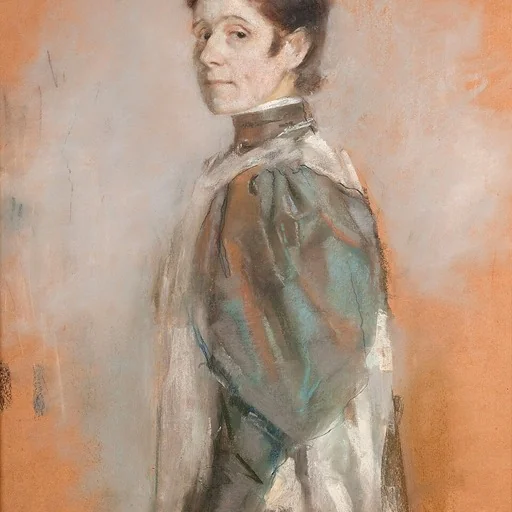
Artist
Olga Boznańska (15 April 1865 – 26 October 1940) was a Polish painter who was stylistically associated with the French impressionism, though she rejected this label.