Artwork
The Judgement of Solomon
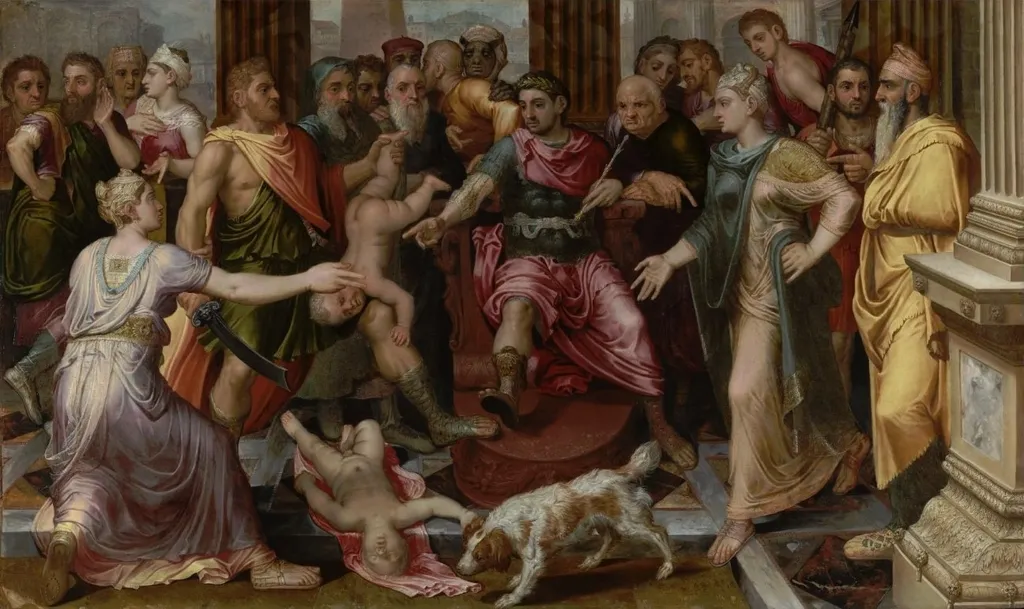
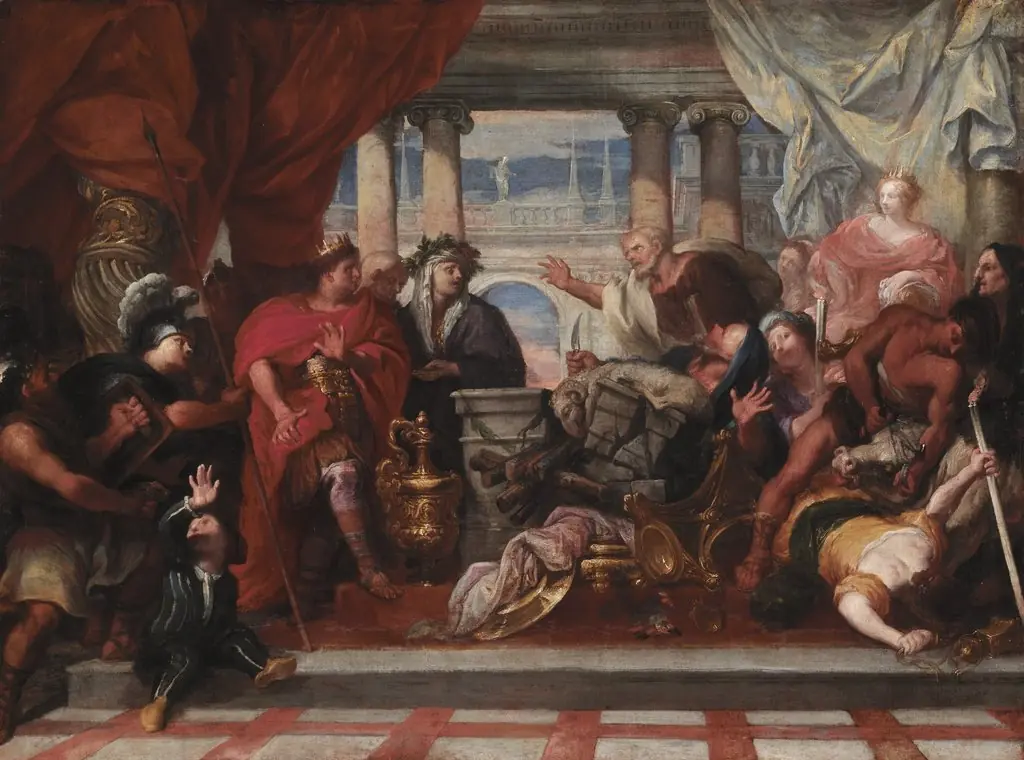
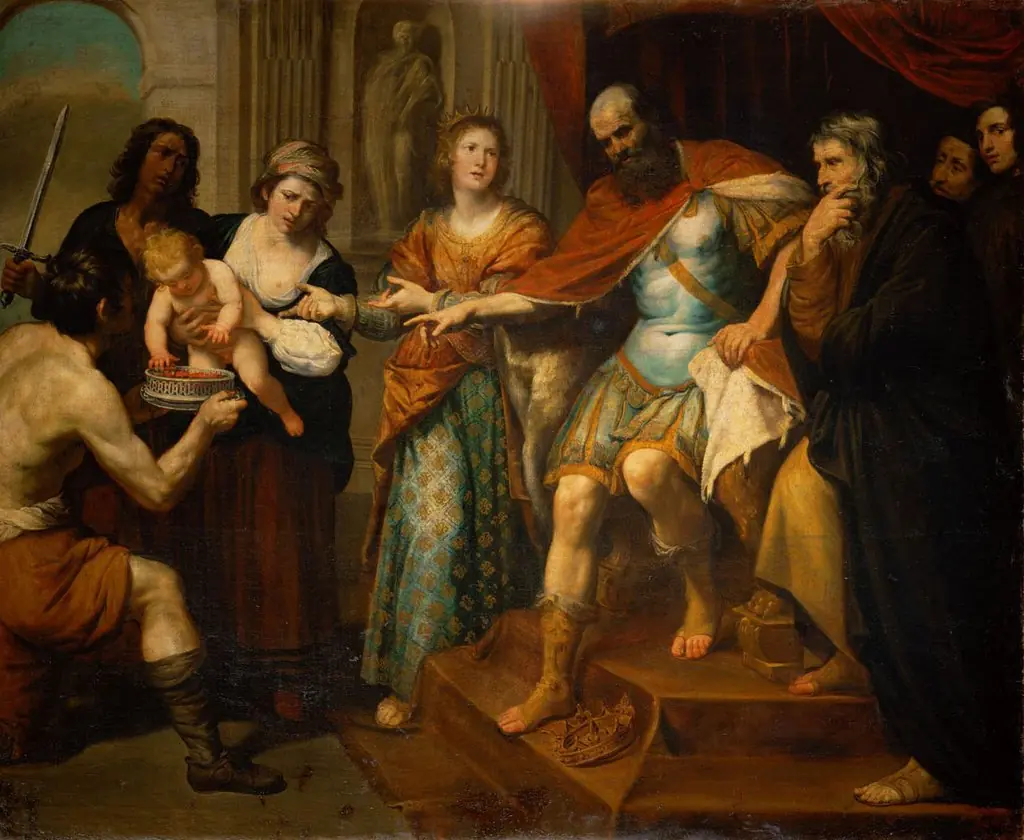
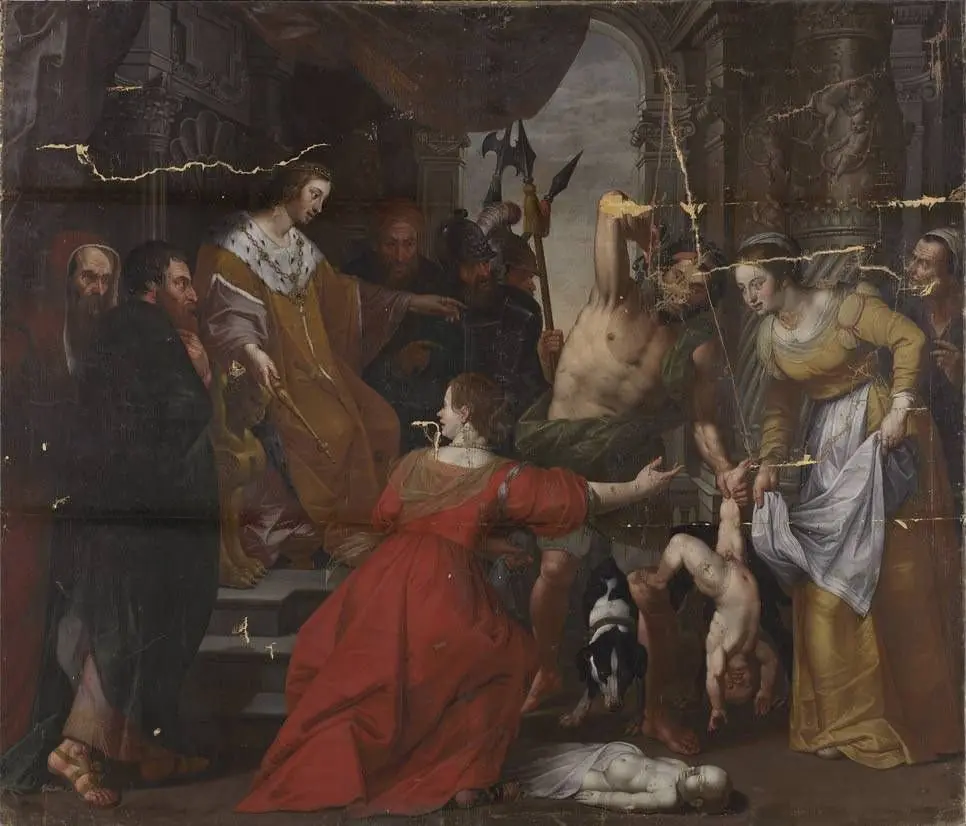
The Judgement of Solomon is an oil painting by the Mannerist artist Frans Floris. It dates from 1547 and is held in the collection of the Royal Museum of Fine Arts Antwerp.
About this work
Overview
Frans Floris painted The Judgement of Solomon in oil on panel shortly after returning from Italy, where he absorbed classical and Renaissance influences.
Frans Floris painted The Judgement of Solomon in oil on panel shortly after returning from Italy, where he absorbed classical and Renaissance influences. The work captures a pivotal moment from the biblical story in which King Solomon resolves a custody dispute through a test of maternal instinct. Its composition reflects Flemish attention to detail fused with Italianate spatial harmony, marking a turning point in Floris’ artistic development.
Subject & Meaning
The scene illustrates Solomon’s wise judgment: two women claim the same infant, and the king orders the child divided to reveal the true mother. One woman consents to the division; the other pleads for the child’s life, even at the cost of losing custody. Floris emphasizes moral revelation over spectacle, highlighting compassion as the mark of true motherhood, a theme resonant in both biblical and humanist traditions of the era.
Technique & Style
Floris employs chiaroscuro to model figures with sculptural weight and heighten emotional tension. The figures are arranged in a semicircle around Solomon, drawing the eye to his central, authoritative pose. Rich fabrics, precise facial expressions, and the inclusion of a dog and sword add narrative layers. The background’s architectural elements and distant landscape anchor the scene in a timeless, idealized antiquity, echoing Italian Renaissance ideals.
History & Provenance
Commissioned soon after Floris’ return from Italy, the painting was likely intended for a private or civic patron interested in moral governance. It remained in Flemish collections through the 17th century before entering a public museum. Its survival in good condition reflects its early recognition as a significant work, though it was never widely reproduced or copied in its time.
Context
Created during the height of the Northern Renaissance, the painting responds to growing interest in classical antiquity and biblical narratives as vehicles for ethical reflection. Floris’ synthesis of Italian compositional principles with Flemish realism aligned him with humanist circles in Antwerp, where art was increasingly seen as a tool for civic and moral education.
Legacy
Though overshadowed in later centuries by more flamboyant Baroque treatments of the same subject, Floris’ version influenced regional painters through its restrained drama and psychological nuance. It stands as an early example of how Flemish artists integrated Italian lessons into native traditions, helping shape the evolution of history painting in the Low Countries.
Artist & collection
Artist
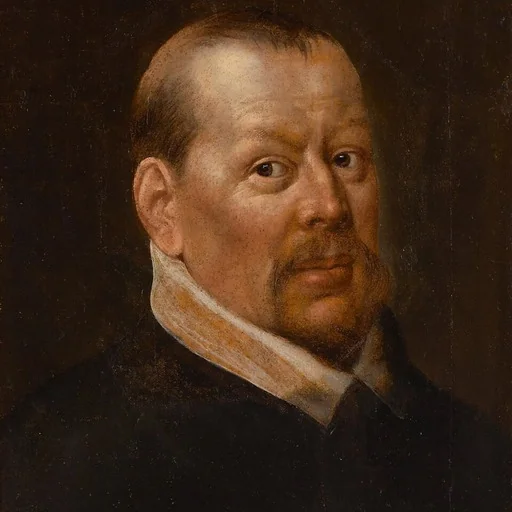
Frans Floris, Frans Floris the Elder or Frans Floris de Vriendt (17 April 1519 – 1 October 1570) was a Flemish painter, draughtsman, print artist and tapestry designer.