Artwork
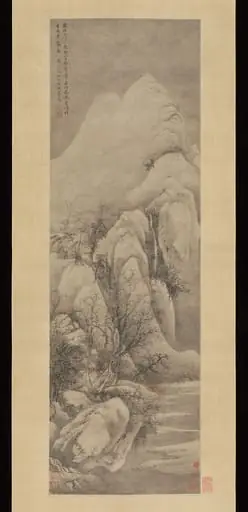
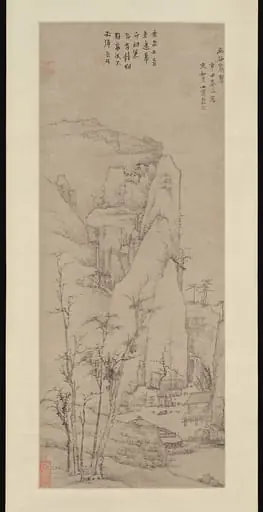
清 祁豸佳 倣倪瓚冬林亭子圖 軸|Pavilion amongst Wintry Trees after Ni Zan
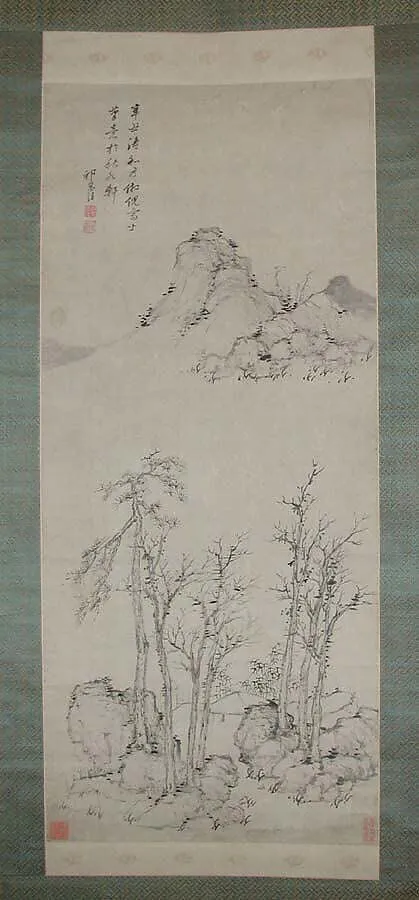
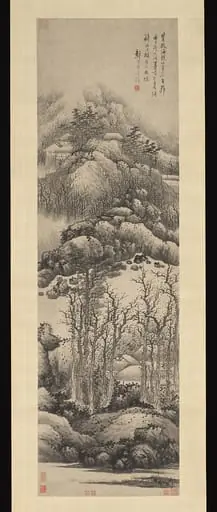
清 祁豸佳 倣倪瓚冬林亭子圖 軸|Pavilion amongst Wintry Trees after Ni Zan is an ink painting by the Baroque artist Qi Zhijia. It dates from 1661 and is held in the collection of the Metropolitan Museum of Art.
About this work
Overview
"Pavilion amongst Wintry Trees after Ni Zan" is a landscape painting by Qi Zhijia, created in 1661. Rendered in ink on paper as a hanging scroll, the work presents a serene winter scene. It features a sparse composition of bare trees and a distant mountain, executed with a monochromatic palette. This piece is a reinterpretation of an earlier work by the renowned Yuan dynasty painter Ni Zan.
Subject & Meaning
The painting depicts a tranquil winter landscape, characterized by two denuded trees rooted in rocky terrain, with a solitary mountain rising in the background. This minimalist arrangement evokes a profound sense of stillness and contemplation, reflecting the quietude of the season. The overall impression is one of a moment suspended, inviting the viewer to engage in quiet observation.
Technique & Style
This approach directly references the aesthetic principles associated with the Yuan dynasty master Ni Zan, whose distinctive style is emulated here.
Executed exclusively with ink on paper, the artwork employs a restricted palette of grays and blacks, deliberately eschewing color to emphasize form and texture. Qi Zhijia utilized light and understated brushstrokes, contributing to the work's overall sense of delicacy and restraint. This approach directly references the aesthetic principles associated with the Yuan dynasty master Ni Zan, whose distinctive style is emulated here.
Context
This painting by Qi Zhijia is explicitly titled "after Ni Zan," signifying its role as a reinterpretation or homage to an earlier work by the celebrated Yuan dynasty artist. Ni Zan was highly regarded for his distinctive winter landscapes, often characterized by sparse compositions and a particular ink wash technique. Qi Zhijia's engagement with Ni Zan's established style places his work within a long tradition of artistic dialogue and reverence for past masters in Chinese painting.
Artist & collection


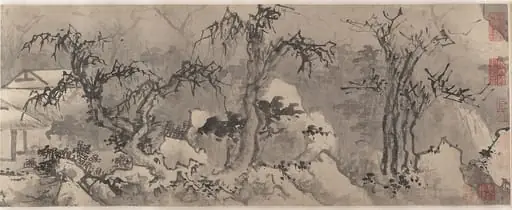 明 傳蔣嵩 冬景山水圖 卷|Winter landscape
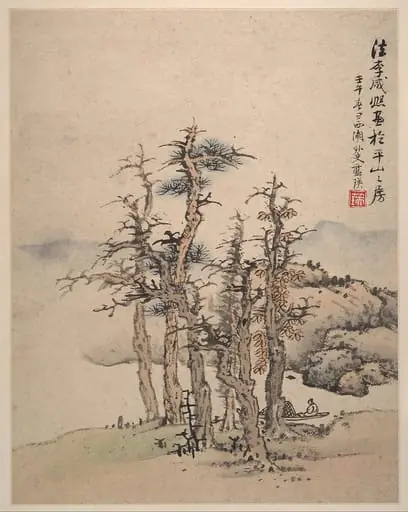 明 藍瑛 仿宋元山水圖 冊|Landscapes after Song and Yuan masters
 清 倣弘仁 幽谷泉聲圖 軸|The Sound of Spring in a Lonely Valley
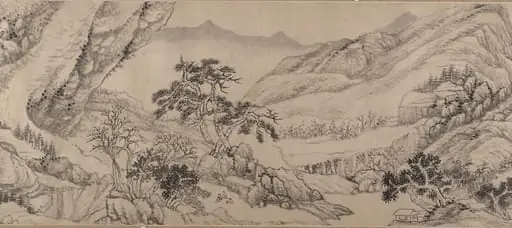 清 柳堉 山水圖 卷|Traveling Amid Streams and Mountains
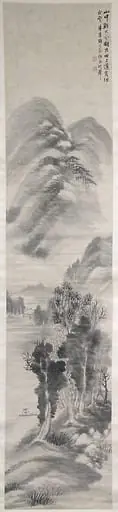 清 胡遠 四季山水圖 四條屏|Landscapes of the Four Seasons
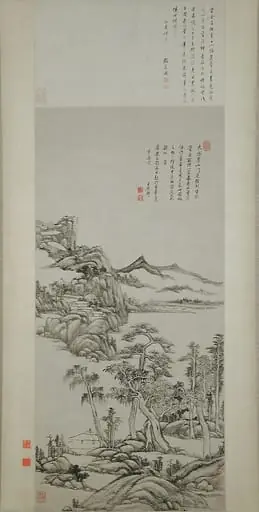 清 王原祁 倣黃公望高克恭山水圖 軸|Landscape in the Styles of Huang Gongwang and Gao Kegong