Artwork
明 佚名 蘇蕙璇璣圖 卷|Lady Su Hui and Her Verse Puzzle
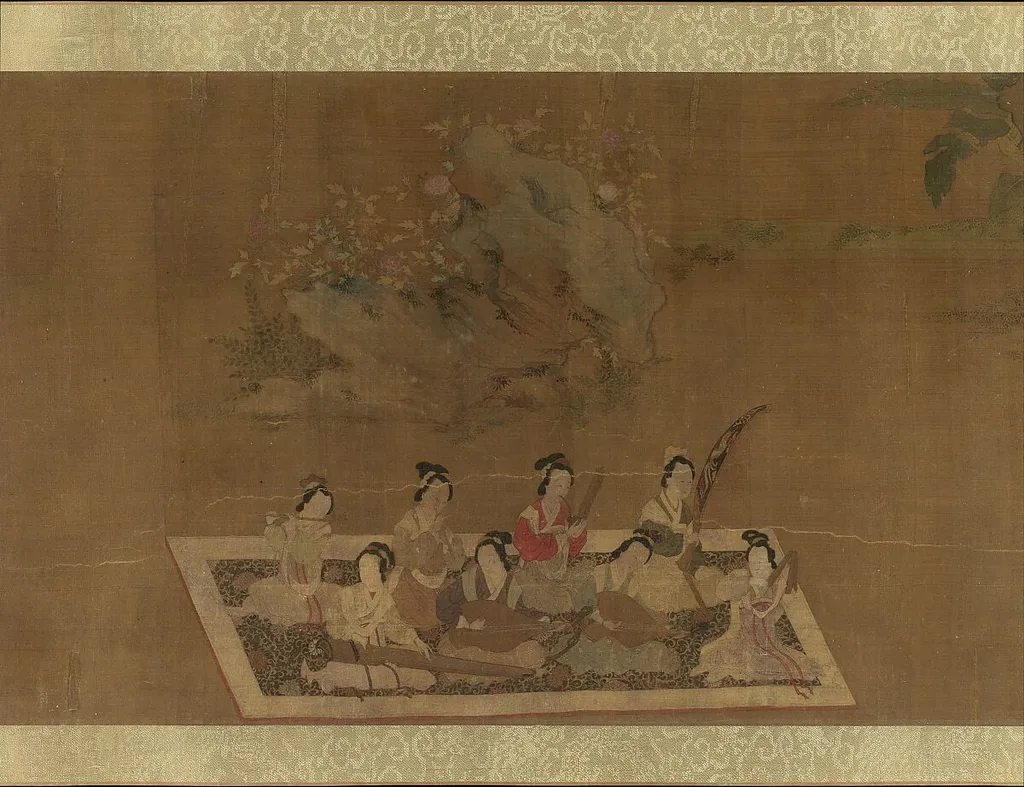
明 佚名 蘇蕙璇璣圖 卷|Lady Su Hui and Her Verse Puzzle is an ink painting by the Ming dynasty painting artist Qiu Ying. It dates from 1549 and is held in the collection of the Metropolitan Museum of Art. This Ming dynasty handscroll depicts Lady Su Hui, a notable poet from the 4th century.
About this work
This painting isn’t just a portrait—it shows Lady Su Hui, a poet from the 4th century.
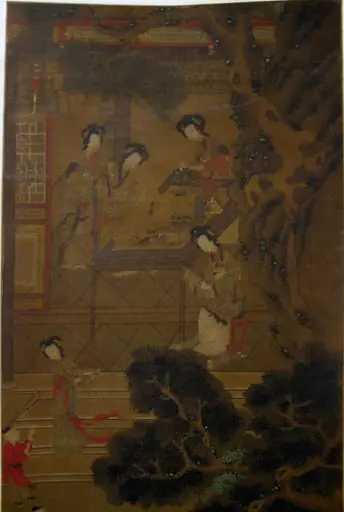
A woman sits on a garden terrace, plucking a lute while two attendants stand nearby. Behind her, a screen shows a grid of tiny red and black characters.
This painting isn’t just a portrait—it shows Lady Su Hui, a poet from the 4th century. She wrote a famous poem that could be read in any direction, like a word puzzle. The artist included the poem on the screen, turning the painting into a quiet riddle.
To see more works like this, look up *women* in art.
Overview
This Ming dynasty handscroll depicts Lady Su Hui, a notable poet from the 4th century. Rendered in ink and color on silk, the painting portrays her seated on a garden terrace, engaged with a musical instrument. The artwork subtly integrates her famed "verse puzzle," a complex poem known for its multi-directional readability, making the painting itself a visual and intellectual challenge for the viewer.
Subject & Meaning
The central figure is Lady Su Hui, celebrated for her intricate literary creation, the *Xuanji Tu* (Broacade of the Turning Sphere). This poem, composed of 841 characters, could be read in numerous patterns, forming a sophisticated word puzzle. The artist incorporates this intellectual feat directly into the scene, presenting the poem as a grid of characters on a screen behind Lady Su Hui, thereby transforming the painting into a contemplative visual riddle.
Technique & Style
Executed as a handscroll using ink and color on silk, the painting presents a serene domestic scene. Lady Su Hui is shown on a garden terrace, delicately plucking a lute, while two attendants stand nearby, contributing to the tranquil atmosphere. The meticulous depiction of the figures and setting, combined with the detailed rendering of the poetic grid, exemplifies the refined aesthetic prevalent in Ming dynasty figure painting.
Context
Lady Su Hui's story, particularly her poetic ingenuity, resonated through subsequent centuries, making her a compelling subject for artists. Depictions of literary figures, especially women celebrated for their intellect and artistic contributions, were a recurring theme in Chinese painting. This work aligns with a tradition of honoring historical personages whose achievements transcended their immediate era, offering both a portrait and an homage to her enduring legacy.
Artist & collection