Artwork
Saint Mary of Egypt
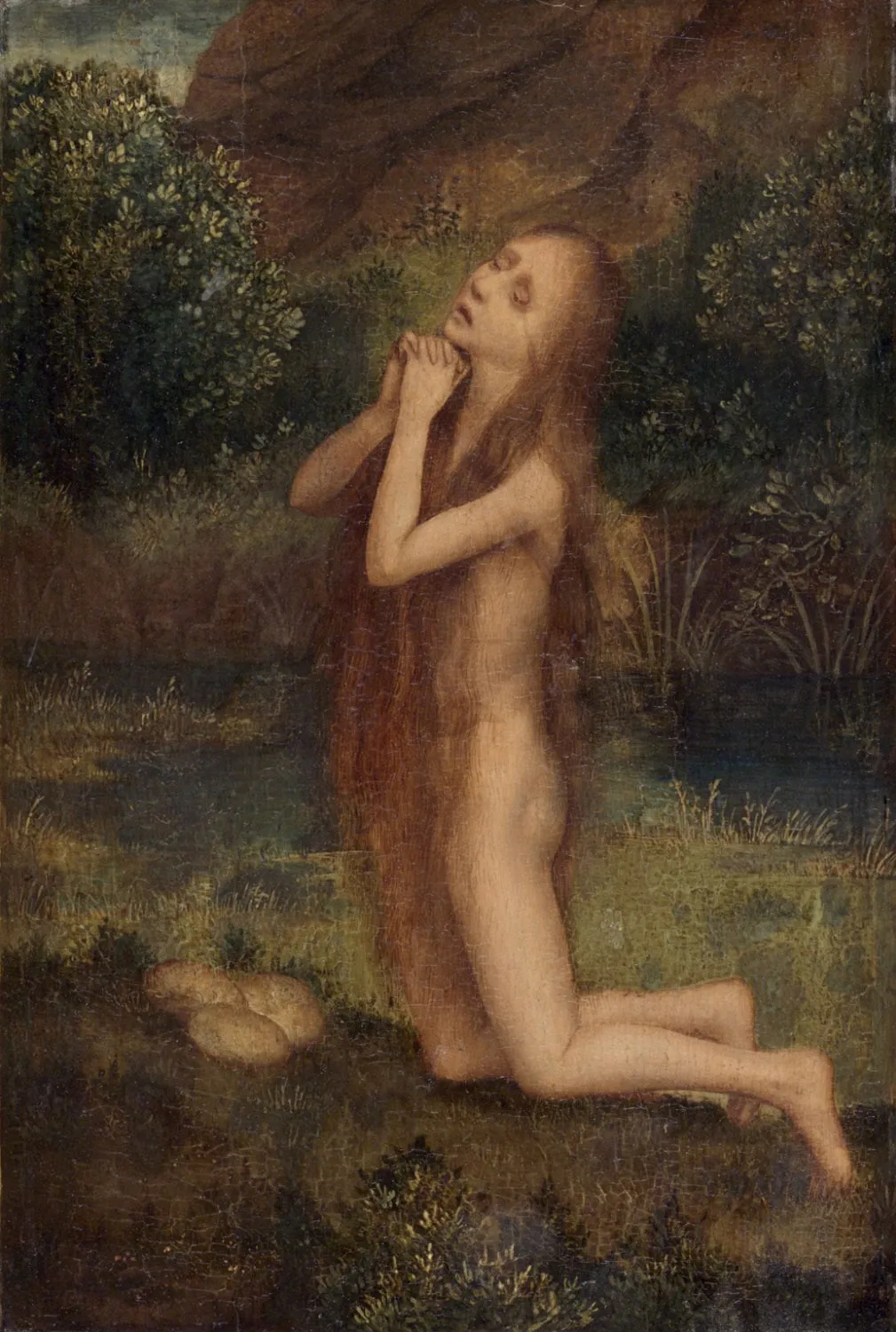
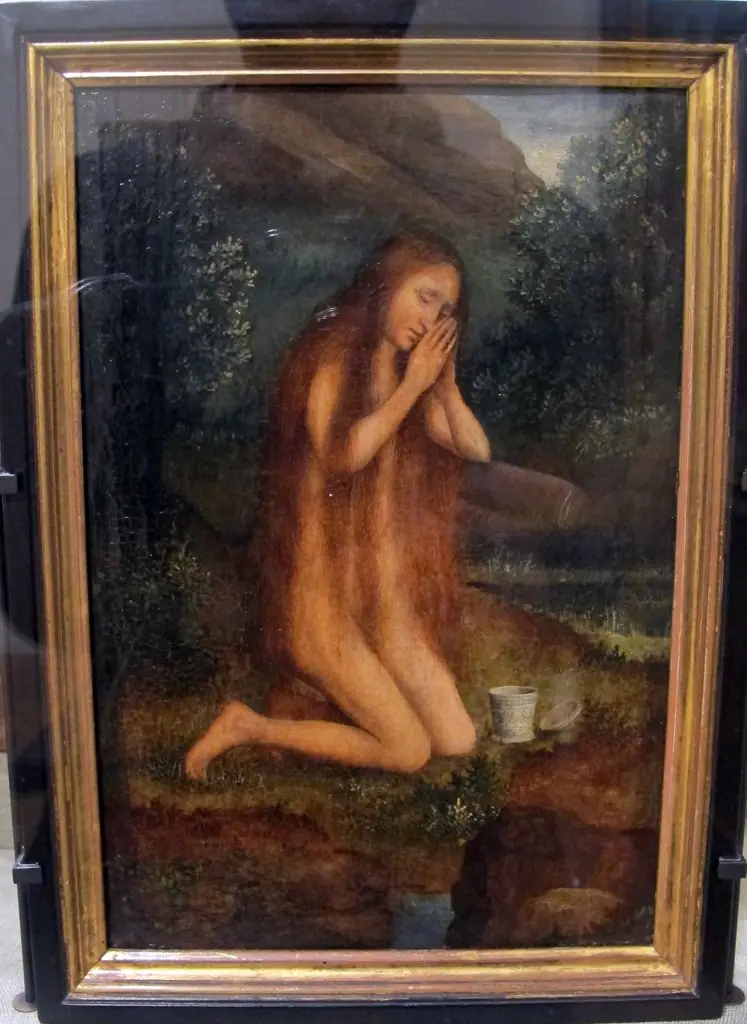
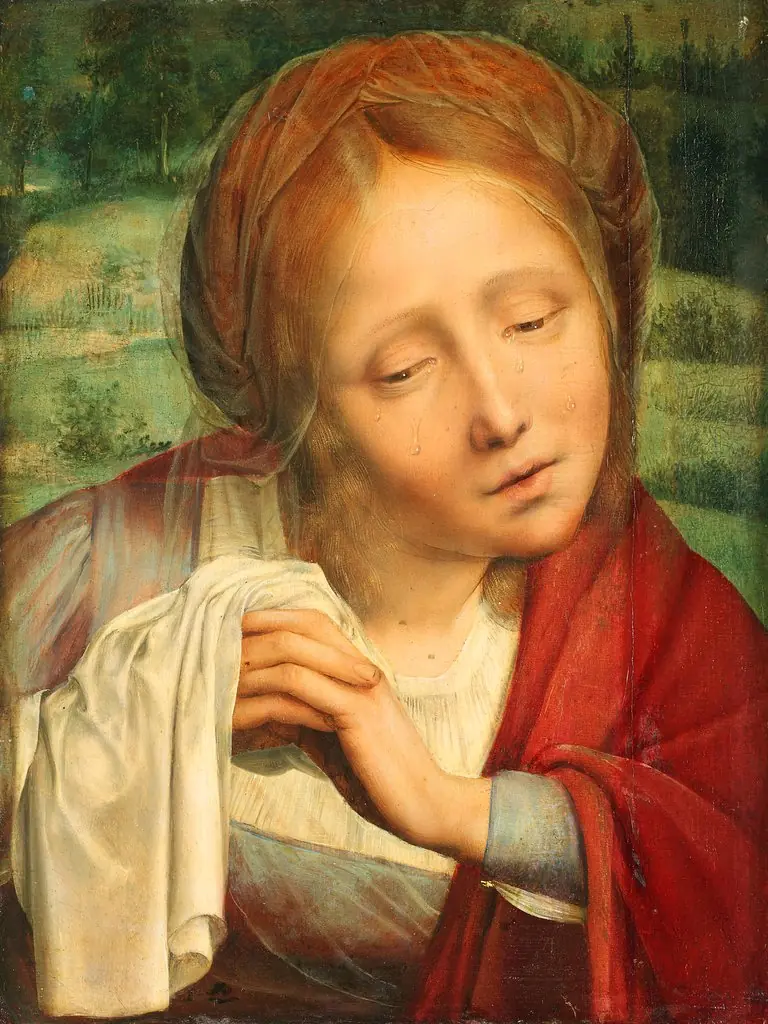
Saint Mary of Egypt is an oil painting by the Northern Renaissance artist Quinten Metsys. It dates from 1515 and is held in the collection of the Philadelphia Museum of Art.
About this work
Overview
Metsys, originally trained as a blacksmith, turned to painting in Antwerp, where he became a central figure in the Northern Renaissance.
Painted in 1515 by Quinten Metsys, this oil-on-panel work portrays Saint Mary of Egypt, a figure from Christian hagiography known for her radical conversion and desert asceticism. Metsys, originally trained as a blacksmith, turned to painting in Antwerp, where he became a central figure in the Northern Renaissance. The piece is now part of the Philadelphia Museum of Art’s collection, representing early 16th-century Flemish religious art.
Subject & Meaning
The painting depicts Mary of Egypt in a moment of profound penitence, kneeling naked in a wooded landscape with her hands pressed to her face. Her nudity symbolizes spiritual vulnerability and the stripping away of worldly identity, while her posture conveys humility before divine grace. The lush, untouched environment reflects the solitude of her desert exile, reinforcing the theme of redemption through isolation and prayer.
Technique & Style
Metsys employed oil paint to achieve subtle gradations of light and texture, particularly in the rendering of skin, foliage, and water. The detailed naturalism of the landscape contrasts with the stylized, almost sculptural form of the figure, blending Northern attention to detail with expressive emotional focus. The composition directs attention to the saint’s centered pose, isolating her within a richly textured world that feels both intimate and vast.
History & Provenance
Created in Antwerp during the height of Metsys’s career, the painting reflects the city’s thriving artistic community and demand for devotional imagery. It remained in private or ecclesiastical hands until entering the Philadelphia Museum of Art’s collection, where it has been studied as an example of early Flemish religious portraiture. Its survival and preservation offer insight into the transmission of devotional art across centuries.
Context
In early 16th-century Flanders, religious subjects dominated painting, often serving as tools for moral instruction. Metsys, alongside contemporaries like Dürer and Bosch, contributed to a visual culture that emphasized inner spiritual states. The depiction of Mary of Egypt aligns with broader trends in Northern art that favored psychological depth and narrative clarity over idealized form.
Legacy
Metsys’s work helped establish Antwerp as a leading center for religious painting in the Renaissance. His synthesis of detailed naturalism and emotional intensity influenced later Flemish artists. While not widely reproduced, this painting remains a significant example of how devotional themes were rendered with psychological nuance, contributing to the evolution of Northern European sacred art.
Artist & collection
Artist
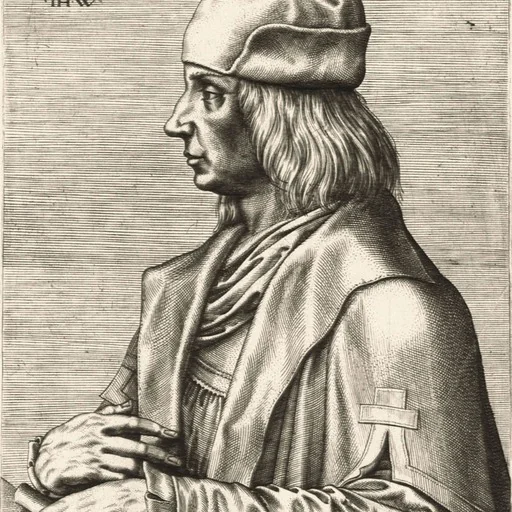
Quentin Matsys (UK: MAT-sysse, US: MAHT-sysse; also Massys or Metsys; Flemish: Quinten Matsijs ; 1466–1530) was a Flemish painter in the Early Netherlandish tradition.