Artwork
Ninfa
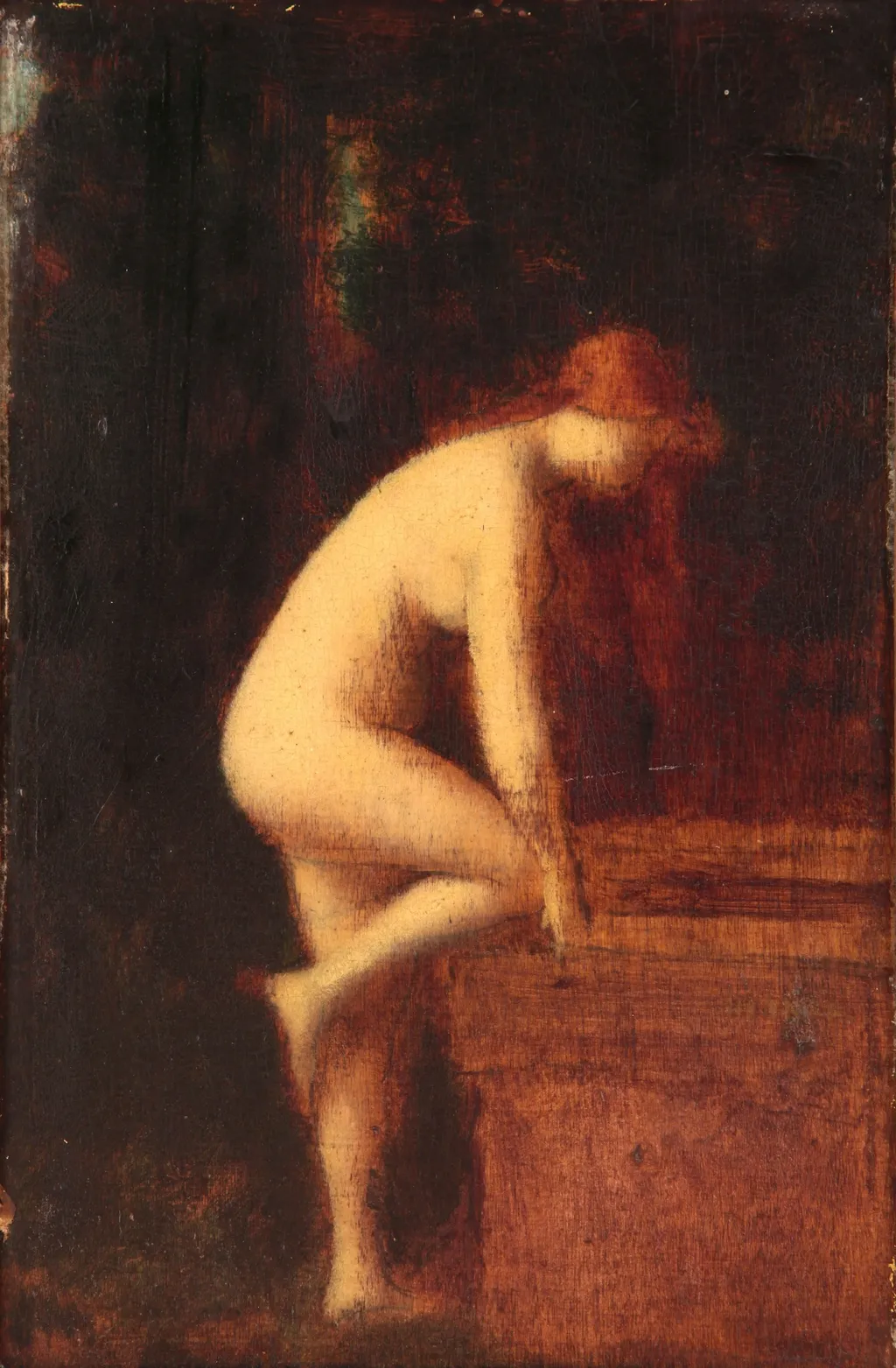
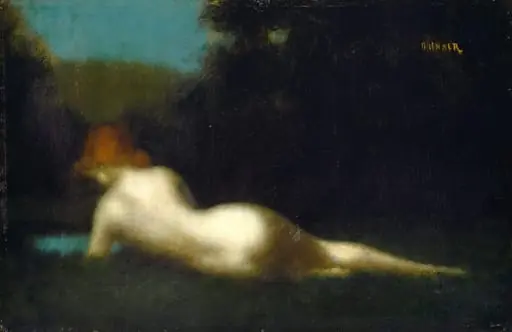
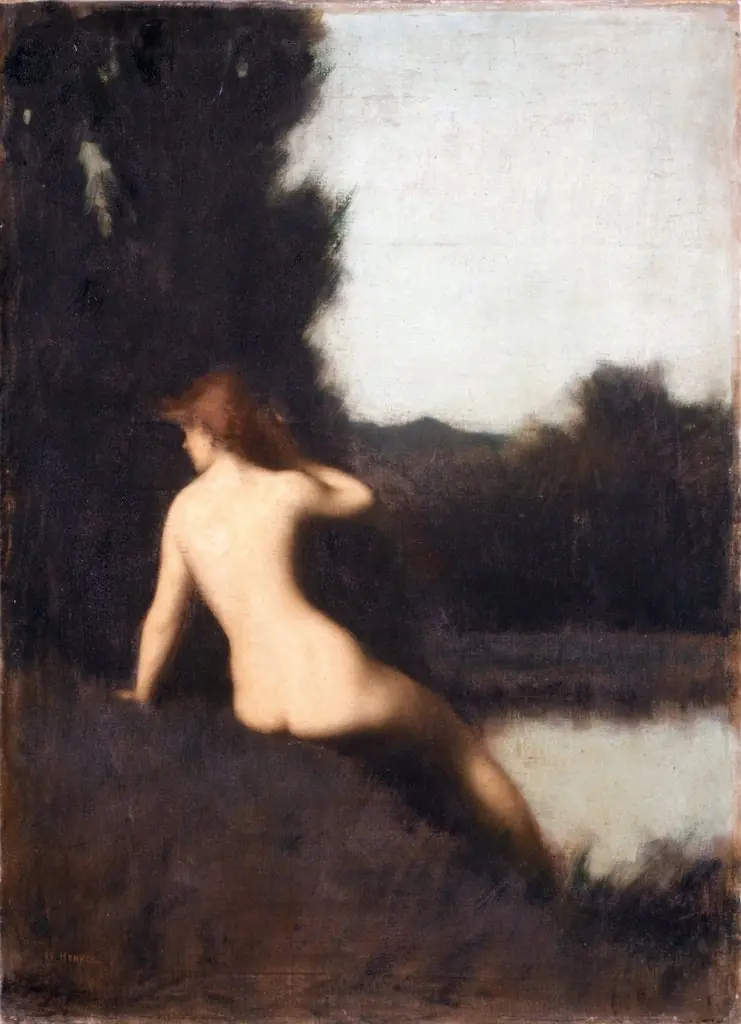
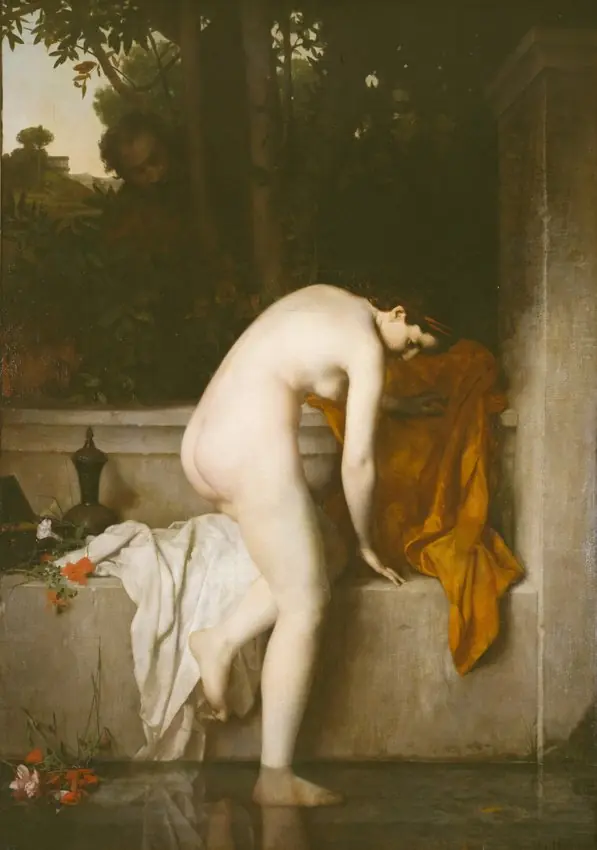
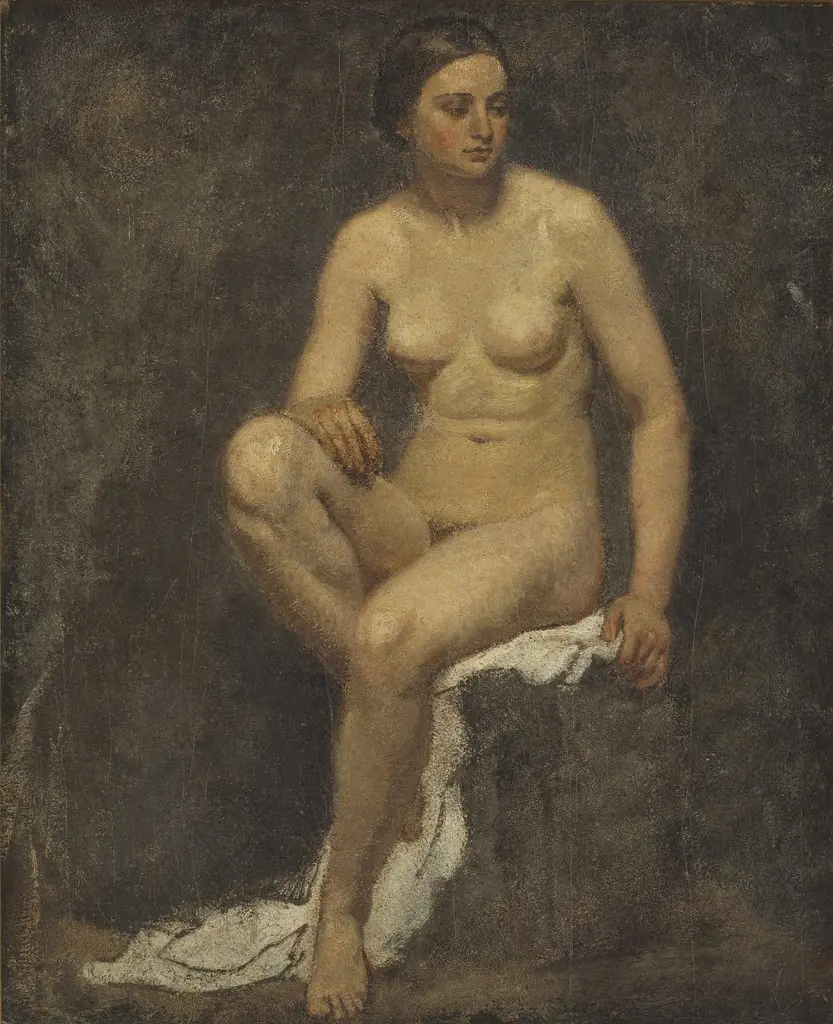
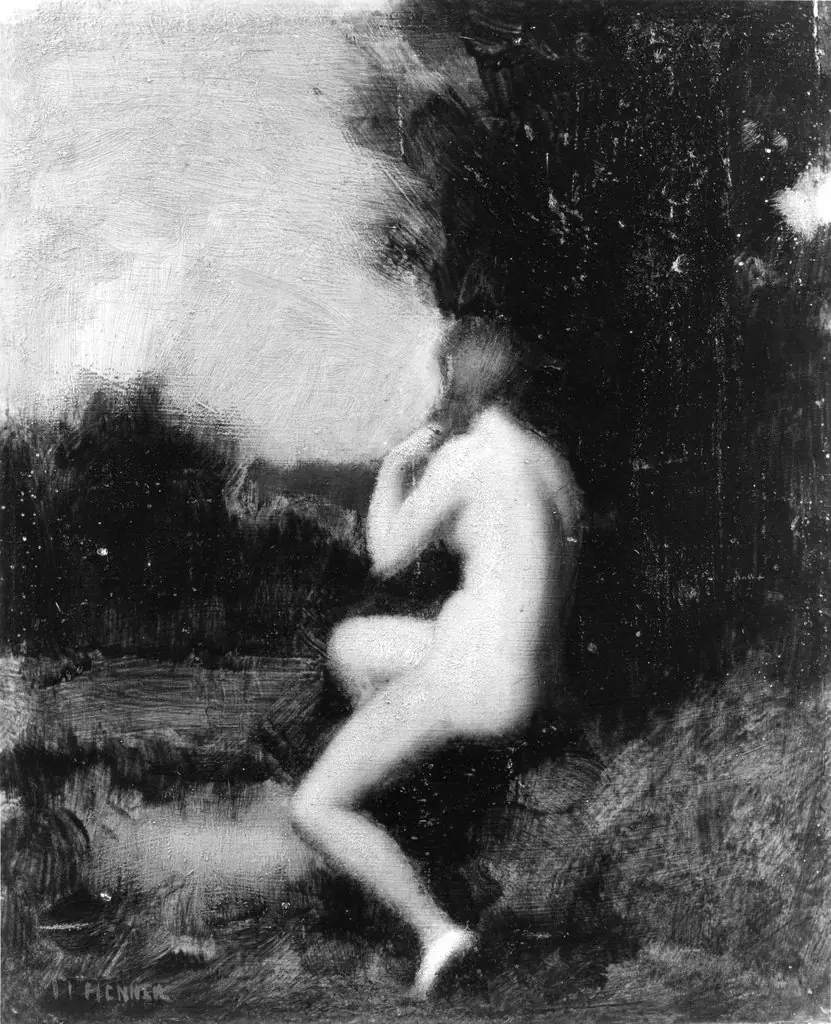
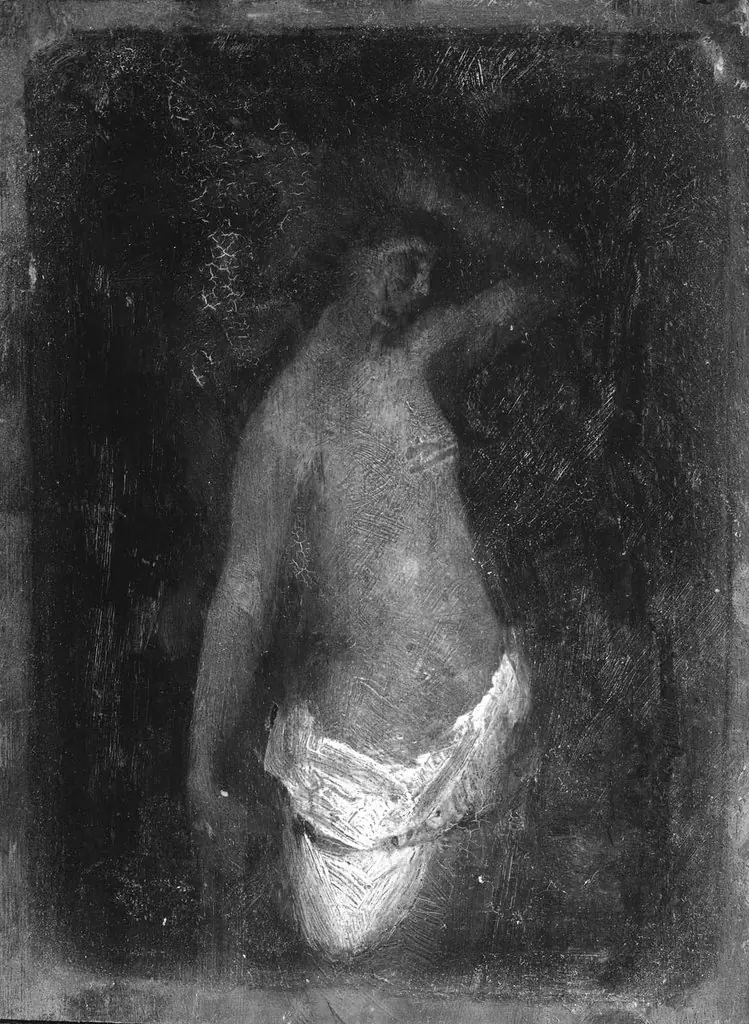
Ninfa is an unspecified painting by the Realist artist Jean-Jacques Henner. It dates from 1850 and is held in the collection of the National Museum of Fine Arts, Argentina.
About this work
Overview
Ninfa is a painting created by French artist Jean-Jacques Henner around 1850, associated with the Realist movement. It is now part of the collection at the National Museum of Fine Arts in Buenos Aires.
Subject & Meaning
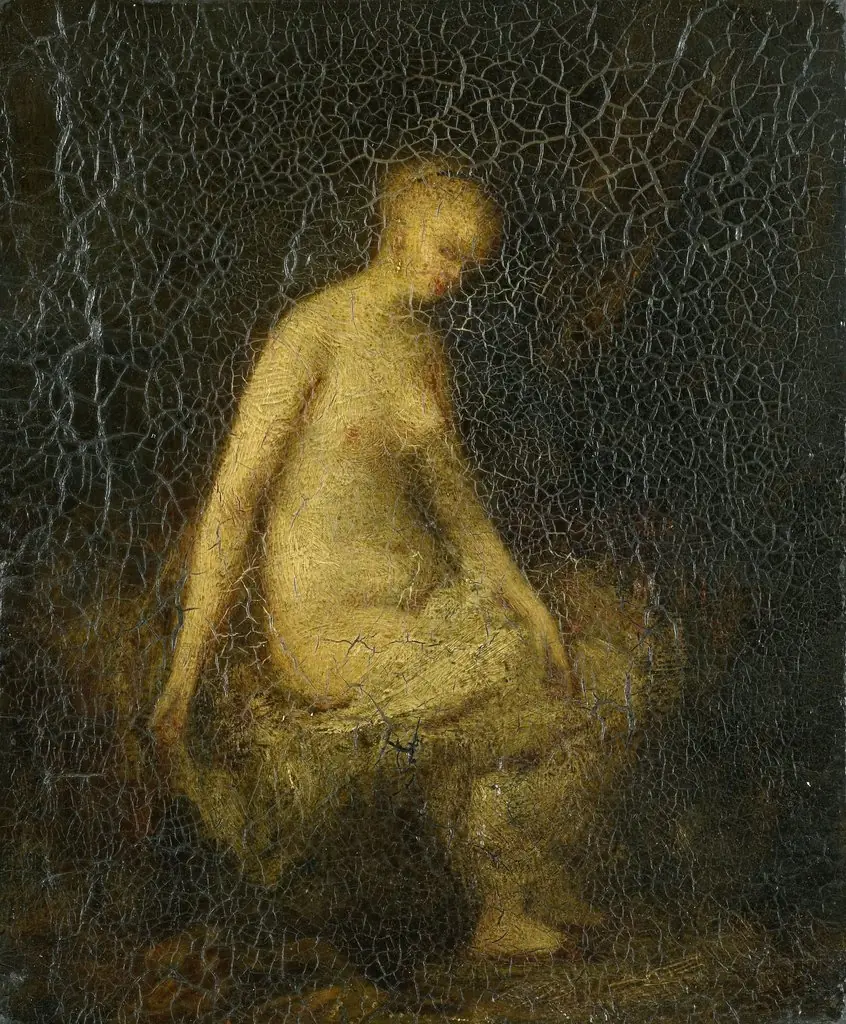
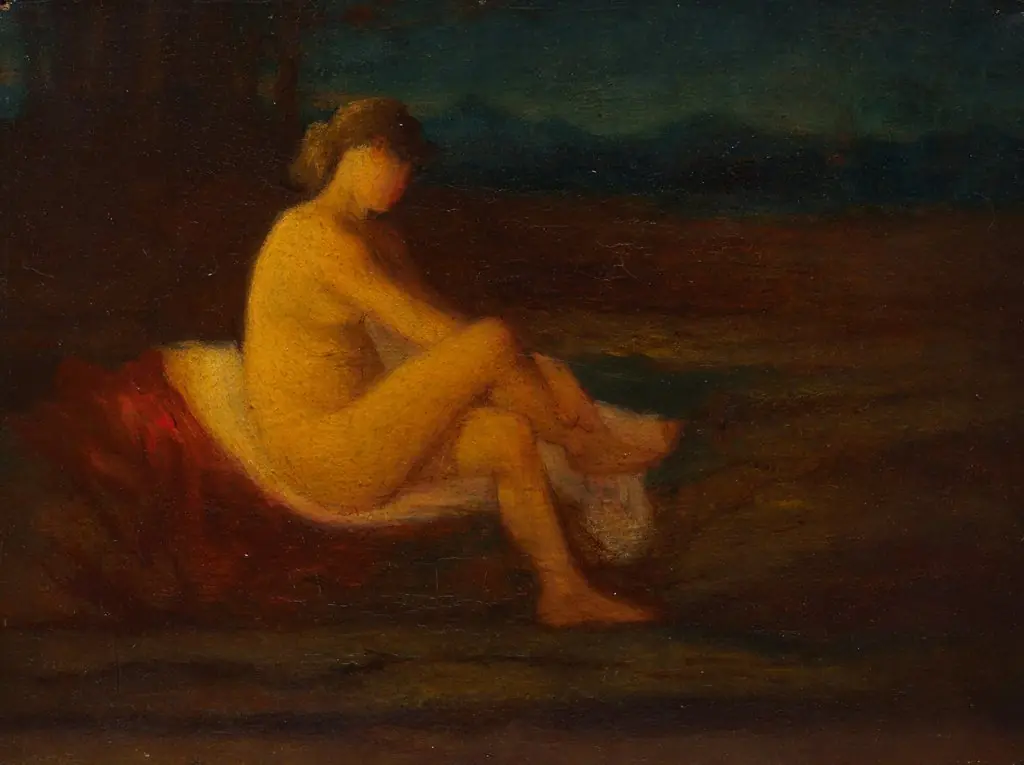
The painting depicts a nude female figure in a bent-over pose, with her body turned to the right. Her head is bowed, and arms are bent, with hands positioned near her knees. The focus is on the female form, with light and shadow emphasizing its curves and contours.
Technique & Style
Henner employed chiaroscuro to create a sense of depth and three-dimensionality in the figure. The dark, monochromatic background (in shades of brown and black) contrasts with the illuminated body, highlighting its volume.
History & Provenance
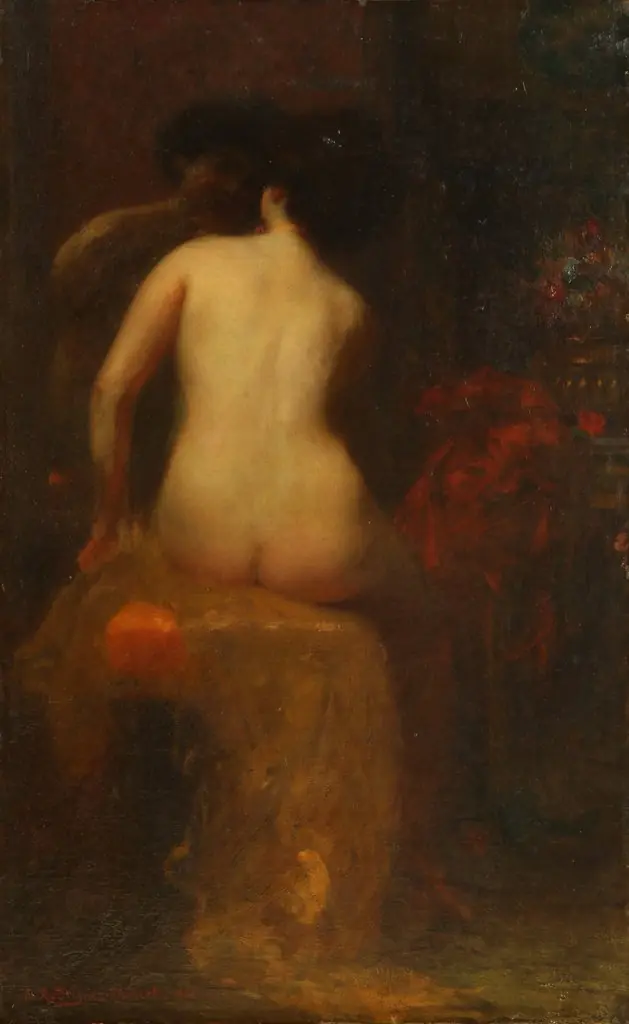
Created circa 1850, Ninfa is part of Henner's oeuvre characterized by frequent depictions of the nude. The work is currently housed at the National Museum of Fine Arts in Buenos Aires.
Context
Ninfa reflects Henner's adherence to Realist principles, focusing on the everyday and the human form in a naturalistic manner, albeit with a refined, artistic interpretation through his lighting techniques.
Legacy
While specific legacy details of *Ninfa* are not highlighted, it contributes to Henner's broader impact on 19th-century French Realism, particularly in the nuanced depiction of the human figure through masterful use of light and shadow.
Own this work as a print
Artist & collection
Artist
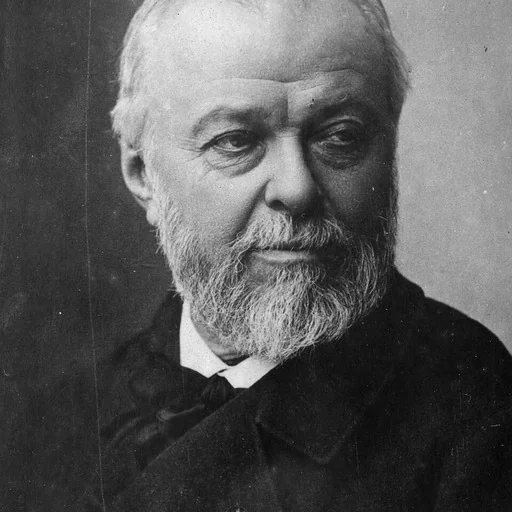
Jean-Jacques Henner (5 March 1829 – 23 July 1905) was a French painter, noted for his use of sfumato and chiaroscuro in painting nudes, religious subjects and portraits.

Museum
National Museum of Fine Arts, Argentina
Continue through works from the same source collection.