Artwork
The Tailor’s Workshop
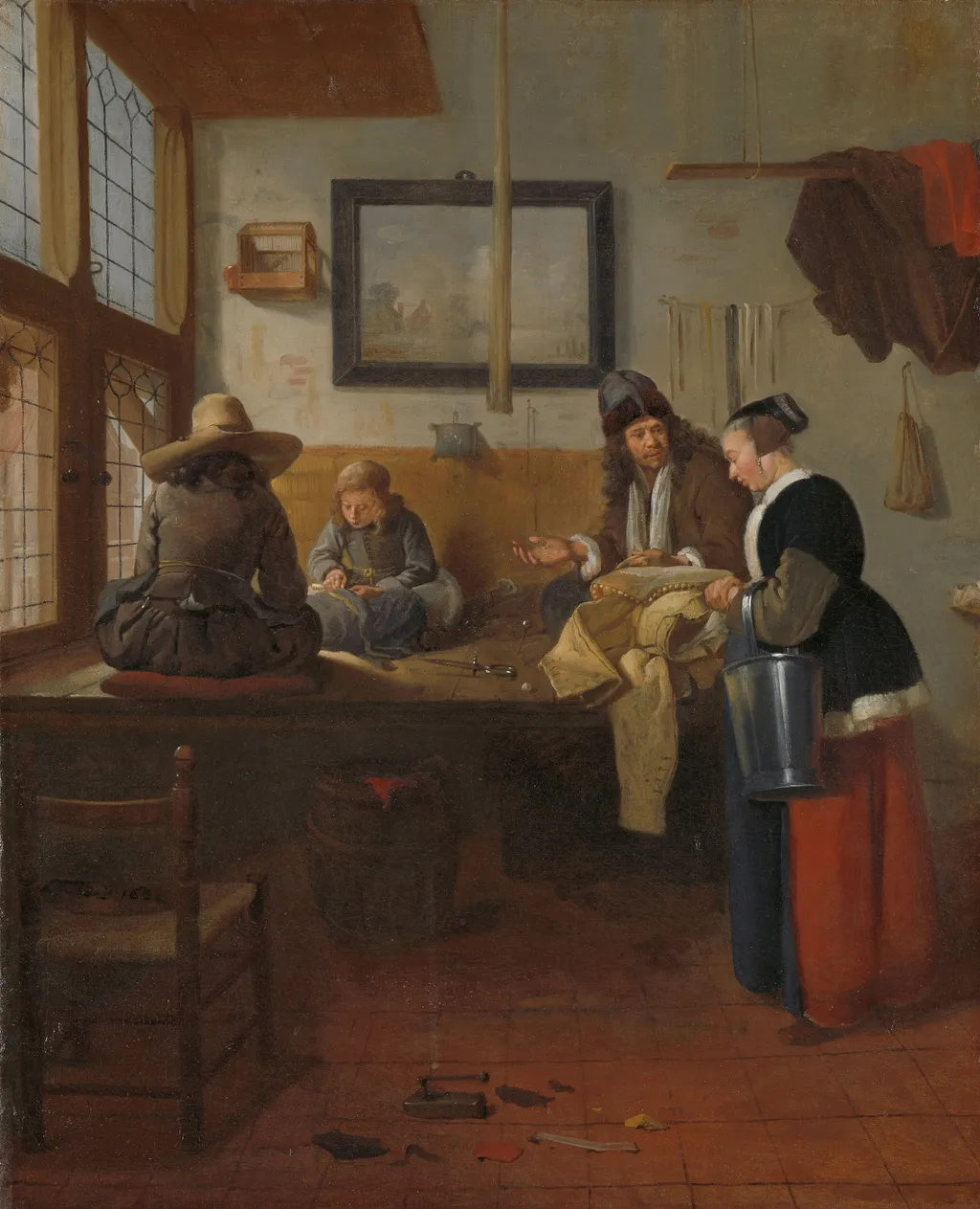
The Tailor’s Workshop is an oil painting by the Dutch Golden Age artist Quirijn van Brekelenkam. It dates from 1661 and is held in the collection of the Rijksmuseum.
About this work
Overview
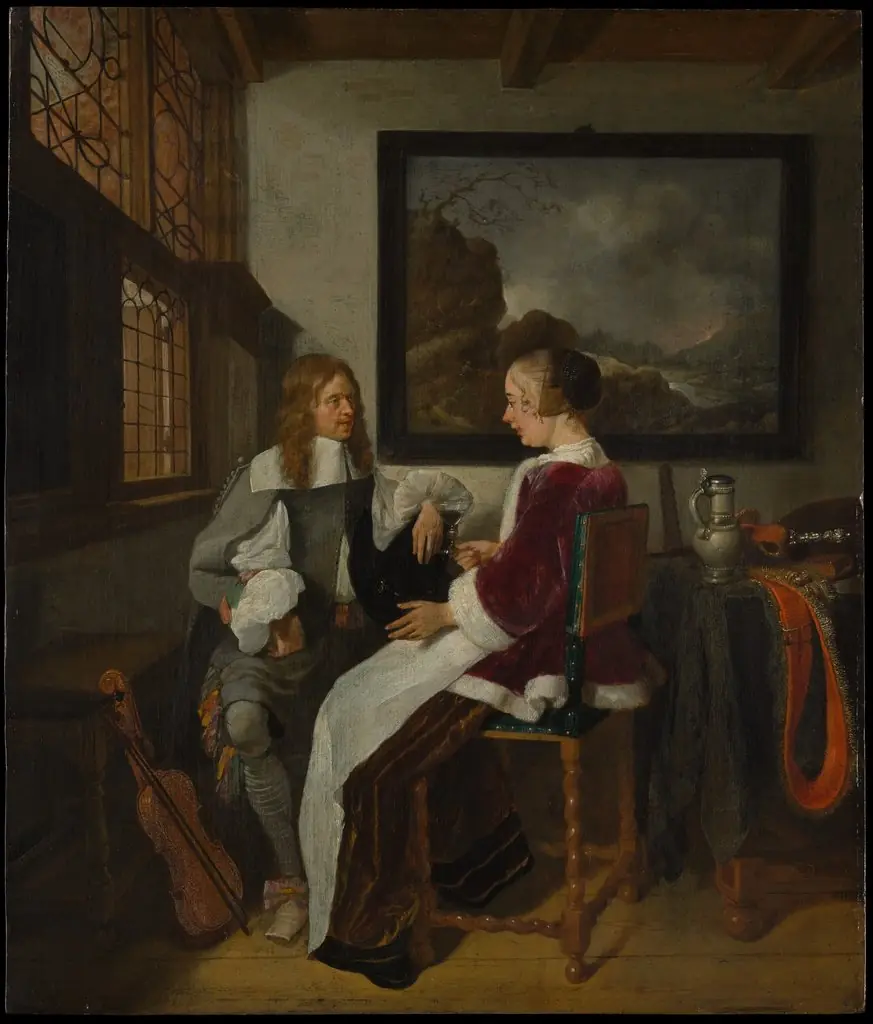
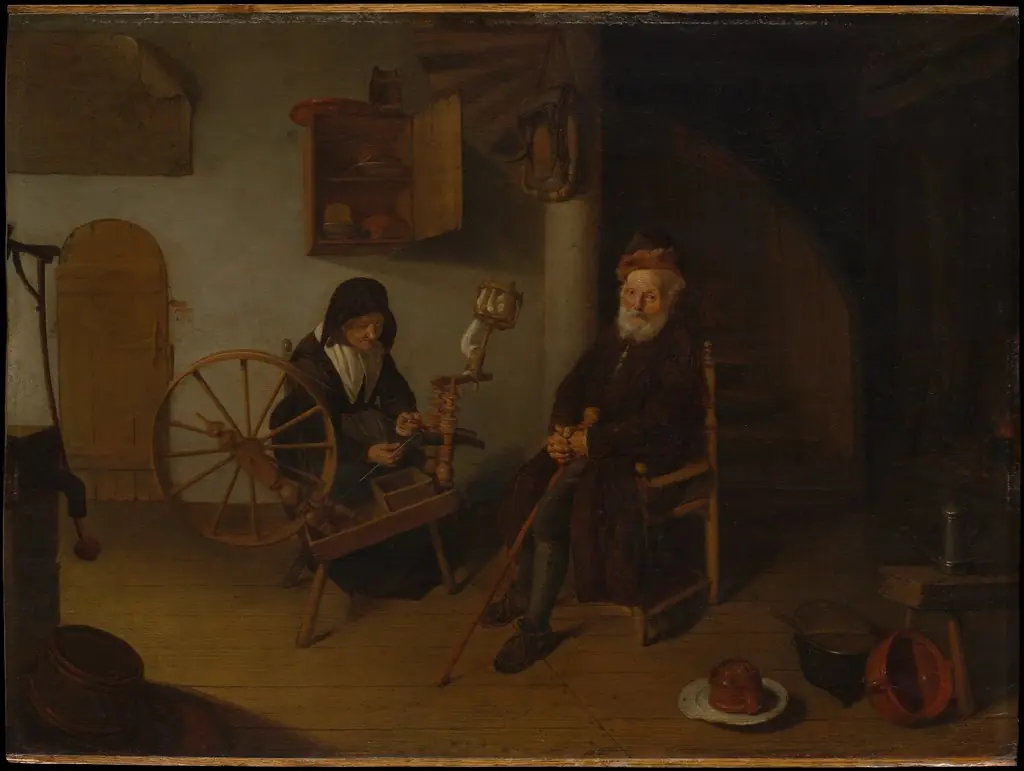
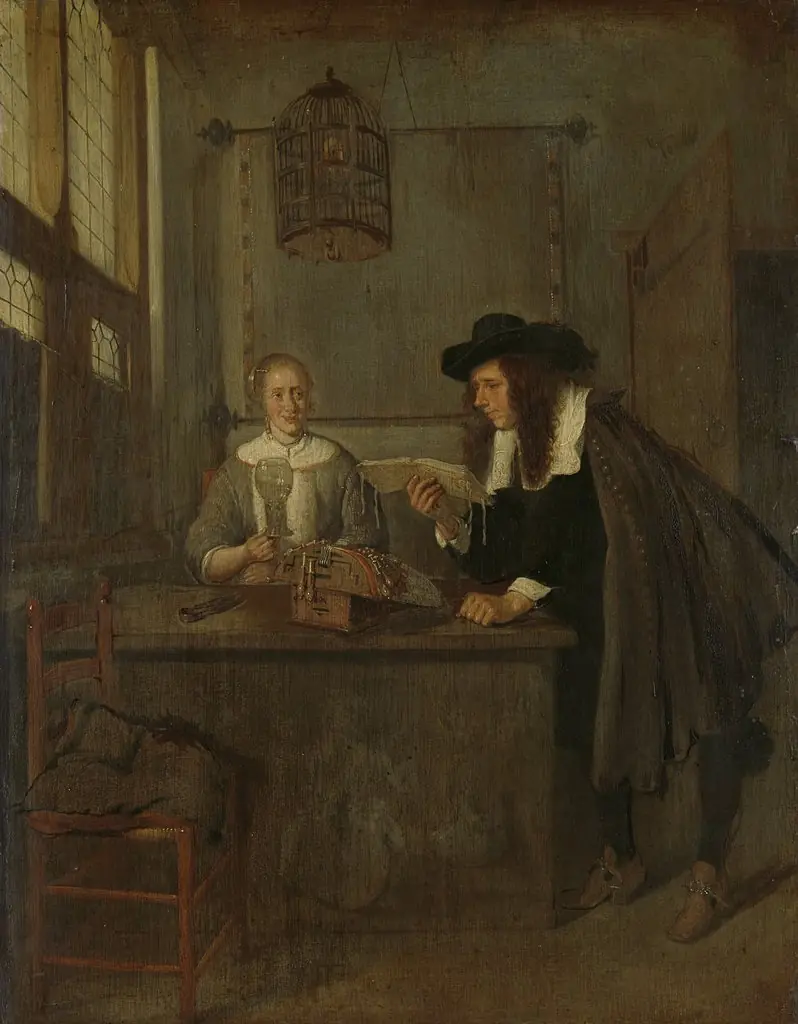
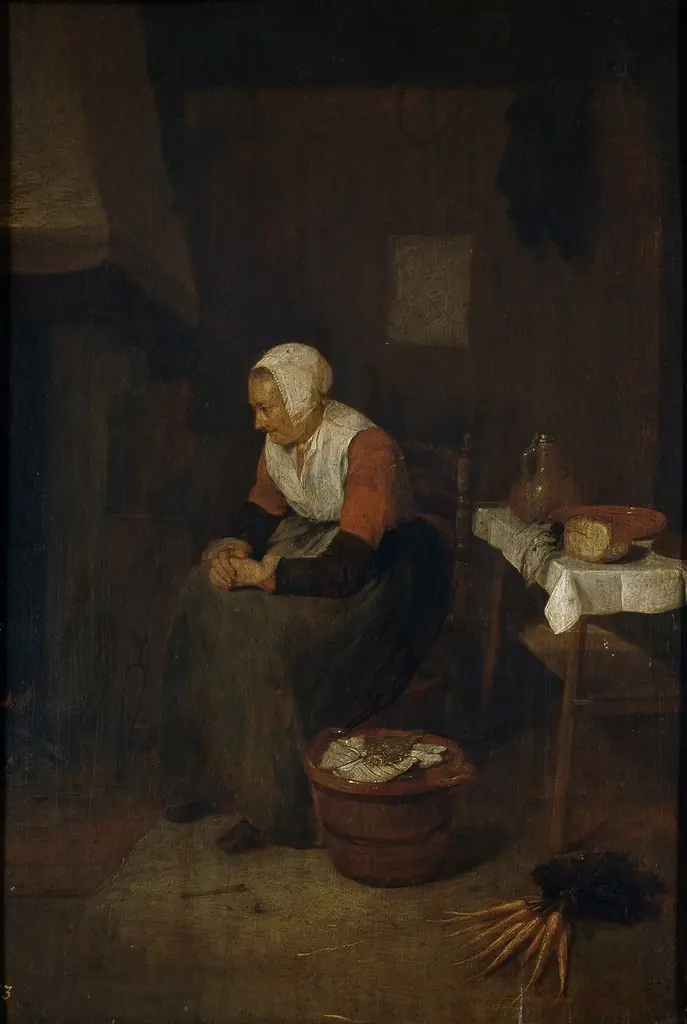
Quirijn van Brekelenkam's The Tailor’s Workshop, painted in oil in 1661, offers a glimpse into 17th-century Dutch daily life. This genre painting, characteristic of the artist's output, captures an intimate scene within a domestic setting. It exemplifies the detailed observation and narrative focus prevalent in Dutch art during the Golden Age, presenting a quiet moment of labor and interaction.
Subject & Meaning
The tools of the trade and the focused attention of the figures underscore the authenticity of this domestic labor scene.
The painting portrays four figures in a humble, somewhat cluttered workshop. A tailor occupies the central space, intently working on fabric, while a child observes him closely. A woman stands near a table, and another man sits by a window, adding to the sense of a shared, everyday environment. The tools of the trade and the focused attention of the figures underscore the authenticity of this domestic labor scene.
Technique & Style
Brekelenkam, a student of Gerard Dou, demonstrates the meticulous approach of the Leiden fijnschilders movement. The artist employs oil paint to render fine details, from the textures of the brick floor and wooden walls to the small objects hanging on pegs. Warm light and subtle shadows enhance the scene's depth and atmosphere, creating a sense of coziness and lived-in reality, a technique reminiscent of chiaroscuro.
Context
Created during the Dutch Golden Age, a period marked by a burgeoning art market and a demand for scenes of everyday life, The Tailor’s Workshop reflects a popular artistic trend. Genre painting, depicting ordinary people engaged in common activities, resonated with the tastes of the prosperous Dutch burghers. Brekelenkam contributed significantly to this tradition, specializing in small-scale domestic interiors that offered viewers relatable narratives.
History & Provenance
This oil painting, completed in 1661, is a notable example of Quirijn van Brekelenkam's contribution to Dutch genre art. It has since become part of the esteemed collection of the Rijksmuseum, where it continues to be preserved and exhibited. Its presence there allows contemporary audiences to appreciate the intricate details and narrative charm characteristic of 17th-century Dutch domestic scenes.
Own this work as a print
Artist & collection
Artist
Quirijn or Quiringh Gerritsz van Brekelenkam (1622/29, Zwammerdam – 1669/79, Leiden) was a Dutch Baroque genre painter.