Artwork
Orientală
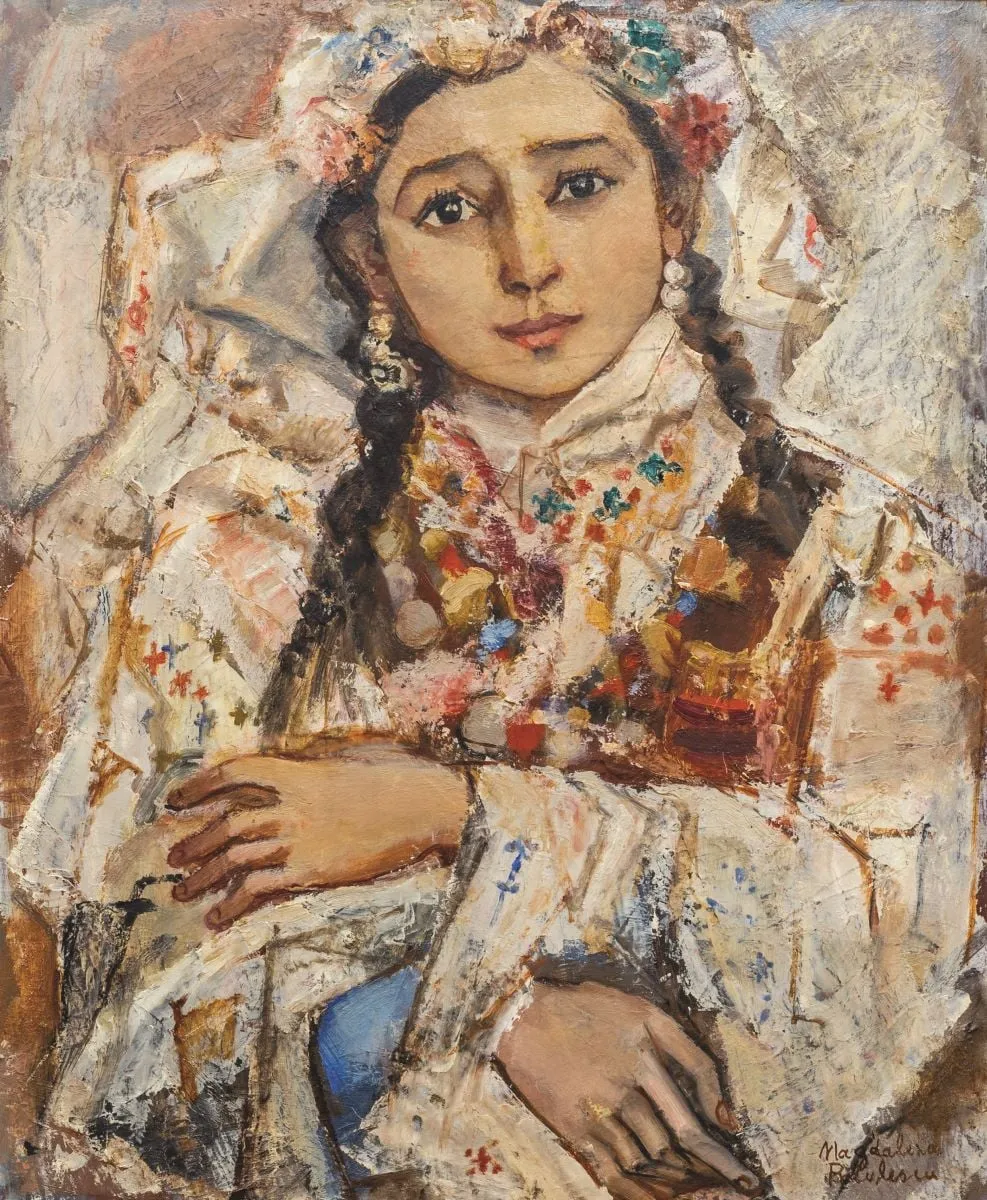
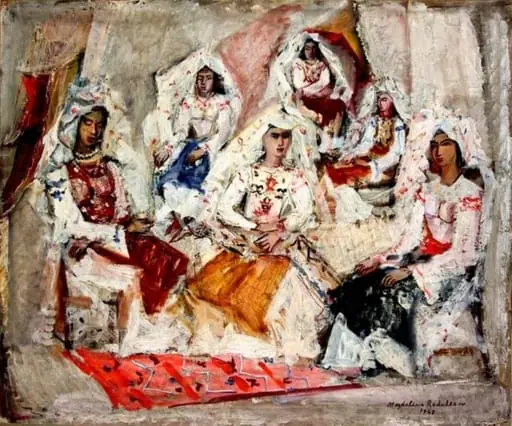
Orientală is an unspecified painting by Magdalena Rădulescu. It dates from 1952 and is held in the collection of the Bucharest Municipality Museum.
About this work
Overview
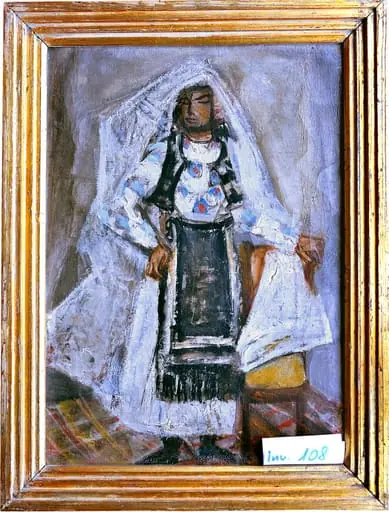
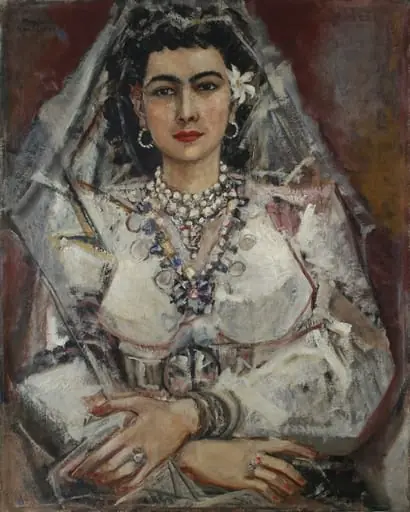
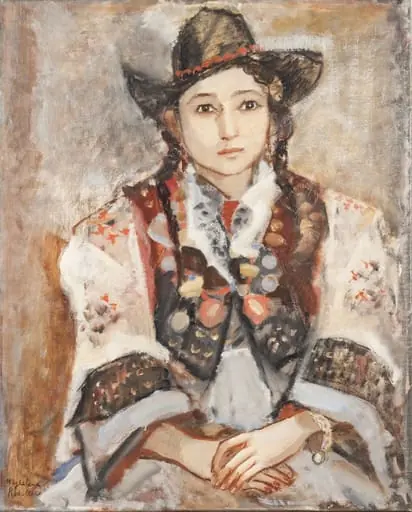
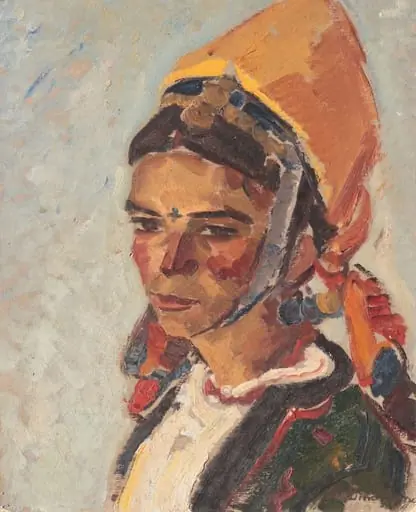
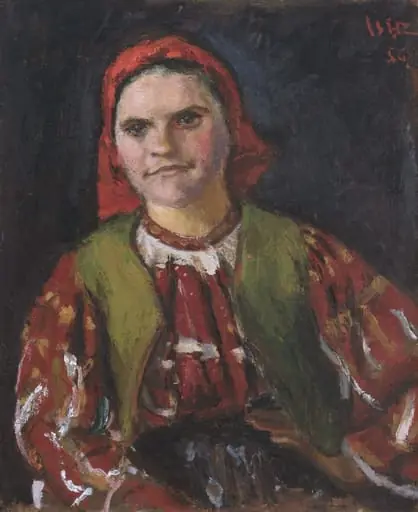
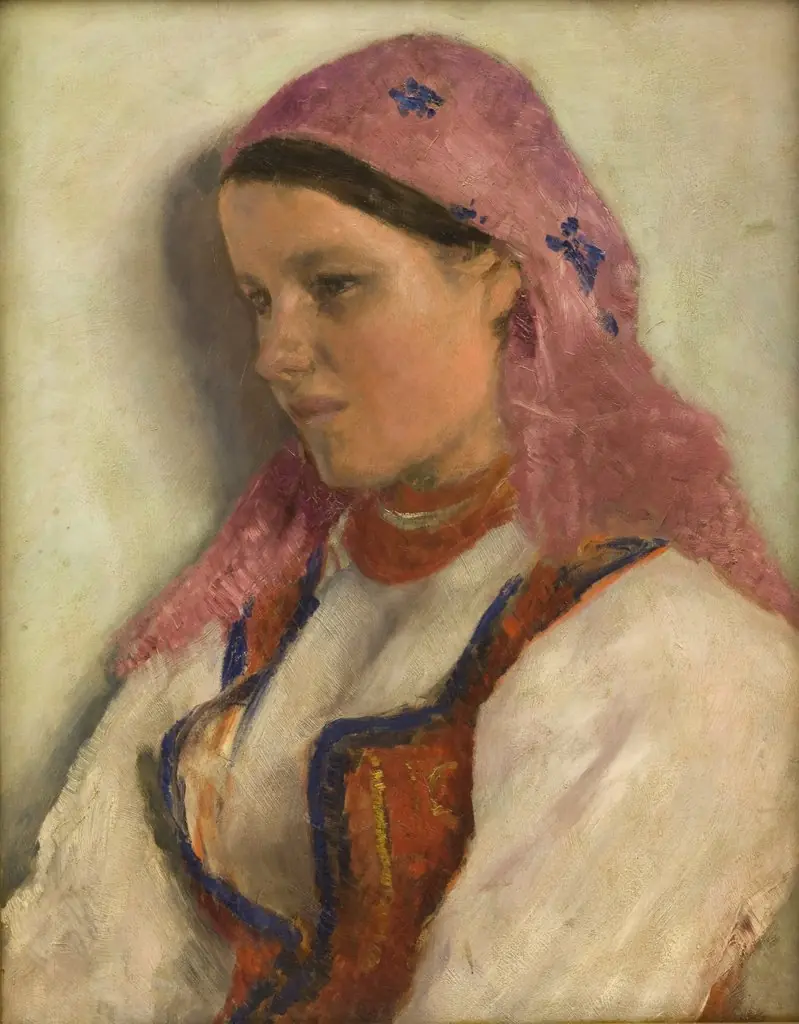
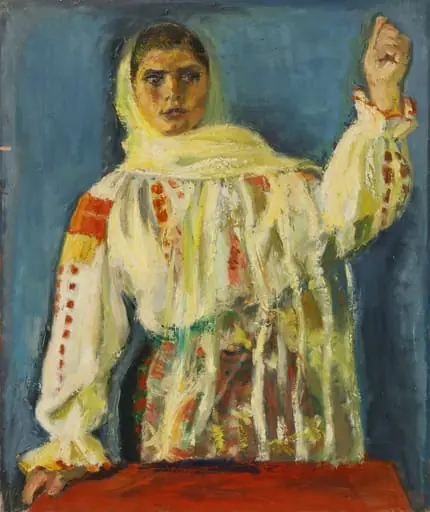
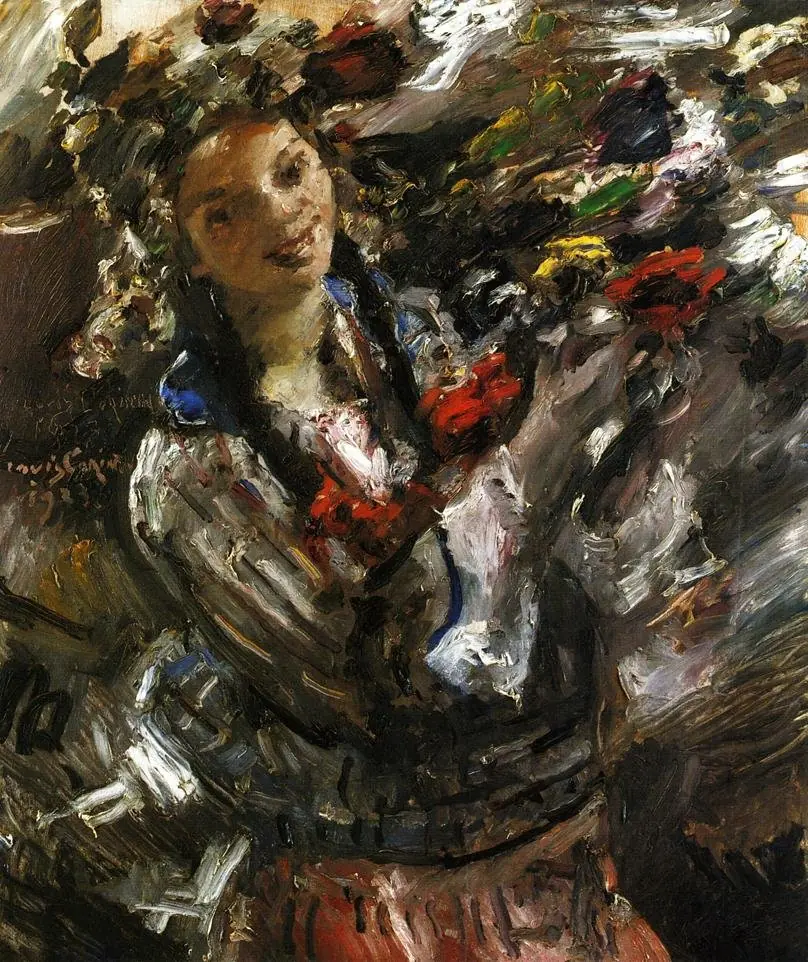
Created around 1952 by Romanian painter Magdalena Rădulescu, Orientală is part of the collection of the Museum of Ethnography. The work is an oil image that presents a solitary female figure against an abstracted backdrop, reflecting the artist’s interest in combining portraiture with expressive surface treatment.
Subject & Meaning
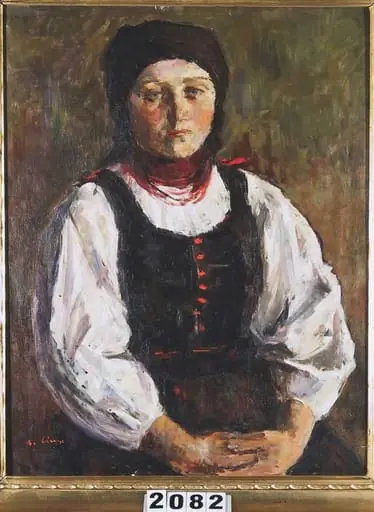
The central figure is a young woman with dark hair, a composed expression, and a white collar framing her face. She wears a patterned dress marked by red and blue spots, her hands resting calmly in her lap. The serene demeanor suggests introspection, while the surrounding chaos of brushwork may hint at an inner tension between order and disorder.
Technique & Style
This contrast between precise modeling and loose abstraction creates a dynamic visual tension characteristic of mid‑20th‑century Romanian modernism.
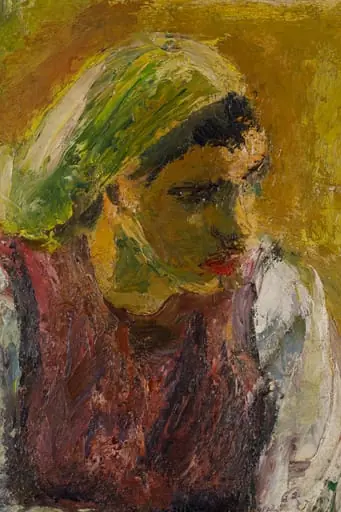
Rădulescu employs a vigorous impasto technique, applying paint in thick, textured strokes that remain visibly layered on the canvas. The facial features are rendered with clarity, whereas the clothing and background dissolve into blurred, gestural marks. This contrast between precise modeling and loose abstraction creates a dynamic visual tension characteristic of mid‑20th‑century Romanian modernism.
History & Provenance
The painting entered the Museum of Ethnography’s holdings sometime after its creation, though precise acquisition details remain undocumented. Its presence in an ethnographic institution underscores the work’s relevance to cultural representation, linking a personal portrait to broader themes of identity and regional aesthetics within the post‑war Romanian art scene.
Artist & collection

Artist
Magdalena Rădulescu was a Romanian modernist painter and illustrator. She was known for her symbolist and expressionist paintings, inspired by Romanian traditions and folklore. Rădulescu lived most of her life in…