Artwork
Afterglow
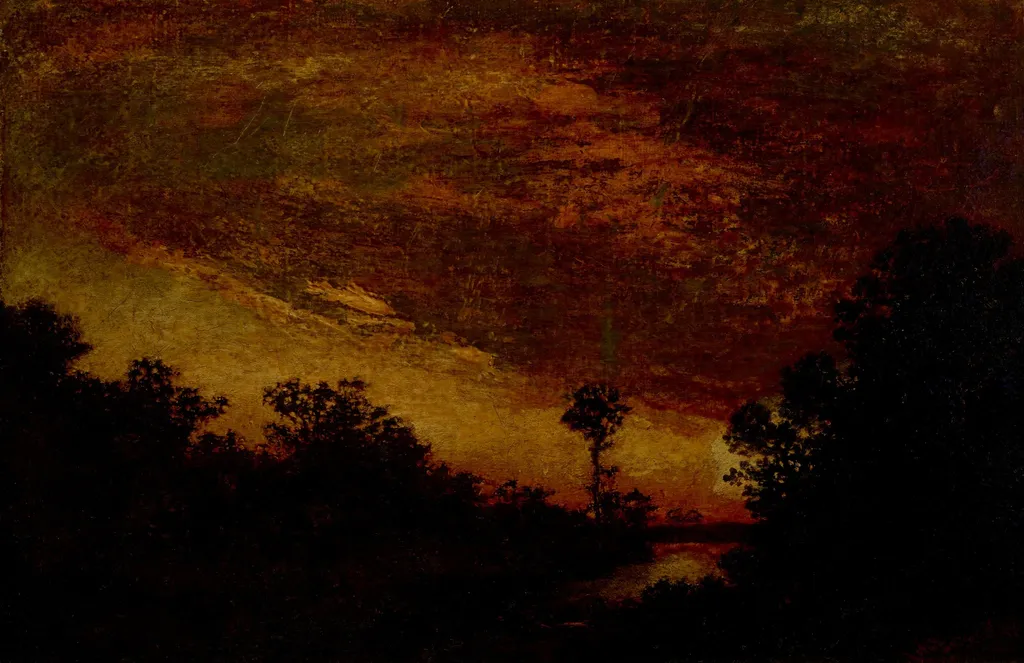
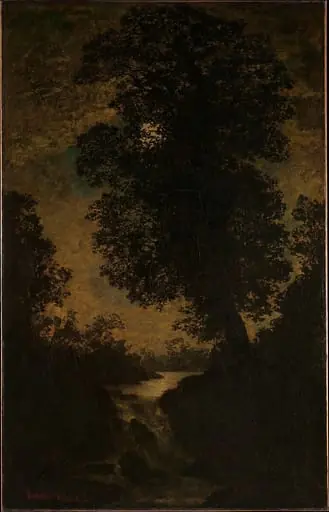
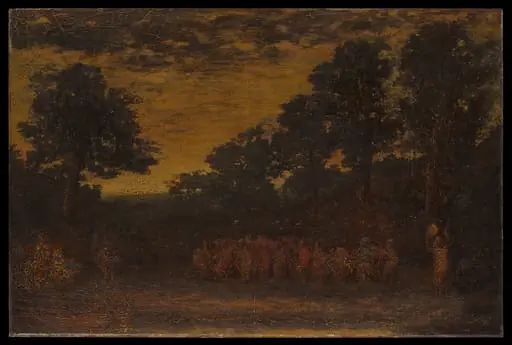
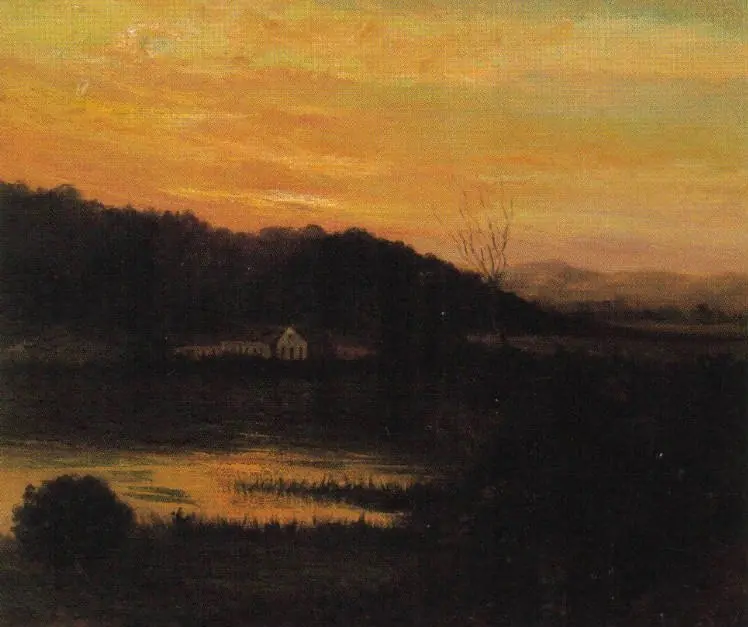
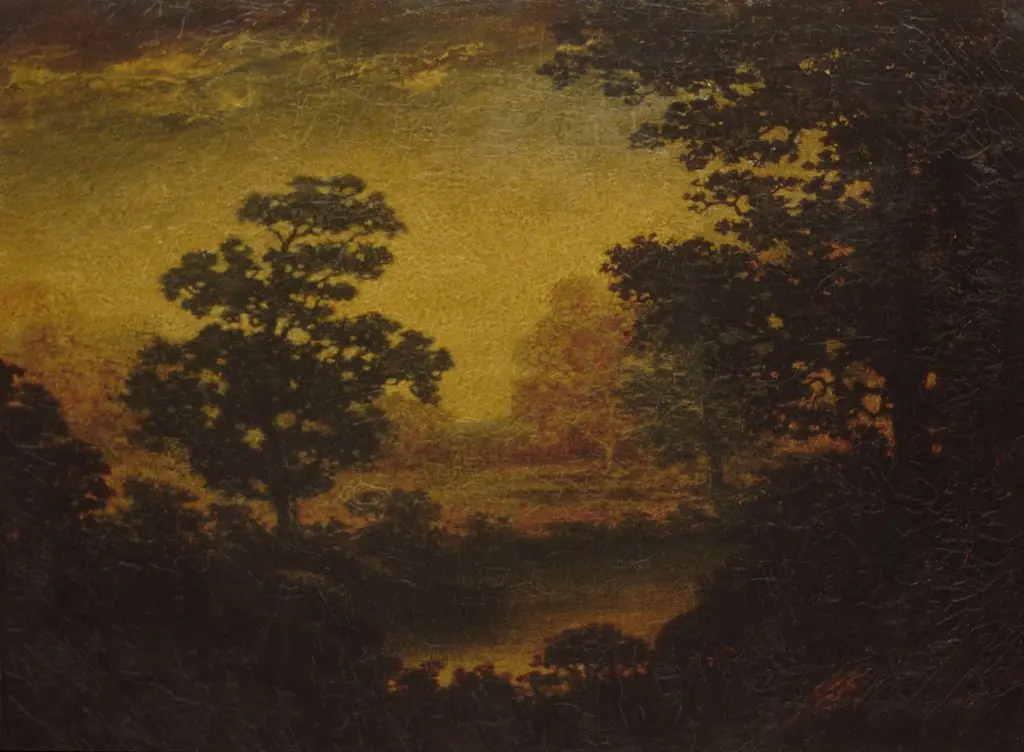
Afterglow is an oil painting by the American Impressionist artist Ralph Albert Blakelock. It dates from 1893 and is held in the collection of the Museum of Fine Arts, Houston.
About this work
Overview
It depicts a quiet, twilight landscape and is part of the permanent collection at the Museum of Fine Arts, Houston.
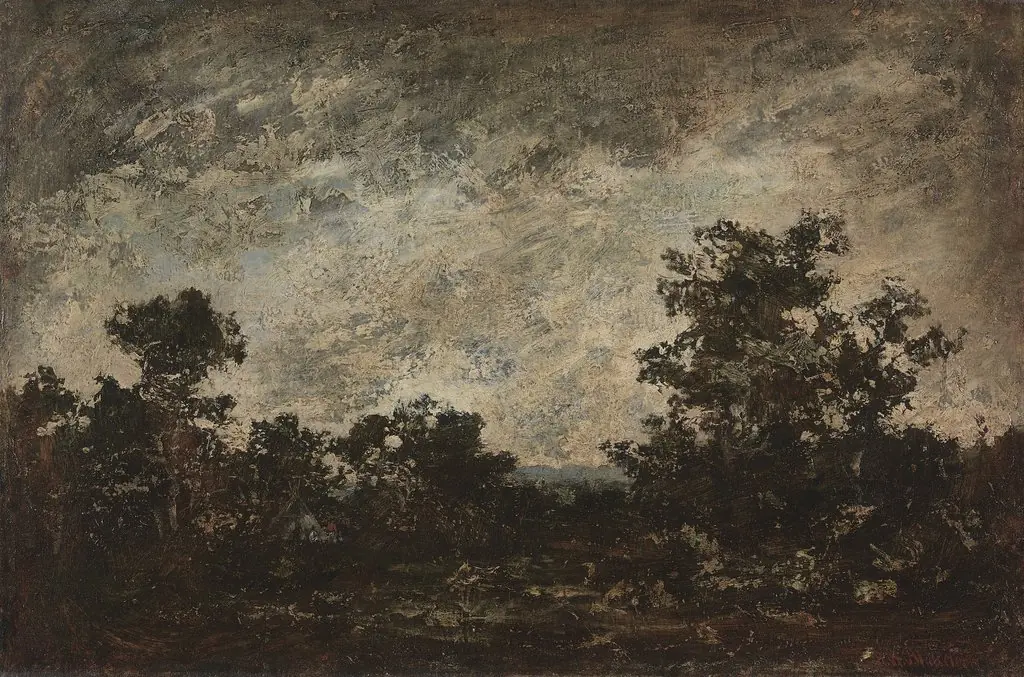
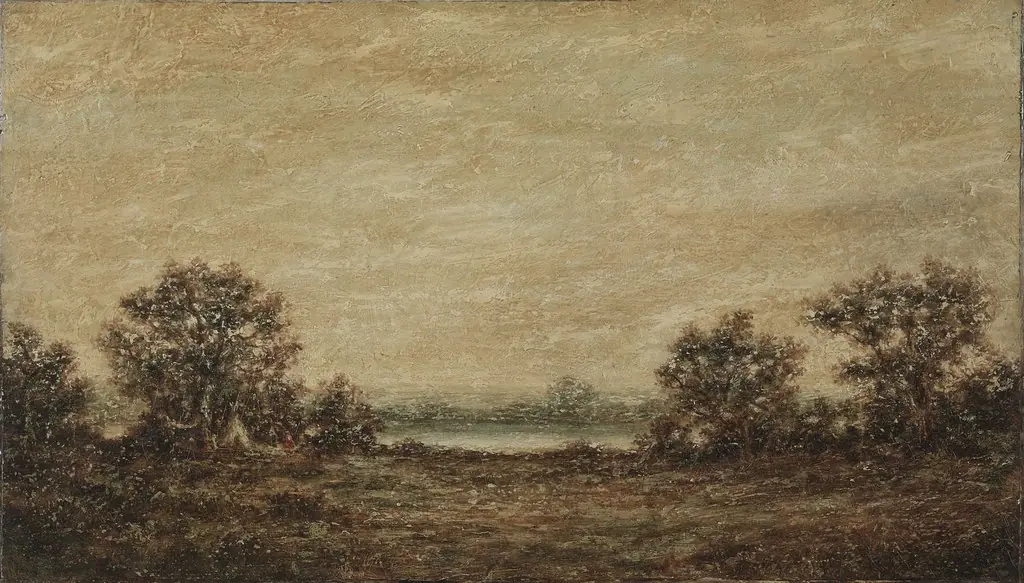
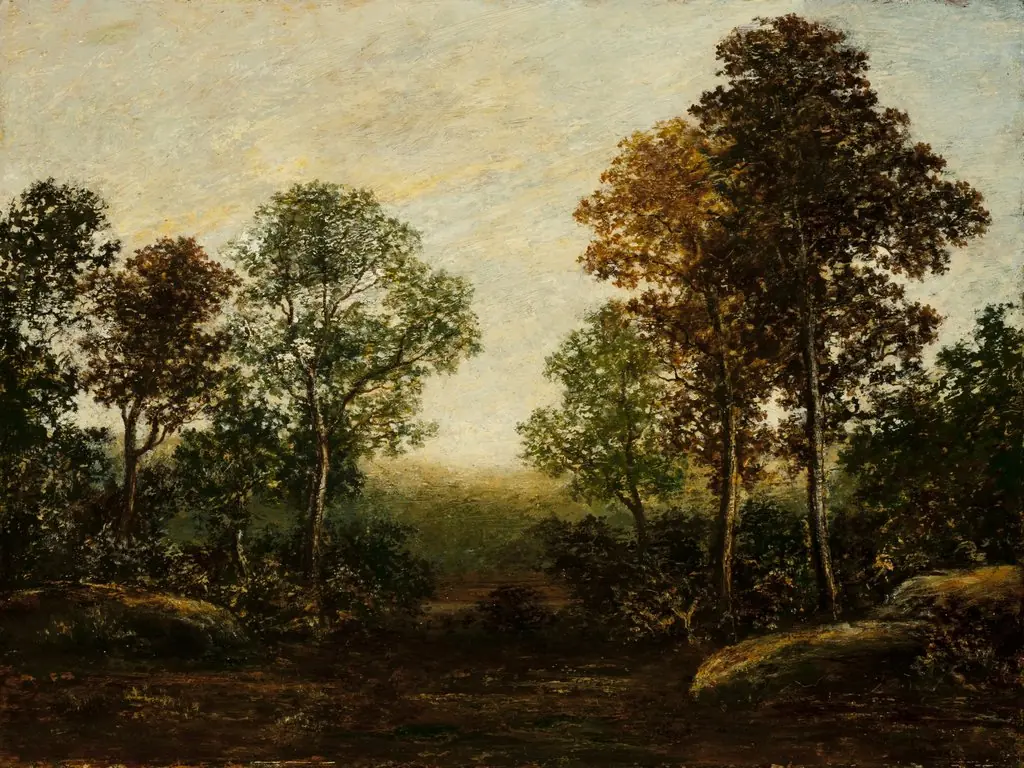
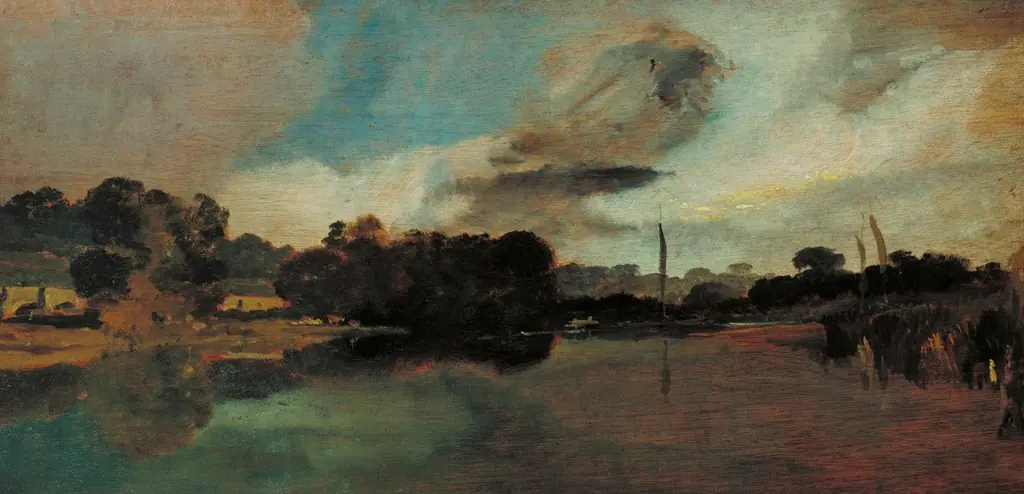
Afterglow is an oil painting completed around 1893 by American artist Ralph Albert Blakelock. It depicts a quiet, twilight landscape and is part of the permanent collection at the Museum of Fine Arts, Houston. The work exemplifies Blakelock’s interest in atmospheric effects and emotional tone, rendered through layered brushwork and a restrained palette dominated by warm hues. Its composition avoids narrative detail in favor of mood.
Subject & Meaning
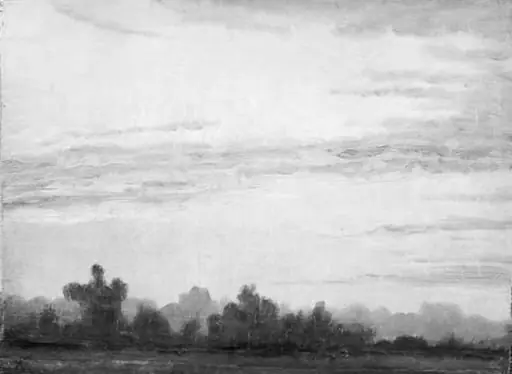
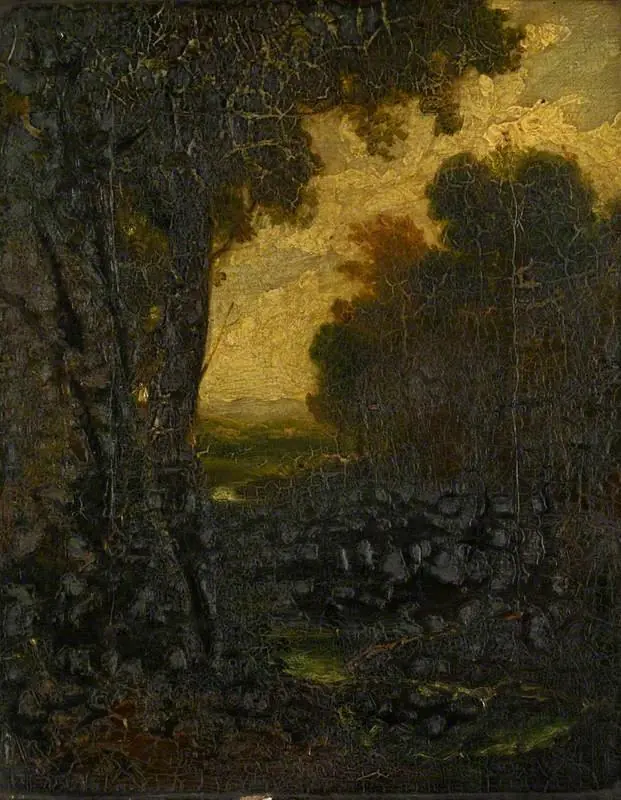
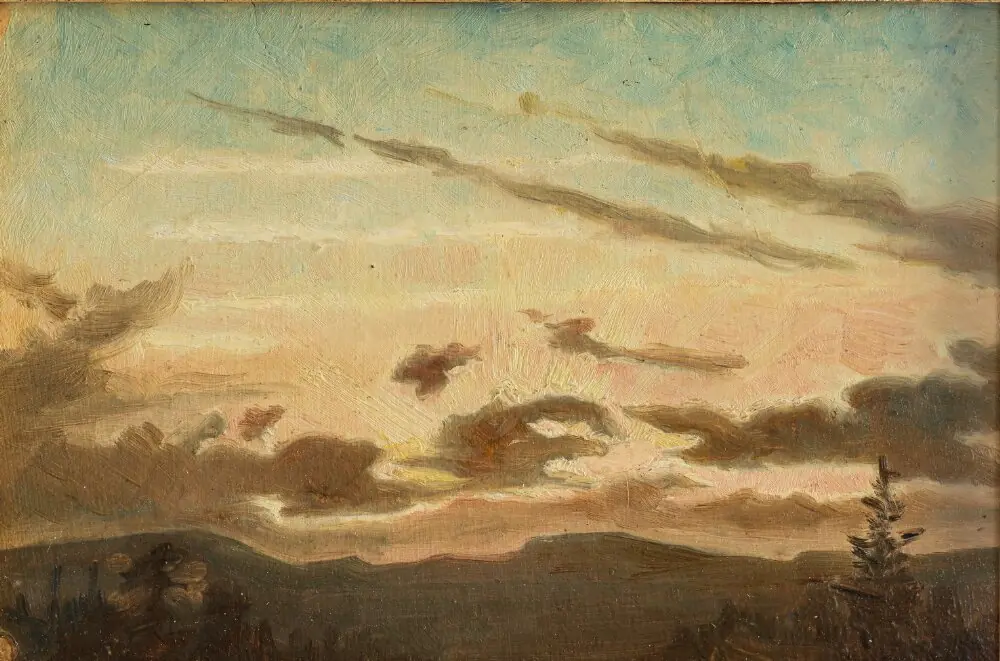
The painting presents a solitary woodland scene at dusk, with tall trees forming dark silhouettes against a glowing sky. A faint reflection of light on distant water suggests a quiet pond or stream. There is no human presence, and the absence of detail invites a meditative response. The work conveys stillness and transience, reflecting a Romantic sensibility toward nature as a space for introspection.
Technique & Style
Blakelock applied oil paint in thick, textured strokes, building up the sky with layered glazes to achieve luminous gradations of orange, yellow, and pale blue. The foreground trees are rendered with minimal detail, using dark, broad strokes to contrast with the radiant horizon. The brushwork is expressive yet controlled, emphasizing atmosphere over precise form, aligning with Symbolist and Luminist tendencies of the period.
History & Provenance
Created during a period of personal hardship for Blakelock, Afterglow was likely painted in the early 1890s while he lived in rural New York. It entered the Museum of Fine Arts, Houston’s collection in the mid-20th century, having passed through several private hands after its completion. Its survival and preservation reflect growing institutional interest in American tonalist painting during the 1950s and 60s.
Context
In the late 19th century, American artists increasingly turned to landscape as a vehicle for emotional expression rather than topographical record. Blakelock’s work, including Afterglow, emerged alongside the Tonalist movement, which favored subdued palettes and poetic ambiguity. His style diverged from the detailed realism of the Hudson River School, favoring mood over topography and light over structure.
Legacy
Afterglow remains a representative example of Blakelock’s mature style and the broader Tonalist tradition in American art. Though not widely known during his lifetime, his work gained renewed attention in the 20th century for its emotional resonance and technical experimentation. The painting continues to be studied for its subtle interplay of color, light, and silence in landscape representation.
Own this work as a print
Artist & collection
Artist
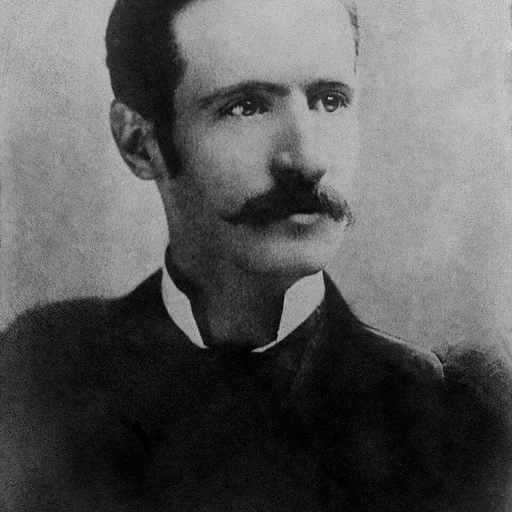
Ralph Albert Blakelock was a romanticist American painter known primarily for his landscape paintings related to the Tonalism movement.