Artwork
Révolution, Famille désespérée
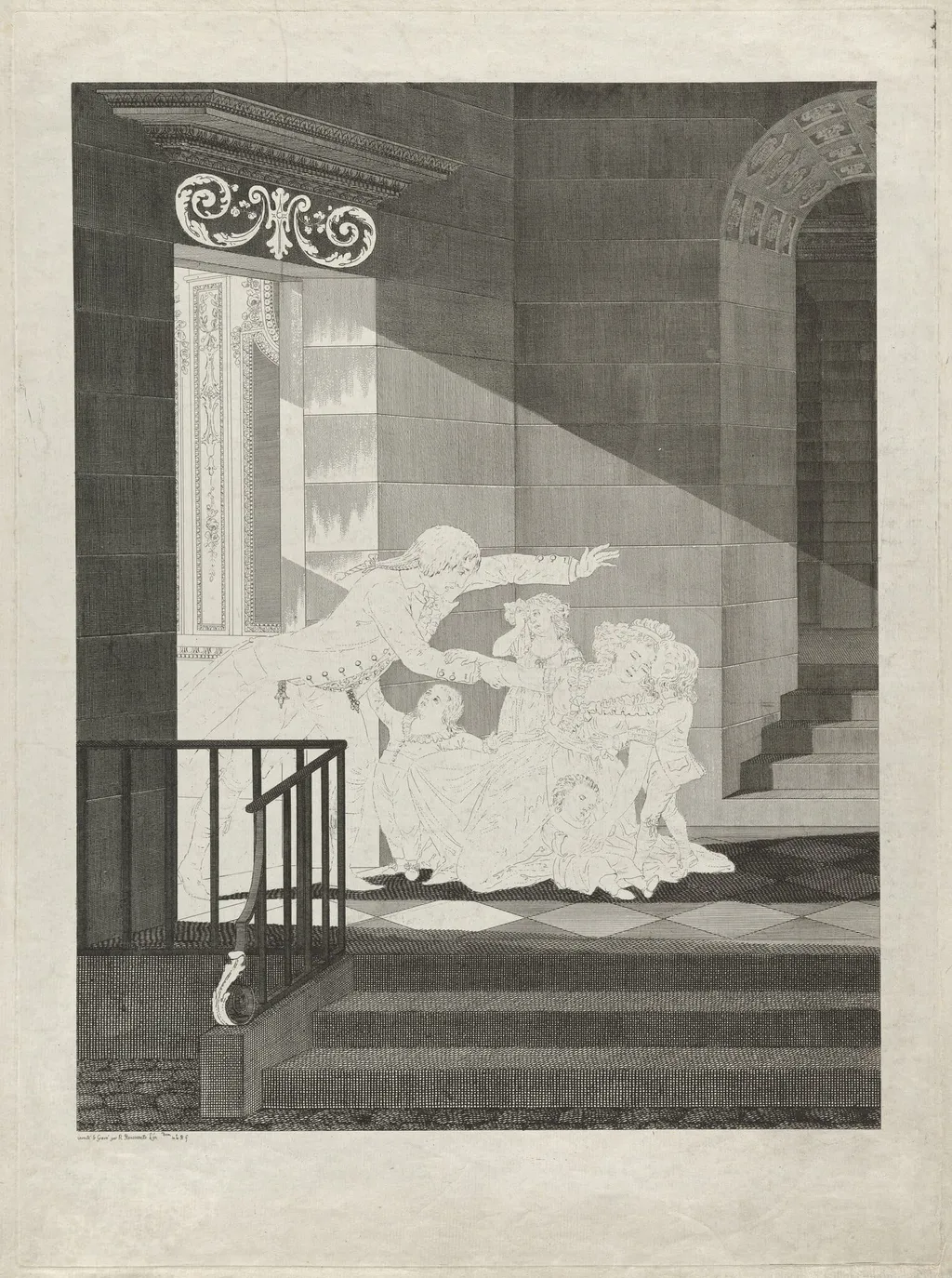
Révolution, Famille désespérée is an ink print by the Romanticist artist Pierre Nicolas Ransonnette. It dates from 1800 and is held in the collection of the National Gallery of Art.
About this work
Overview
Révolution, Famille désespérée is a print executed in 1800 by French artist Pierre‑Nicolas Ransonnette. The work is an etching and engraving on a light blue‑green laid paper, preserved as a proof. It is part of the collection of the National Gallery of Art in Washington, D.C., where it is displayed as an example of early‑19th‑century graphic art.
Subject & Meaning
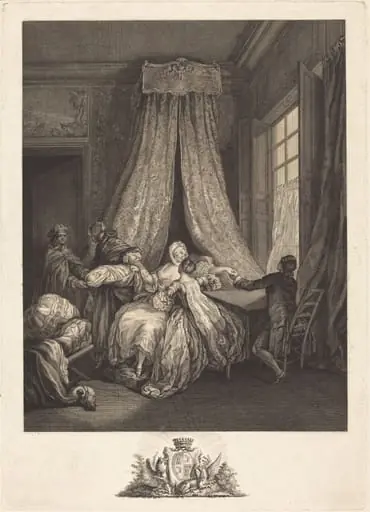
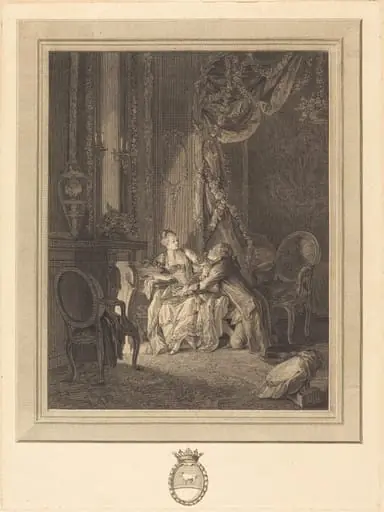
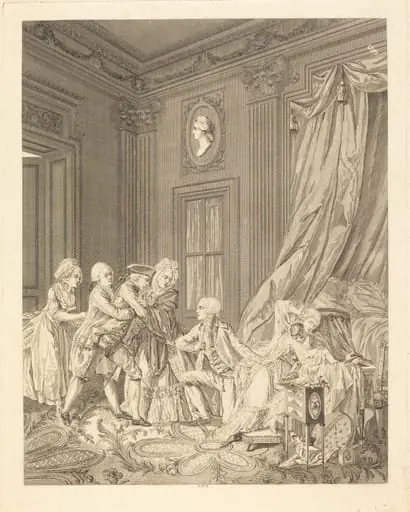
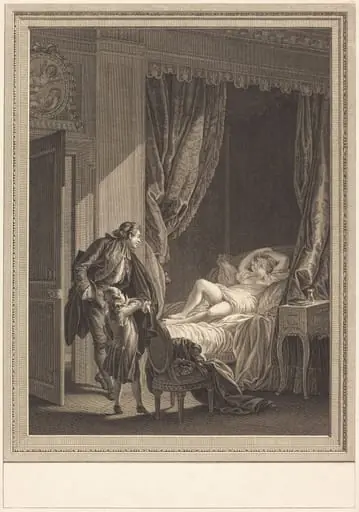
The image portrays a family caught in a moment of acute distress. A man in period costume stretches his arms outward, seemingly attempting to shield or restrain a woman and three children who appear panicked and frightened. The composition suggests a narrative of upheaval, evoking the personal toll of revolutionary turmoil on ordinary households.
Technique & Style
Ransonnette combines etching and engraving to achieve a range of line qualities, from bold, decisive strokes that define the figures to delicate hatching that models the stone wall and staircase background. The contrast between deep shadows and lighter areas heightens the sense of tension, while the use of a blue‑green paper adds a subtle tonal nuance uncommon in contemporary prints.
History & Provenance
Created at the turn of the 19th century, the proof entered the National Gallery of Art’s holdings through a donation in the mid‑20th century. Documentation traces its ownership back to the artist’s estate, with no record of intermediate sales, indicating that the print remained largely within private or institutional collections before its acquisition by the museum.
Context
The work emerges from the Romantic era’s fascination with dramatic, emotionally charged scenes, particularly those reflecting the social upheavals of the French Revolution. Ransonnette, known for his narrative prints, often depicted moments of crisis that resonated with contemporary audiences seeking visual representations of collective anxieties and individual suffering.
Artist & collection