Artwork
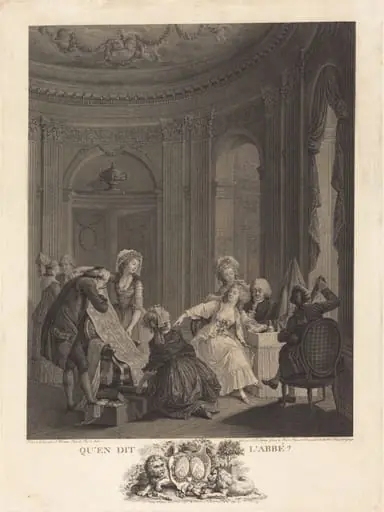
Qu'en dit l'Abbé?
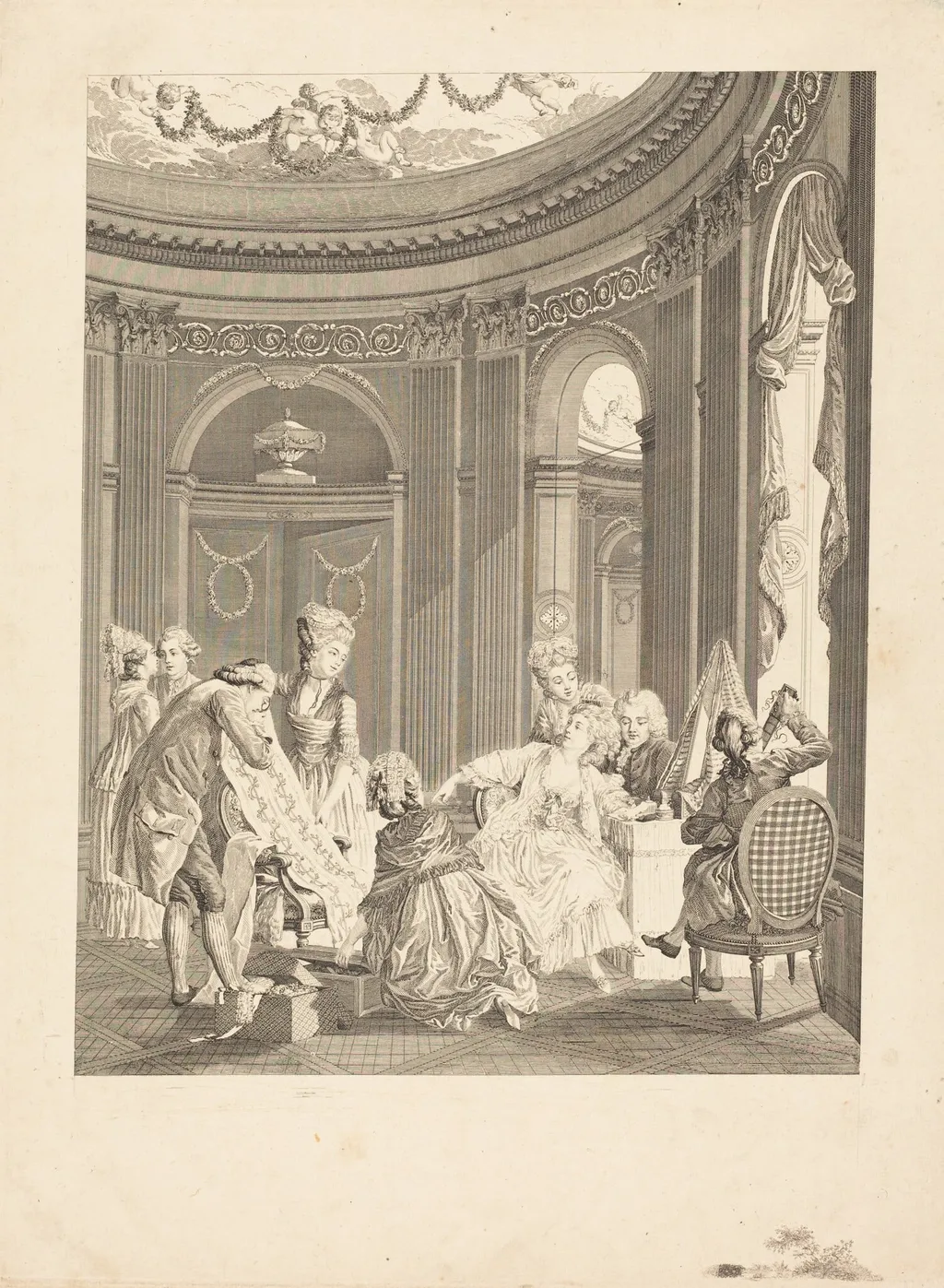
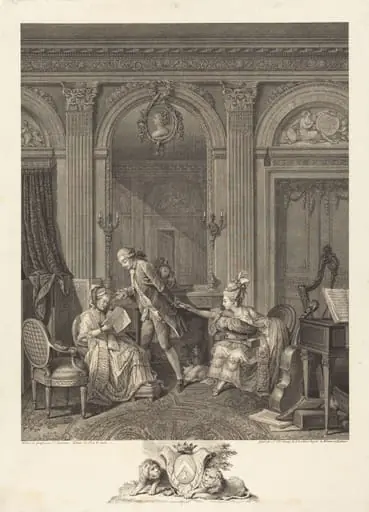
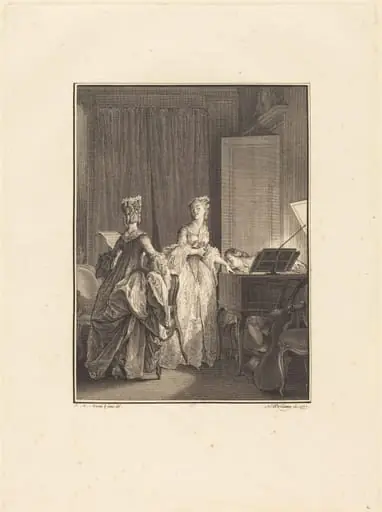
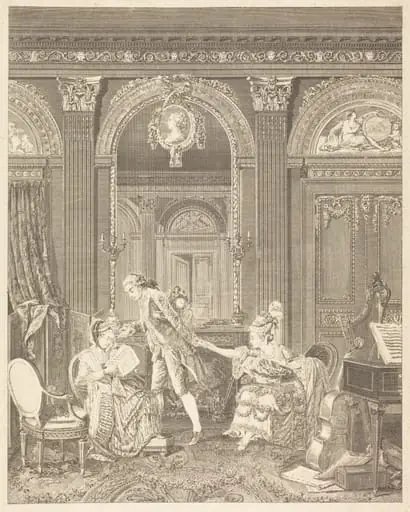
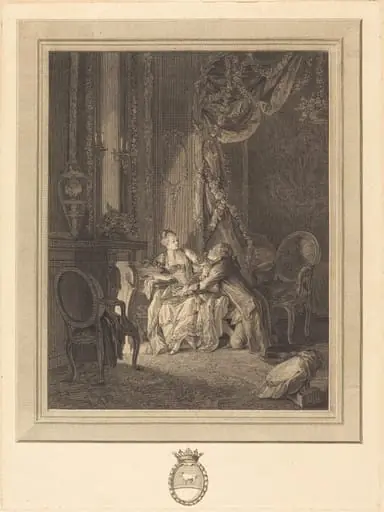
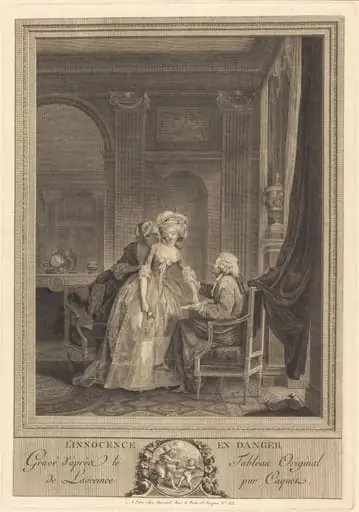
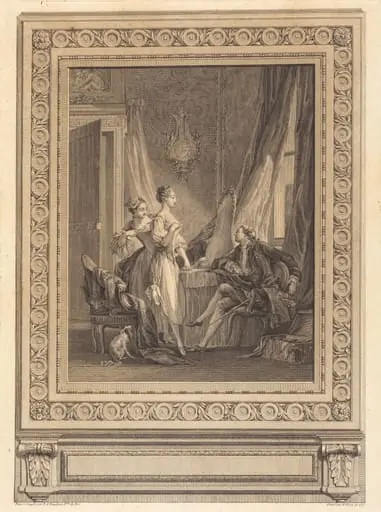
Qu'en dit l'Abbé? is an ink print by the Romanticist artist Nicolas Delaunay. It dates from 1788 and is held in the collection of the National Gallery of Art.
About this work
Overview
Its fine-line technique and intimate composition reflect the era’s fascination with refined domestic scenes, rendered with precision and subtle tonal variation.
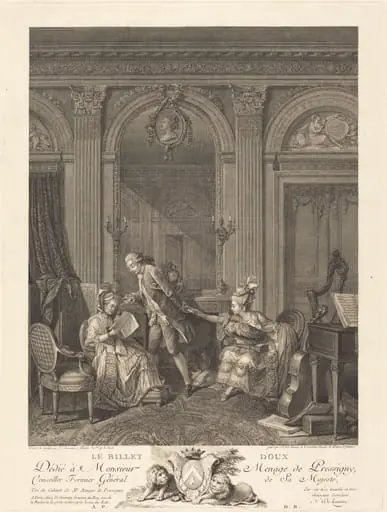
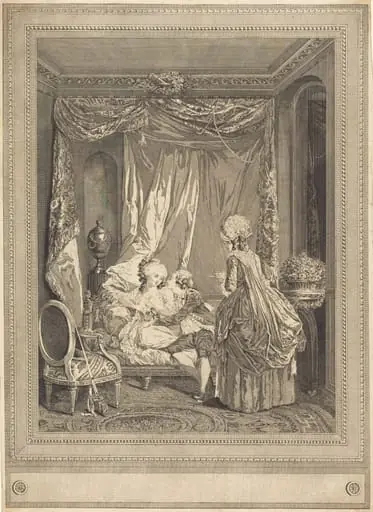
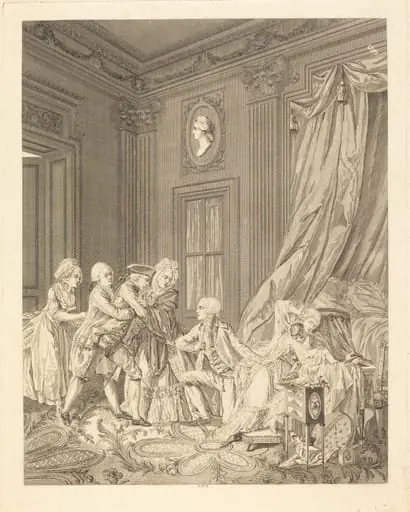
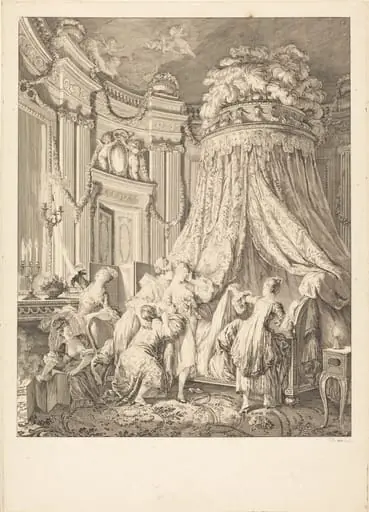
Qu'en dit l'Abbé? is an 1788 etching by Nicolas Delaunay, capturing a moment of aristocratic leisure in a lavishly furnished interior. The print belongs to the tradition of French graphic art that documented social rituals of the late Ancien Régime. Its fine-line technique and intimate composition reflect the era’s fascination with refined domestic scenes, rendered with precision and subtle tonal variation.
Subject & Meaning
The scene depicts a group of elegantly dressed individuals gathered in a salon, engaged in music and conversation. A violinist and harpist perform while others observe or converse, suggesting a cultivated evening of entertainment. The title, translating to 'What does the Abbot say?', hints at irony or social commentary, possibly alluding to the clergy’s presence in secular elite circles during a time of growing cultural tension.
Technique & Style
Delaunay employed etching to achieve delicate detail, using fine, controlled lines to render textures of silk, lace, and powdered wigs. Soft chiaroscuro models faces and fabrics, creating a warm, atmospheric glow. The composition is framed by architectural elements—columns, a chandelier, and a draped curtain—that direct focus toward the central group, characteristic of Rococo-influenced printmaking of the period.
History & Provenance
Created in 1788, the print emerged on the eve of the French Revolution, a time when depictions of aristocratic life were both popular and increasingly scrutinized. While its early ownership is undocumented, it likely circulated among collectors and artists familiar with the satirical and genre prints of the period, reflecting the visual culture of pre-revolutionary Paris.
Context
The image aligns with a broader trend in 18th-century French printmaking that illustrated the private lives of the upper classes. Such scenes, often published in albums or as standalone works, served as both entertainment and social documentation. The presence of music and elaborate dress underscores the importance of performance and appearance in elite social rituals during the late Enlightenment.
Legacy
Though not widely known today, Qu'en dit l'Abbé? exemplifies the skill and social observation of French etchers working in the decades before revolutionary upheaval. It preserves a visual record of a world on the brink of transformation, offering insight into the aesthetics and customs of a class whose influence would soon be dramatically redefined.
Artist & collection