Artwork
Christ Falling on the Way to Calvary
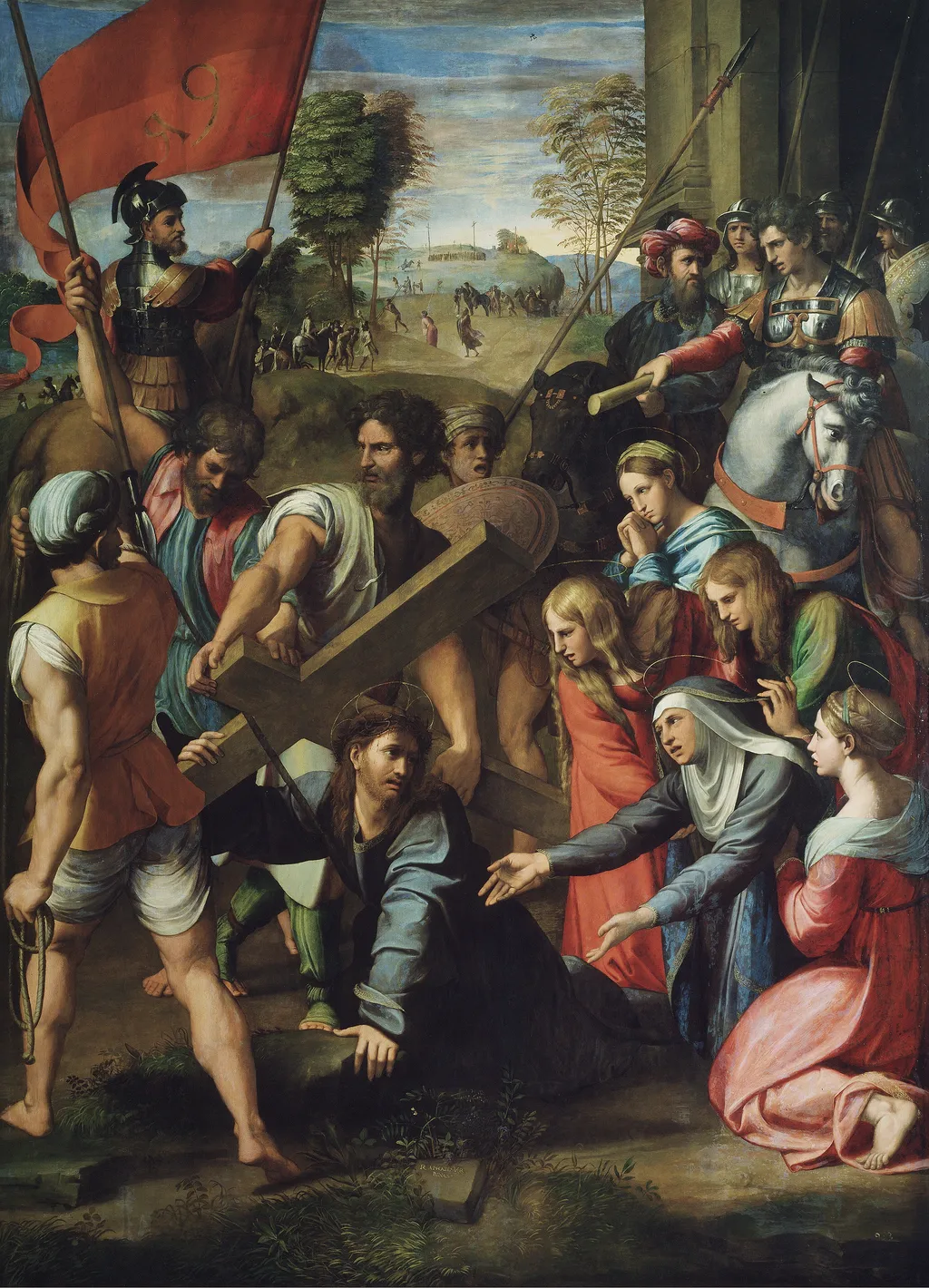
Christ Falling on the Way to Calvary is an oil painting by the High Renaissance artist Raphael. It dates from 1515 and is held in the collection of the Museo del Prado.
About this work
This painting shows Christ carrying the cross on his way to Calvary.
Raphael made it around 1515 using oil paint.
It now lives at the Museo del Prado in Madrid.
The scene marks a quiet but heavy moment in Christ’s journey.
Raphael was still changing his style when he painted this.
That’s why experts call it important for his growth.
Look up the Museo del Prado next.
Overview
Christ Falling on the Way to Calvary, also referred to as Lo Spasimo or Il Spasimo di Sicilia, is an oil painting executed by Raphael around 1514–1516. The work measures roughly 267 × 199 cm and is part of the collection of the Museo del Prado in Madrid. It occupies a pivotal position in the artist’s oeuvre, marking a transitional phase in his artistic development.
Subject & Meaning
The composition captures the moment when Jesus, burdened with the cross, stumbles on the path to Golgotha. Raphael isolates the figure against a subdued landscape, emphasizing the physical strain and spiritual weight of the episode. The subdued atmosphere conveys a sense of solemnity, inviting contemplation of the suffering inherent in the Passion narrative.
Technique & Style
Rendered in oil on canvas, the painting demonstrates Raphael’s experimentation with chiaroscuro and a more naturalistic handling of flesh and drapery. The softened contours and delicate modeling of light reflect a departure from his earlier, more linear approach, indicating an evolving synthesis of Venetian colorism and central Italian design.
History & Provenance
Created during Raphael’s Roman period, the work entered the Spanish royal collection in the 17th century before being transferred to the Prado Museum, where it remains on public display. Its acquisition history underscores the painting’s appeal to collectors who valued its devotional intensity and its role in tracing Raphael’s stylistic progression.
Context
The painting belongs to a broader tradition of Passion scenes popular in early 16th‑century Italy, yet Raphael’s treatment distinguishes itself through a focus on the solitary figure rather than a crowded narrative. This emphasis aligns with contemporary theological interests in personal meditation on Christ’s suffering.
Own this work as a print
Artist & collection
Artist
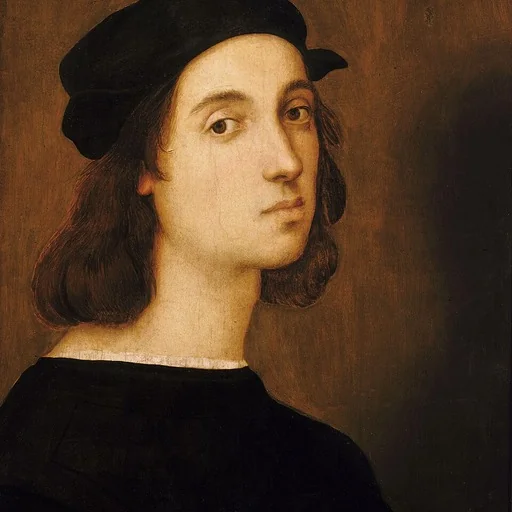
Raphael was born Raffaello Sanzio in Urbino on April 6, 1483, the son of Giovanni Santi, a painter and poet attached to the ducal court.