Artwork
Sistine Madonna
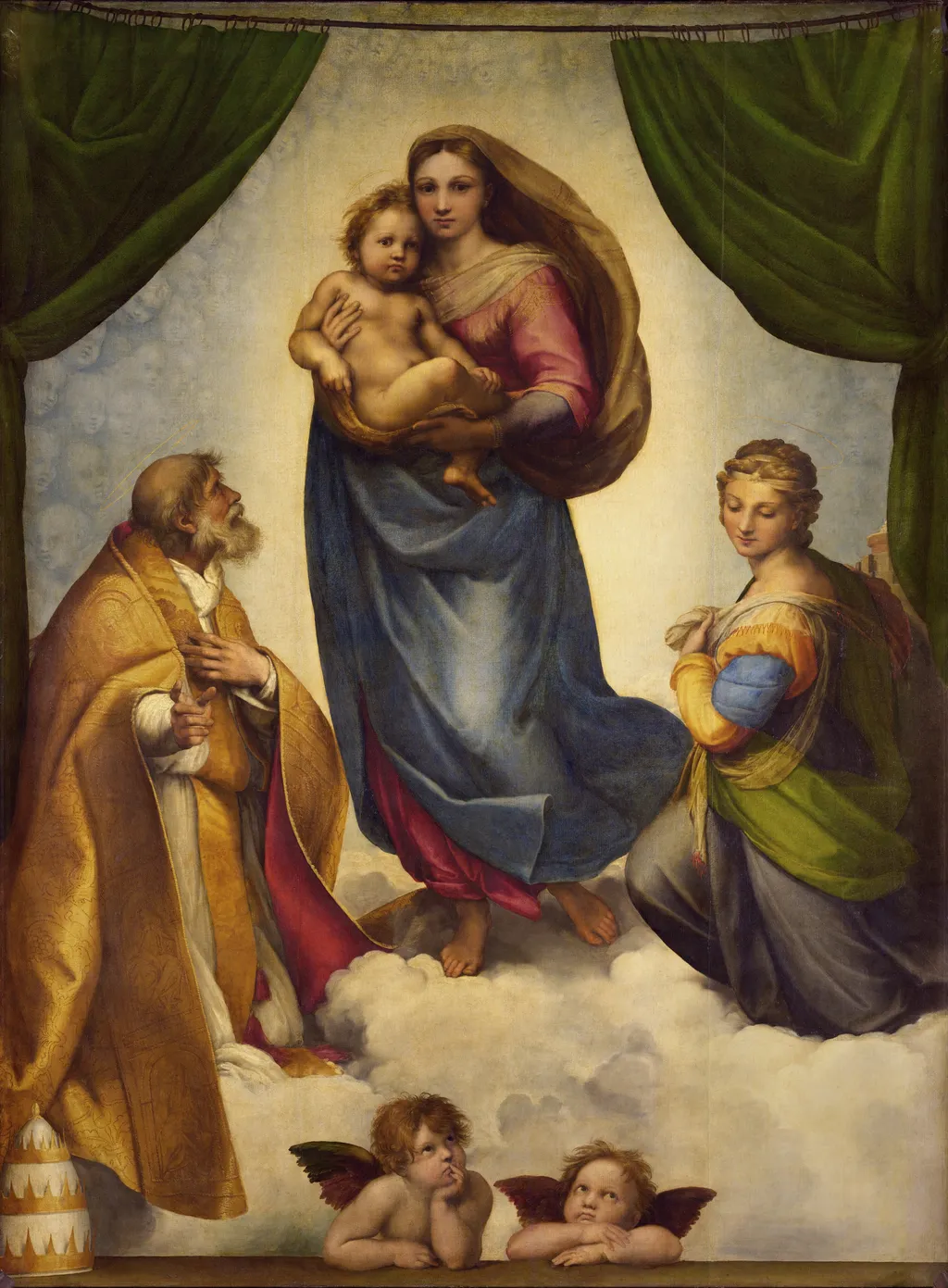
Sistine Madonna is an oil painting by the High Renaissance artist Raphael. It dates from 1512 and is held in the collection of the Staatliche Kunstsammlungen Dresden.
About this work
Overview
The Sistine Madonna, also known as the Madonna di San Sisto, is an oil painting executed by Raphael around 1513–1514. Commissioned by Pope Julius II in 1512 for the church of San Sisto in Piacenza, it belongs to the final series of Madonnas the artist produced before his death.
Subject & Meaning
The work depicts the Virgin Mary holding the infant Christ, flanked by two cherubic figures. The composition emphasizes the tender interaction between mother and child, a recurrent theme in Renaissance devotional art, intended to inspire piety among the church’s congregants.
Technique & Style
Rendered in oil on canvas, the painting showcases Raphael’s mature handling of light and color, with soft modeling of flesh and a luminous backdrop. The delicate brushwork and harmonious palette reflect the High Renaissance ideal of balanced, graceful forms.
History & Provenance
After its completion for San Sisto, the canvas remained in the church until the late 18th century, when it entered the collection of the Dresden Gallery. Its movement from Italy to Germany mirrors the broader European interest in Raphael’s late works.
Legacy
Contemporary writer Giorgio Vasari described the piece as “a truly rare and extraordinary work,” underscoring its reputation among early critics. The painting has since been studied for its role in the evolution of Marian iconography and for exemplifying Raphael’s late artistic development.
Own this work as a print
Artist & collection
Artist
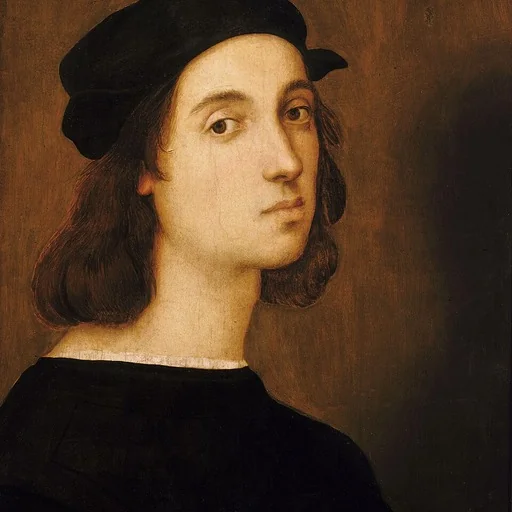
Raphael was born Raffaello Sanzio in Urbino on April 6, 1483, the son of Giovanni Santi, a painter and poet attached to the ducal court.

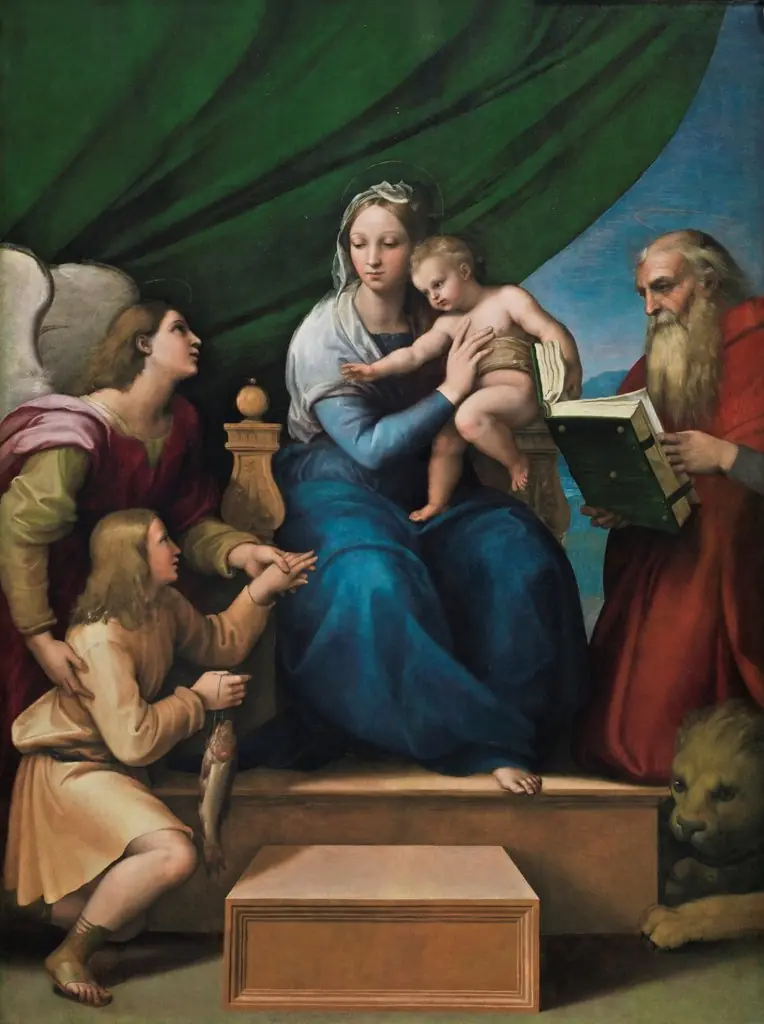 Madonna with the Fish
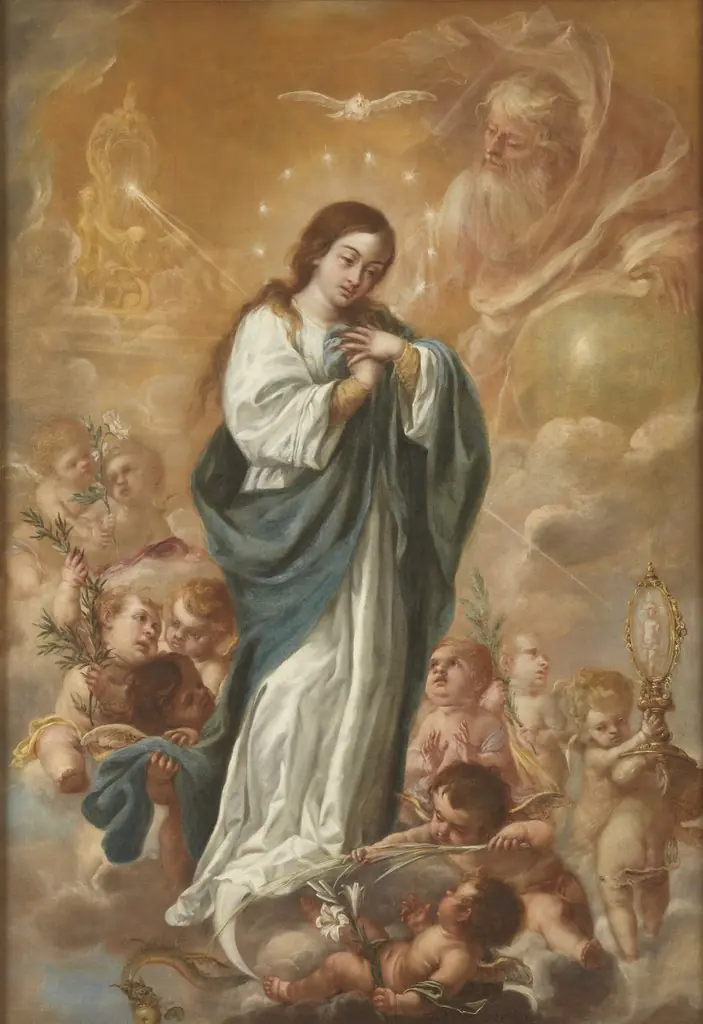 Immaculate Conception
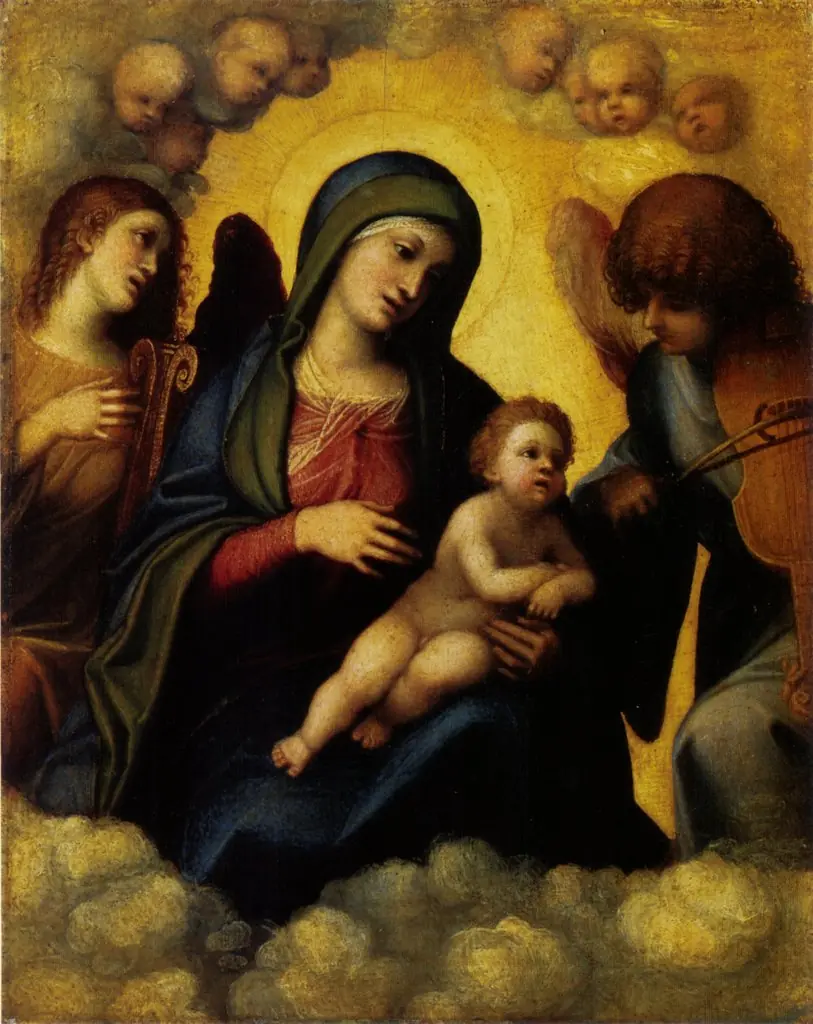 Madonna with child and two angel musicians
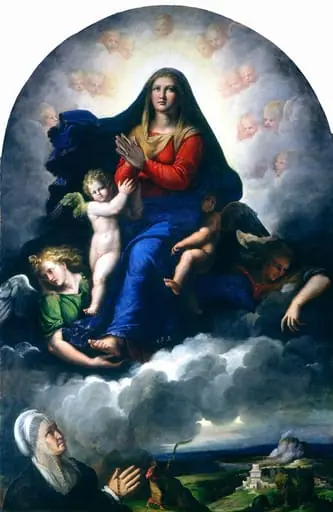 The Apparition of the Virgin
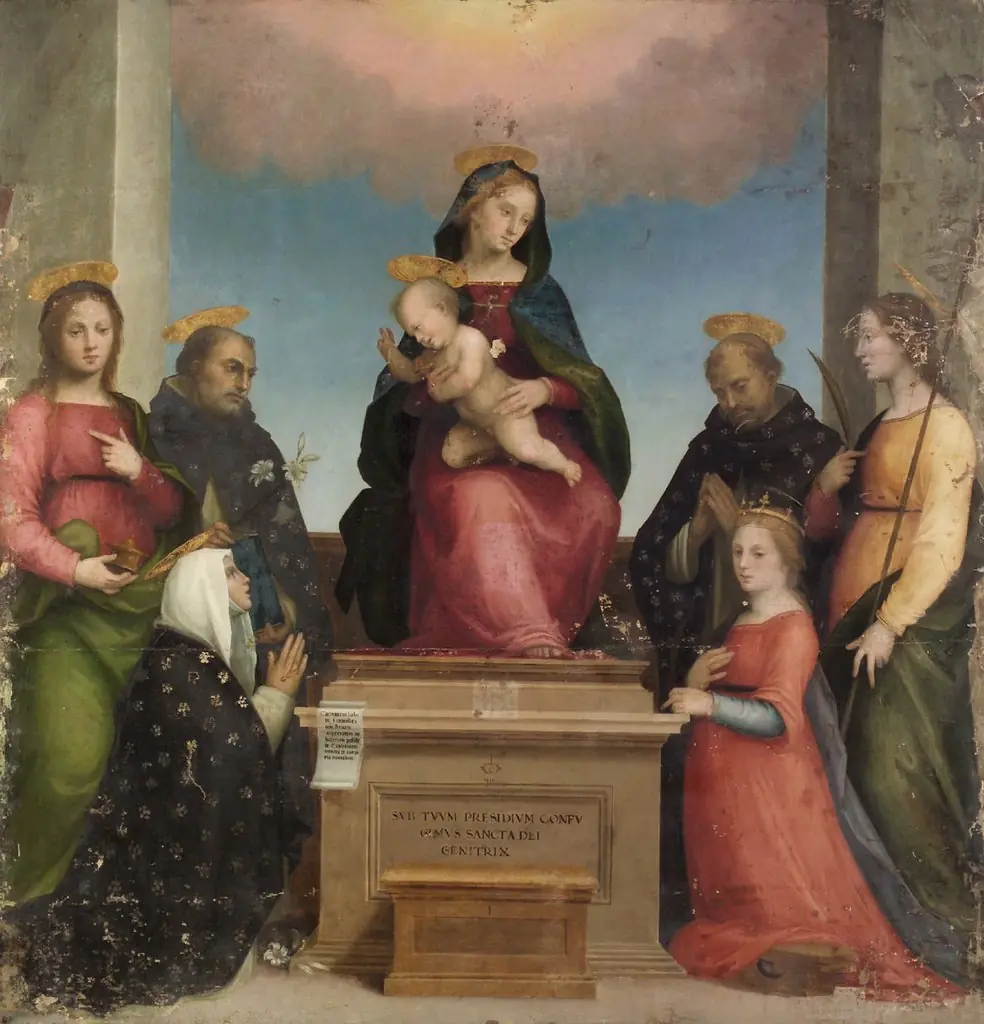 Maria mit Kind und den Hll. Katharina von Siena, Katharina von Alexandrien, Maria Magdalena, Dominikus, Petrus Martyr und einer Märtyrerin
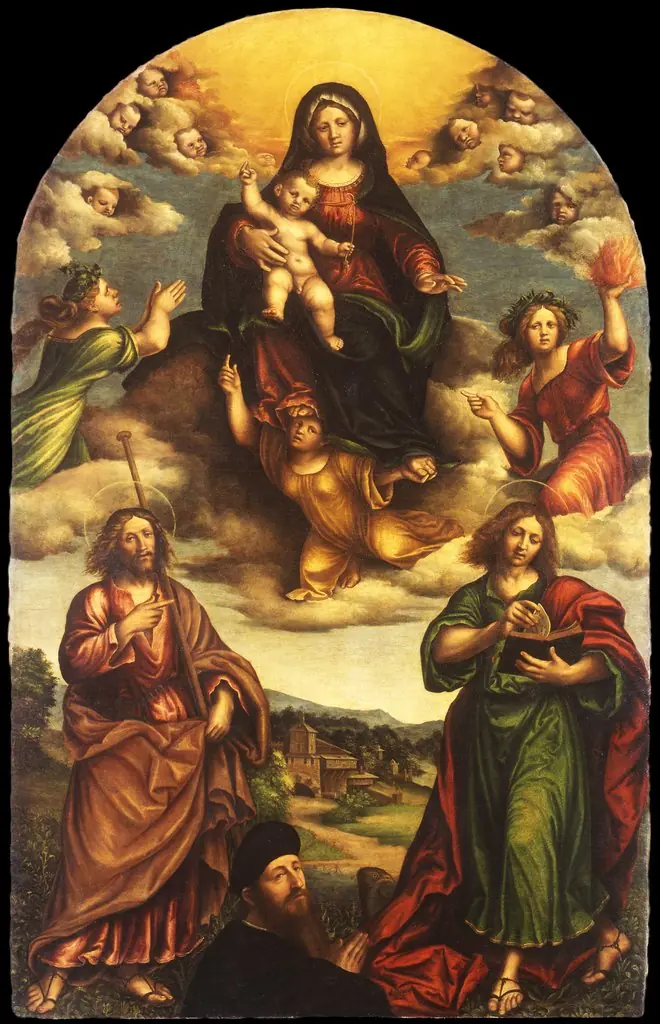 The Virgin with Blessing Child and Saints
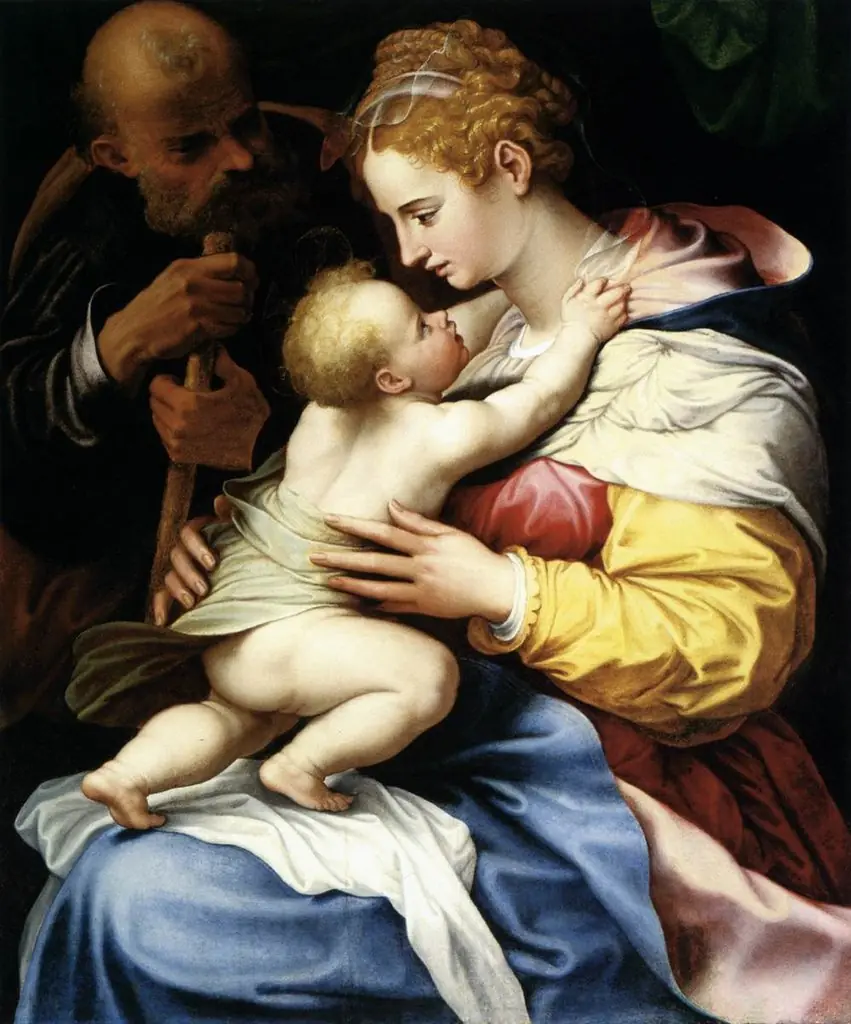 The Holy Family
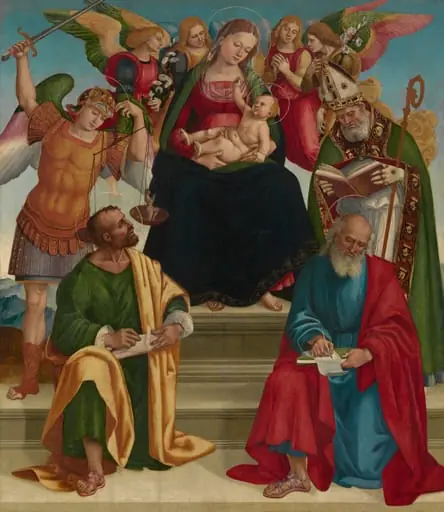 Madonna and Child with Saints and Angels
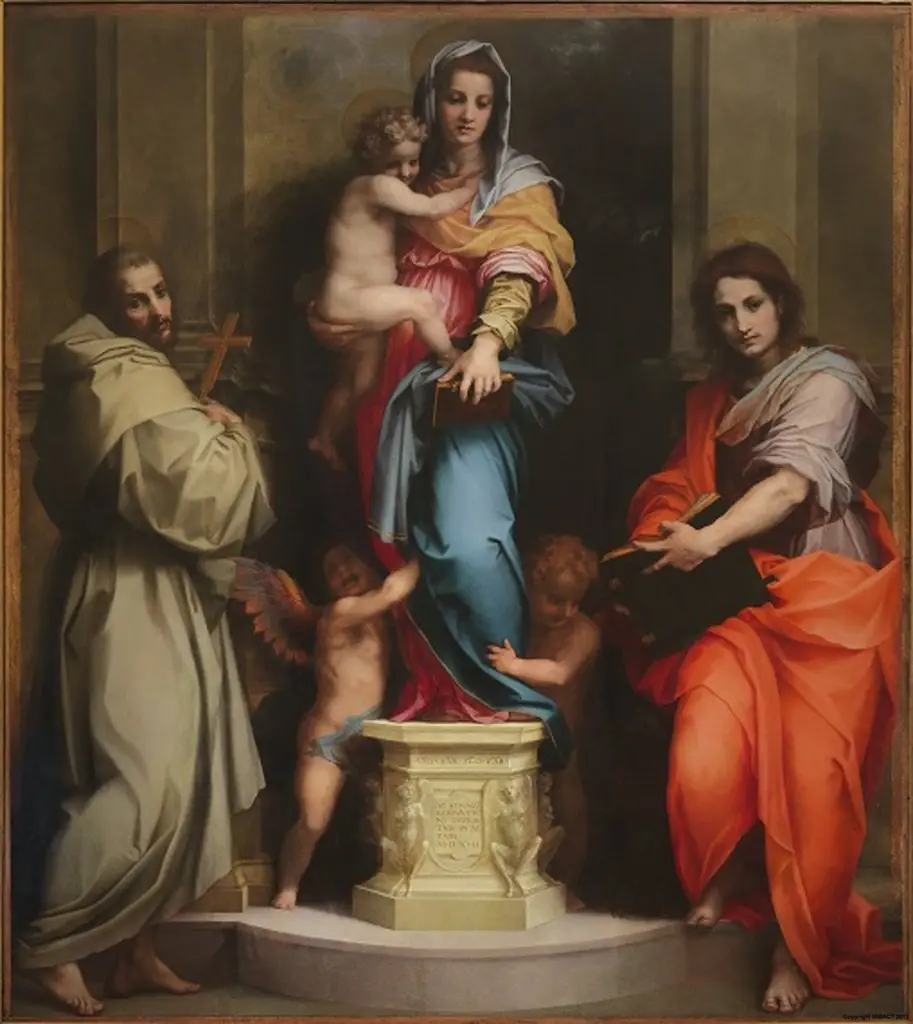 Madonna of the Harpies
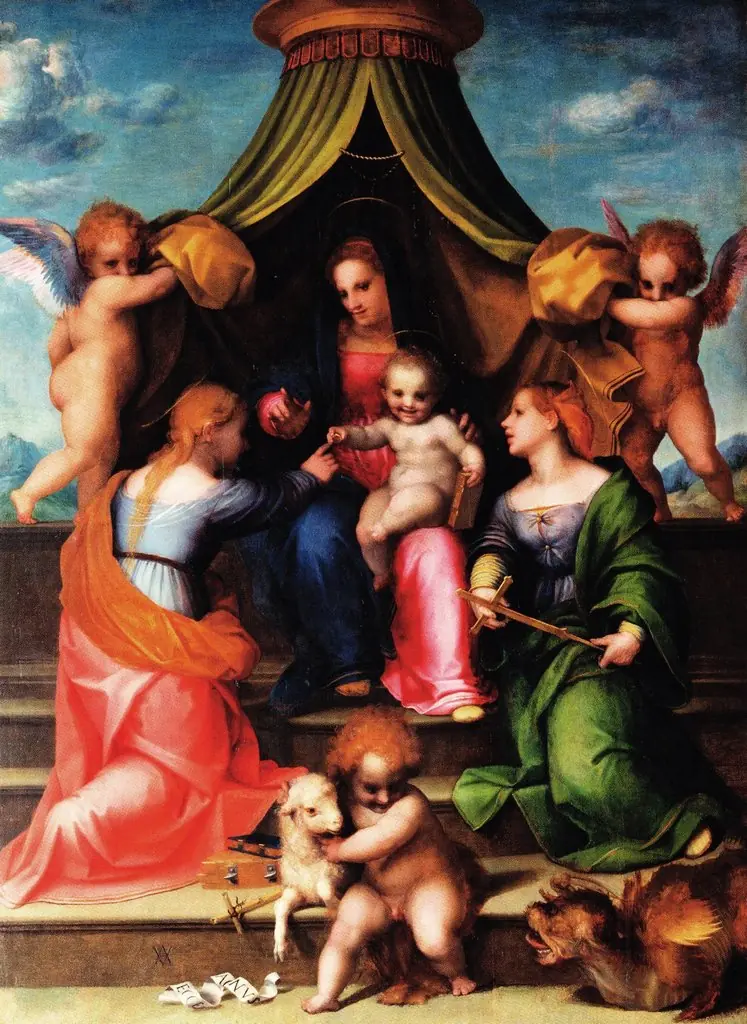 The Mystical Marriage of Saint Catherine
 Assumption of the Virgin
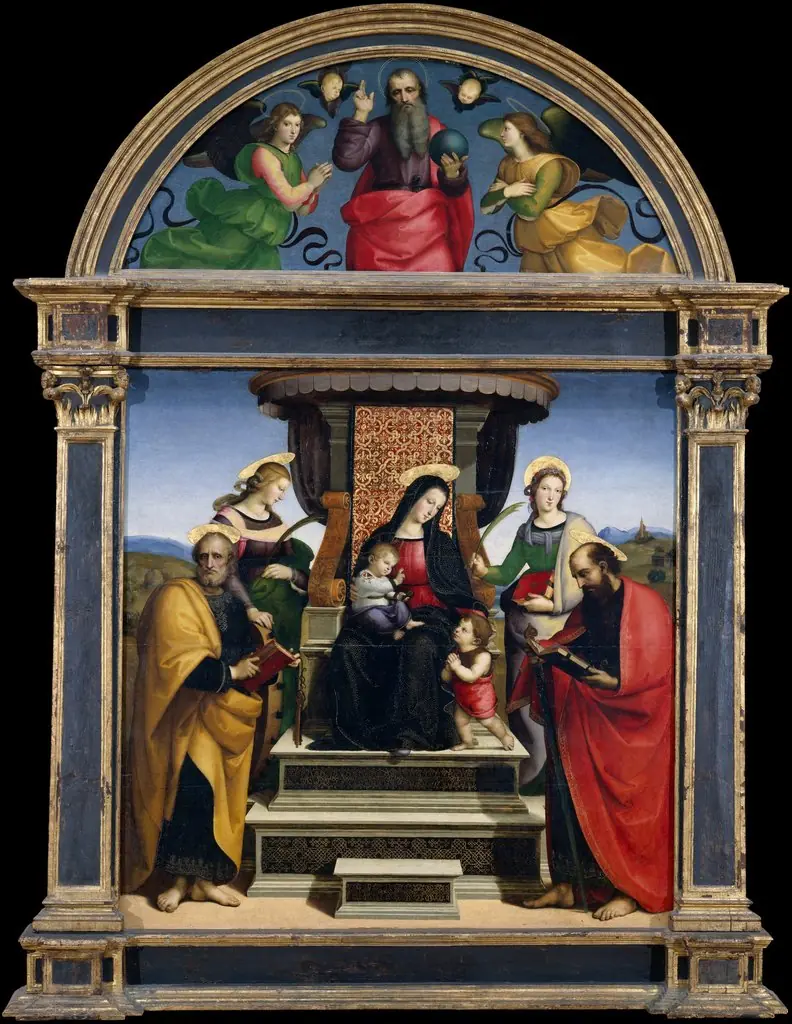
 Madonna and Child Enthroned with Saints