Artwork
Madonna of the Harpies
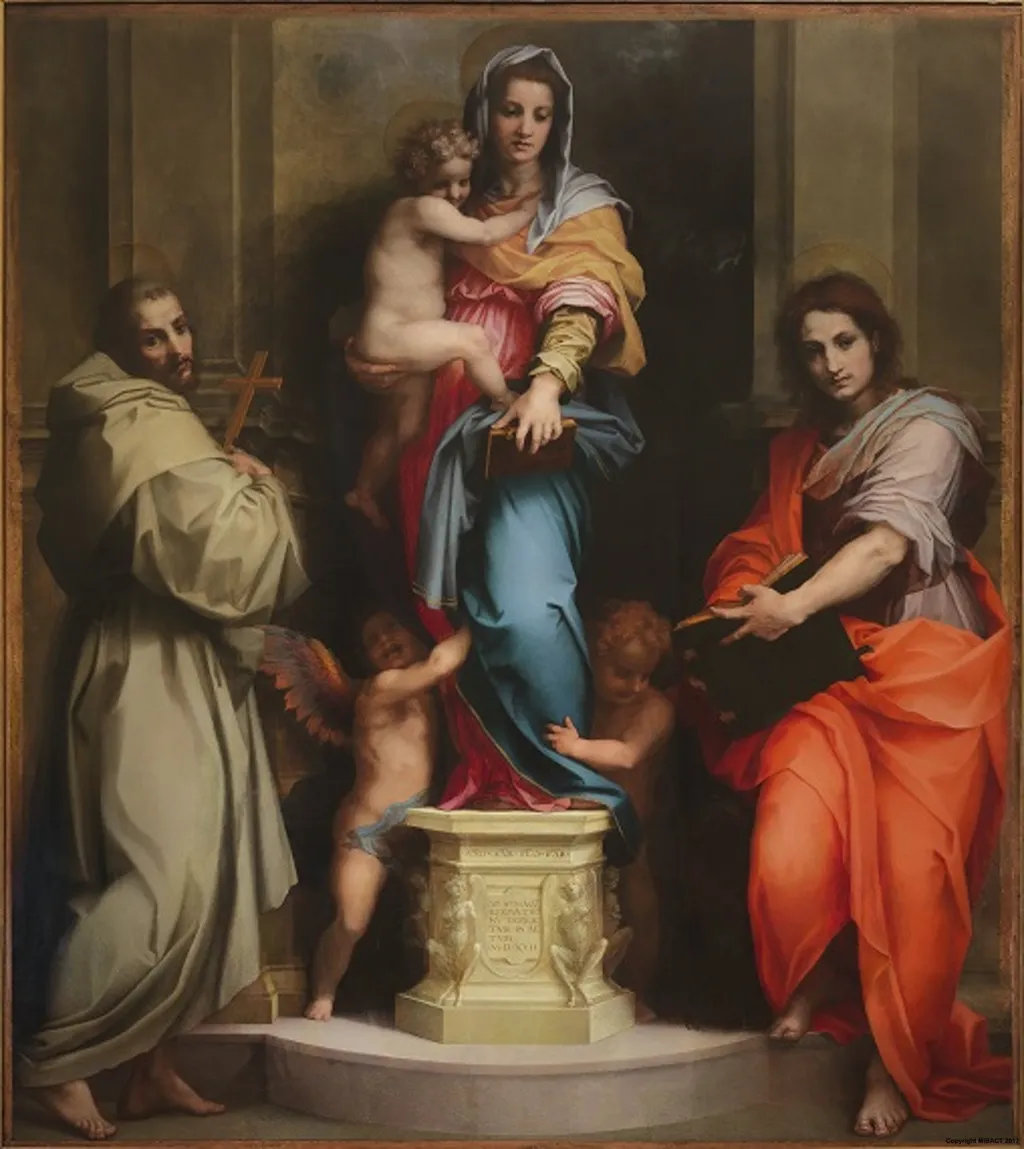
Madonna of the Harpies is an oil painting by the High Renaissance artist Andrea del Sarto. It dates from 1517 and is held in the collection of the Uffizi Gallery.
About this work
Overview
Andrea del Sarto’s oil altarpiece, commonly called the Madonna of the Harpies, was executed between 1515 and 1517 and now hangs in the Uffizi Gallery, Florence. The work presents the Virgin Mary holding the infant Christ, flanked by angels and two saints, and rests upon a pedestal whose carved relief gives the painting its name.
Subject & Meaning
The central figures form a sacra conversazione, with Mary and the Child surrounded by putti and the saints Saint Bonaventure (or Francis) and John the Evangelist. The pedestal bears relief figures interpreted as harpies—or, by some scholars, locusts—symbolizing defeated evil, a motif drawn from biblical imagery.
Technique & Style
Del Sarto employs a balanced pyramidal composition reminiscent of Leonardo, while chiaroscuro creates a sculptural sense of volume. The figures display a subtle dynamism characteristic of the High Renaissance, moving beyond the static arrangements of earlier 15th‑century works.
History & Provenance
Commissioned for the convent and hospital of San Francesco dei Macci in Florence, the altarpiece was signed and dated by the artist in 1517. The original religious complex is now closed, though the church building survives; the painting entered the Uffizi’s collection in the centuries that followed.
Context
Created during a period when Florentine artists were integrating classical purity with a new energetic expression, the work reflects contemporary debates about the representation of sacred subjects. Its inclusion of mythic or apocalyptic creatures on the base underscores the tension between divine serenity and worldly menace.
Artist & collection
Artist
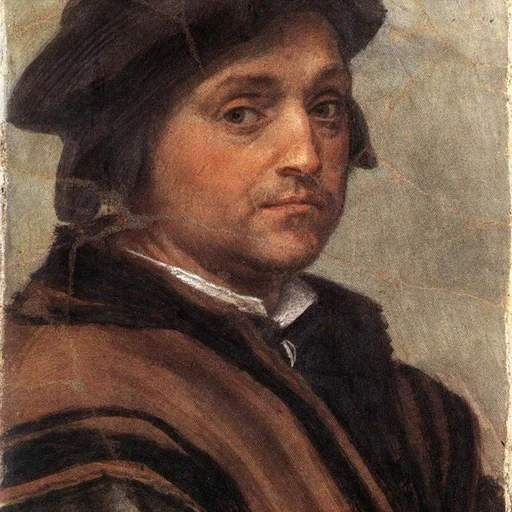
Andrea del Sarto was an Italian painter from Florence, whose career flourished during the High Renaissance and early Mannerism.

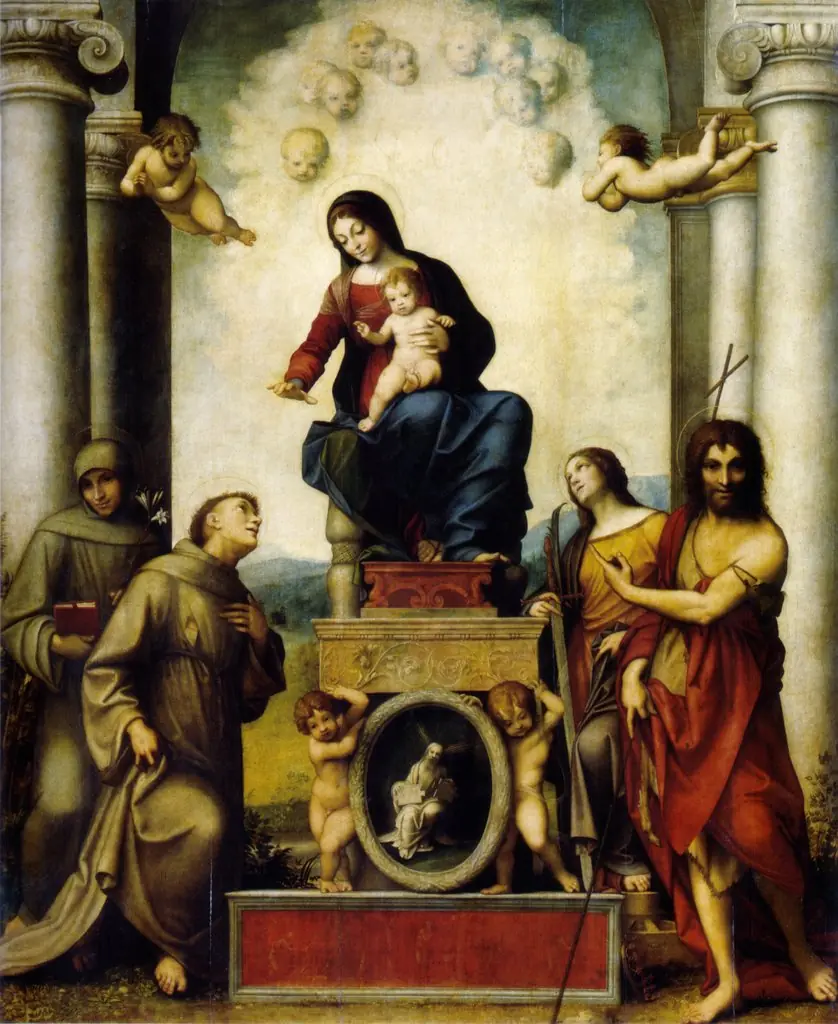 Madonna with St. Francis
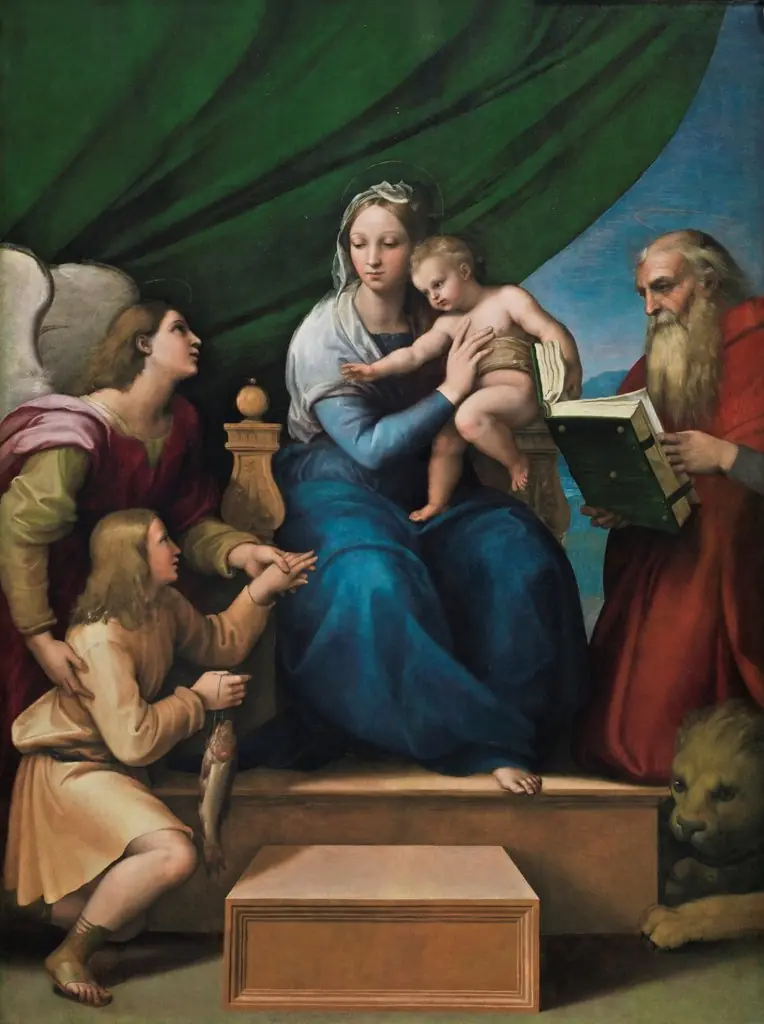 Madonna with the Fish
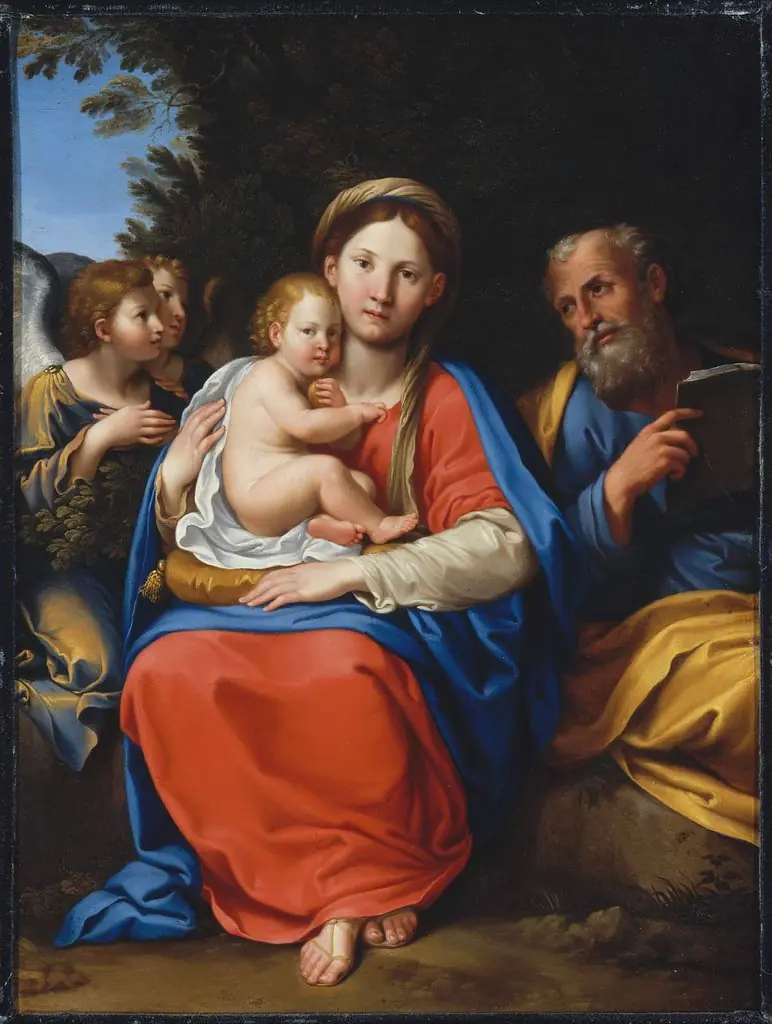 Holy Family with Angels
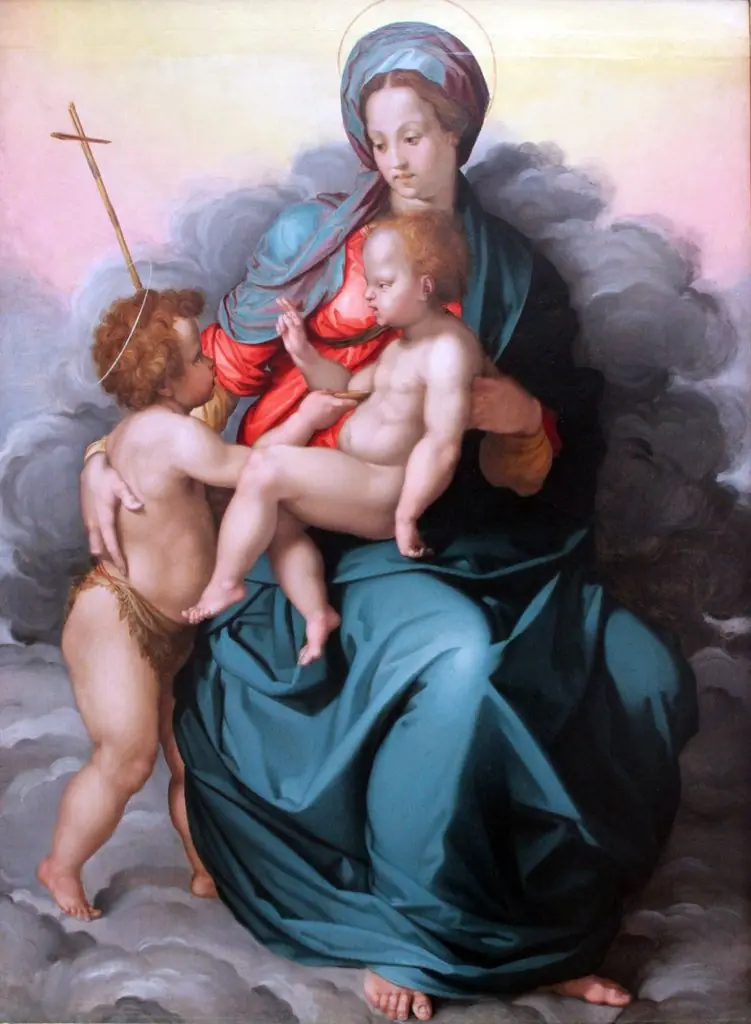 Madonna with Child and Saint John the Baptist on clouds
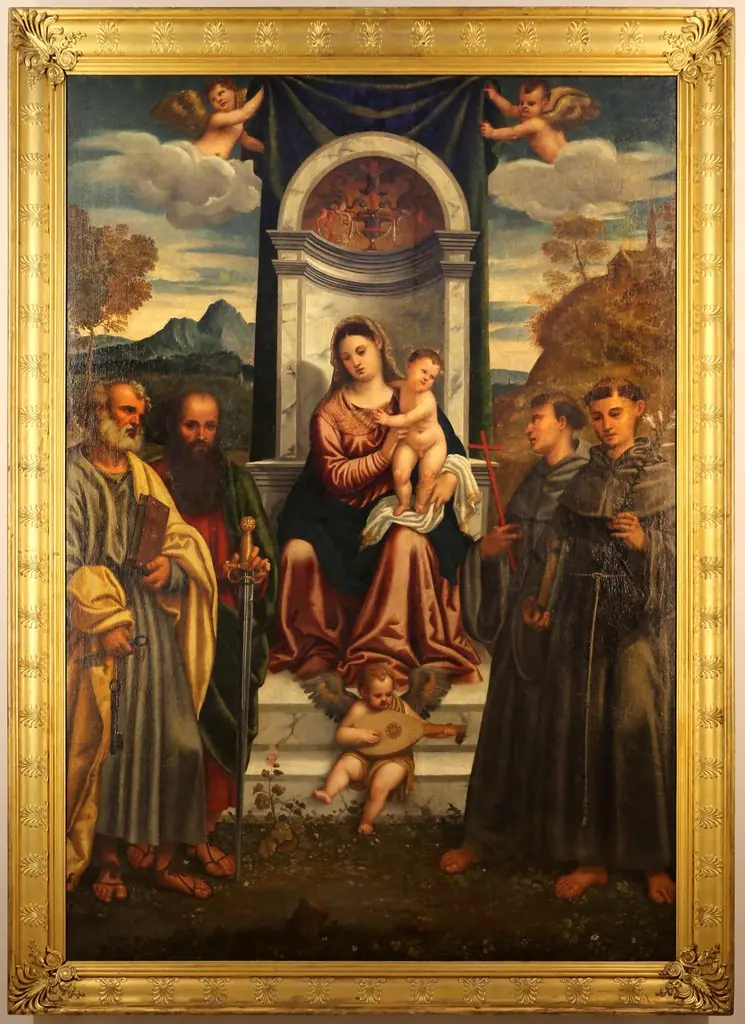 Virgin and Child enthroned with SS. Peter, Paul, Francis and Anthony of Padua
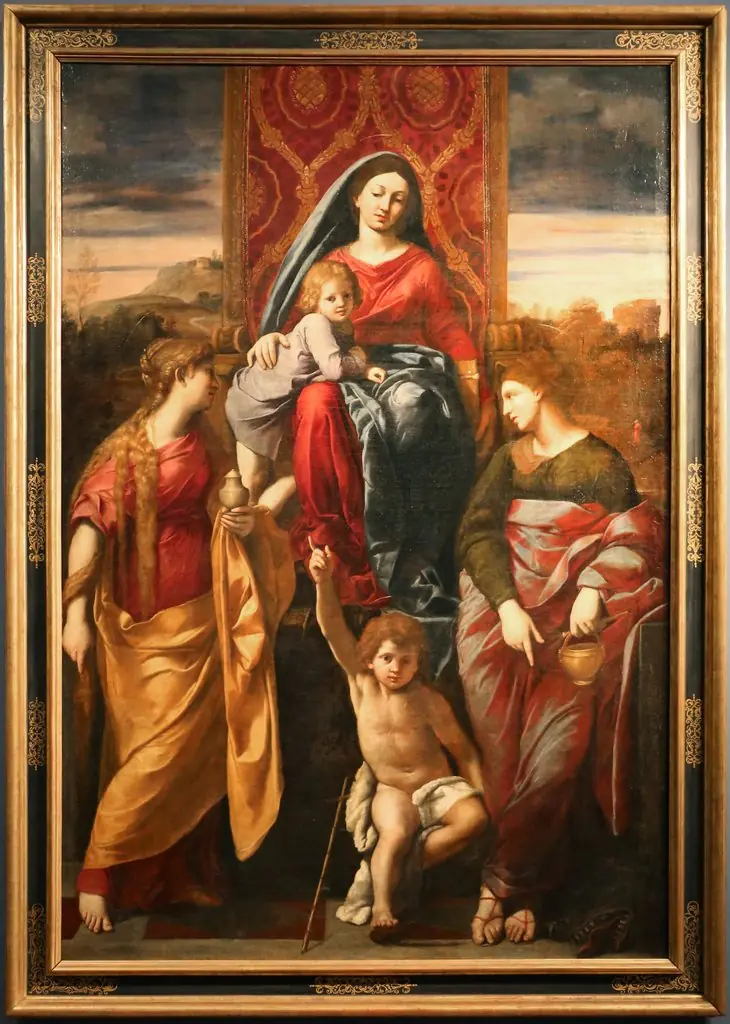 Thronende Maria mit dem Kind und den Heiligen Martha, Magdalena und Johannes dem Täufer
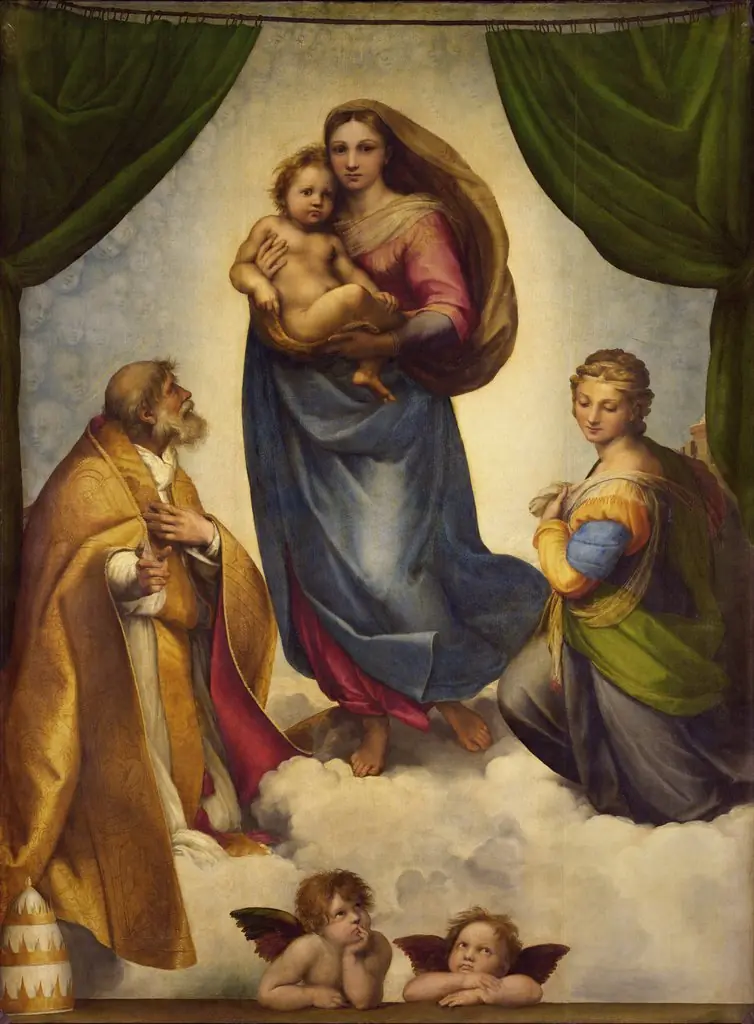 Sistine Madonna
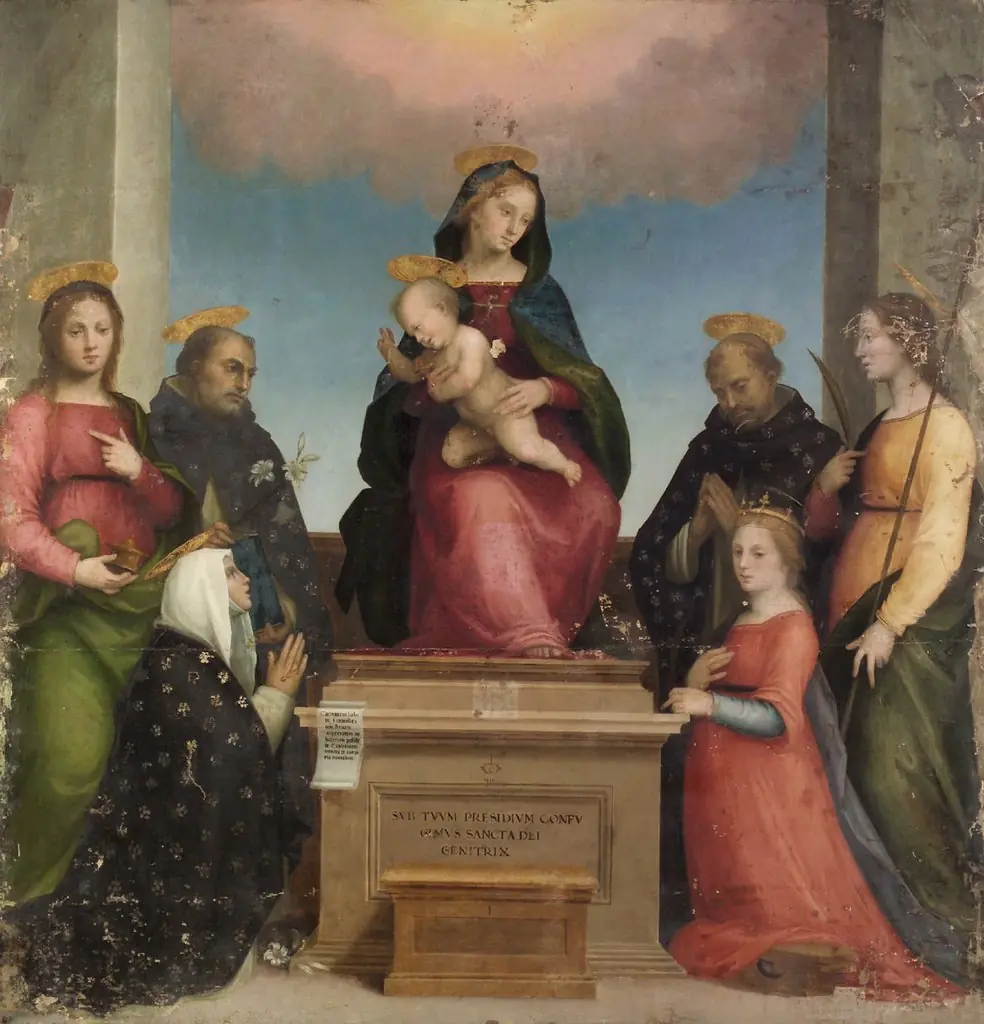 Maria mit Kind und den Hll. Katharina von Siena, Katharina von Alexandrien, Maria Magdalena, Dominikus, Petrus Martyr und einer Märtyrerin
 The Apparition of the Virgin
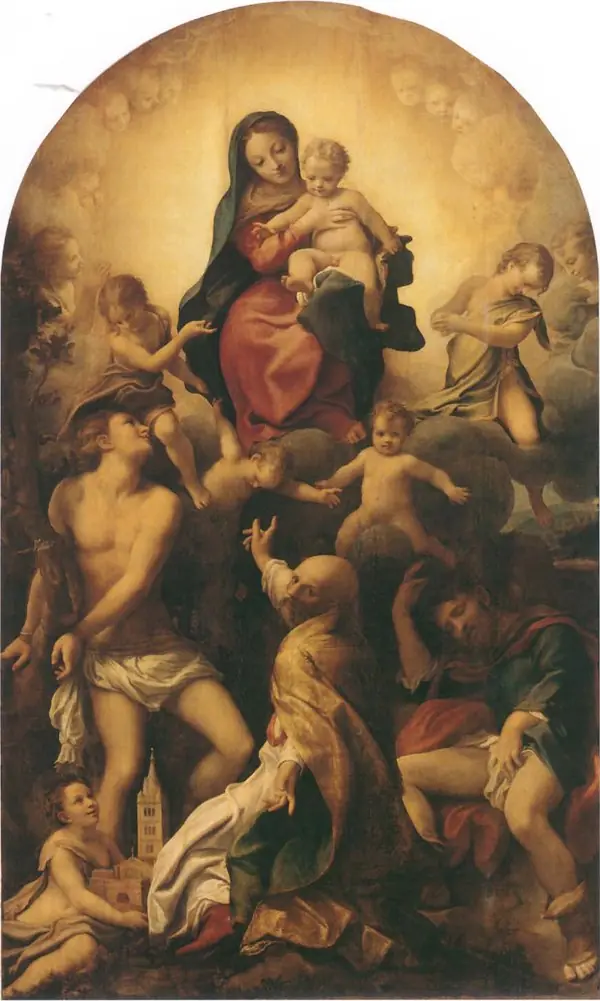 Madonna of Saint Sebastian
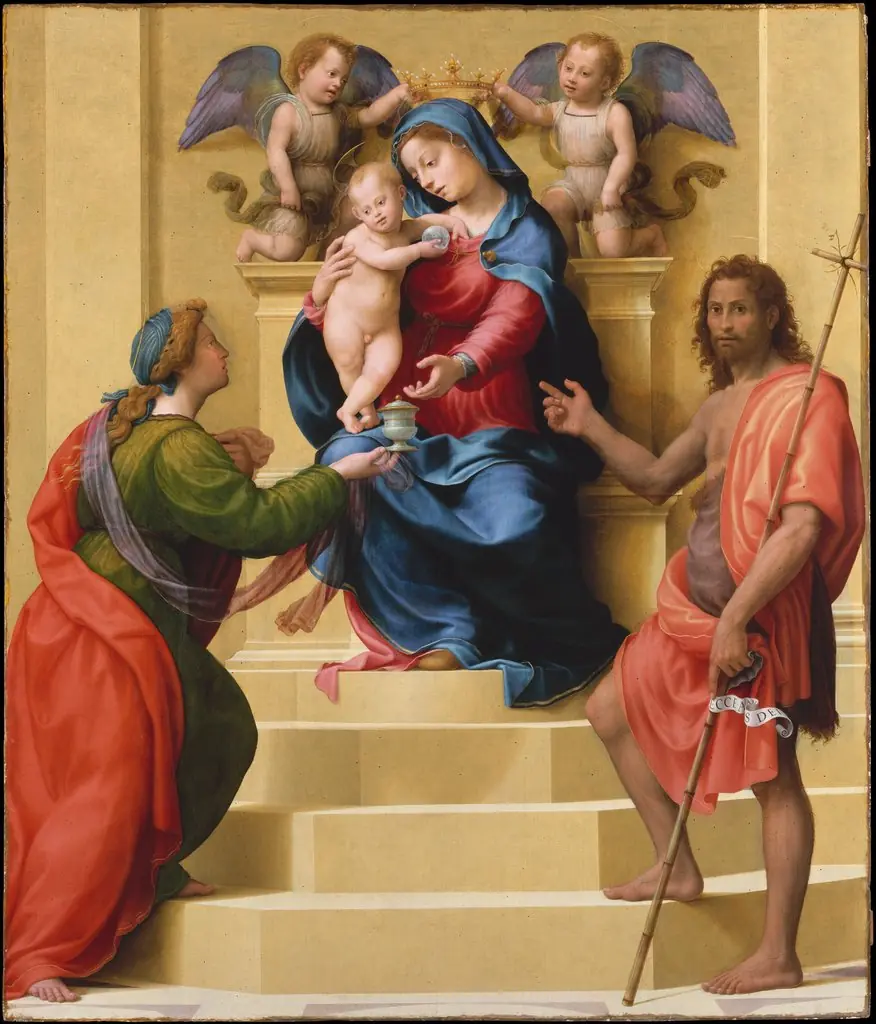 Madonna and Child Enthroned with Saints Mary Magdalen and John the Baptist
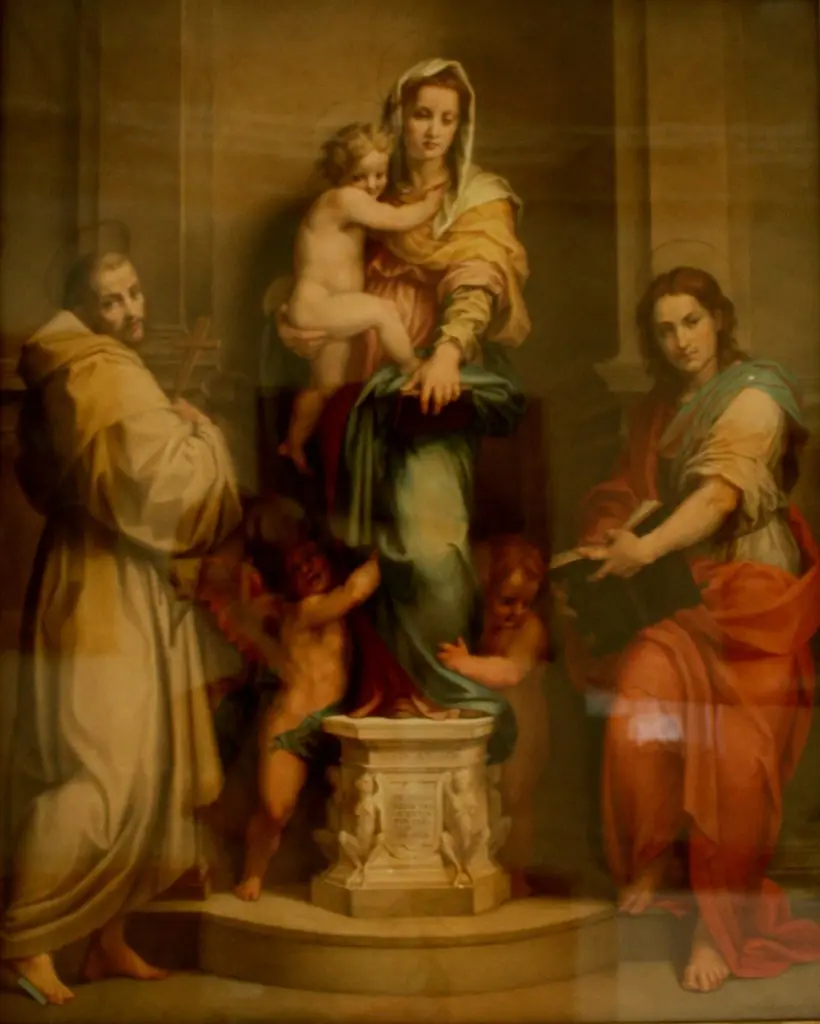 Madonna of the Harpies