Artwork
The Adoration of the Kings
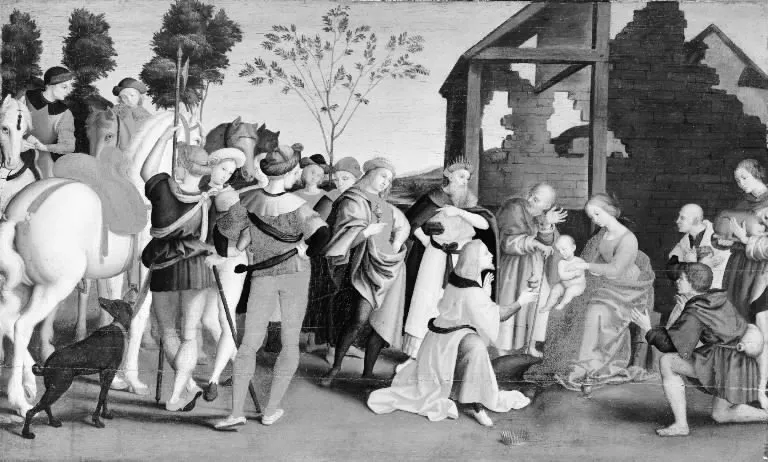
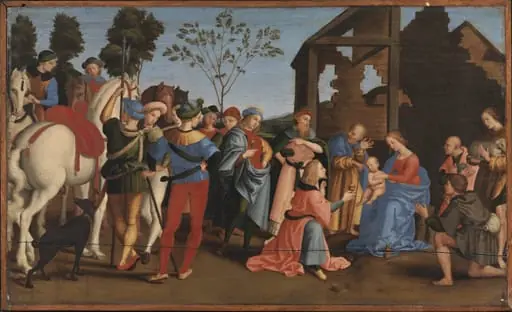
The Adoration of the Kings is an unspecified painting by the High Renaissance artist Raphael. It dates from 1511 and is held in the collection of the Statens Museum for Kunst.
About this work
Overview
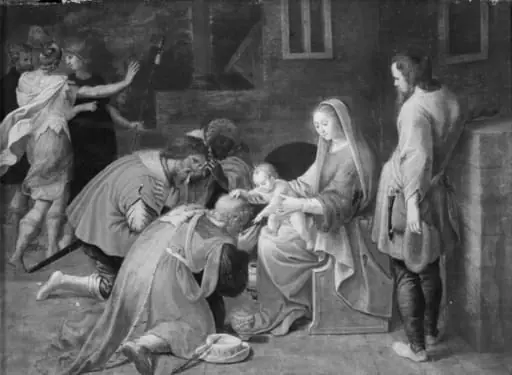
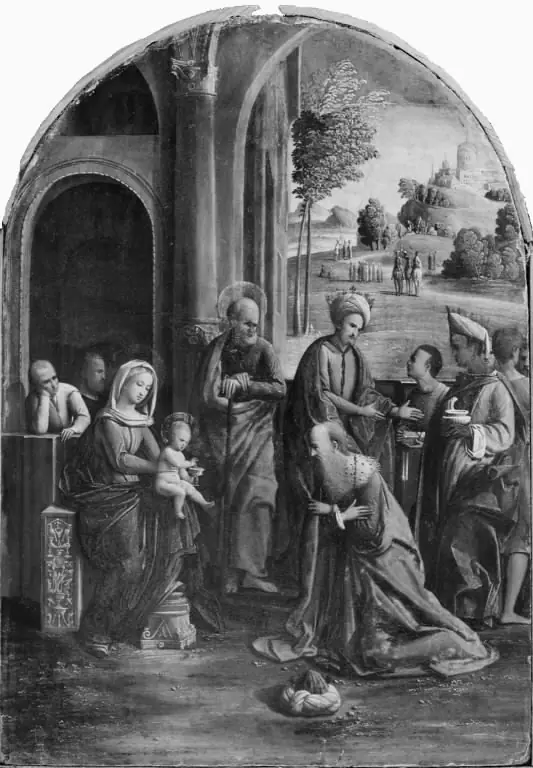
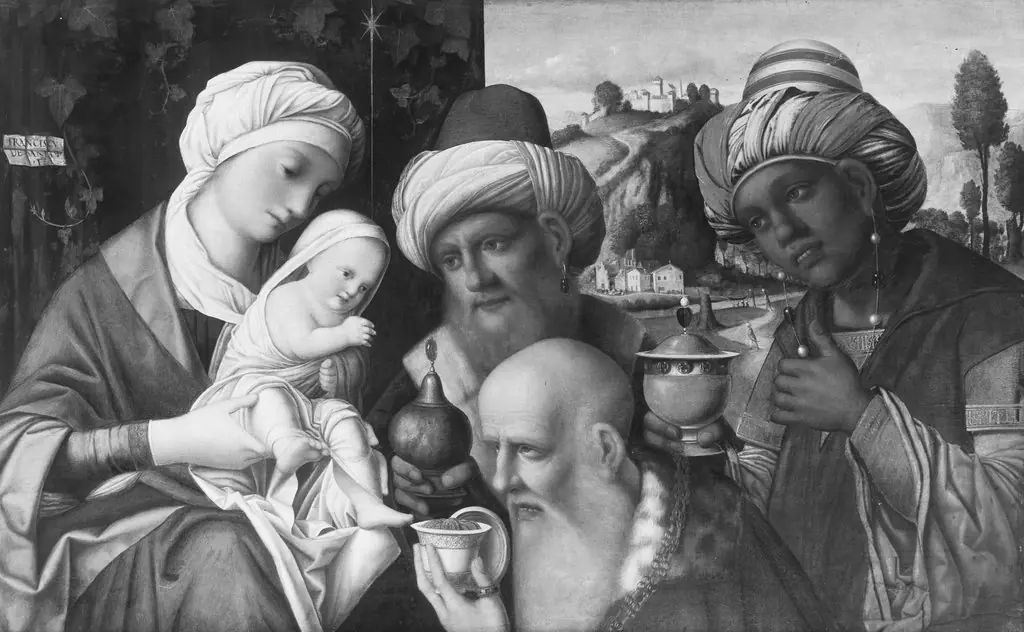
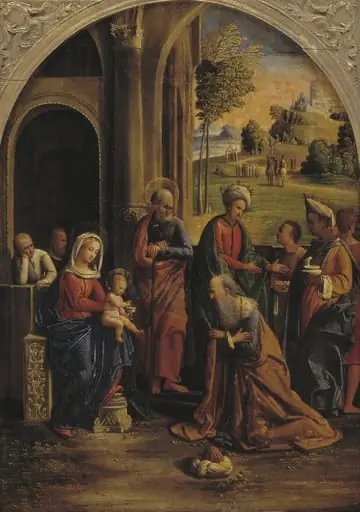
Created around 1511, this oil painting by Raphael portrays the biblical episode of the Magi’s homage to the infant Jesus. The composition gathers a diverse group of figures—knights on horseback, robed attendants, and a small dog—around a central woman cradling the child. Though populated, the scene conveys a tranquil pause as all eyes focus on the newborn.
Subject & Meaning
The work illustrates the adoration of the Christ Child by the three wise men, a theme that underscores the recognition of Jesus’ divine status by the wider world. The surrounding onlookers, both secular and noble, emphasize the universal significance of the event, while the ruined architecture in the background hints at the transition from the old order to a new spiritual era.
Technique & Style
Executed in the High Renaissance idiom, the painting displays Raphael’s characteristic balance of harmonious composition and refined modeling.
Executed in the High Renaissance idiom, the painting displays Raphael’s characteristic balance of harmonious composition and refined modeling. Figures are rendered with subtle chiaroscuro, giving them three‑dimensional presence, while the vivid colors of the riders’ armor contrast with the softer tones of the central group. The spatial arrangement creates depth, leading the viewer’s gaze toward the infant.
History & Provenance
The canvas entered the collection of Denmark’s national gallery, the Statens Museum for Kunst, where it remains on display. Its attribution to Raphael has been consistently accepted since early catalogues, and the work has been referenced in scholarly studies of the artist’s early mature period.
Context
Painted during a prolific phase of Raphael’s career, the piece reflects the broader High Renaissance interest in classical balance and narrative clarity. The inclusion of contemporary armor and a domestic dog situates the sacred scene within a familiar, early‑16th‑century milieu, aligning divine revelation with everyday life.
Artist & collection
Artist
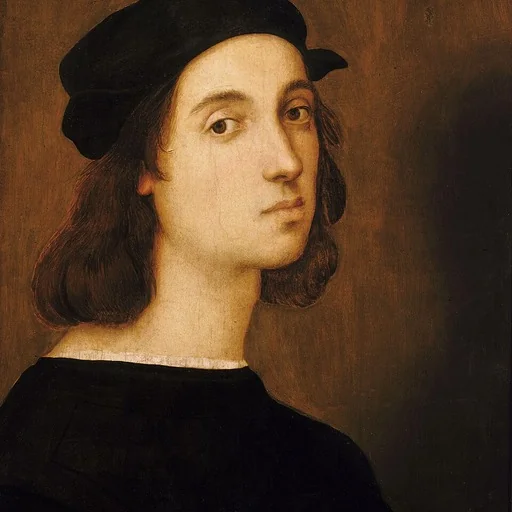
Raphael was born Raffaello Sanzio in Urbino on April 6, 1483, the son of Giovanni Santi, a painter and poet attached to the ducal court.