Artwork
The Long Man of Wilmington
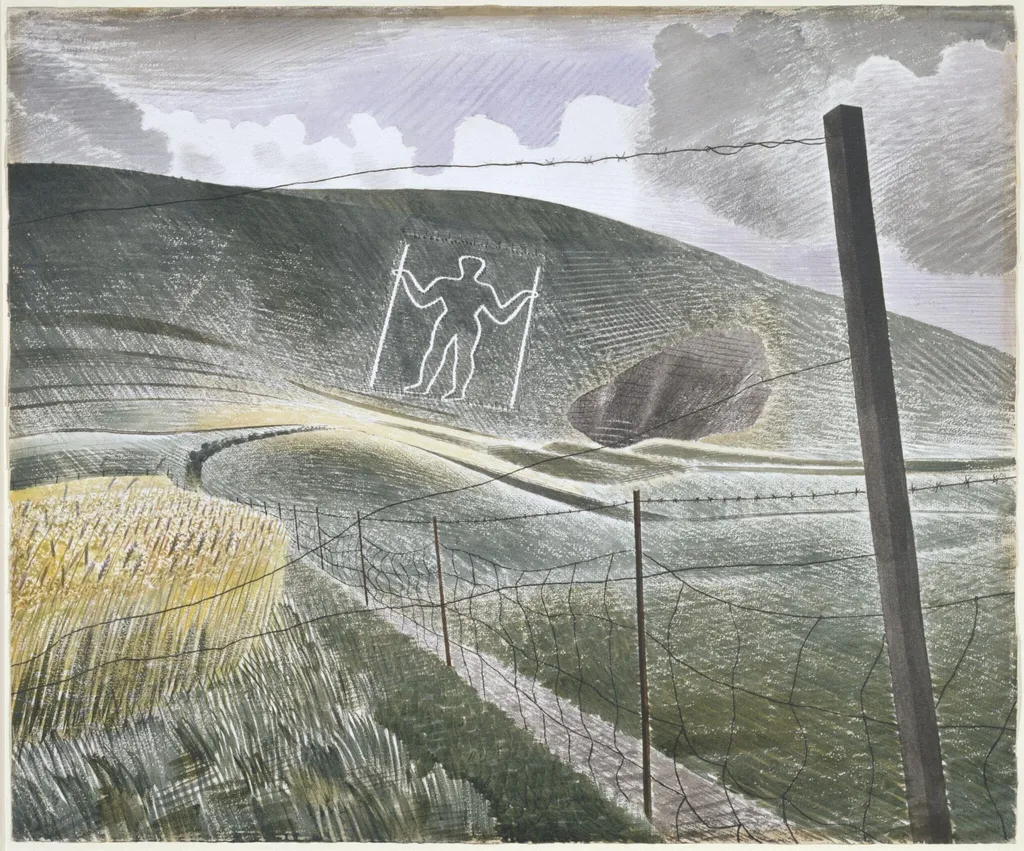
The Long Man of Wilmington is a watercolor work on paper by Eric Ravilious. It dates from 1939 and is held in the collection of the Victoria and Albert Museum.
About this work
Eric Ravilious painted *The Long Man of Wilmington* in 1939. It’s a watercolour of a giant figure cut into a chalk hillside. The image shows a tall, stick-like man against the landscape.
The giant is an old mystery. Some say it’s ancient, others guess it’s from the 1500s. No one knows why it’s there.
Check out more of Ravilious, Eric’s work.
Overview
His composition emphasizes the figure’s elongated form against the rolling hills, blending topographical accuracy with quiet contemplation.
Eric Ravilious created this watercolour in 1939, capturing the Long Man of Wilmington, a chalk outline of a human figure carved into the slope of the South Downs near Eastbourne. The painting reflects his late-career focus on watercolour landscapes, particularly those of southern England’s rural terrain. His composition emphasizes the figure’s elongated form against the rolling hills, blending topographical accuracy with quiet contemplation.
Subject & Meaning
The Long Man is a prehistoric or early modern chalk figure whose origins remain unresolved. Some theories link it to Iron Age deities or Roman iconography, while archaeological evidence points to a possible 16th- or 17th-century origin. Ravilious did not attempt to resolve its mystery but instead presented it as a silent, enduring presence within the landscape, inviting quiet reflection rather than narrative explanation.
Technique & Style
Ravilious employed delicate watercolour washes to render the chalk figure’s faint outline and the surrounding grassy slopes. His precise linework defines the figure’s stick-like form, while soft gradients in the sky and terrain suggest atmospheric depth. The palette is restrained—ochres, greys, and muted greens—emphasizing the figure’s integration with its natural setting rather than its symbolic weight.
History & Provenance
Painted in 1939, shortly before Ravilious’s death in military service, this work belongs to his final series of landscape watercolours. It was likely created during one of his sketching trips to the South Downs. The painting remained in private hands until acquired by the Towner Art Gallery in Eastbourne, where it is now held as part of a significant collection of his work.
Context
Ravilious’s interest in ancient earthworks coincided with a broader interwar fascination with England’s rural heritage. As industrialization advanced, artists like him turned to landscapes imbued with historical ambiguity. The Long Man, with its unresolved past, resonated as a symbol of enduring mystery—offering a quiet counterpoint to the looming uncertainties of the late 1930s.
Legacy
Ravilious’s watercolour helped cement the Long Man’s place in 20th-century British visual culture. While archaeological debates about its age continue, his depiction endures as a definitive artistic interpretation. The painting’s restrained tone and attention to topography influenced later landscape artists who sought to convey historical presence without romanticization.
Artist & collection
Artist
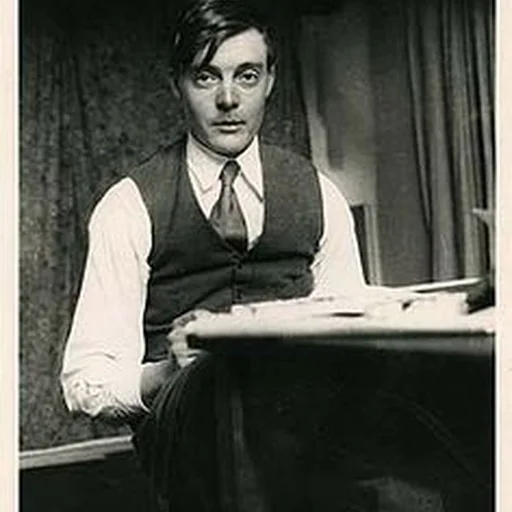
Eric William Ravilious was a British painter, designer, book illustrator and wood-engraver.

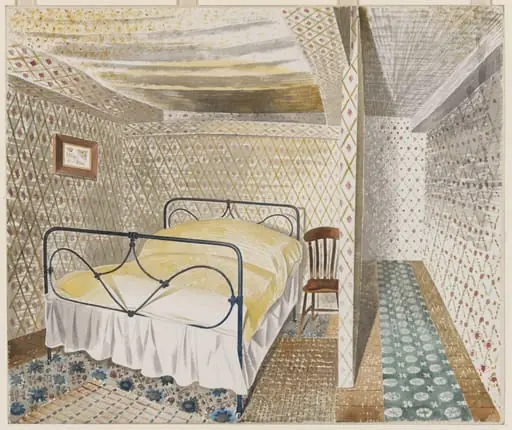
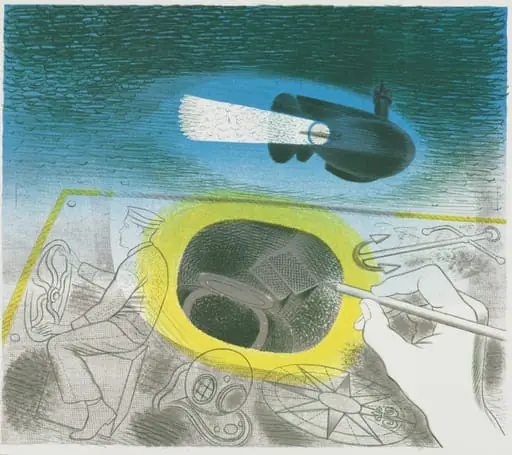
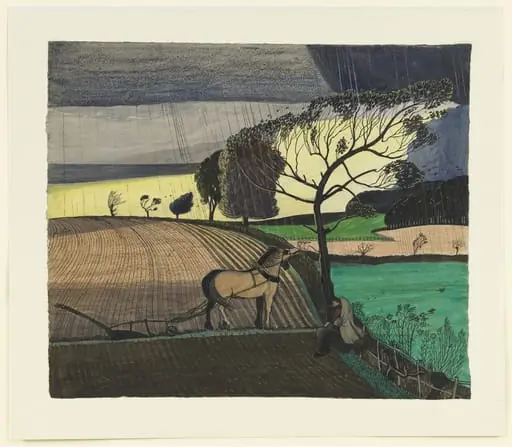 Untitled
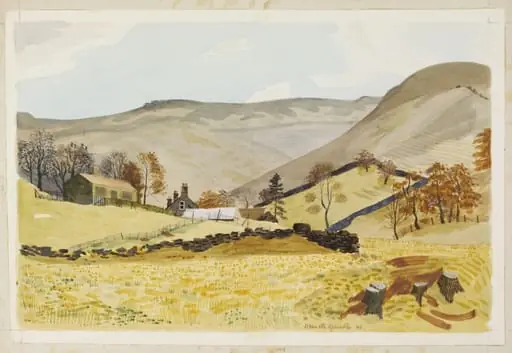 Grainfoot Farm, Derwentdale
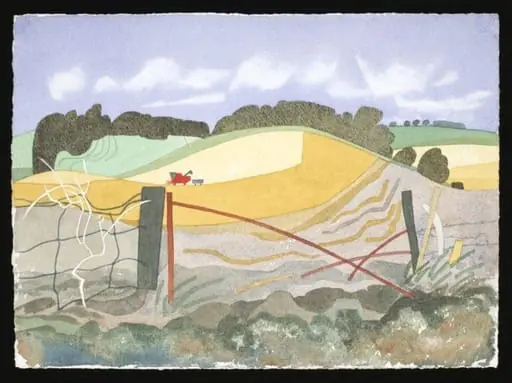 Mid Harvest (field with combine harvester)
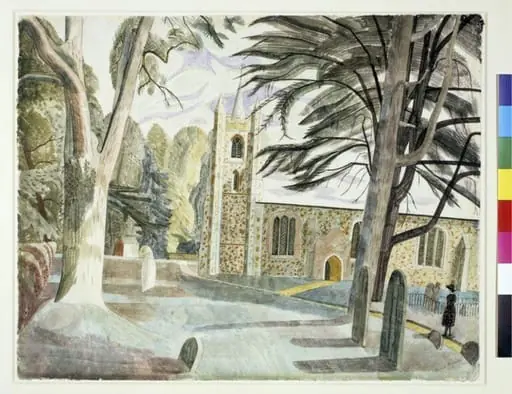 'Christ! I have been many times to church!'
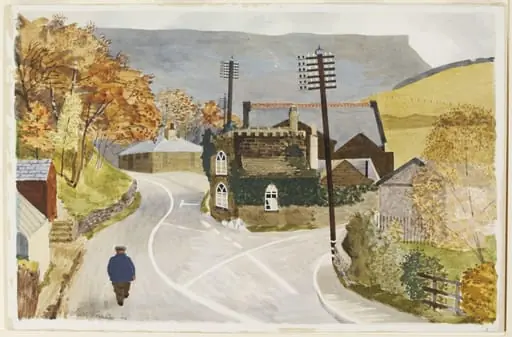 Old Toll Bar House, Ashopton
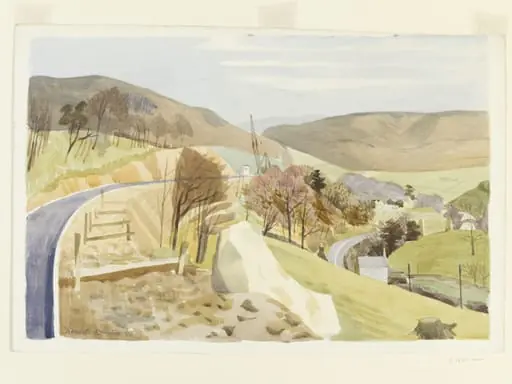 Ashopton, from the New Road
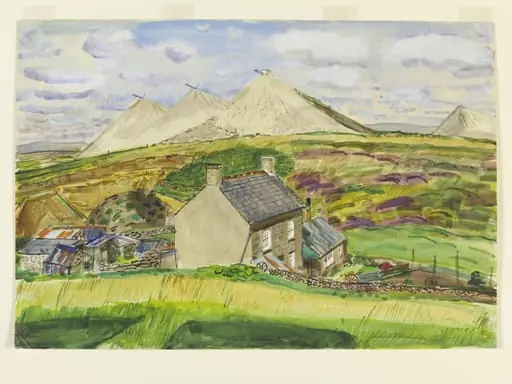 China Clay Works, Great Wheal Prosper, Tresayes, Roche
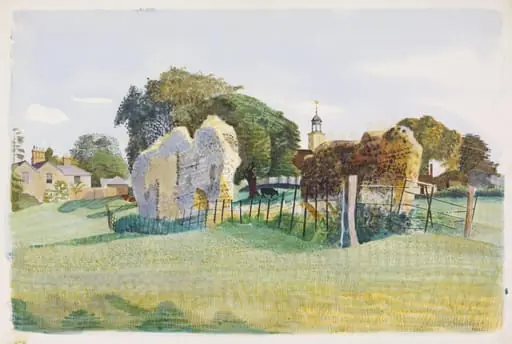 View of the Ruins of the Cloister, the Belfry of St. Mary's Church, and the Vicarage, Tilty
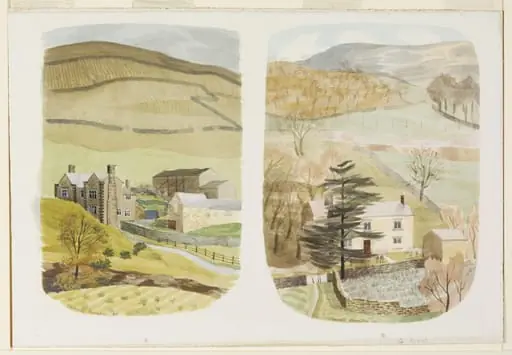 Cox's Farm, and White House, Ashopton
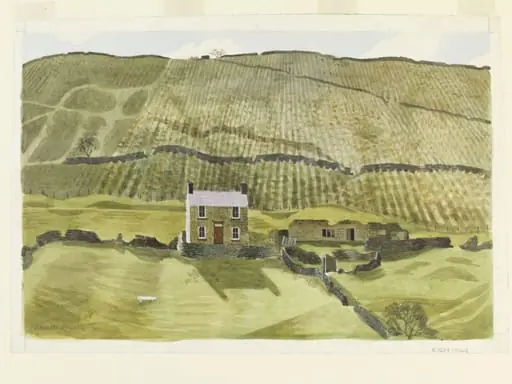 Underbank Farm, Woodlands, Ashdale, Derbyshire
 Gibraltar Tower Mill, Great Bardfield