Artwork
Submarines in Dry Dock
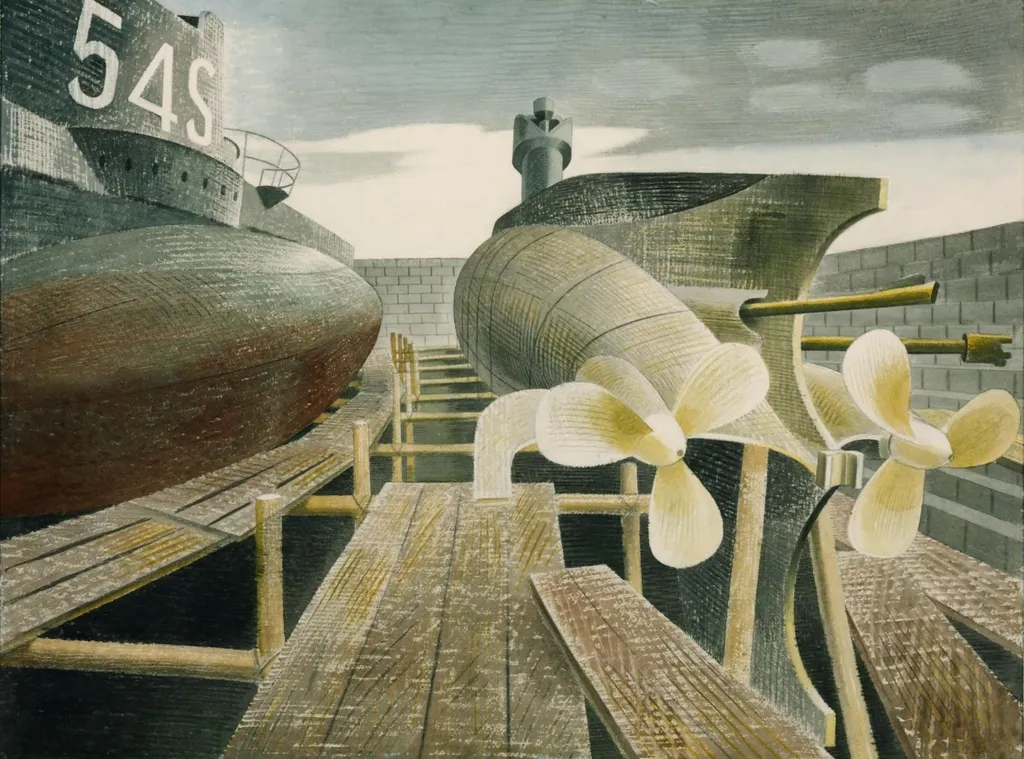
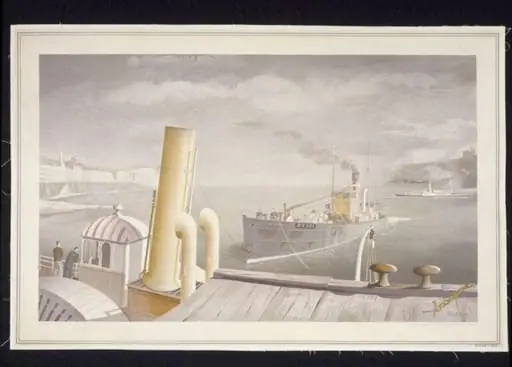
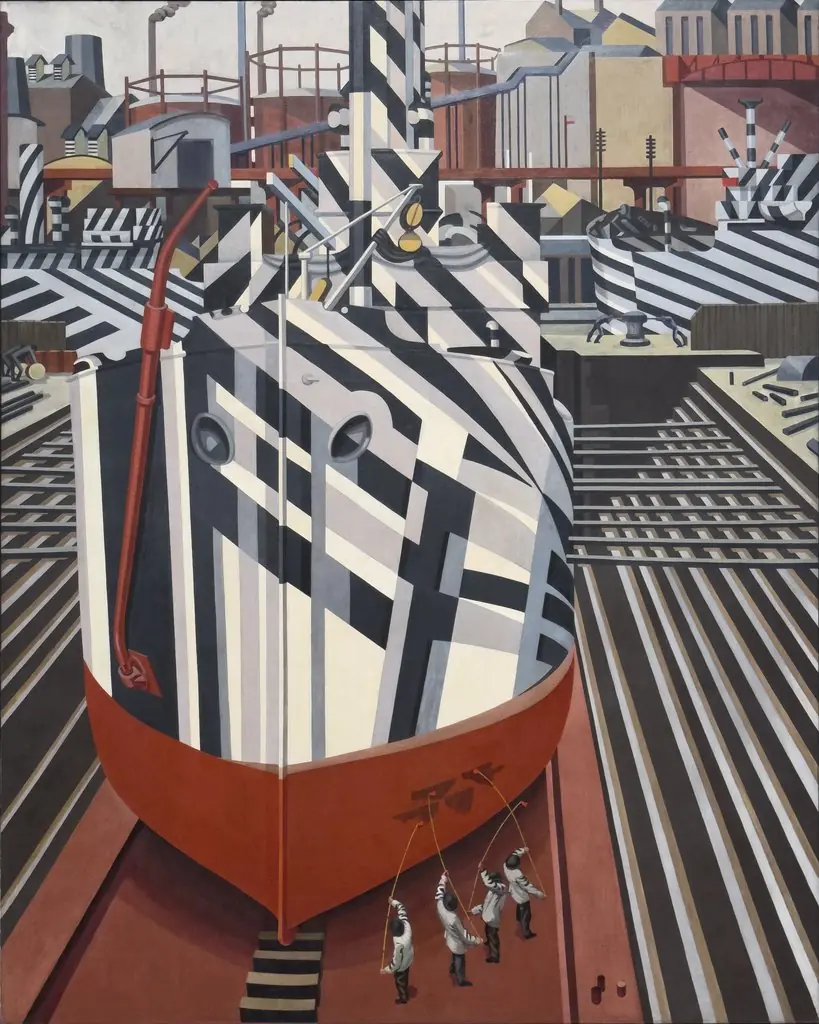
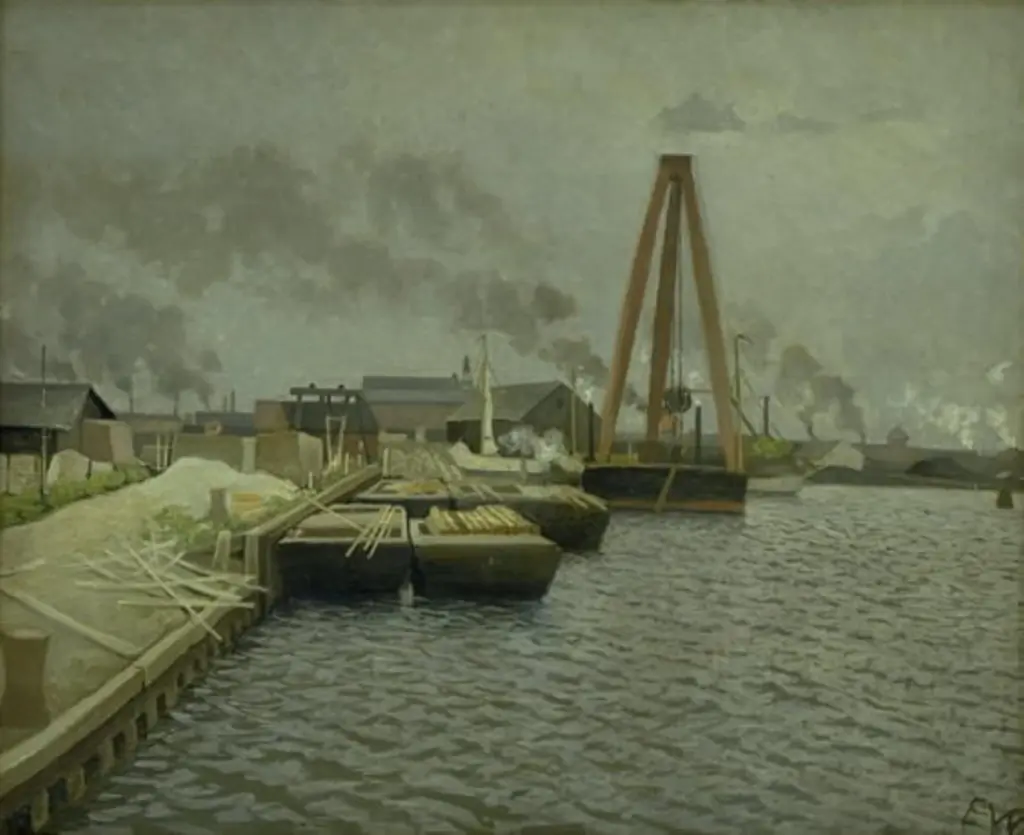
Submarines in Dry Dock is an unspecified painting by the British Romanticist artist Eric Ravilious. It dates from 1940 and is held in the collection of the Tate Britain.
About this work
The painting is titled Submarines in Dry Dock.
It was created by Eric Ravilious in 1940.
The painting is held at Tate Britain, which might have more information about the artist and his work, like the fact that Eric Ravilious was a British artist who lived from 1903 to 1942.
You can learn more about similar works by visiting the museum: Tate Britain.
Overview
Eric Ravilious painted Submarines in Dry Dock in 1940 during the early years of the Second World War. The work depicts Royal Navy submarines resting in a dry dock, stripped of their usual maritime context and rendered in quiet, geometric stillness. It is part of the collection at Tate Britain, where it reflects the artist’s engagement with wartime industry and his distinctive visual language.
Subject & Meaning
The painting portrays two submarines in a naval dockyard, their forms simplified and arranged with deliberate order. Rather than emphasizing action or conflict, Ravilious focuses on their inert presence, suggesting a pause between missions. The absence of personnel and the clinical lighting evoke a sense of suspension, hinting at the quiet tension of wartime preparation.
Technique & Style
The composition balances architectural structure with organic curves, reflecting his background in design and printmaking.
Ravilious employed watercolor and gouache to achieve a crisp, luminous clarity. His lines are precise, forms are flattened, and color is restrained—predominantly grays, blues, and muted greens. The composition balances architectural structure with organic curves, reflecting his background in design and printmaking. The result is a serene yet unsettling stillness, characteristic of his wartime output.
History & Provenance
Commissioned by the War Artists’ Advisory Committee in 1940, the painting was created during Ravilious’s official role as a war artist. It entered the Tate collection shortly after its completion and has remained there since. The work documents a specific moment in Britain’s naval defense efforts, capturing industrial sites that were otherwise rarely depicted in fine art.
Context
Created during the Battle of the Atlantic, the painting reflects Britain’s reliance on submarine warfare to counter U-boat threats. Ravilious’s focus on the dockyard rather than the sea underscores the importance of maintenance and logistics in wartime. His approach diverged from dramatic battle scenes, instead highlighting the overlooked spaces of industrial endurance.
Legacy
Submarines in Dry Dock stands as a quiet testament to Ravilious’s ability to transform mundane industrial scenes into contemplative compositions. Though less known than his landscapes, this work exemplifies his contribution to British war art—offering a restrained, poetic counterpoint to more heroic narratives. It continues to inform discussions on the aesthetics of wartime labor and observation.
Artist & collection

Artist
Eric William Ravilious was a British painter, designer, book illustrator and wood-engraver.