Artwork
Untitled
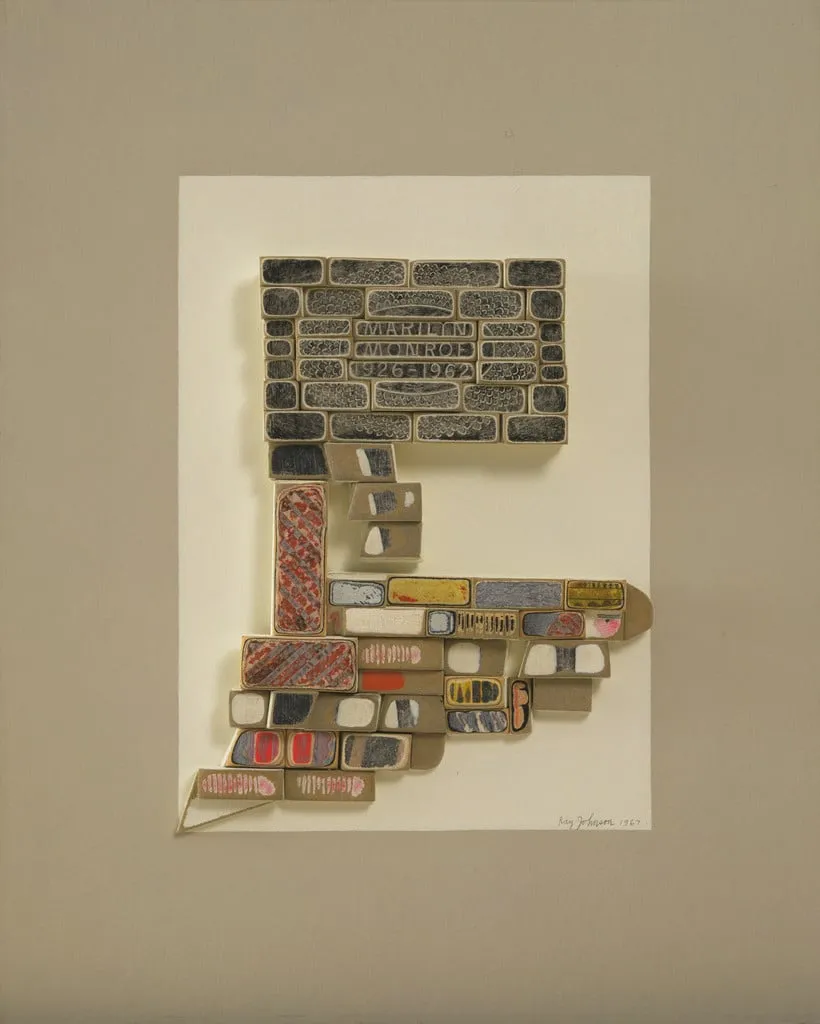
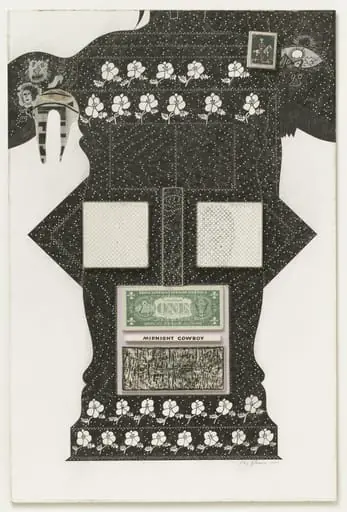
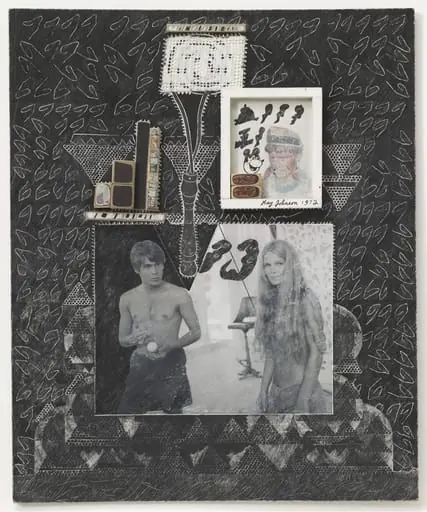
Untitled is a gouache drawing by Ray Johnson. It dates from 1967 and is held in the collection of the Museum of Modern Art.
About this work
Check out gouache—it’s the paint used here, and it’s different from regular paint.
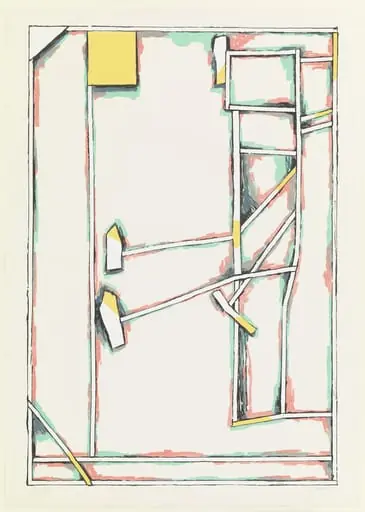
This looks like a city made of blocks. The top is a brick wall with words carved into it. Below, tiny buildings sit on a street—some are red, some blue, some gray. A long bus or train runs through the middle. The colors are bright but flat, like a child’s drawing with crayons.
The bricks at the top spell out "MONTROY" and two years: 1962 and 1967. The artist used real materials—paper, paint, even fabric—to build this scene.
Check out gouache—it’s the paint used here, and it’s different from regular paint.
Overview
Created in 1967, this mixed-media drawing by Ray Johnson combines gouache, crayon, and colored ink on layered board. It presents a stylized urban landscape built from flat, geometric forms and bold, unmodulated colors. The work resists traditional perspective, instead assembling a fragmented cityscape through layered materials and text, reflecting Johnson’s interest in collage and non-linear composition.
Subject & Meaning
The composition resembles a miniature metropolis, with blocky structures arranged along a central axis that suggests a road or rail line. Above, a horizontal band of bricks bears the name 'MONTROY' and the years 1962 and 1967, possibly referencing personal or artistic milestones. The scene evokes a symbolic city rather than a literal one, blending private notation with urban abstraction.
Technique & Style
Johnson employed gouache for its opaque, matte finish, layered with crayon and ink to create sharp, childlike contours. Fabric and paper fragments are embedded into the surface, adding tactile depth. The palette is limited but vivid, with no shading or texture modeling—emphasizing flatness and deliberate simplicity, aligning with his affinity for found imagery and amateur aesthetics.
History & Provenance
The work entered The Museum of Modern Art’s collection as part of its broader engagement with postwar American experimental drawing. Johnson, known for his mail art and conceptual networks, often treated drawings as ephemeral artifacts. This piece, like many of his works, was likely made in his home studio and circulated among peers before institutional acquisition.
Context
Made during a period of intense experimentation in American art, the piece reflects influences from Pop Art, Dada, and the burgeoning mail art movement. Johnson’s use of text, fragmented architecture, and everyday materials aligns with contemporaries like Robert Rauschenberg and Jasper Johns, yet his approach remained deeply personal, blurring the line between diary and public artifact.
Legacy
This work exemplifies Johnson’s contribution to expanding the boundaries of drawing beyond traditional media. His integration of text, collage, and personal symbolism influenced later generations of conceptual and mail artists. Though not widely exhibited during his lifetime, its inclusion in MoMA’s collection underscores its significance in redefining what a drawing could contain and communicate.
Artist & collection

Artist
Raymond Edward "Ray" Johnson was an American artist. Known primarily as a collagist and correspondence artist, he was a seminal figure in the history of Neo-Dada and early Pop art and was described as "New York's most…