Artwork
Untitled
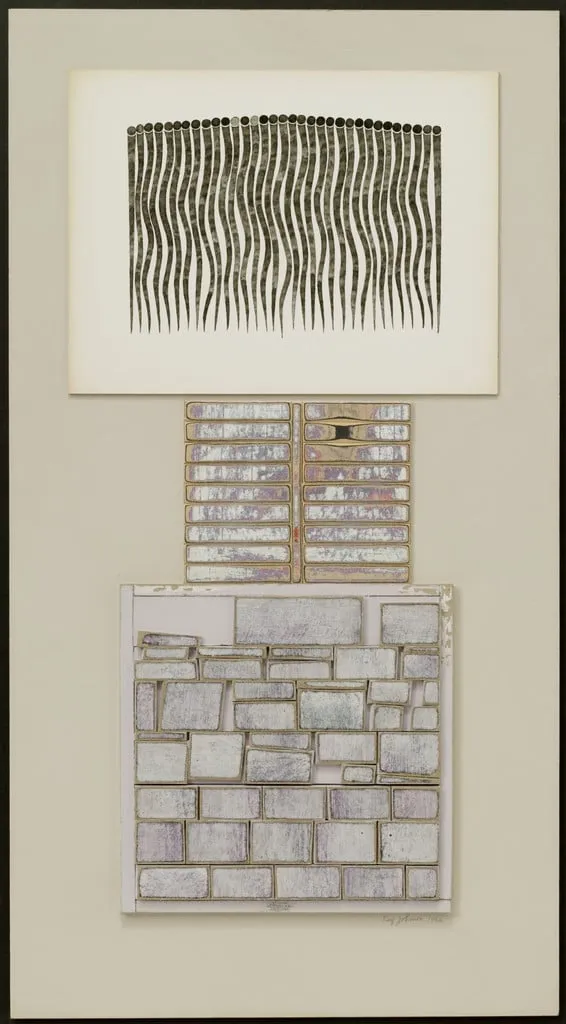
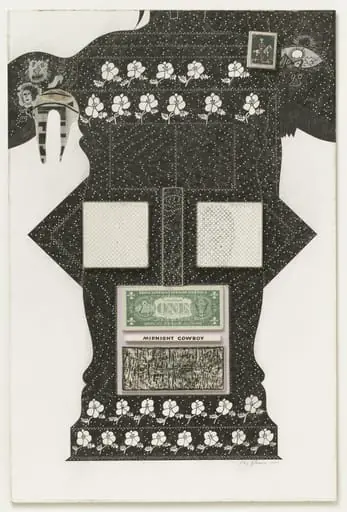
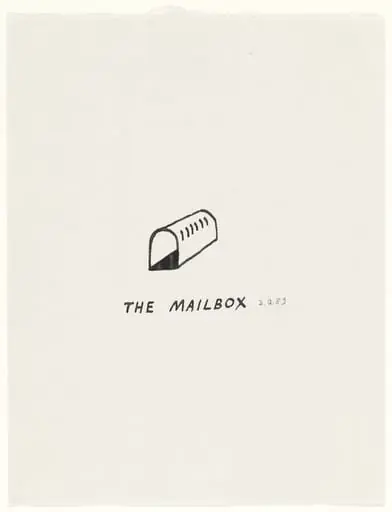
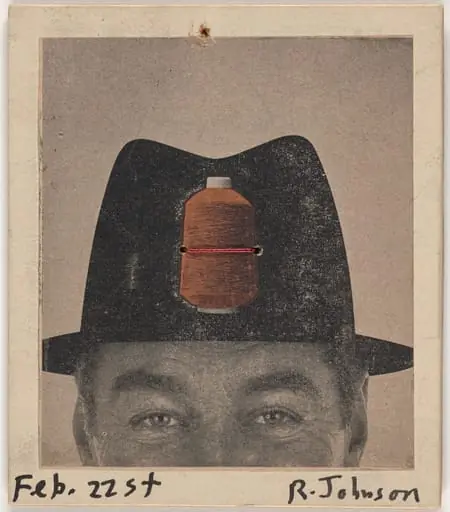
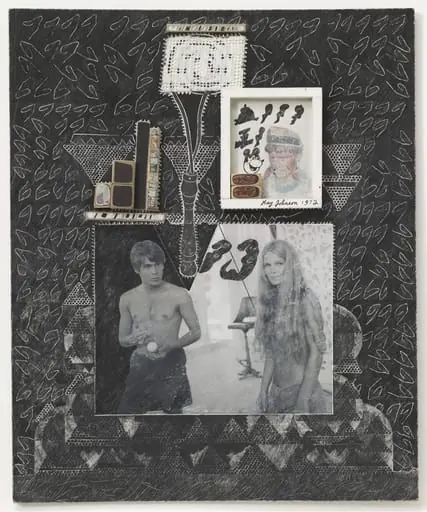
Untitled is a gouache drawing by Ray Johnson. It dates from 1966 and is held in the collection of the Museum of Modern Art.
About this work
Overview
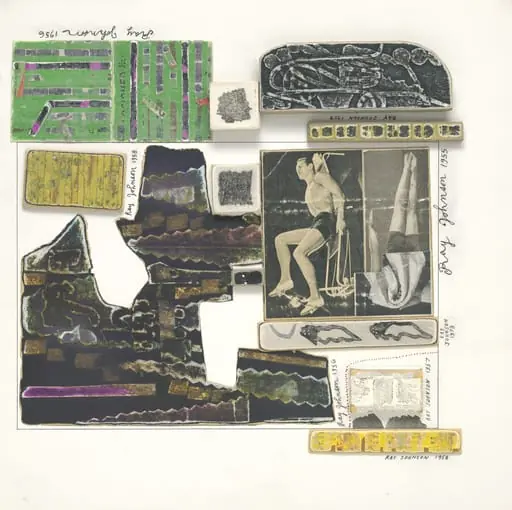
Created in 1966, this work by Ray Johnson is an assemblage composed of printed paper, paperboard, ink, and gouache applied to a painted surface. It is part of The Museum of Modern Art’s collection and exemplifies Johnson’s interest in layered, non-traditional compositions that blur the boundaries between drawing, collage, and object.
Subject & Meaning
Together, they evoke systems of communication, decay, and coded structure without explicit narrative.
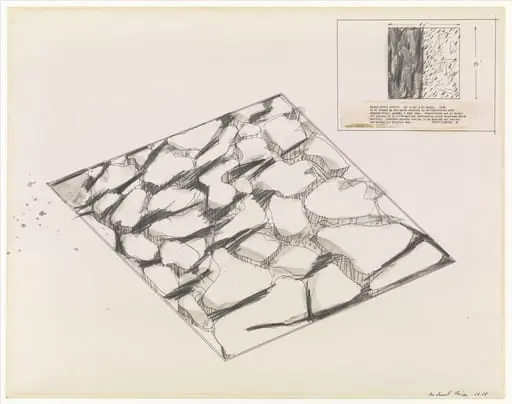
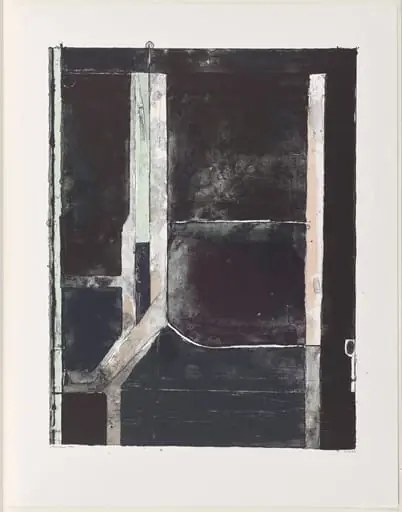
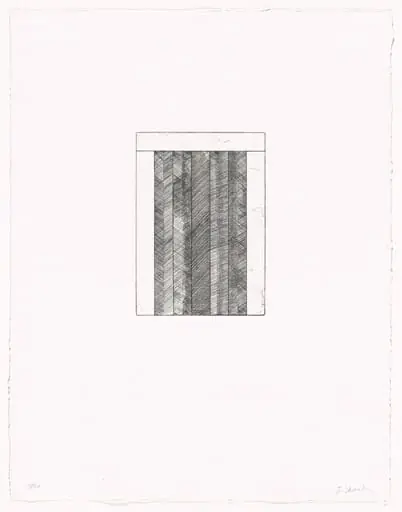
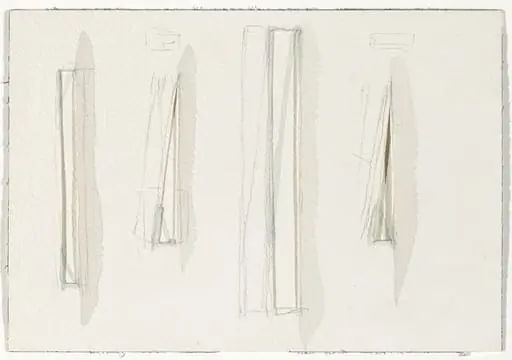
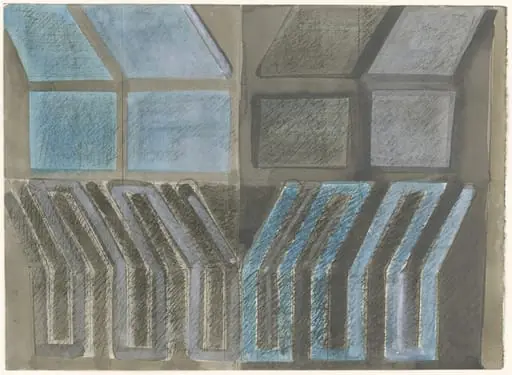
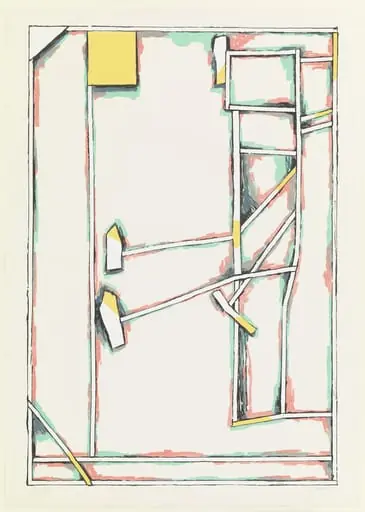
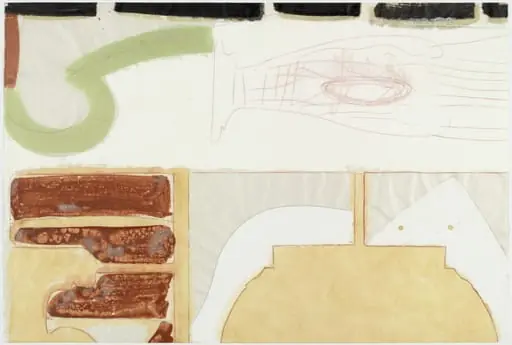
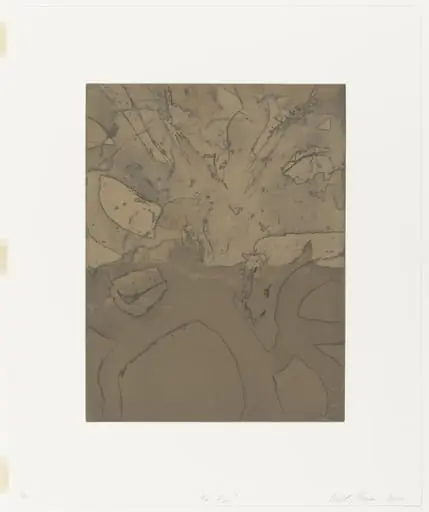
The piece presents three distinct horizontal bands, each with its own visual logic. The top features undulating lines suggesting motion or notation; the center holds a muted grid of colored squares with a central dark form, possibly a focal point or cipher; the bottom mimics a fragmented brick wall with irregular gaps and gold-edged tiles. Together, they evoke systems of communication, decay, and coded structure without explicit narrative.
Technique & Style
Johnson assembled the work from found and hand-altered paper materials, layering printed textures with hand-painted elements. Gouache and ink were used to modify surfaces, while the gold edges on the lower section introduce a subtle metallic contrast. The irregular spacing and uneven application suggest deliberate imperfection, rejecting mechanical precision in favor of tactile, handmade rhythm.
History & Provenance
The work was produced during a period when Johnson was actively developing his mail art network and experimental collage practices. It entered The Museum of Modern Art’s collection in the late 20th century, recognized for its role in expanding the definition of drawing beyond conventional media. Its provenance reflects Johnson’s broader engagement with avant-garde circles in New York.
Context
Emerging in the mid-1960s, this piece aligns with the rise of conceptual and anti-art movements that prioritized process over permanence. Johnson’s use of everyday materials and fragmented imagery resonated with contemporaries like Robert Rauschenberg and the Fluxus group, who challenged traditional hierarchies in art-making and embraced chance, repetition, and personal symbolism.
Legacy
This work contributes to Johnson’s reputation as a pioneer of mail art and assemblage drawing. Its fragmented structure and layered materials influenced later artists exploring collage, textual ambiguity, and the aesthetics of the ephemeral. Though not widely exhibited, it remains a quiet but significant example of his methodical, personal approach to visual language.
Artist & collection

Artist
Raymond Edward "Ray" Johnson was an American artist. Known primarily as a collagist and correspondence artist, he was a seminal figure in the history of Neo-Dada and early Pop art and was described as "New York's most…