Artwork
Michael and Christine with Toys and Books
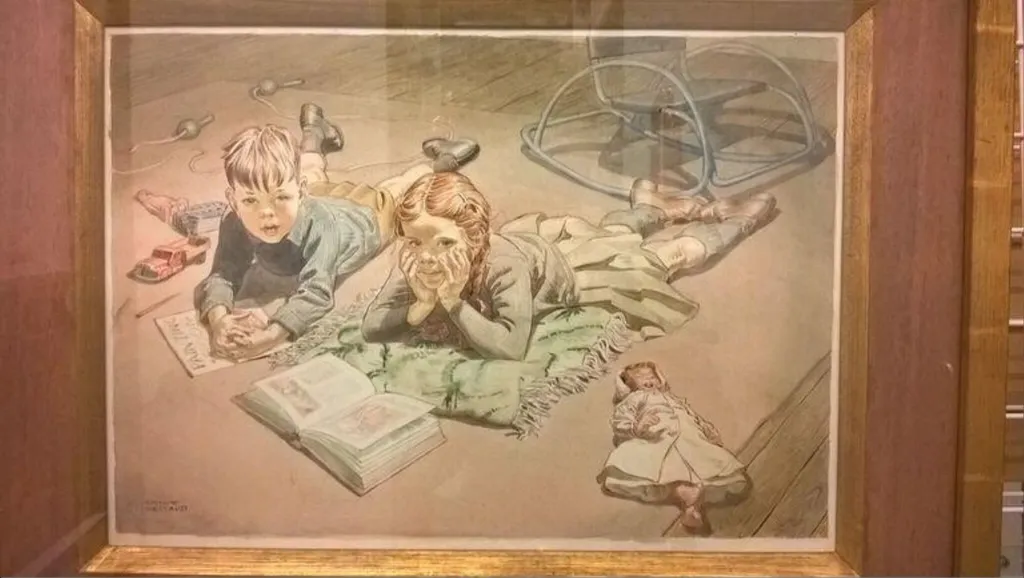
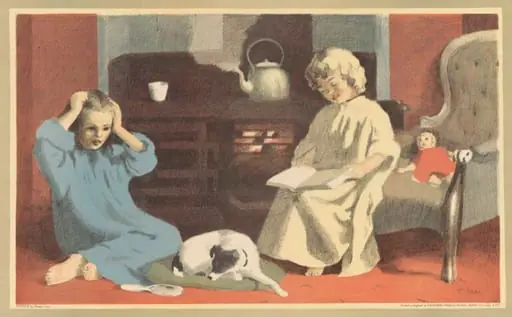
Michael and Christine with Toys and Books is a watercolor work on paper by the British Romanticist artist Raymond Sheppard. It dates from 1950 and is held in the collection of the Victoria and Albert Museum.
About this work
The artist used toys the children owned—a doll named Sylvie, a moving clown, and Christine’s skipping rope.
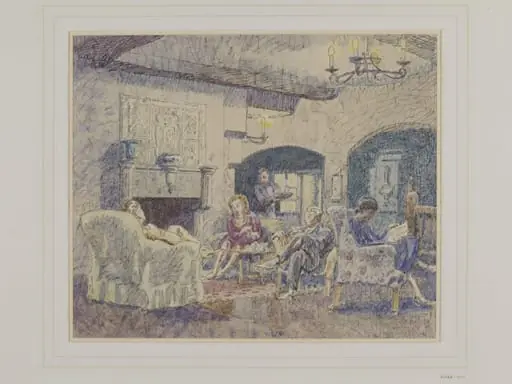
This is a watercolour painting of two children in their family home. It shows Michael and Christine with their toys and books in the front room. Raymond Sheppard made quick sketches of his kids at play, then turned them into finished works.
The artist used toys the children owned—a doll named Sylvie, a moving clown, and Christine’s skipping rope. A magic painting book may sit open on the table. The book in front of Christine could be *The Golden Gift Book* from 1939.
If you like this style, look up the artist Raymond Sheppard.
Overview
This watercolour painting depicts Raymond Sheppard’s two children, Michael and Christine, in the front room of their family home in Kingsbury Green. Created from quick observational sketches made during play, the work captures a quiet, intimate moment of childhood. The scene is rendered with gentle washes and delicate detail, reflecting the artist’s personal connection to his subjects and his environment.
Subject & Meaning
The painting portrays the children engaged with familiar objects from their daily lives: a doll named Sylvie, a mechanical clown, and a skipping rope. These items are not mere props but extensions of their world, suggesting authenticity and emotional resonance. The presence of books implies a domestic culture of reading and imagination, grounding the scene in the ordinary rhythms of early 20th-century family life.
Technique & Style
Sheppard employed watercolour for its transparency and fluidity, allowing light to pass through layers and create a soft, luminous atmosphere. His brushwork is precise yet unforced, capturing textures of fabric, wood, and paper with subtle tonal shifts. The composition is unposed, favoring natural arrangement over formal balance, reinforcing the spontaneity of the moment observed.
History & Provenance
The painting originated in the Sheppard household, where Raymond made frequent sketches of his children during play. These were later developed into finished watercolours, preserved within the family. The specific book in the image, possibly 'The Golden Gift Book' (1939), aligns with Sheppard’s known work as a children’s book illustrator, suggesting a personal and professional overlap in his artistic life.
Context
Created in the late 1930s or early 1940s, the work reflects a middle-class British home during a period of social stability before wartime disruption. The presence of manufactured toys and illustrated books indicates access to consumer culture, while the domestic setting underscores the value placed on quiet, indoor play. Sheppard’s approach aligns with a broader trend of artists documenting family life with sincerity rather than sentimentality.
Legacy
Though not widely exhibited, Raymond Sheppard’s watercolours remain valued for their quiet authenticity. They offer a rare glimpse into the private world of children in interwar Britain, free from idealization. His method—transforming fleeting moments into enduring images—resonates with later generations of artists who sought to elevate the everyday through careful observation and personal connection.
Artist & collection
Artist
Raymond Sheppard was a British artist and illustrator of books for children and adults.