Artwork
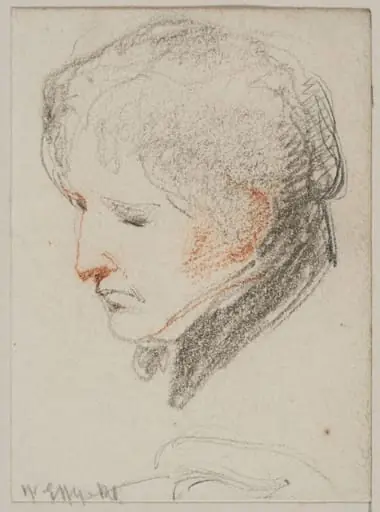
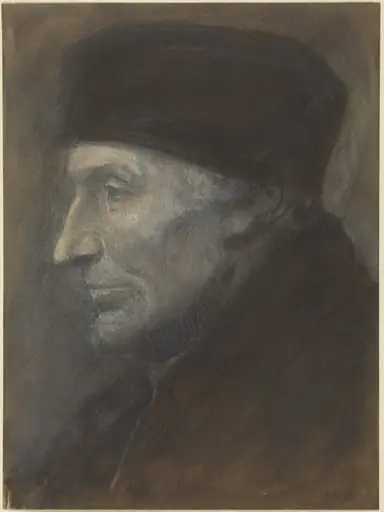
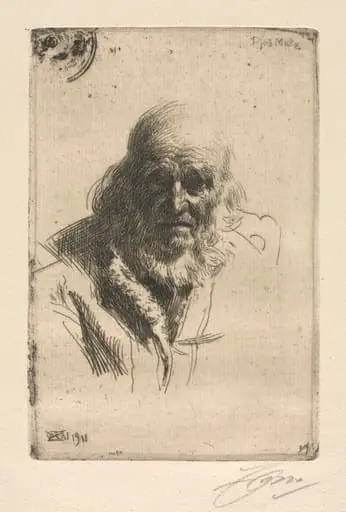
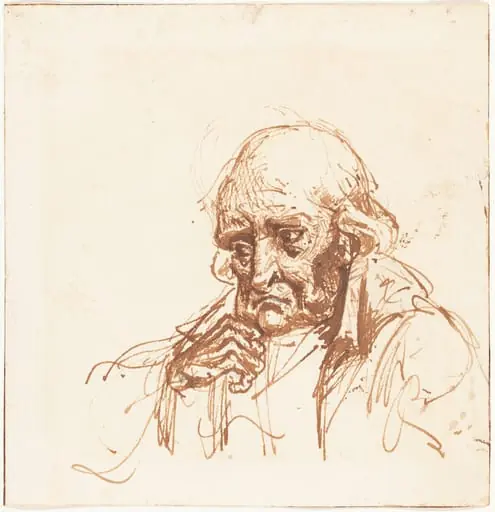
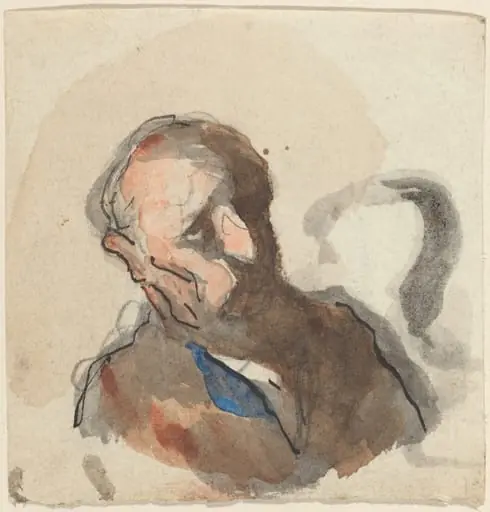
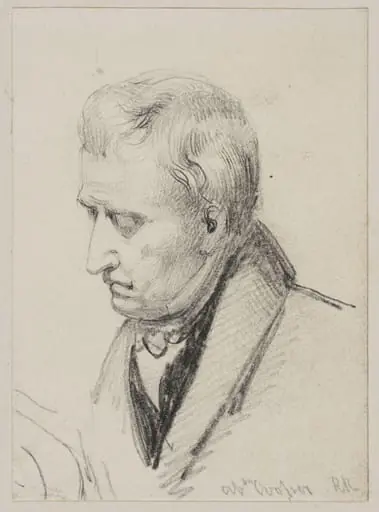
Study of an old man’s head
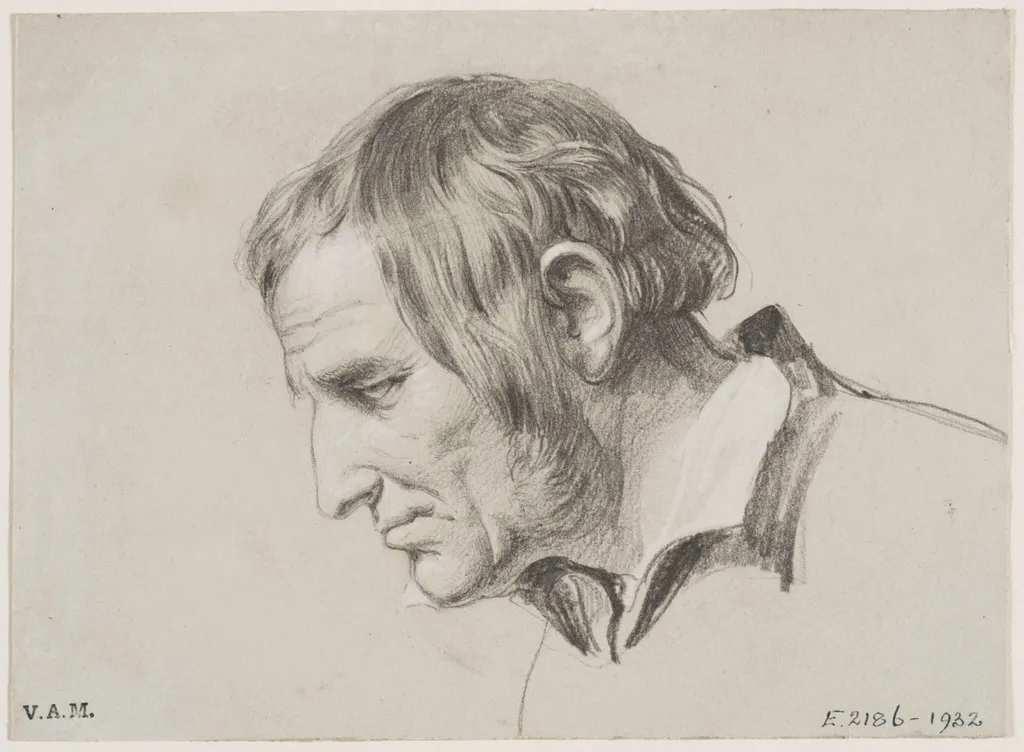
Study of an old man’s head is a drawing by Richard CB, RA, ARA Redgrave. It dates from 1850 and is held in the collection of the Victoria and Albert Museum.
About this work
Overview
Created during the mid-nineteenth century, it reflects the artist’s habit of working from life to refine his understanding of form and expression.
This pencil and chalk drawing by Richard Redgrave captures a study of an elderly man’s head, executed with focused attention on facial features while the rest of the figure remains loosely suggested. Created during the mid-nineteenth century, it reflects the artist’s habit of working from life to refine his understanding of form and expression. Though not tied to any known painting, it exemplifies the disciplined practice underlying his larger works.
Subject & Meaning
The subject is an anonymous older man, his head turned left with a quiet intensity in his gaze. No narrative or identity is assigned; the focus lies in the physical presence of aging—wrinkles, bone structure, and the play of light across skin. Redgrave treats the face as a study in human texture and volume, valuing observation over storytelling. The absence of context invites contemplation of the individual’s quiet dignity.
Technique & Style
Redgrave employed pencil for initial contours, then layered black chalk to deepen shadows and white chalk to lift highlights, creating a subtle tonal range. The face is rendered with careful gradations, while the shoulders and clothing are reduced to swift, minimal strokes. This contrast between precision and economy reveals a working method rooted in direct observation, prioritizing the study of light and form over finish.
History & Provenance
The drawing entered the collection of the South Kensington Museum—later the Victoria and Albert Museum—through Redgrave’s role as its first curator. It remained in the institution’s holdings, likely preserved as part of his personal archive of studies. Its survival reflects institutional recognition of preparatory work as valuable in its own right, not merely as a step toward finished art.
Context
In mid-nineteenth-century Britain, academic artists routinely produced life studies to hone their skills in anatomy and expression. Redgrave, trained in the Royal Academy system, followed this tradition. While many such drawings served specific commissions, this one stands apart—unattached to any known painting—suggesting it was undertaken for personal mastery rather than professional necessity.
Legacy
The drawing endures as a quiet testament to the artist’s daily discipline. It illustrates how preparatory work, often overlooked, formed the foundation of academic practice. Today, it offers insight into Redgrave’s process and the broader culture of observational drawing among Victorian artists, preserving the unvarnished act of looking as a vital artistic act.
Artist & collection
Artist
Richard Redgrave painted quiet English woods, cottages, and manor halls in watercolour and oil.

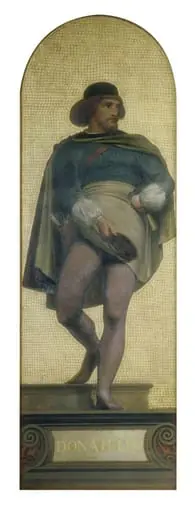 Donatello: design for a mosaic in the Museum (the 'Kensington Valhalla')
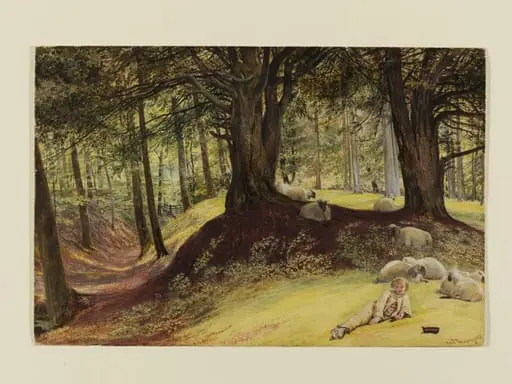 Parkhurst Woods, Abinger, Surrey
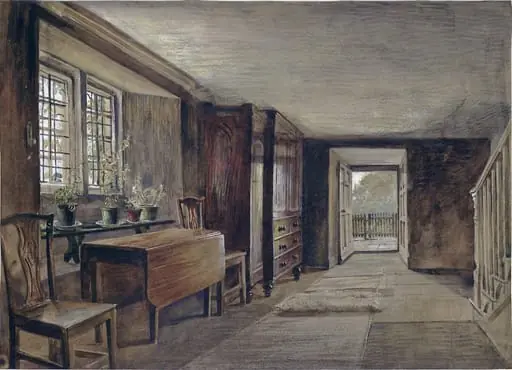 The Entrance Hall of Mortham Tower, Rokeby, Yorkshire
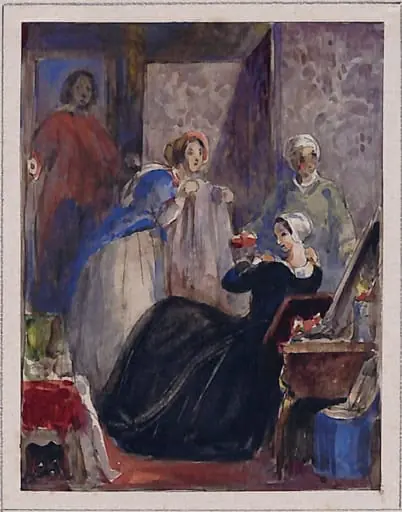 Throwing off her Weeds
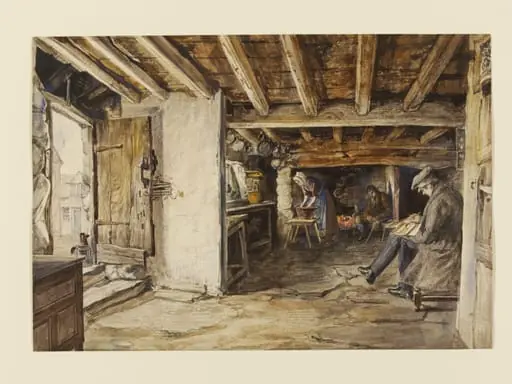 Interior of a cottage, North Wales
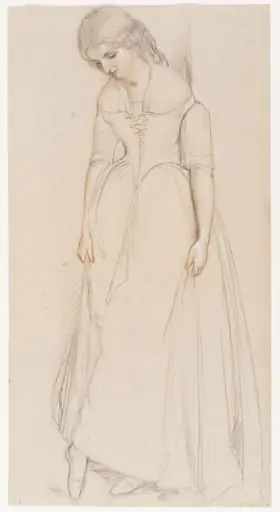 Study for the woman near the doorway in <i>Cinderella About to Try on the Glass Slipper</i> (1842)
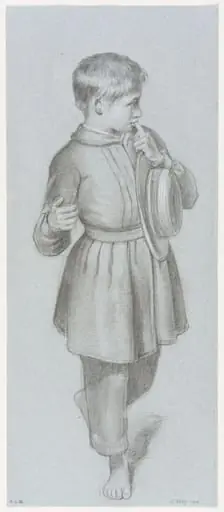 Study of the boy with his finger in his mouth for <i>Sunday Morning: Walk from Church</i>
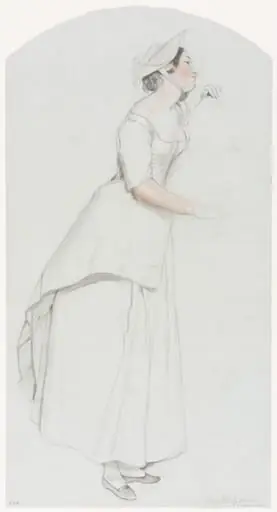 Study of a female figure