Artwork
Edwin Edwards
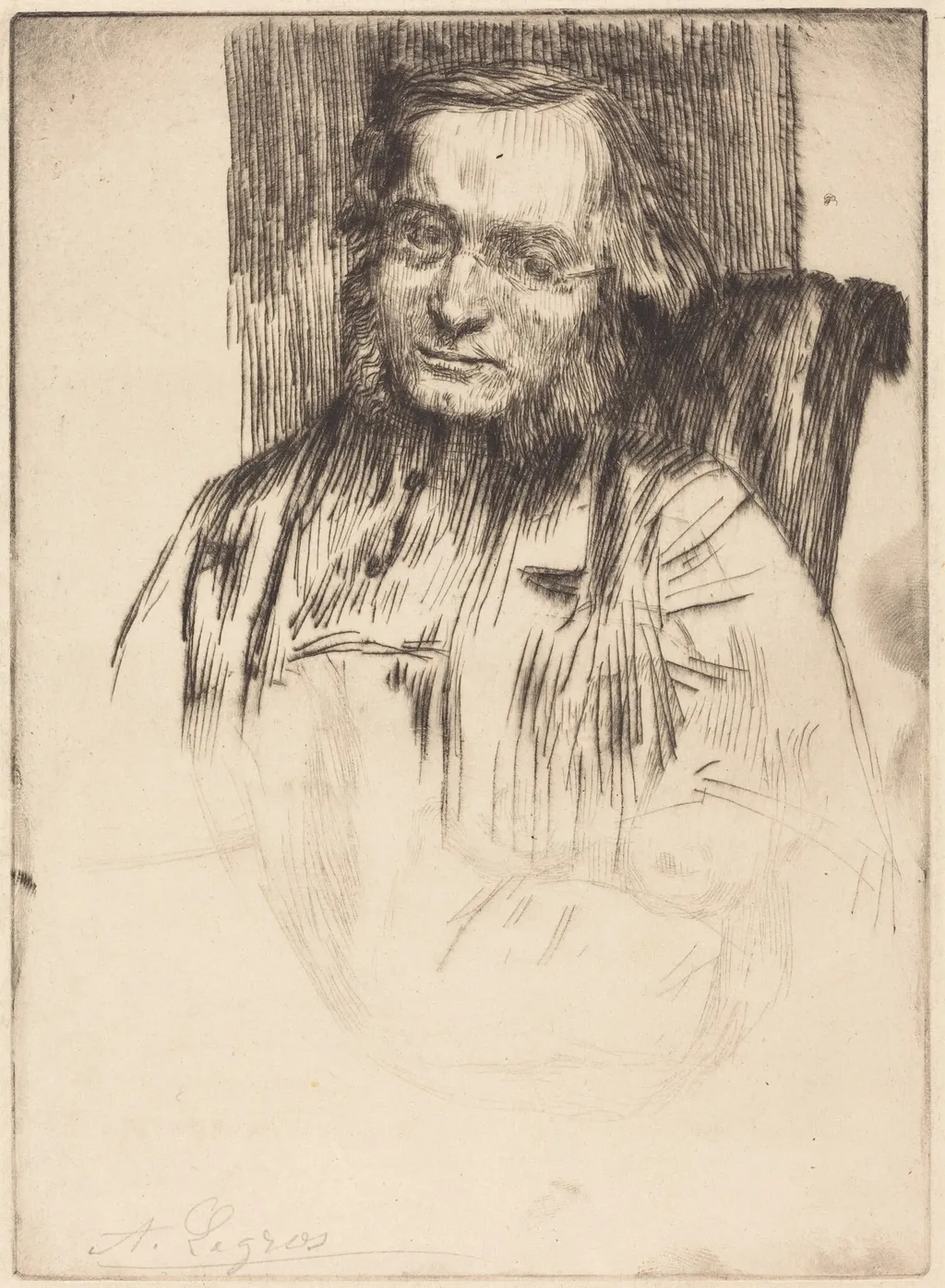
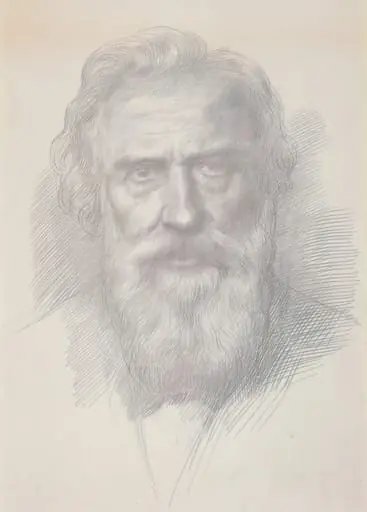
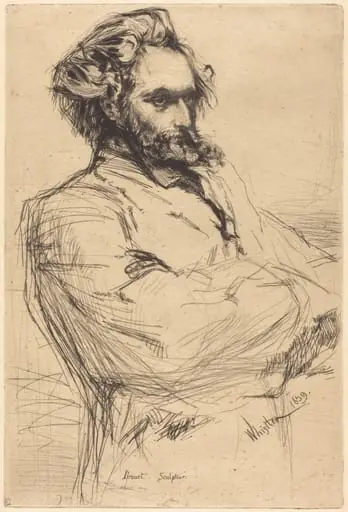
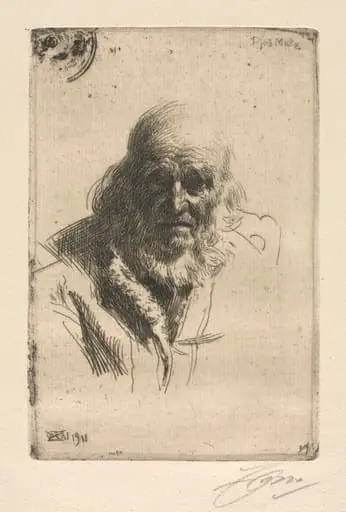
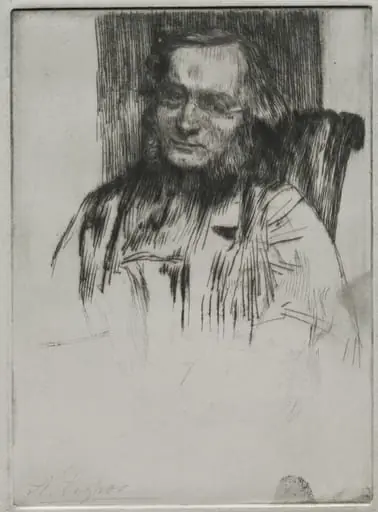
Edwin Edwards is an ink print by the Romanticist artist Alphonse Legros. It dates from 1874 and is held in the collection of the National Gallery of Art.
About this work
Overview
This work exemplifies Legros’s dedication to reviving printmaking in Britain during a period when etching and drypoint were regaining artistic credibility.
Alphonse Legros, a French artist who moved to London in 1863 and became a British citizen, created the drypoint portrait of Edwin Edwards in 1874. This work exemplifies Legros’s dedication to reviving printmaking in Britain during a period when etching and drypoint were regaining artistic credibility. His technical precision and commitment to the medium made him a pivotal figure in the British print revival.
Subject & Meaning
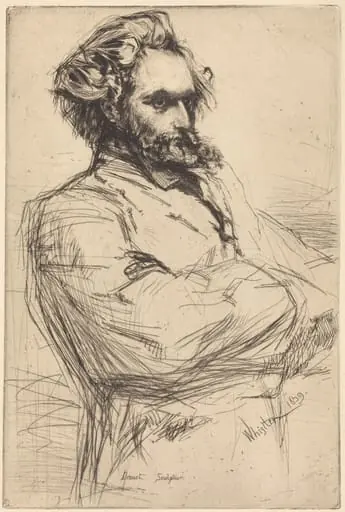
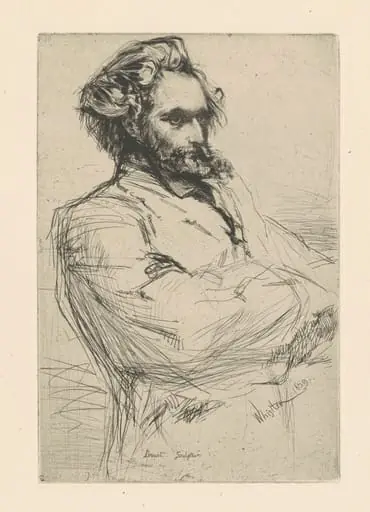
Edwin Edwards, a fellow artist and colleague of Legros, is portrayed with quiet dignity. His long hair, mustache, and loosely worn shirt suggest an informal, intellectual demeanor. The gaze directed away from the viewer conveys introspection rather than engagement, reinforcing a sense of inner stillness. The absence of context or props focuses attention on the subject’s presence and psychological depth.
Technique & Style
Legros employed drypoint, a technique involving direct incision into a metal plate, to create rich, velvety lines and subtle tonal gradations. The dark, expressive strokes contrast with the pale areas of the shirt and skin, enhancing three-dimensionality. The roughness of the burr, characteristic of drypoint, adds texture and immediacy, reflecting Legros’s mastery of the medium’s tactile qualities.
History & Provenance
Created during Legros’s tenure at the Slade School of Fine Art, where he taught printmaking, the portrait likely emerged from his close circle of artistic peers. Edwin Edwards, a British engraver and illustrator, was part of this network. The work remained within private collections after its creation, with no public exhibition record noted in early sources, underscoring its intimate, personal character.
Context
In the 1870s, British printmaking was shifting from reproductive engraving toward original, expressive graphic art. Legros, trained in France and influenced by Rembrandt, championed this change. His portraits, like this one, aligned with a broader European interest in the psychological depth achievable through direct drawing on metal, distinguishing his work from more commercial print traditions.
Legacy
Legros’s drypoints, including this portrait, influenced a generation of British artists who embraced printmaking as a legitimate fine art form. His emphasis on directness, tonal nuance, and emotional restraint became foundational to the British etching revival. Though less widely known today, his technical innovations and pedagogical role left a lasting imprint on the medium’s development in England.
Artist & collection

Artist
Alphonse Legros (French pronunciation: ; 8 May 1837 – 8 December 1911) was a French, later British, painter, etcher, sculptor, and medallist.