Artwork
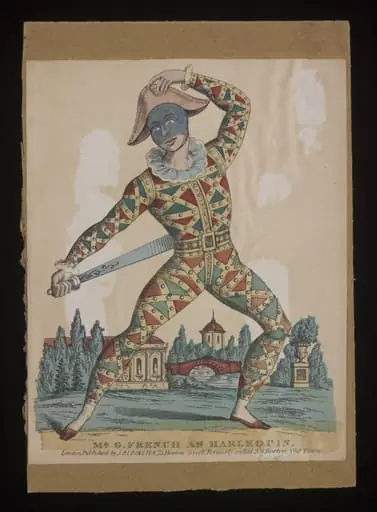
Mr G. French as Harlequin
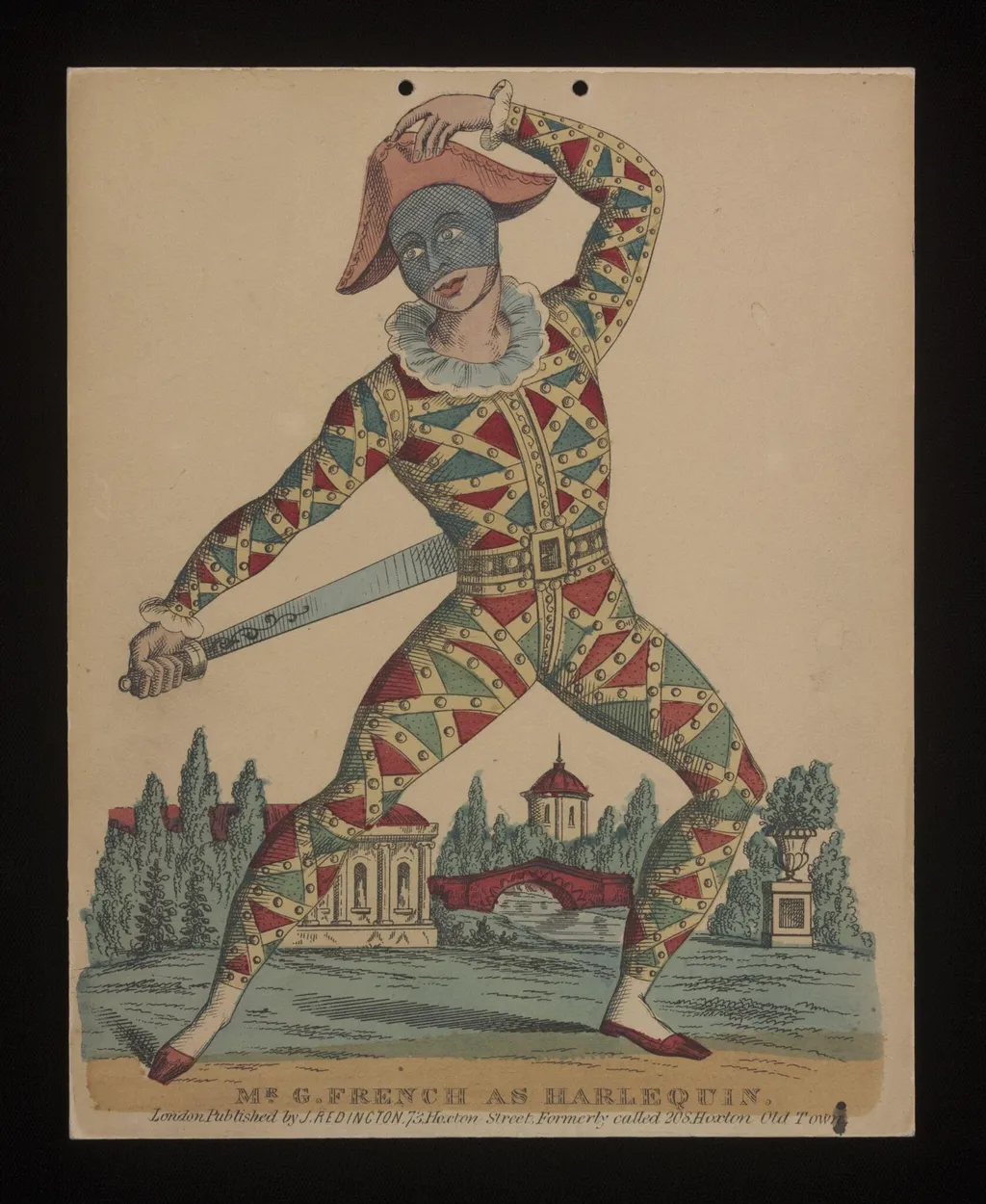
Mr G. French as Harlequin is a print by the Romanticist artist John Redington. It dates from 1840 and is held in the collection of the Victoria and Albert Museum. This 1840 print, titled 'Mr G.
About this work
This print is titled Mr G. French as Harlequin.
It was made around 1840 by John Redington.
The print is held at the Victoria and Albert Museum, which gives us a clue about its significance, and it's an example of work from the Romanticism period, a time when artists focused on emotion and imagination.
You can learn more about the movement by exploring Romanticism.
Overview
This 1840 print, titled 'Mr G. French as Harlequin', is a representation of its subject in a theatrical costume, created by publisher J. Redington in London.
Subject & Meaning
The print portrays Mr. G. French in the character of Harlequin, a figure from the Commedia dell'Arte, suggesting a connection to theatrical performance or a specific role played by French.
Technique & Style
While specific technical details are not provided, the print's creation during the Romanticism period implies an emphasis on expressive qualities, though the medium (print) often lent itself to more restrained, detailed work.
History & Provenance
Published by J. Redington in London around 1840, the print is now part of the Victoria and Albert Museum's collection, indicating its recognized historical or artistic value.
Context
Emerging from the Romanticism period, the print reflects the era's focus on emotion and imagination, though its status as a print may have also catered to a broader, more accessible audience.
Legacy
As part of the Victoria and Albert Museum's holdings, the print contributes to the historical record of theatrical representation and Romantic-era aesthetics, available for study and public viewing.
Artist & collection
Artist
John Redington spent his mornings in a Covent Garden print shop where actors came to buy cheap likenesses of themselves.