Artwork
C'est moi, Jean, qui ai vu et qui ai oie ces choses (And I John saw these things and heard them
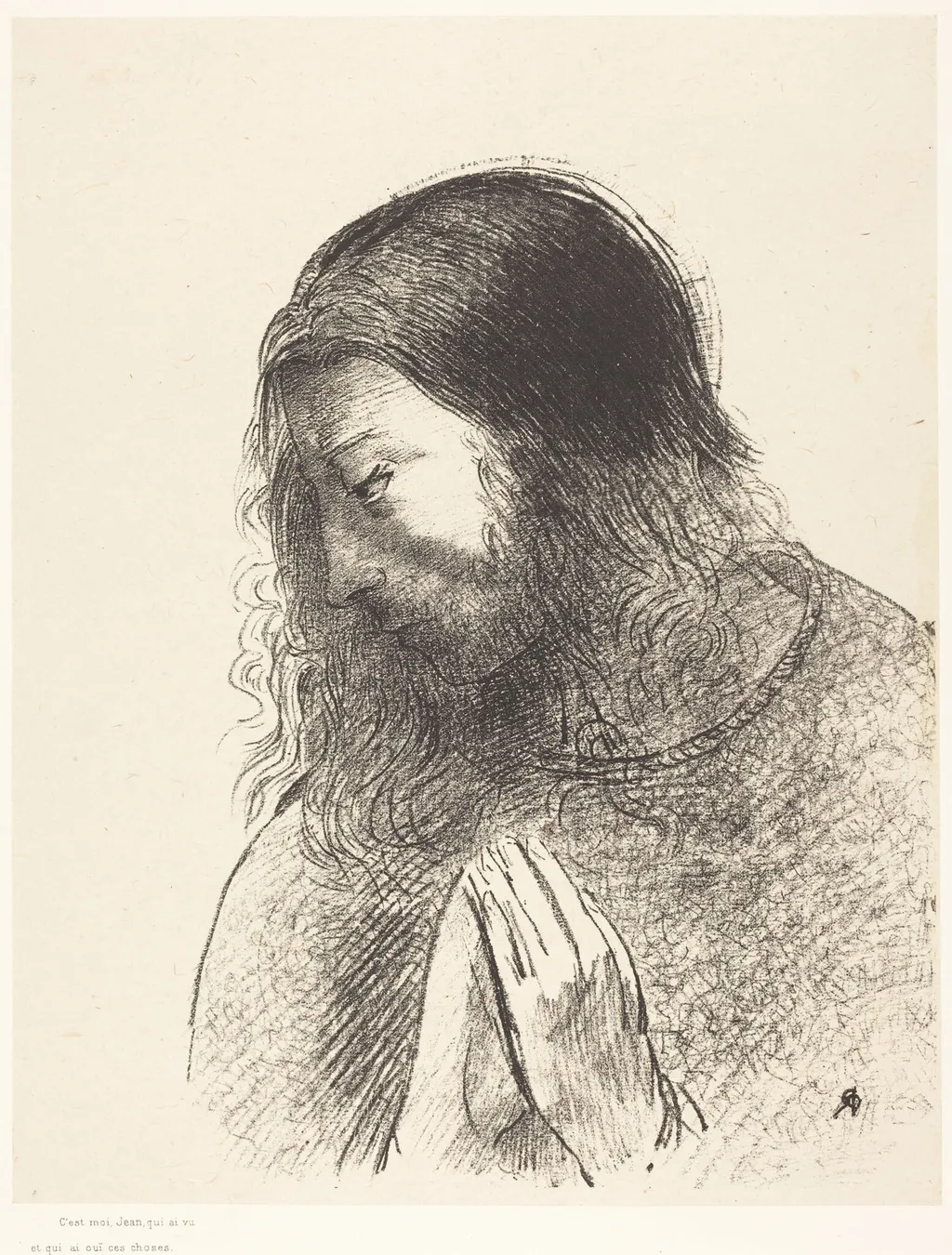
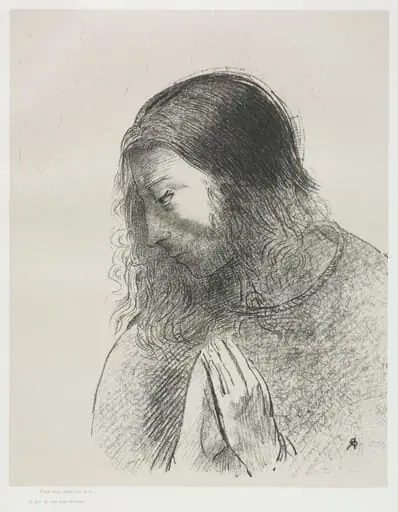
C'est moi, Jean, qui ai vu et qui ai oie ces choses (And I John saw these things and heard them is an ink print by the Impressionist artist Odilon Redon. It dates from 1899 and is held in the collection of the National Gallery of Art.
About this work
Overview
Created in 1899, this lithograph by French symbolist Odilon Redon bears the French title C’est moi, Jean, qui ai vu et qui ai oie ces choses, translated as And I John saw these things and heard them. Executed as a single‑sheet print, the work exemplifies Redon’s late‑period interest in narrative and spiritual subjects.
Subject & Meaning
The composition centers on a bearded, long‑haired figure kneeling in prayer. Clad in a simple robe, his hands are pressed together before his chest, and his bowed head suggests contemplation or supplication. The title’s reference to a personal witness implies an intimate, perhaps autobiographical, testimony of vision and sound.
Technique & Style
Redon employed the lithographic process, drawing directly onto a stone or metal plate with greasy media before transferring the image onto paper. The print’s palette is restrained, dominated by muted browns and a pale beige ground that accentuates the darker tones of the figure’s hair and garments, reinforcing a solemn mood.
History & Provenance
The lithograph was produced toward the end of Redon’s career, a period marked by a shift from his earlier charcoal and pastel works to more figurative, narrative prints. It entered public collections through early 20th‑century acquisitions, though specific ownership records remain limited.
Context
Redon’s late oeuvre often explored themes of mysticism, inner experience, and the unseen. This work aligns with his broader engagement with symbolism, where personal revelation and spiritual introspection are rendered through simplified forms and subdued coloration.
Legacy
While not as widely reproduced as Redon’s pastel series, the lithograph contributes to scholarly understanding of his printmaking practice and his exploration of devotional imagery, offering insight into the artist’s evolving visual language at the turn of the century.
Artist & collection
Artist
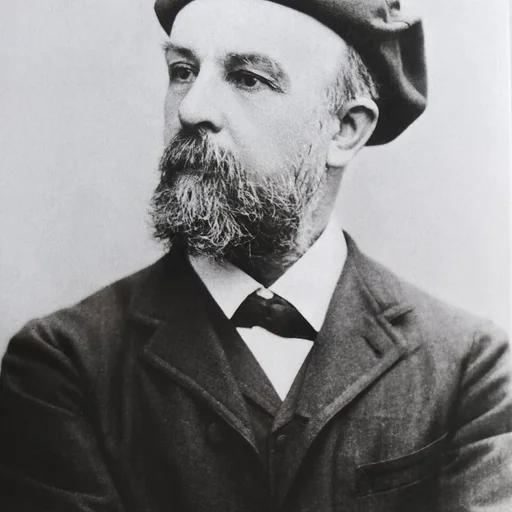
Born Bertrand-Jean Redon on 20 April 1840 in Bordeaux, the artist adopted the name Odilon from his mother, Marie-Odile.

 And I John Saw These Things, and Heard Them
 Alphonse Daudet
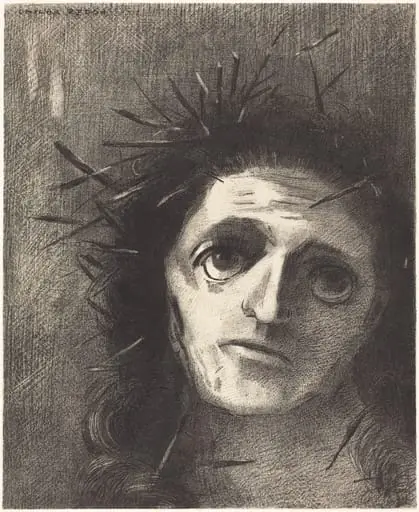 Christ
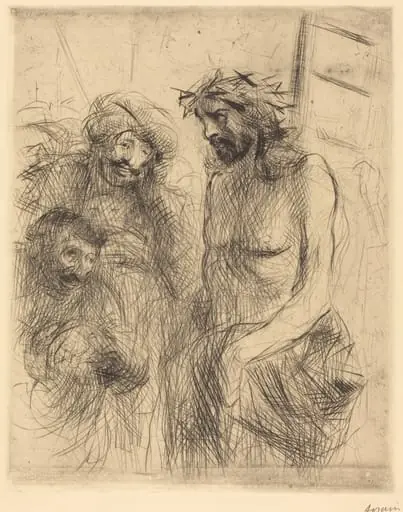 Le Christ aux outrages (The Mocking of Christ)
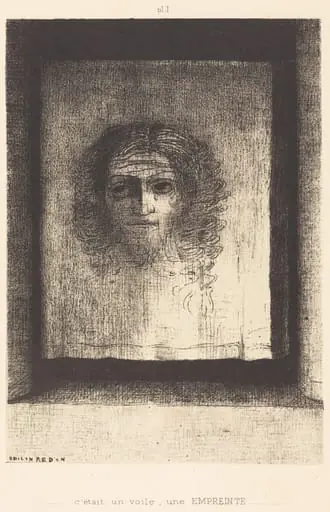 C'etait un voile, un empreinte (It was a veil, an imprint)
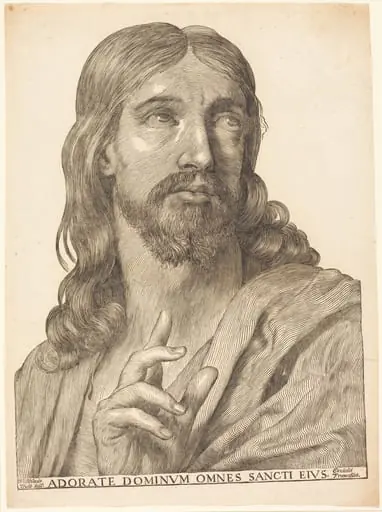 Christ in Half-Length
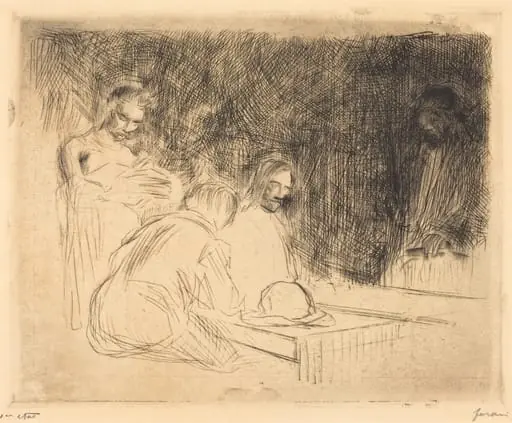 Le repas à Emmaus (3e planche) (The Supper at Emmaus) (third plate)
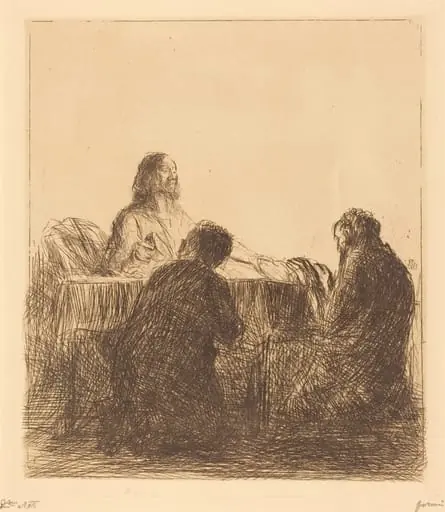 La fraction du pain (The Breaking of the Bread)
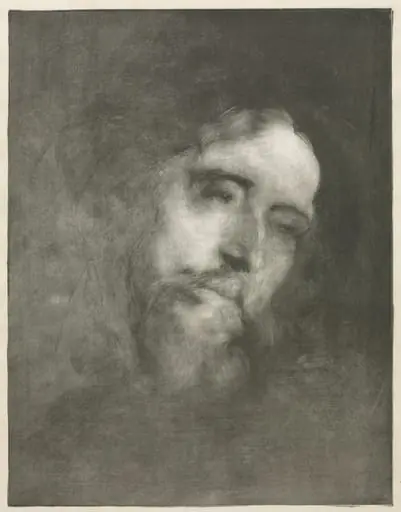 Alphonse Daudet
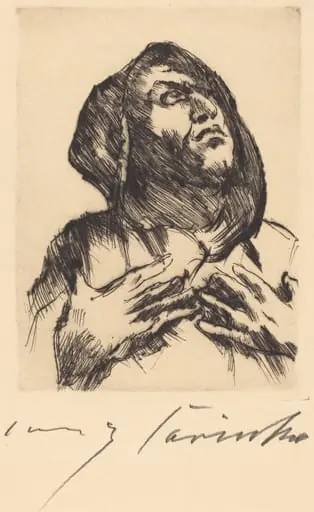 Mönch mit Erhobenem Blick (Monk Gazing Upward)
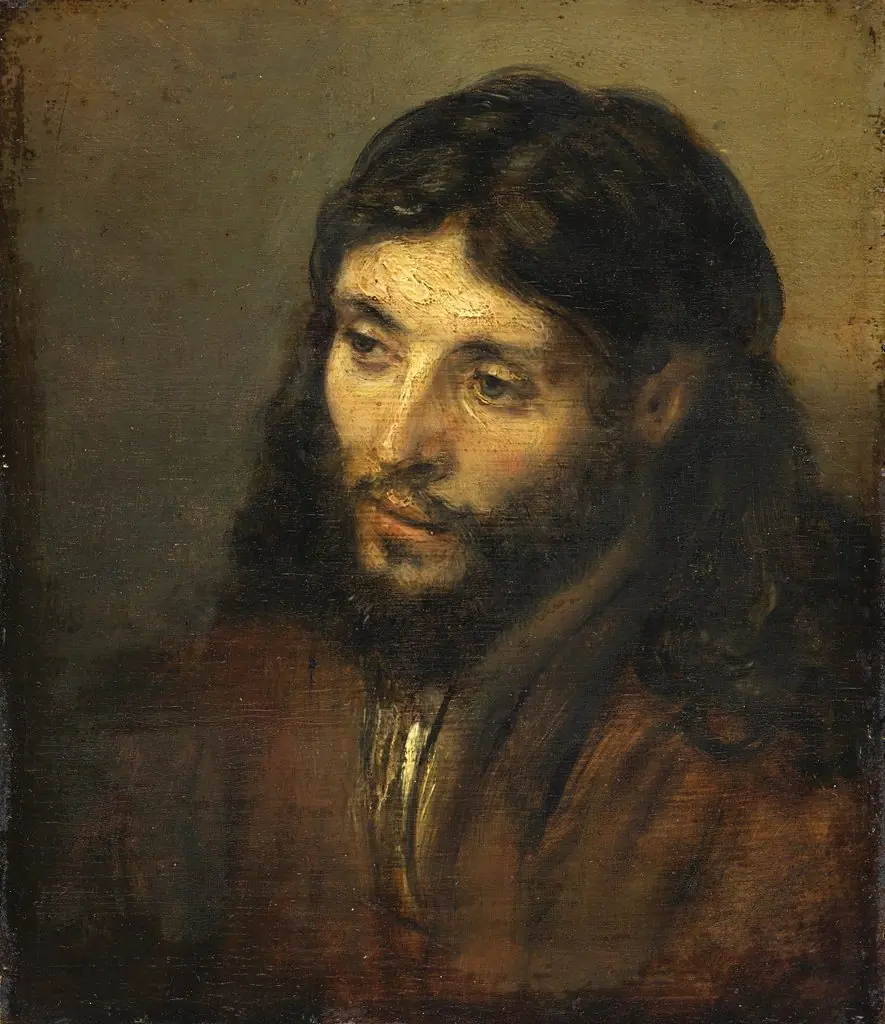 Head of Christ
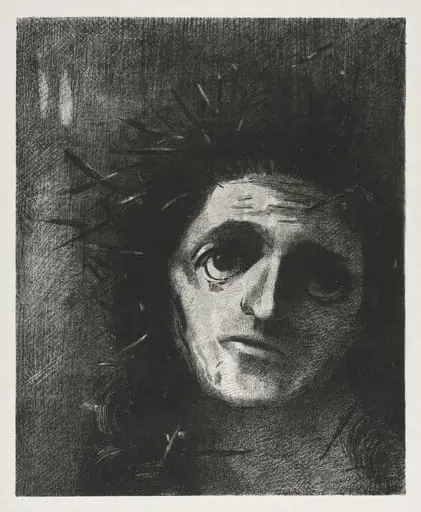 Christ