Artwork
Et moi, Jean, Je vis la sainte cite, la nouvelle Jerusalem, qui descendait du ciel, d'aupres de dieu (And I John saw the holy city, new Jerusalem, coming down from God out of heaven)
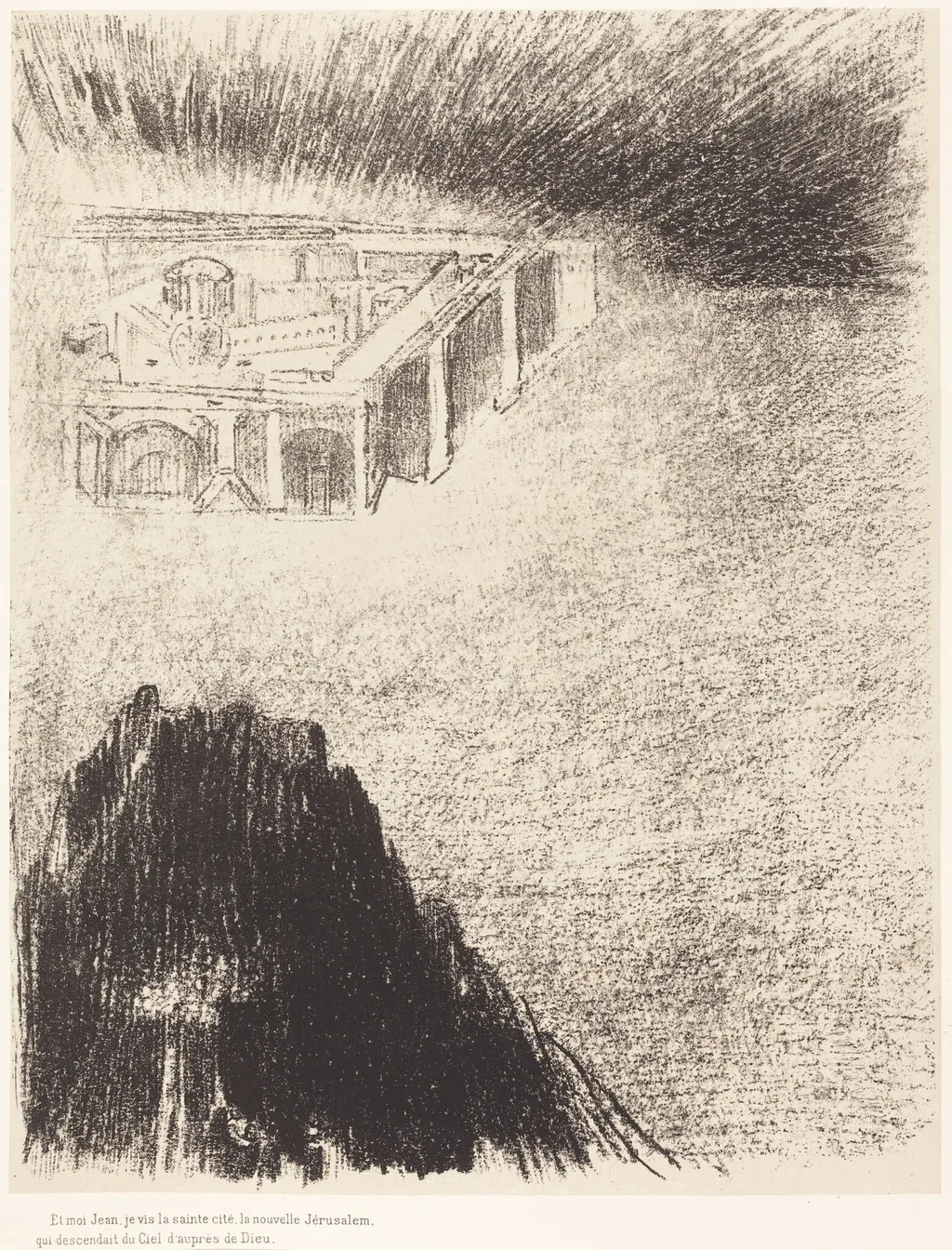
Et moi, Jean, Je vis la sainte cite, la nouvelle Jerusalem, qui descendait du ciel, d'aupres de dieu (And I John saw the holy city, new Jerusalem, coming down from God out of heaven) is an ink print by the Impressionist artist Odilon Redon. It dates from 1899 and is held in the collection of the National Gallery of Art.
About this work
Overview
Created in 1899, this lithograph by Odilon Redon illustrates a passage from the Book of Revelation, rendered not as a literal scene but as an ethereal vision.
Created in 1899, this lithograph by Odilon Redon illustrates a passage from the Book of Revelation, rendered not as a literal scene but as an ethereal vision. The composition avoids clear architectural detail, instead suggesting a celestial city through fragmented, shadowed forms suspended in a turbulent sky. The work belongs to Redon’s late period, where he increasingly favored atmospheric, symbolic imagery over defined representation.
Subject & Meaning
The title quotes Saint John’s vision of the New Jerusalem descending from heaven, a moment of divine revelation. Redon does not depict the city as orderly or grand, but as a haunting, indistinct mass hovering in the air. The ambiguity reflects a spiritual experience beyond physical form—more feeling than doctrine—inviting contemplation rather than narrative recognition.
Technique & Style
Redon employed lithography to achieve soft, fluid tonal shifts, using loose, gestural marks that blur between drawing and ink wash. The dark, irregular blocks of architecture contrast with the swirling, chaotic sky, created through rapid, uneven strokes. The text, integrated at the base, functions as both caption and poetic counterpoint, reinforcing the work’s dreamlike, introspective tone.
History & Provenance
This print was produced during Redon’s mature phase, after he had shifted from dark, fantastical charcoal works to lighter, color-infused imagery. It was likely made for a private or limited edition, consistent with his interest in literary and mystical themes. No public record of early ownership exists, but it aligns with his broader engagement with biblical and poetic subjects in the 1890s.
Context
In late 19th-century France, artists increasingly turned to inner experience over realism. Redon, influenced by Symbolist poetry and Theosophy, sought to visualize the invisible—dreams, spiritual states, metaphysical ideas. His approach to biblical themes avoided dogma, favoring emotional resonance and ambiguity, distinguishing his work from academic religious art of the time.
Legacy
The lithograph exemplifies Redon’s contribution to modern printmaking by elevating the medium’s capacity for psychological depth. Its open-ended imagery influenced later Surrealists and expressionists who valued subjective vision over literal depiction. Though not widely exhibited in his lifetime, it remains a quiet testament to his belief that art should evoke the unseen.
Artist & collection
Artist
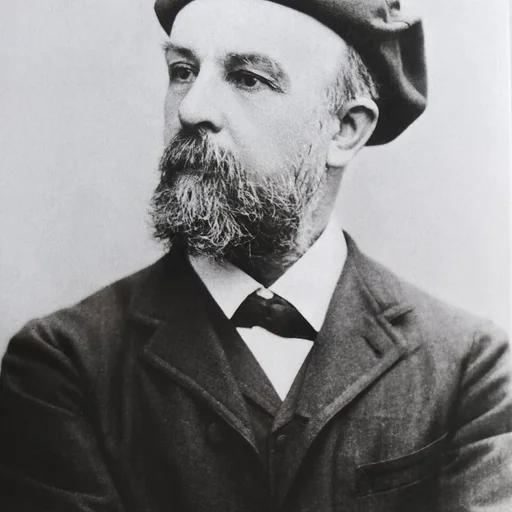
Born Bertrand-Jean Redon on 20 April 1840 in Bordeaux, the artist adopted the name Odilon from his mother, Marie-Odile.

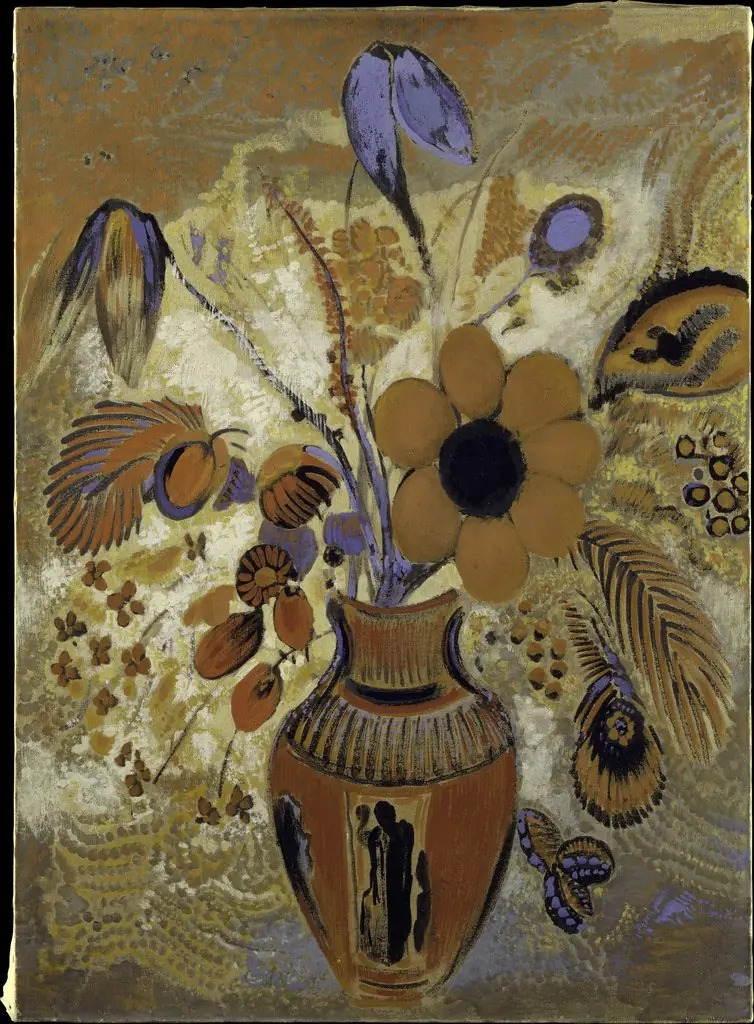
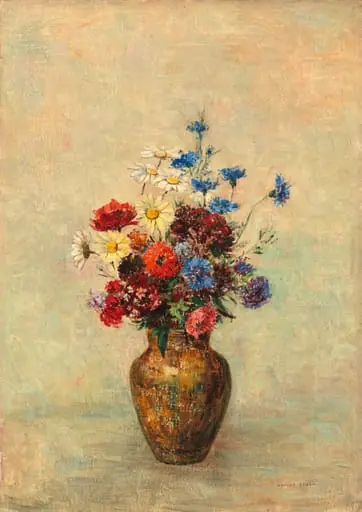
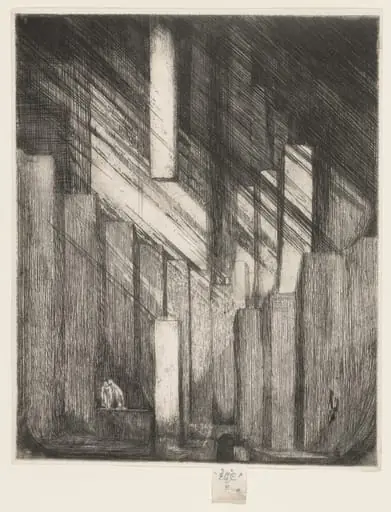 Untitled
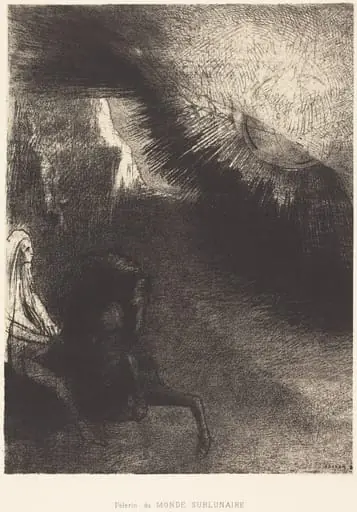 Pélerin du monde sublunaire (Pilgrim of the sublunary world)
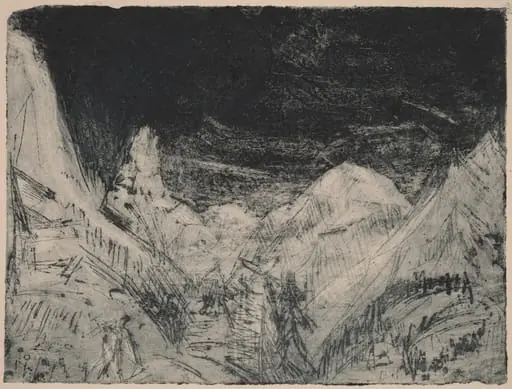 Mountain Landscape with Little Mowers
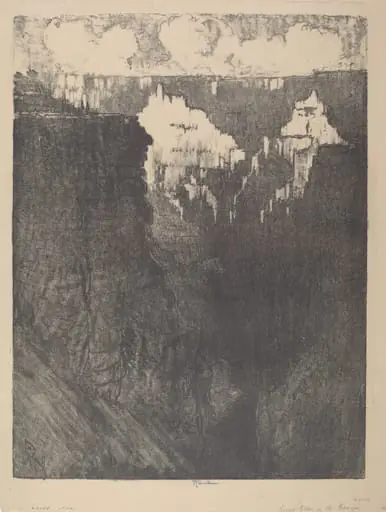 Sunset Cities in the Canyon
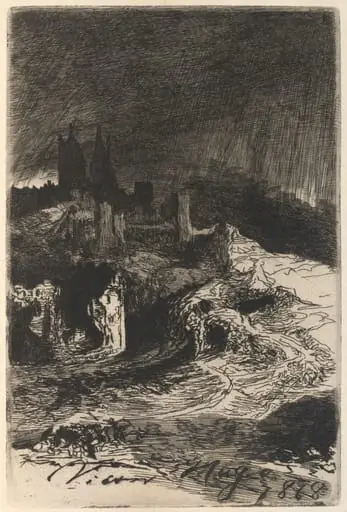 L'Eclair (Lightning)
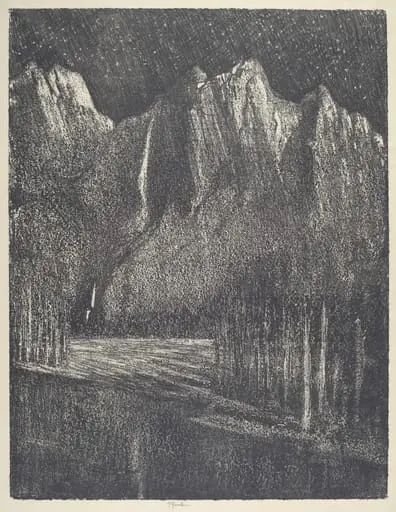 Night in the Yosemite
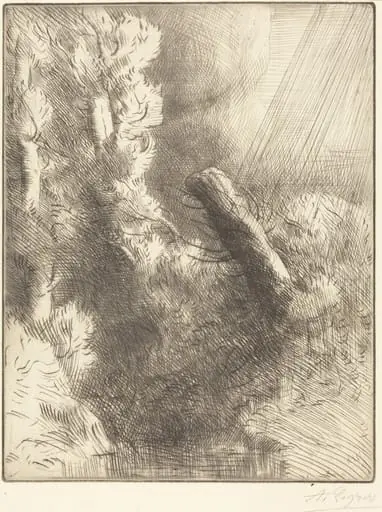 Memories of Fountainebleau in the Rain (Souvenir de Fountainebleau (Effet de pluie))
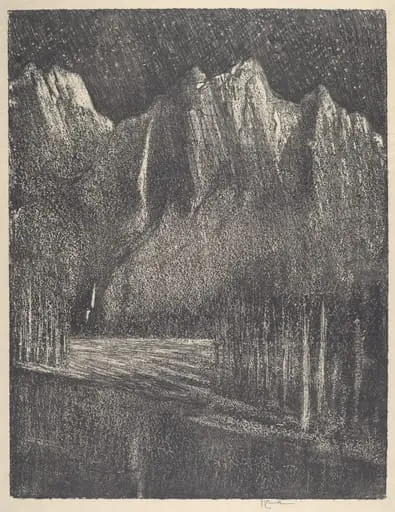 Night in the Yosemite
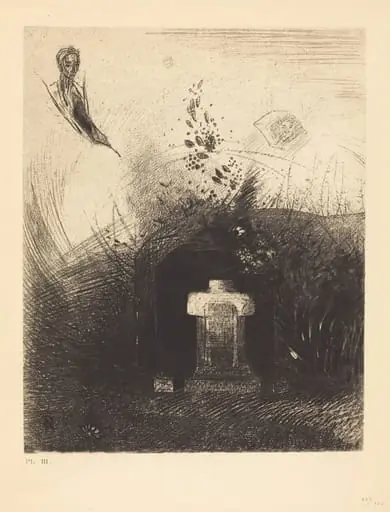 Si par une nuit lourde et sombre, un bon chretien, par charite, derriere quelque vieux decombre, enterre votre corps voute (If on a close dark night a good Christian, out of charity, behind some old ruin, buries your arched body)
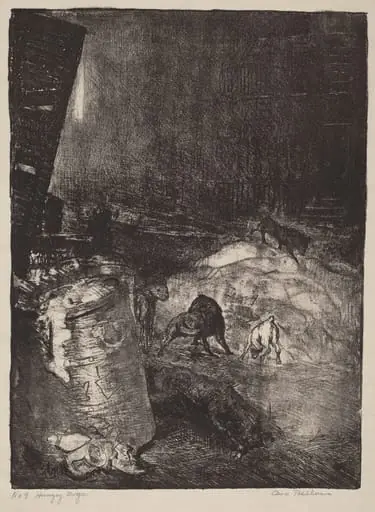 Hungry Dogs, second stone