Artwork
Si par une nuit lourde et sombre, un bon chretien, par charite, derriere quelque vieux decombre, enterre votre corps voute (If on a close dark night a good Christian, out of charity, behind some old ruin, buries your arched body)
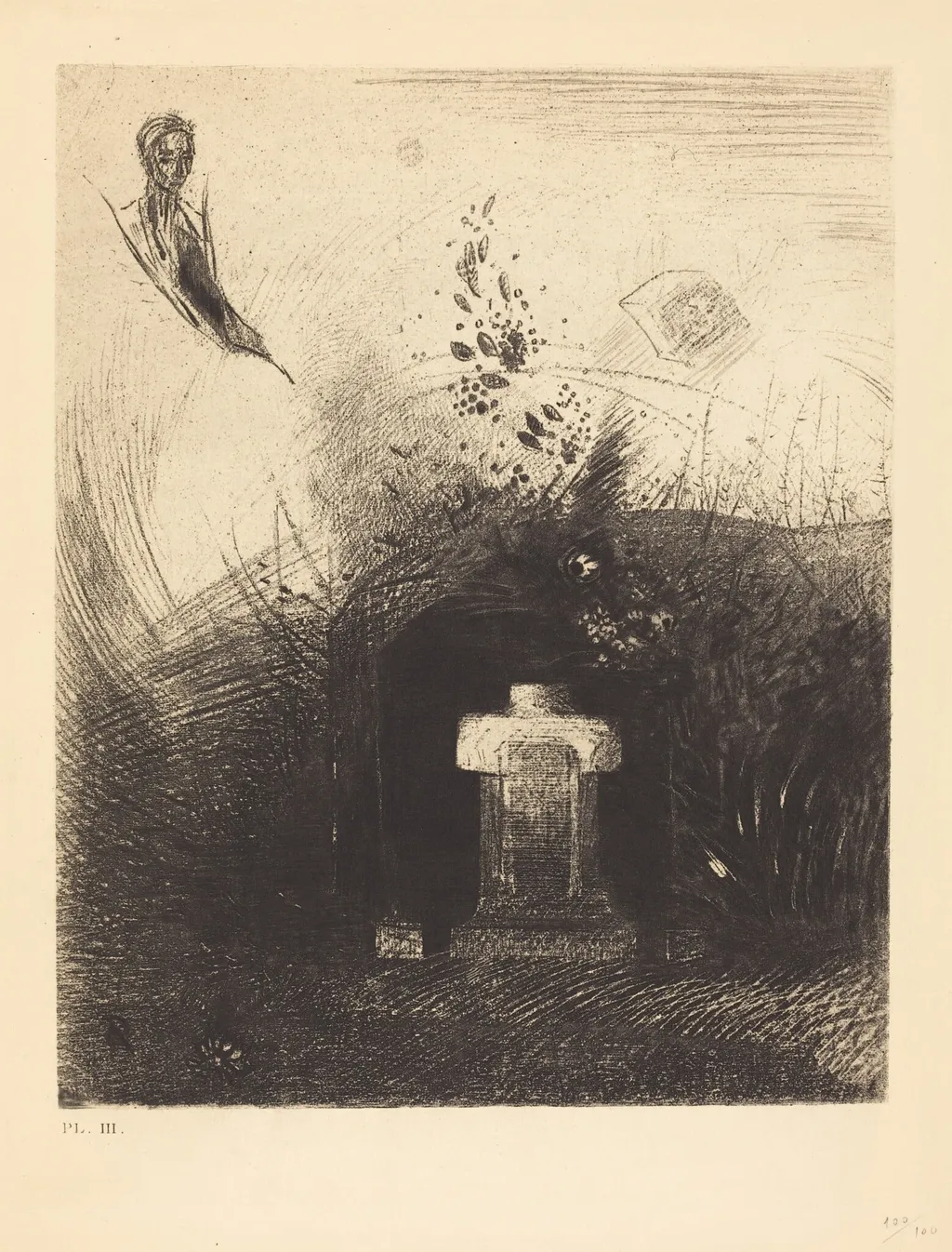
Si par une nuit lourde et sombre, un bon chretien, par charite, derriere quelque vieux decombre, enterre votre corps voute (If on a close dark night a good Christian, out of charity, behind some old ruin, buries your arched body) is an ink print by the Impressionist artist Odilon Redon. It dates from 1890 and is held in the collection of the National Gallery of Art.
About this work
Overview
Odilon Redon’s 1890 lithograph, titled Si par une nuit lourde et sombre, un bon chrétien, par charité, derrière quelque vieux décombres, enterre votre corps voûte, presents a nocturnal scene rendered in monochrome. The print depicts a solitary figure near a dilapidated tomb, its arches shadowed and overgrown, while a spectral hand extends from above, set against a turbulent sky.
Subject & Meaning
The composition suggests an act of compassionate burial performed under cover of night, juxtaposing themes of charity and mortality. The crumbling tomb, entwined with vines and blossoms, evokes the coexistence of decay and renewal, hinting at a spiritual consolation offered to the departed.
Technique & Style
Redon employs the lithographic process with loose, sketch‑like lines that blur the boundary between the tangible and the ethereal. The tonal gradations and swirling atmospheric marks create a dreamlike ambience, while the contrast between the dark arches and the delicate floral details heightens the work’s otherworldly quality.
History & Provenance
Created in 1890, the print belongs to Redon’s mature period when he explored symbolic and fantastical subjects through printmaking. It was issued as part of a limited series of lithographs that circulated among collectors of avant‑garde French art in the late nineteenth century.
Context
Redon’s interest in the supernatural and the poetic aligns this work with Symbolist tendencies of the era, which favored evocative imagery over literal representation. The nocturnal setting and the motif of a benevolent figure performing a burial reflect contemporary preoccupations with mortality and spiritual rescue.
Artist & collection
Artist
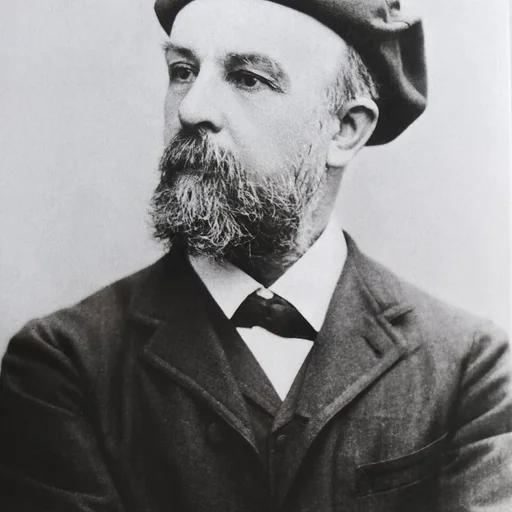
Born Bertrand-Jean Redon on 20 April 1840 in Bordeaux, the artist adopted the name Odilon from his mother, Marie-Odile.

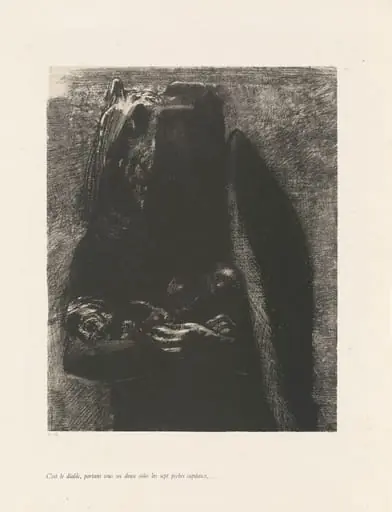 C'est le Diable
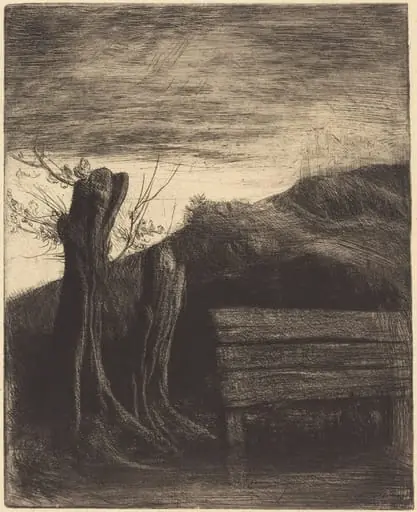 Pollard Willows (Les saules tetards)
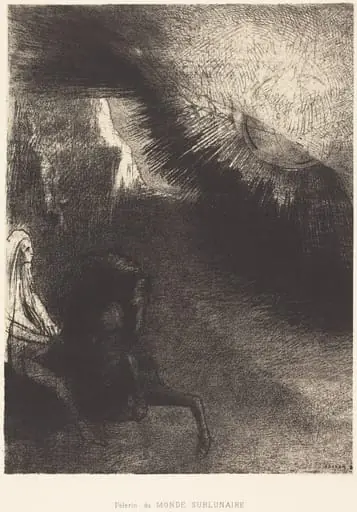 Pélerin du monde sublunaire (Pilgrim of the sublunary world)
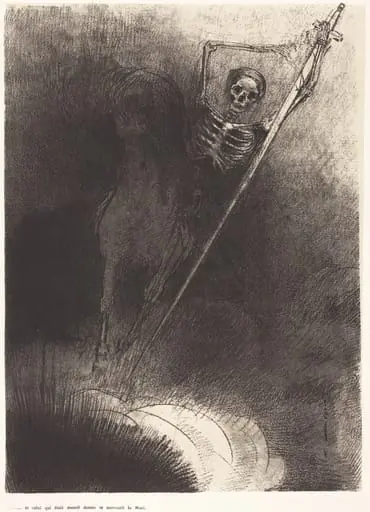 Et celui qui était monté dessus se nommait la Mort (And his name that sat on him was Death)
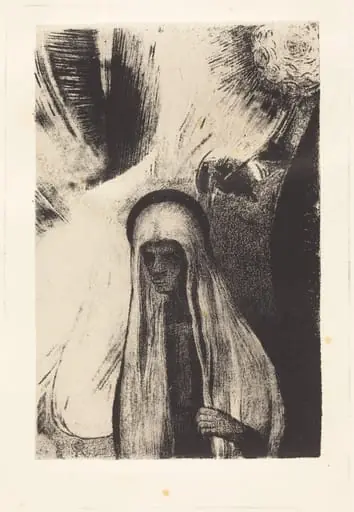 La Vieille: Que Crains-tu? Un large trou Noir! Il est vide peut-etre? (What are you afraid of? A wide black hole! It is empty, perhaps!)
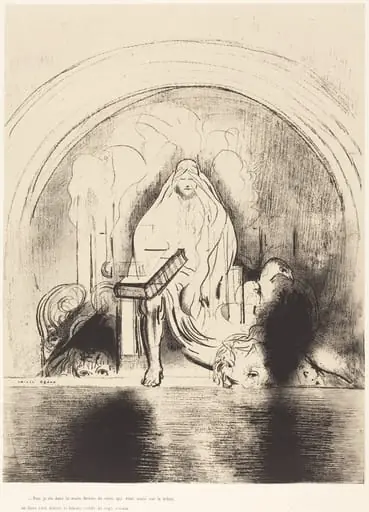 Puis je vis, dans la main droite de celui quietait assis sur le trone, un livre ecritdedans et dehors, scelle de sept sceaux (And I saw in the right hand of him that sat on the throne a book written within and on the backside, sealed with seven seals )
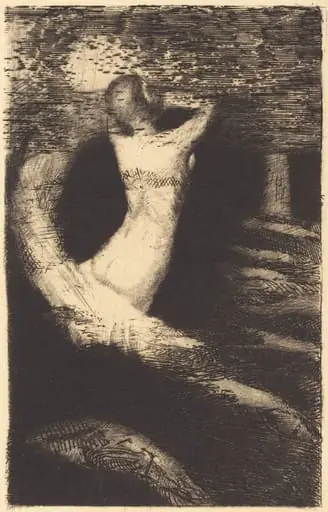 Passage d'une Ame (Passage of a Spirit)
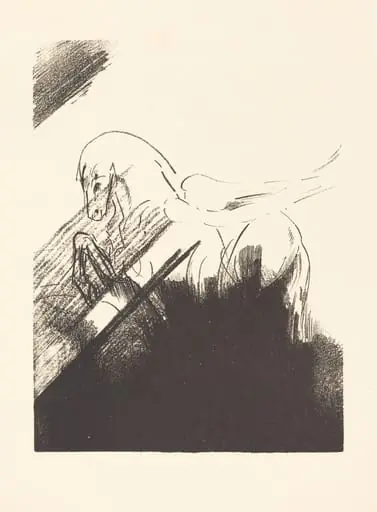 Cheval aile (Winged Horse)
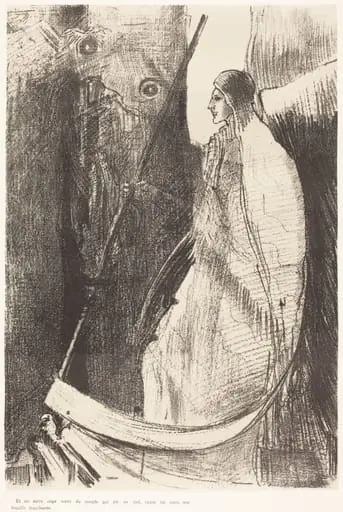 Et un autre ange sortit du temple qui est au ciel, ayant lui aussi une faucille tranchante (And another angel came out of the temple which is in heaven, and he also having a sharp sickle)
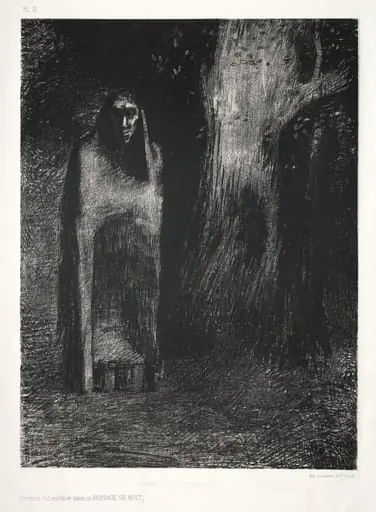 The Man Was Alone in a Night Landscape
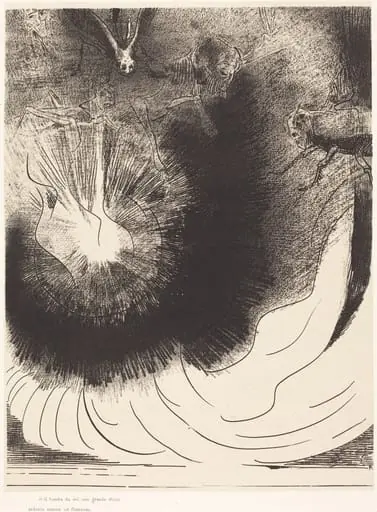 Et il tombe du ciel une grande etoile ardente (And there fell a great star from heaven burning as it were a lamp)
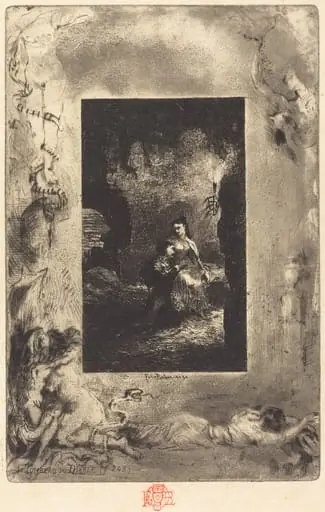 Le Tombeau du Diable (The Devil's Tomb)