Artwork
Il y eut peut-etre une vision premiere essayee dans la fleur (There was perhaps a first vision attempted in the flower)
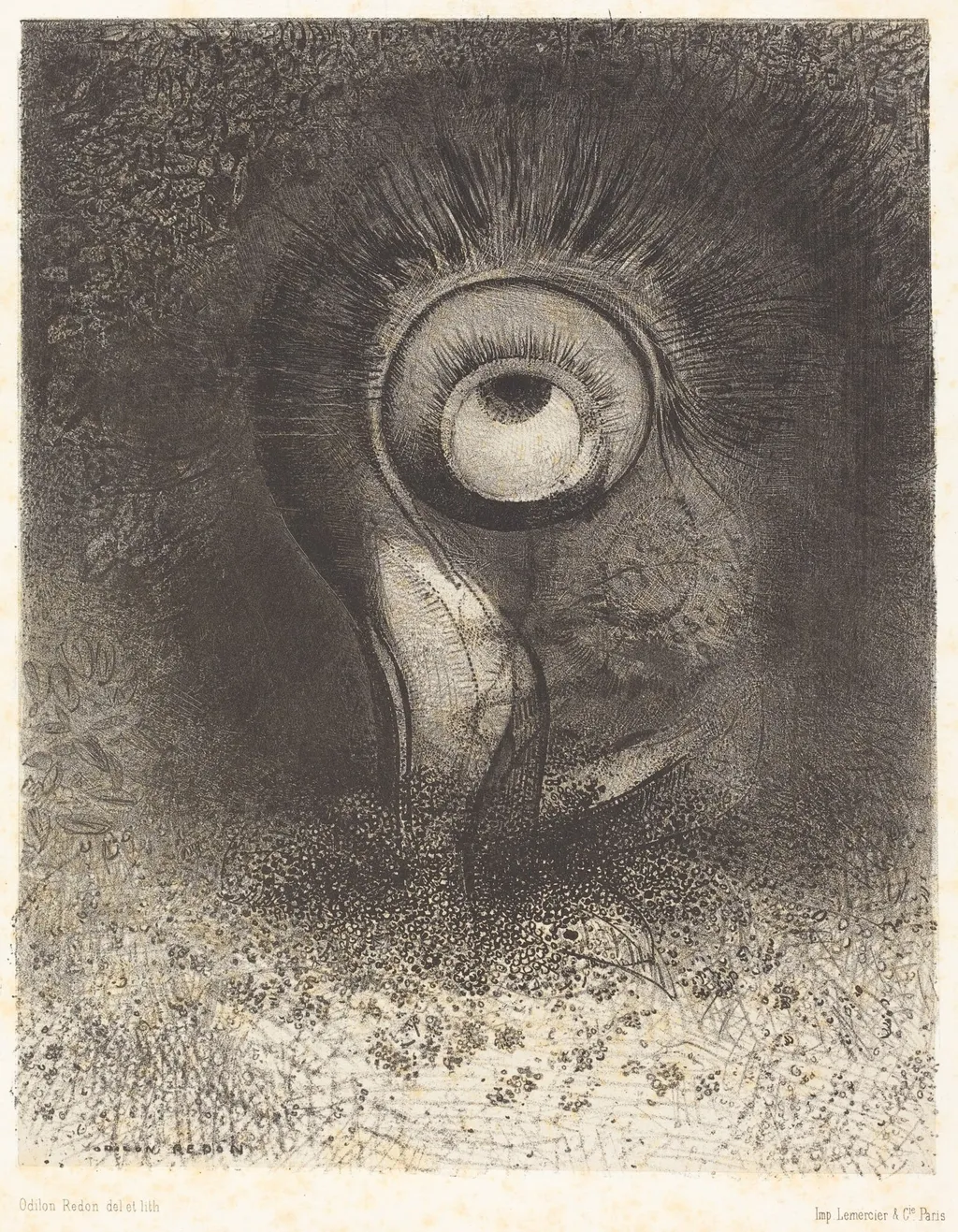
Il y eut peut-etre une vision premiere essayee dans la fleur (There was perhaps a first vision attempted in the flower) is an ink print by the Impressionist artist Odilon Redon. It dates from 1883 and is held in the collection of the National Gallery of Art.
About this work
Overview
Created in 1883, this lithograph by Odilon Redon is part of his series of visionary prints that explore inner states through symbolic imagery.
Created in 1883, this lithograph by Odilon Redon is part of his series of visionary prints that explore inner states through symbolic imagery. The work is rendered in black ink on paper, utilizing the lithographic process to achieve a range of tonal effects—from delicate gradients to abrupt, scratchy lines. Its title suggests a poetic meditation on perception, framing the image as a fleeting, almost ineffable moment of insight.
Subject & Meaning
At the center, a large, luminous eye dominates the composition, its gaze unblinking and detached. Below it, a slender hand cradles a flower with elongated petals, evoking both fragility and symbolic resonance. The surrounding radiating lines suggest energy or revelation, while the textured, speckled background implies an undefined, cosmic space. Together, these elements hint at an internal vision—perhaps the birth of imagination or the moment consciousness encounters the sublime.
Technique & Style
Redon employed lithography to draw directly onto a limestone plate, allowing him to mimic the spontaneity of charcoal or ink. He contrasted smooth, blended tones in the eye with jagged, expressive lines radiating outward, creating tension between stillness and motion. The background, densely stippled with minute marks, adds depth and a sense of atmospheric unrest, enhancing the dreamlike quality of the scene without relying on realistic detail.
History & Provenance
This print was produced during Redon’s most prolific period in printmaking, following his transition from charcoal drawings to lithography in the early 1880s. It was included in his portfolio 'Les Origines' (1883–1884), a collection of 20 prints exploring mythic and psychological themes. The work entered public collections in the early 20th century and is now held in major institutions, including the Museum of Modern Art and the British Museum.
Context
Redon created this work amid the rise of Symbolism in French art, a movement that rejected naturalism in favor of emotional and spiritual expression. His imagery drew from literature, dreams, and mysticism, resonating with writers like Mallarmé and Baudelaire. Unlike his contemporaries who depicted the external world, Redon turned inward, using the print medium to render the invisible—thoughts, fears, and visions beyond the reach of sight.
Legacy
This lithograph exemplifies Redon’s influence on later Surrealist and Expressionist artists, who admired his ability to materialize the subconscious. His use of the eye as a symbol of inner vision became a recurring motif in 20th-century art. The work’s quiet intensity and technical innovation helped redefine printmaking as a vehicle for psychological depth rather than mere reproduction.
Artist & collection
Artist
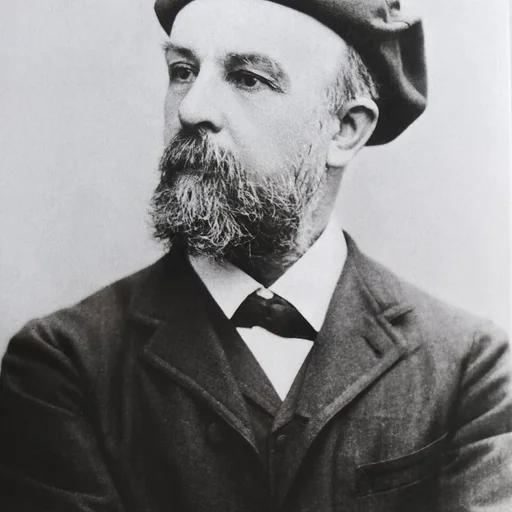
Born Bertrand-Jean Redon on 20 April 1840 in Bordeaux, the artist adopted the name Odilon from his mother, Marie-Odile.

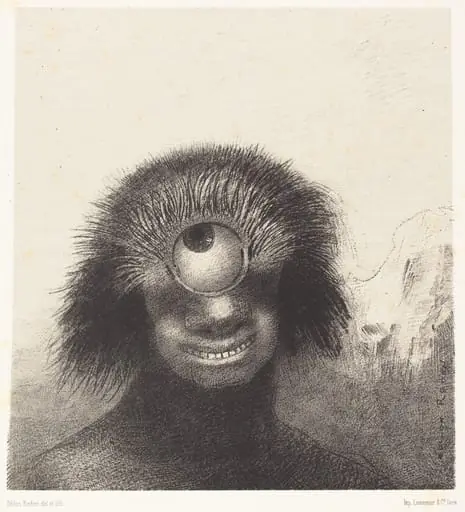 Le Polype difforme flottait sur les rivages, sorte de cyclope souriant et hideux (The deformed polyp floated on the shores, a sort of smiling and hideous Cyclops)
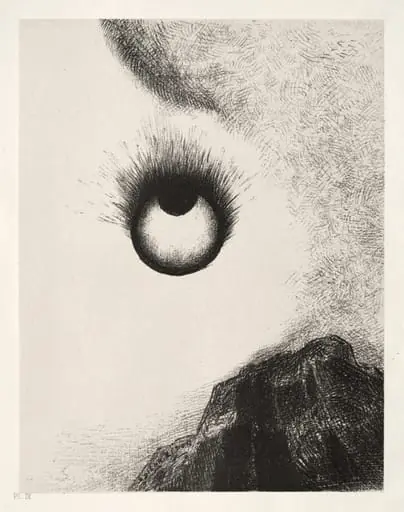 Everywhere Eyeballs are Aflame
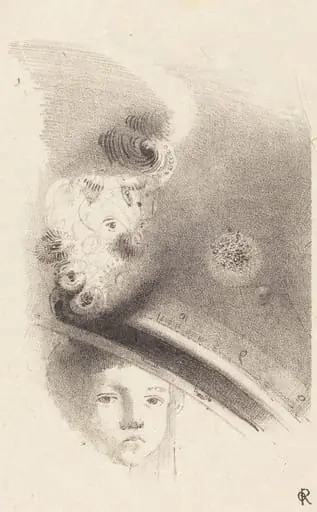 Tete d'Enfant (Head of a Child)
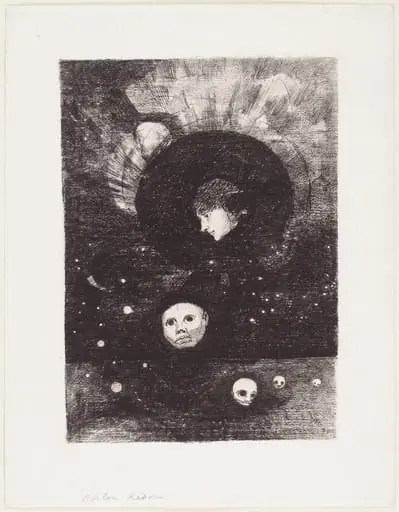 Untitled
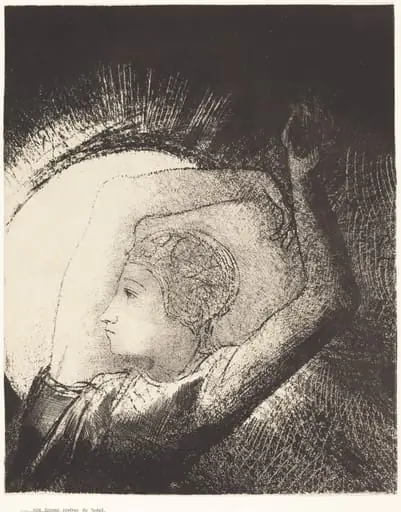 Une femme revêtue du Soleil (A woman clothed with the sun)
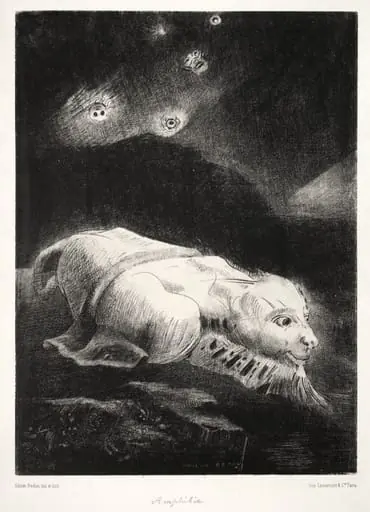 When Life Was Awakening in the Depths of Obscure Matter
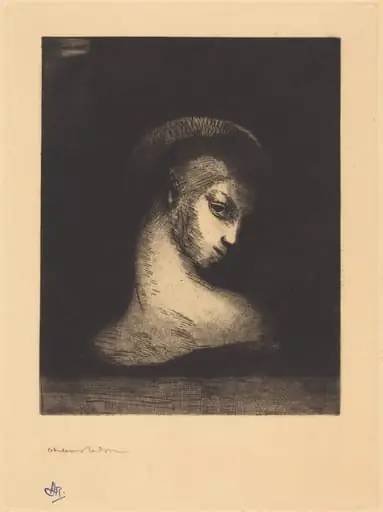 Perversité
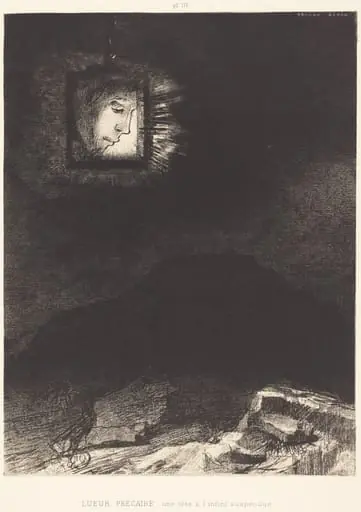 Lueur precaire, une tete a l'infini suspendue(Precarious glimmering, a head suspended
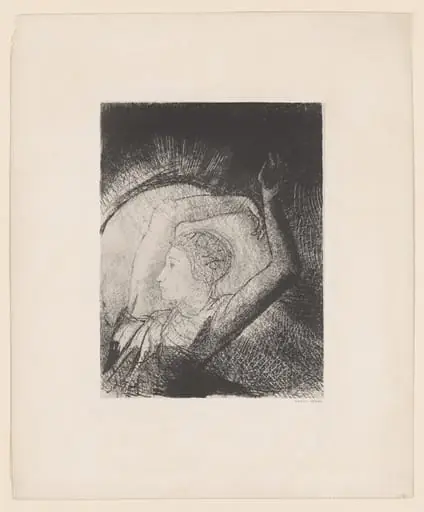 Untitled
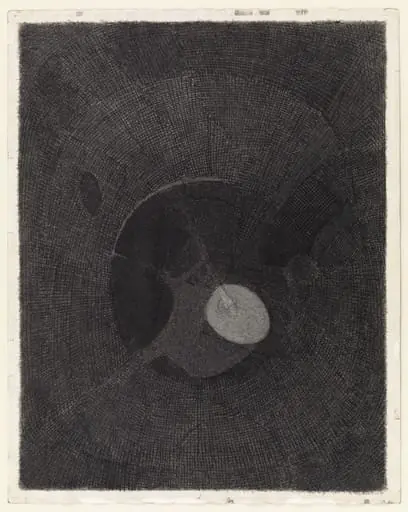 Untitled
 Untitled
 La sirene sortit des flots vetue de dards (The Siren clothed in barbs, emerged from the waves