Artwork
Yeux Clos (Closed Eyes)
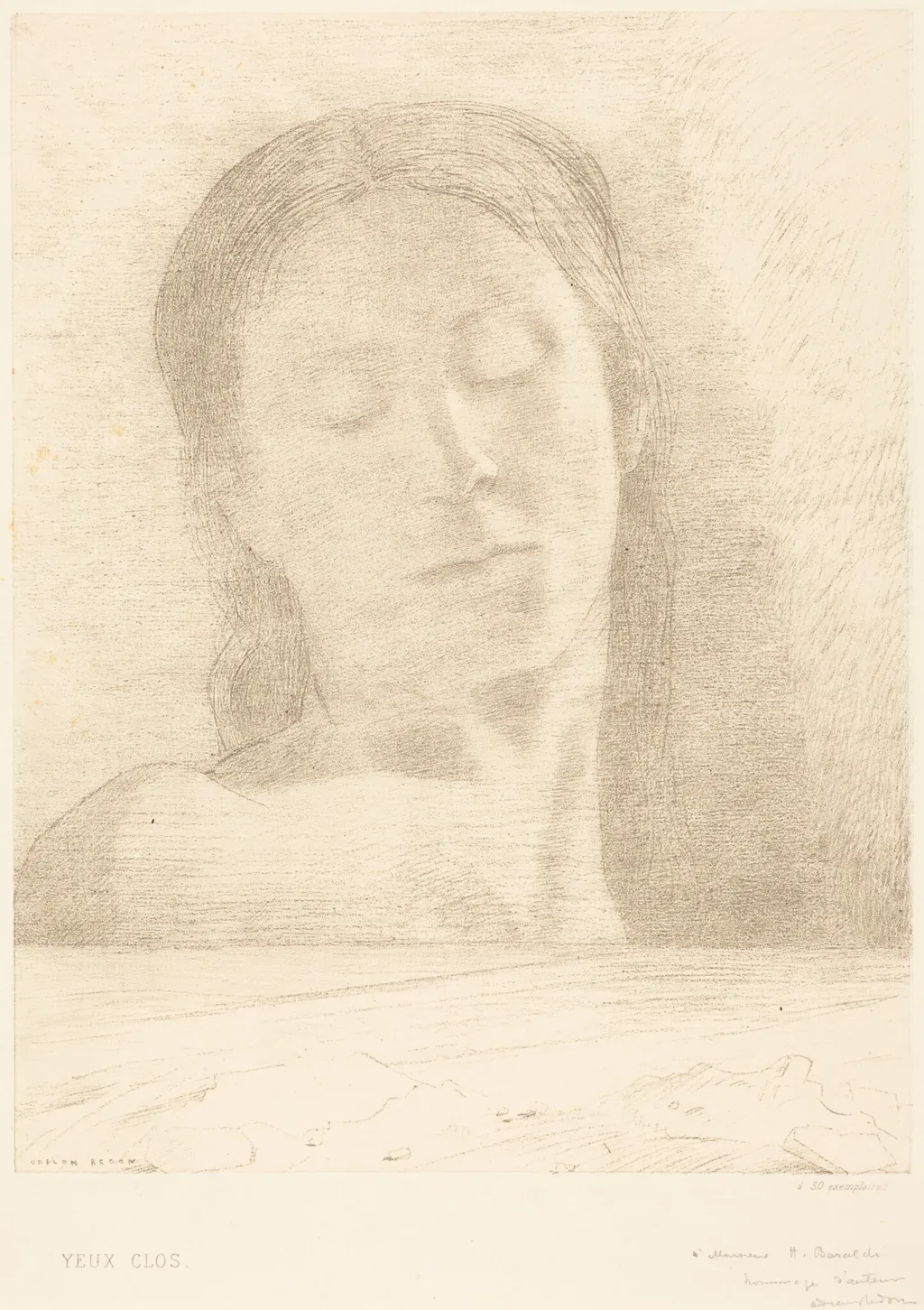
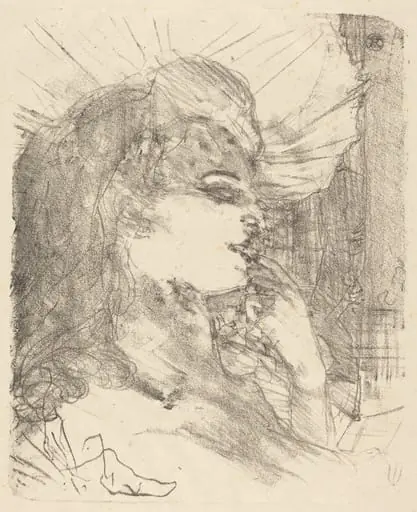
Yeux Clos (Closed Eyes) is an ink print by the Impressionist artist Odilon Redon. It dates from 1890 and is held in the collection of the National Gallery of Art.
About this work
Overview
The work belongs to Redon’s mature period, where he increasingly favored introspective subjects and atmospheric effects over narrative clarity.
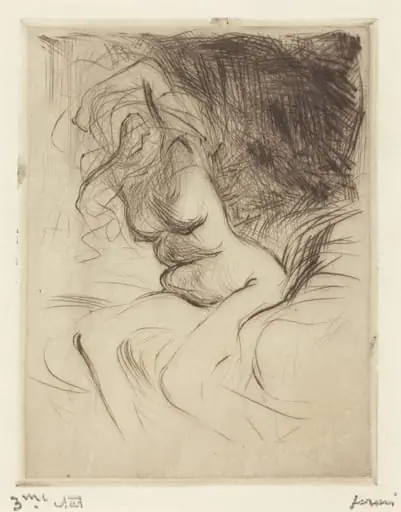
Yeux Clos, created in 1890, is a lithograph by Odilon Redon that captures a contemplative female portrait with closed eyes. Rendered in soft, muted tones, the image relies on delicate, smudged lines to suggest form rather than define it. The paper bears signs of age, enhancing its intimate, ephemeral quality. The work belongs to Redon’s mature period, where he increasingly favored introspective subjects and atmospheric effects over narrative clarity.
Subject & Meaning
The figure’s closed eyes and slumped posture evoke inward reflection, suggesting a state of reverie or withdrawal from the external world. The loose hair and indistinct collar imply informality and vulnerability, reinforcing a sense of quiet solitude. The title, meaning 'Closed Eyes,' invites interpretation as a meditation on inner vision, silence, or the threshold between consciousness and dream—themes central to Redon’s symbolic approach.
Technique & Style
Redon employed lithography to achieve a fluid, sketch-like texture, using chalk-like strokes that blur into one another. The image is built through subtle tonal gradations rather than sharp contours, with the background left nearly empty to emphasize the figure’s isolation. The medium’s capacity for softness suited his interest in evoking mood over detail, aligning with Symbolist ideals that prioritized suggestion over literal representation.
History & Provenance
Created during a period when Redon was deeply engaged with printmaking, Yeux Clos emerged from his exploration of personal and psychological themes after the death of his son. The work was likely produced in a small edition, typical of his lithographs from this time. Its worn paper suggests it was handled or displayed over time, possibly circulating among collectors who valued his poetic imagery.
Context
In the 1890s, Redon moved away from his earlier dark fantasies toward more serene, human-centered subjects. Yeux Clos reflects this shift, aligning with Symbolist circles that valued emotion and intuition over realism. While contemporaries like Gauguin and Moreau pursued mythic or exotic themes, Redon turned inward, using the human face as a vessel for quiet, universal states of being.
Legacy
Yeux Clos exemplifies Redon’s influence on later artists who embraced psychological depth and atmospheric abstraction. His use of lithography to convey inner states prefigured modernist explorations of subjectivity in portraiture. Though not widely exhibited in his lifetime, the work remains a quiet touchstone in the history of printmaking for its emotional restraint and technical sensitivity.
Artist & collection
Artist
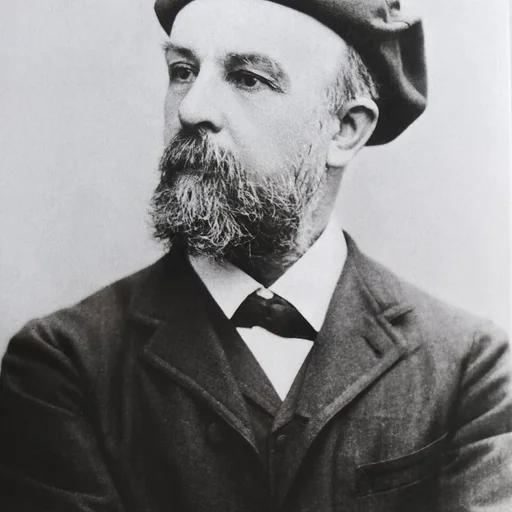
Born Bertrand-Jean Redon on 20 April 1840 in Bordeaux, the artist adopted the name Odilon from his mother, Marie-Odile.