Artwork
Iris
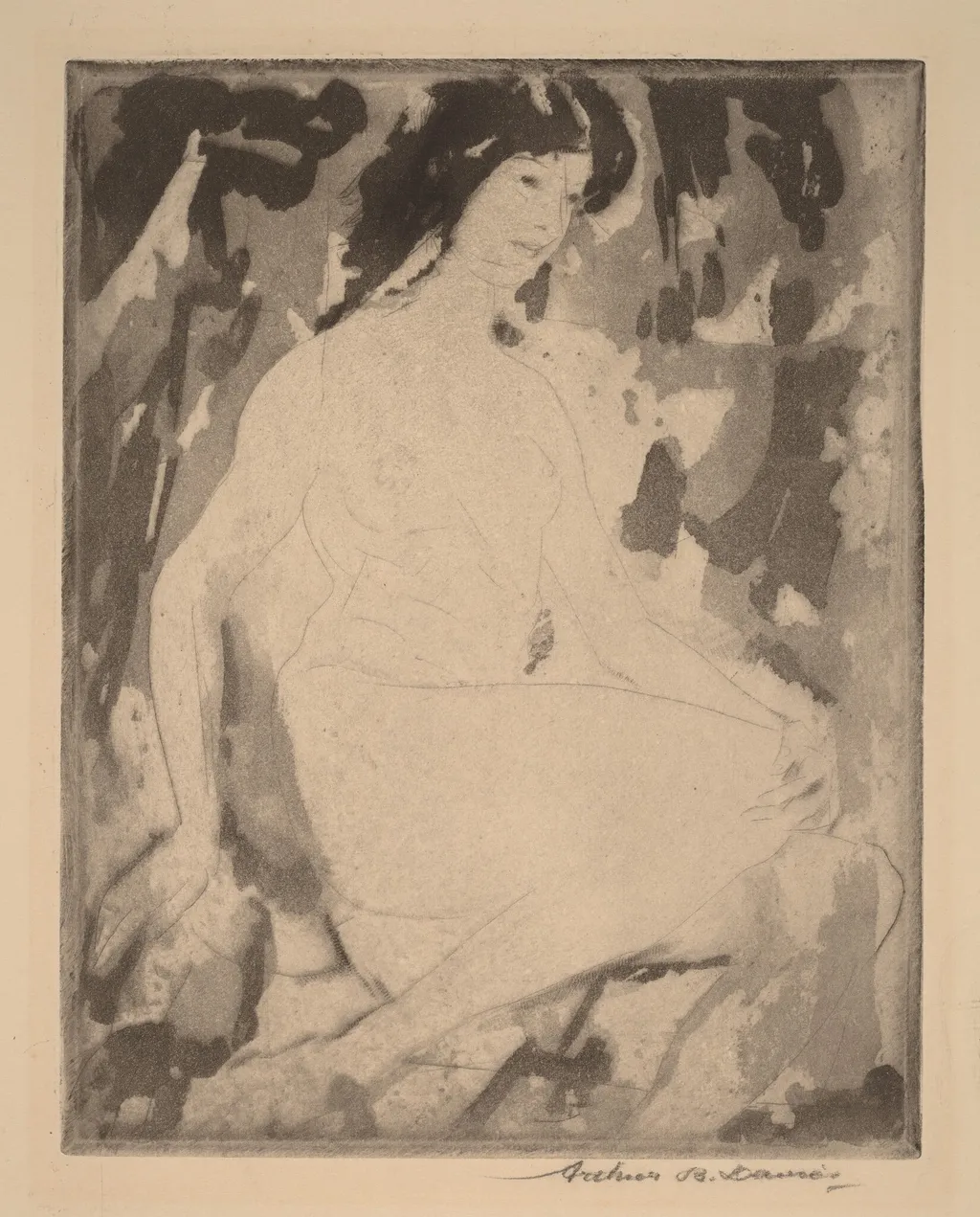
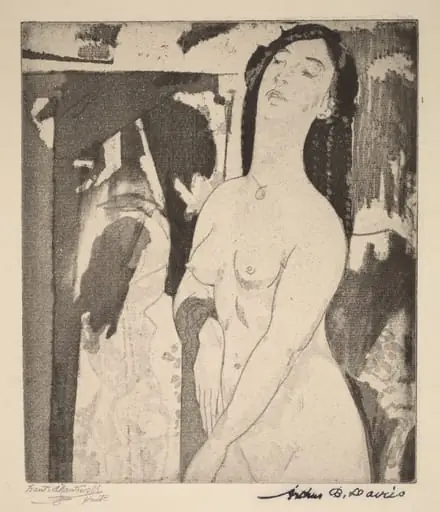
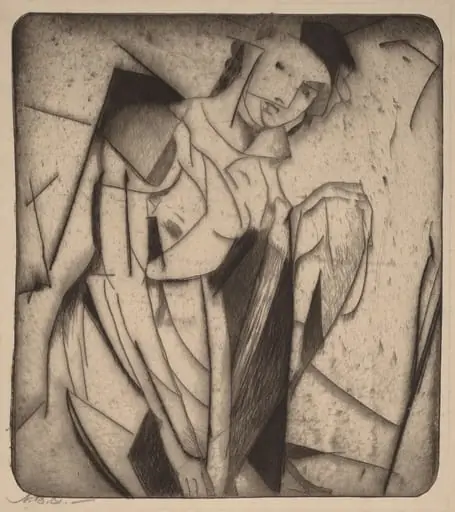
Iris is an ink print by Arthur Bowen Davies. It dates from 1916 and is held in the collection of the National Gallery of Art.
About this work
Overview
Iris, a 1916 drypoint print by Arthur B. Davies, exemplifies the artist's experimental approach to modern art during the early 20th century.
Subject & Meaning
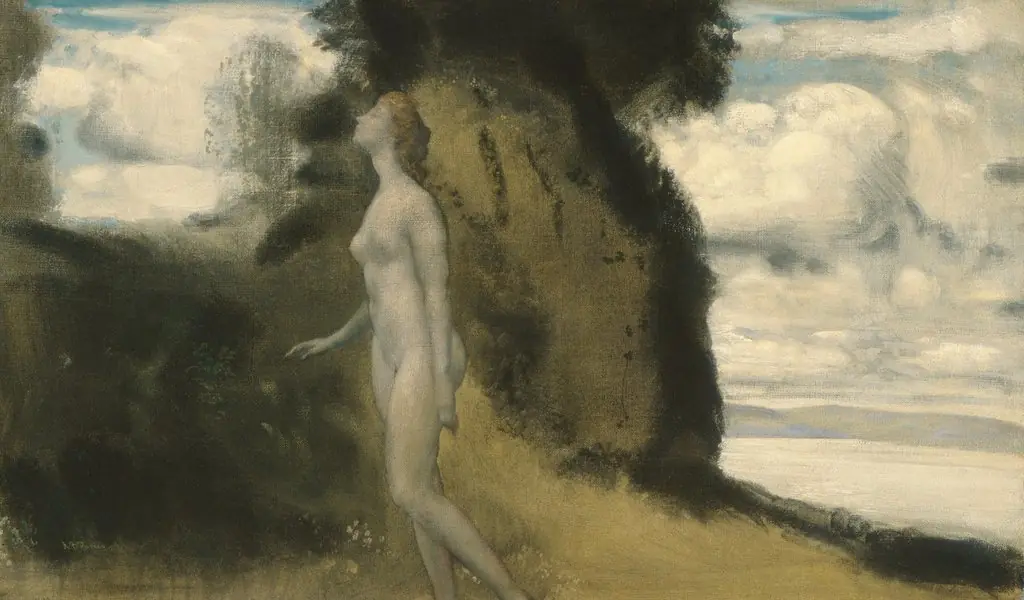
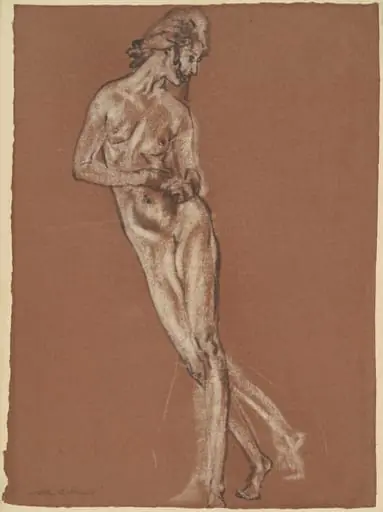
The print depicts a solitary figure standing with slightly raised arms, facing forward. The subject's pose and the enigmatic, largely blank background suggest a focus on contemplation or introspection, though the overall meaning remains open to interpretation.
Technique & Style
Characterized by uneven lines and rough, dark patches resembling shadows, the print's sketchy appearance is inherent to the drypoint technique. By scratching the design into a metal plate, Davies achieved the distinctive, hand-drawn quality and variable shading present in Iris.
History & Provenance
Created in 1916, Iris reflects Davies' role as a vanguard of modern art in the United States. While specific ownership histories are not detailed here, the work aligns with Davies' broader stylistic innovations of the period.
Context
Iris emerges from the early 20th-century American art scene, where Davies played a pivotal role in promoting avant-garde practices. The piece contributes to the era's shift towards expressive, modernist forms.
Legacy
As part of Davies' experimental oeuvre, Iris contributes to the broader legacy of early 20th-century American modernism, illustrating the medium's potential for expressive, introspective works.
Artist & collection
Artist
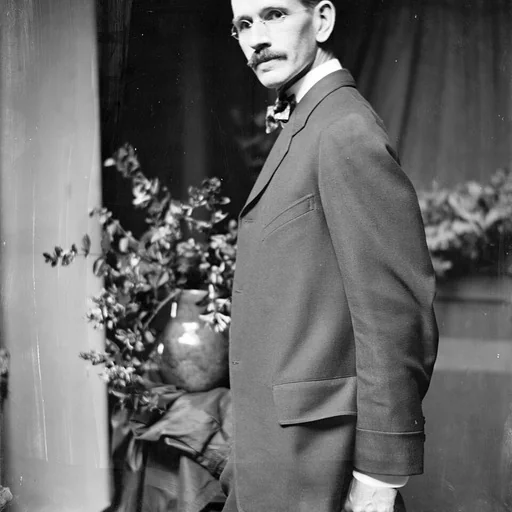
Arthur Bowen Davies (September 26, 1862 – October 24, 1928) was an avant-garde American artist and influential advocate of modern art in the United States c. 1910–1928.