Artwork
A Betrothal Scene. Interior with Dutch peasants
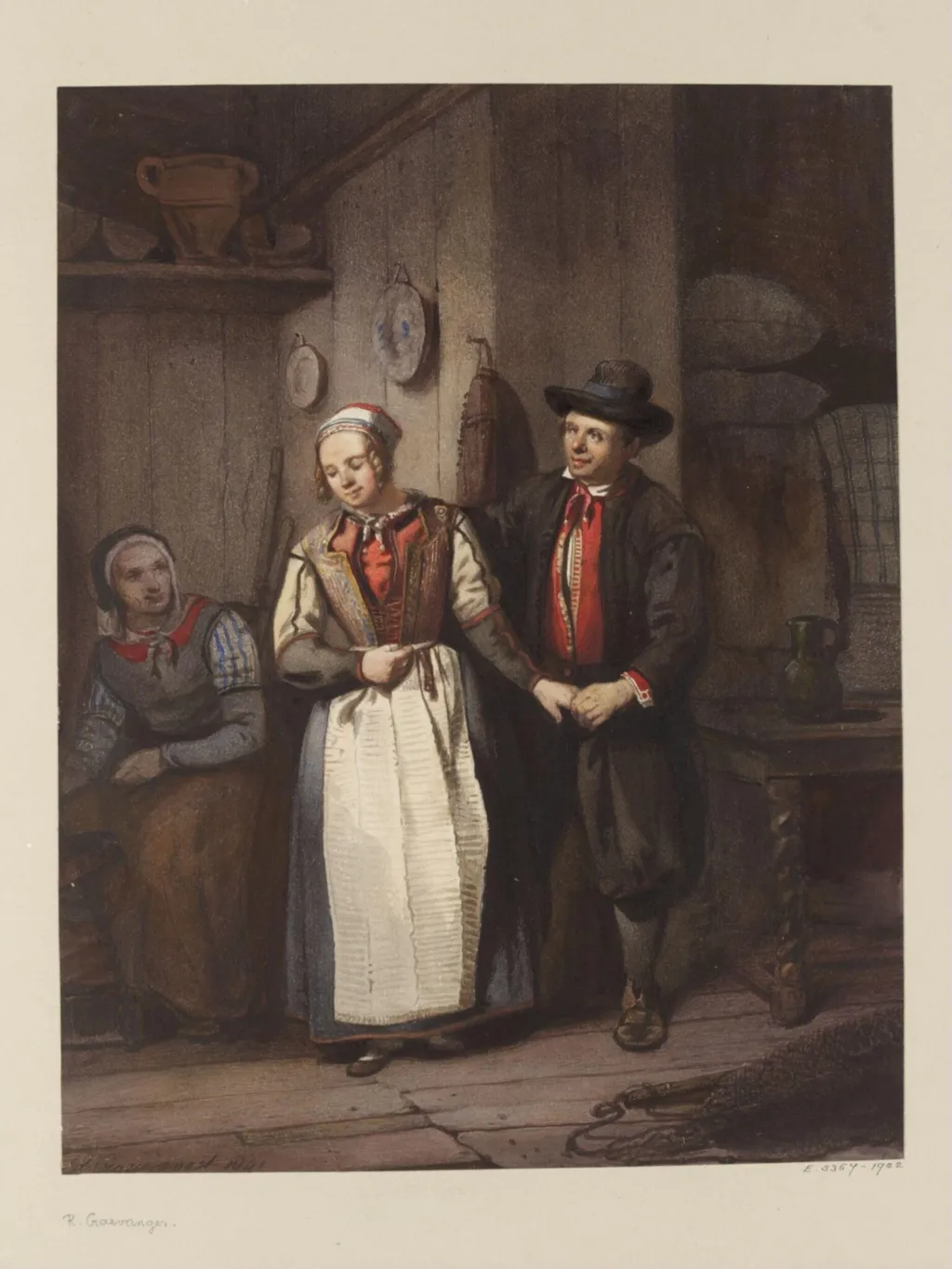
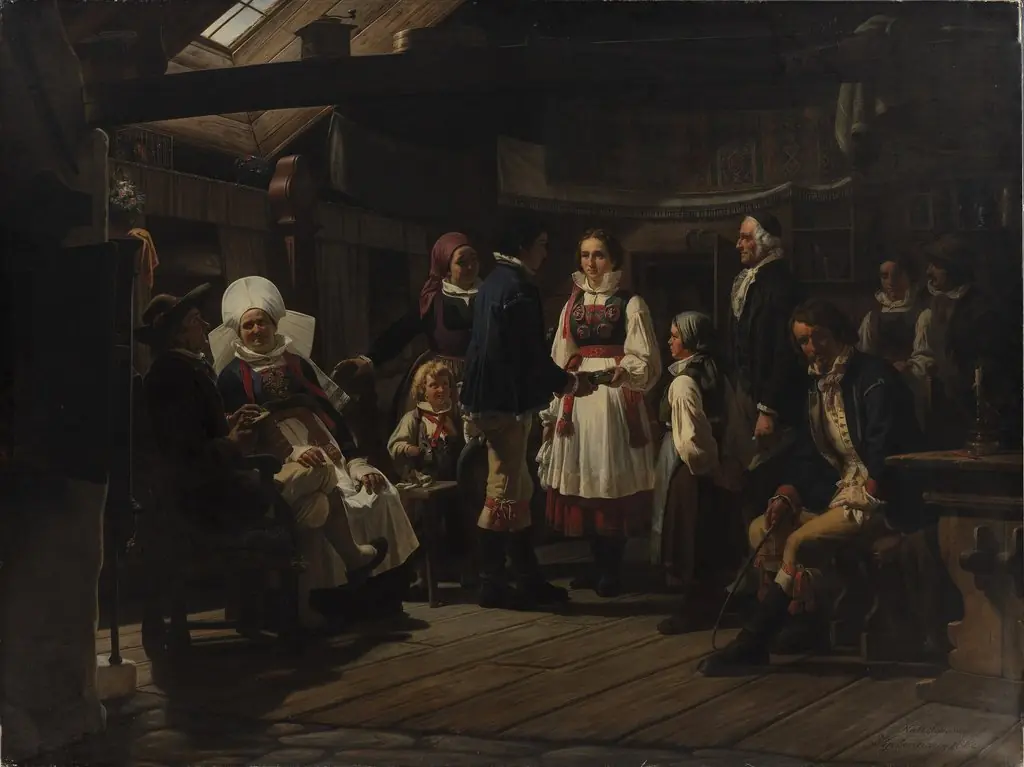
A Betrothal Scene. Interior with Dutch peasants is a watercolor work on paper by the Biedermeier artist Reinier Craeyvanger. It dates from 1841 and is held in the collection of the Victoria and Albert Museum.
About this work
Overview
Created in 1841 by Reinier Craeyvanger, this watercolour depicts an intimate domestic moment among Dutch peasants. Signed and dated by the artist, it belongs to a bound album titled *Drawings The Gift of Dr. Penrose To Henry R. Eyre*, suggesting its origin as a collected study rather than a standalone exhibition piece. The medium’s delicacy suits the quiet atmosphere of the scene.
Subject & Meaning
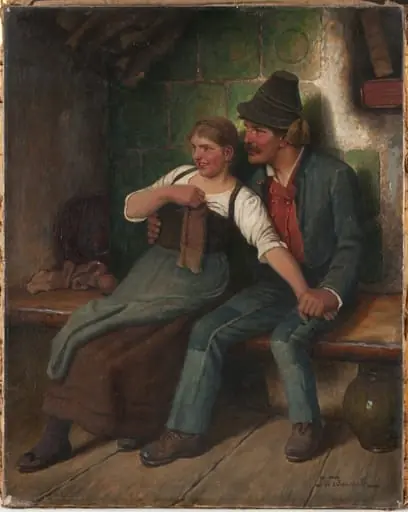
The composition centers on a young couple engaged in a subdued exchange, their clasped hands suggesting a betrothal. An older woman observes from a bench, her presence implying familial approval or quiet vigilance. The setting—unadorned yet warm—emphasizes the ordinary dignity of rural life, with no overt symbolism, only the weight of a personal milestone unfolding in private.
Technique & Style
Details like fabric patterns and ceramic vessels are rendered with restrained precision, avoiding sentimentality.
Craeyvanger employs transparent watercolour to render subtle shifts in light and texture. The dim interior is suggested through muted tones and soft shadows, while the hearth’s glow adds focal warmth. Details like fabric patterns and ceramic vessels are rendered with restrained precision, avoiding sentimentality. The brushwork remains controlled, prioritizing atmospheric cohesion over dramatic effect.
History & Provenance
The work entered the collection through Dr. Penrose’s gift to Henry R. Eyre, forming part of a curated volume of drawings. Its inclusion in such a volume indicates it was valued as a representative example of 19th-century Dutch genre studies. No record of public exhibition prior to its archival placement is known, suggesting its primary function was private contemplation.
Context
In mid-19th century the Netherlands, genre scenes of rural life gained traction among collectors and artists seeking authenticity beyond idealized history painting. Craeyvanger’s focus on unromanticized interiors aligns with a broader trend of documenting everyday customs, influenced by both Dutch Golden Age precedents and emerging realist sensibilities.
Legacy
Though not widely reproduced, the piece contributes to a modest but persistent body of work documenting Dutch peasant life through intimate observation. Its preservation in a private collection-turned-archive underscores its role as a documentary artifact rather than a celebrated artwork, reflecting the quiet endurance of domestic traditions in visual culture.
Artist & collection

Artist
Reinier Craeyvanger, was a 19th-century Dutch painter and etcher who was also a gifted musician.