Artwork
Scene with soldier
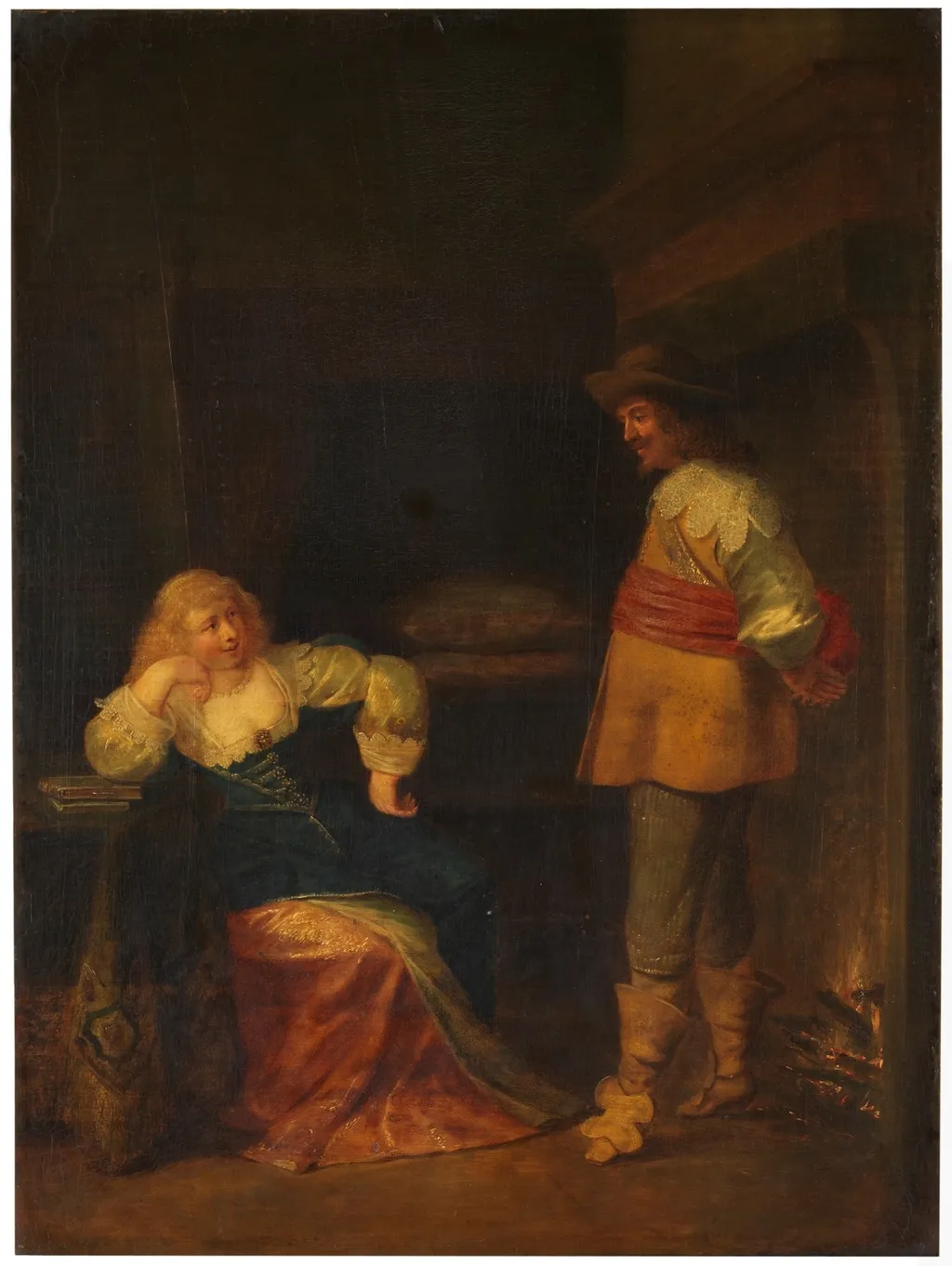
Scene with soldier is an oil painting by the Flemish Baroque painting artist Christoffel Jacobsz van der Laemen. It dates from 1626 and is held in the collection of the Museo del Prado.
About this work
Overview
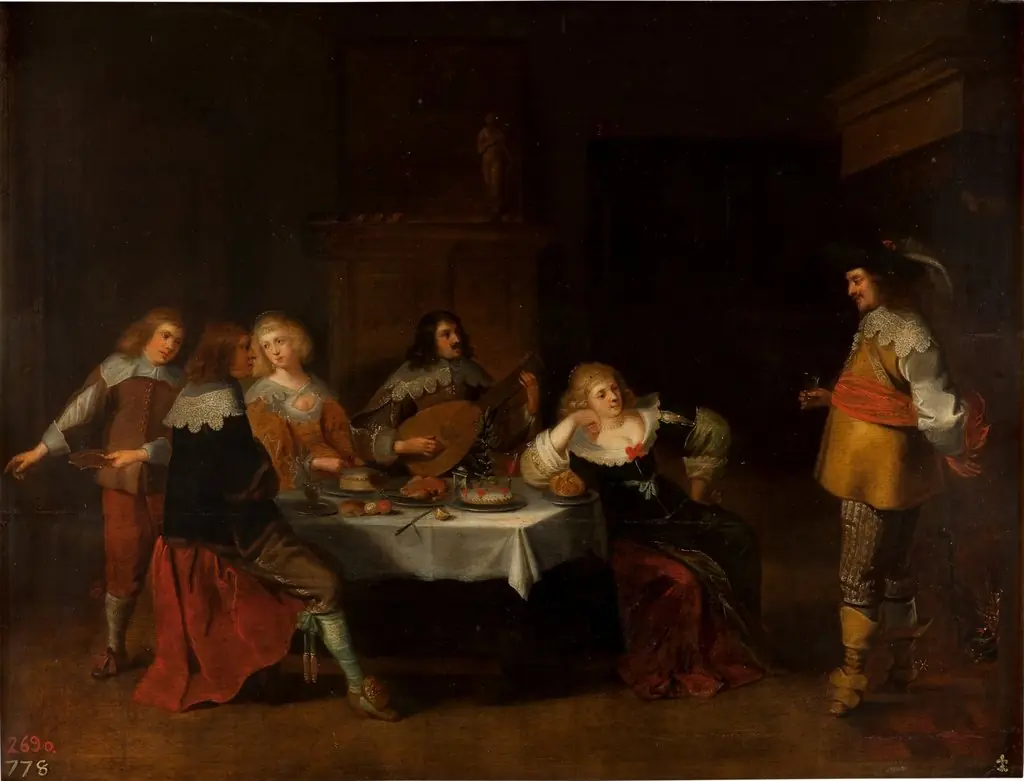
Painted in 1626 by Christoffel Jacobsz van der Laemen, this oil-on-canvas work captures a quiet moment between a woman and a soldier in a dim interior.
Painted in 1626 by Christoffel Jacobsz van der Laemen, this oil-on-canvas work captures a quiet moment between a woman and a soldier in a dim interior. A representative of Flemish Baroque genre painting, it reflects the artist’s interest in intimate social encounters, rendered with careful attention to costume, light, and psychological nuance. The piece is part of the Museo del Prado’s collection, where it contributes to the broader study of 17th-century Northern European domestic scenes.
Subject & Meaning
The painting presents a solitary interaction between a seated woman and a standing soldier, their gaze meeting in an unspoken exchange. The woman’s poised posture and illuminated face suggest contemplation, while the soldier’s ornate uniform implies status or recent return from service. No narrative is overtly stated, but the tension in their proximity hints at personal or emotional significance, possibly reflecting themes of transient connection or civilian-military encounters in wartime Flanders.
Technique & Style
Van der Laemen employs chiaroscuro to isolate the figures against a shadowed interior, directing focus to the woman’s face and attire. The lighting, emanating from the right, models forms with subtle gradations, enhancing three-dimensionality. Rich textures in lace, silk, and leather are rendered with fine brushwork, while the muted background contrasts with the vivid hues of their clothing—blue, red, and yellow—grounding the scene in realism without theatricality.
History & Provenance
Created in 1626 during van der Laemen’s active years in Antwerp, the painting entered the Museo del Prado’s collection through Spanish royal acquisitions or later transfers common in the 18th and 19th centuries. Its attribution has remained consistent, with no major disputes over authorship. The work’s survival in good condition reflects its preservation within institutional care since at least the early 19th century.
Context
In early 17th-century Flanders, genre scenes of civilians and soldiers in domestic interiors were popular among urban patrons. Van der Laemen’s works aligned with a broader trend that elevated everyday moments into subjects of artistic interest, often reflecting the social tensions of the Eighty Years’ War. Though not overtly political, such paintings subtly acknowledged the presence of military life in civilian spaces.
Legacy
Though less widely known than contemporaries like Rubens, van der Laemen’s contributions to Flemish genre painting helped refine the depiction of psychological subtlety in quiet scenes. This work exemplifies a shift toward intimate, character-driven compositions that influenced later Dutch and Flemish artists. Its presence in the Prado ensures continued scholarly attention to the nuanced portrayal of ordinary human encounters in Baroque art.
Own this work as a print
Artist & collection
Artist
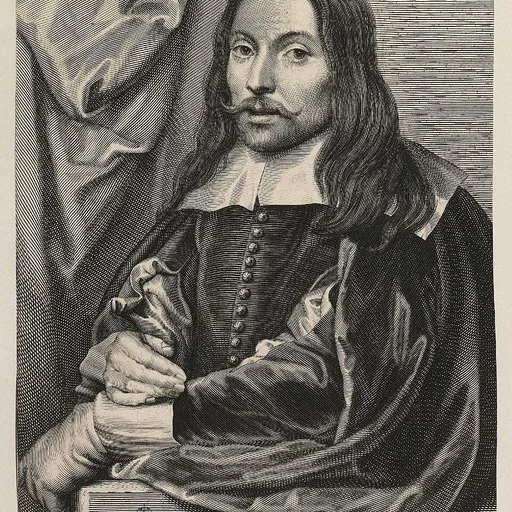
Christoffel Jacobsz van der Laemen
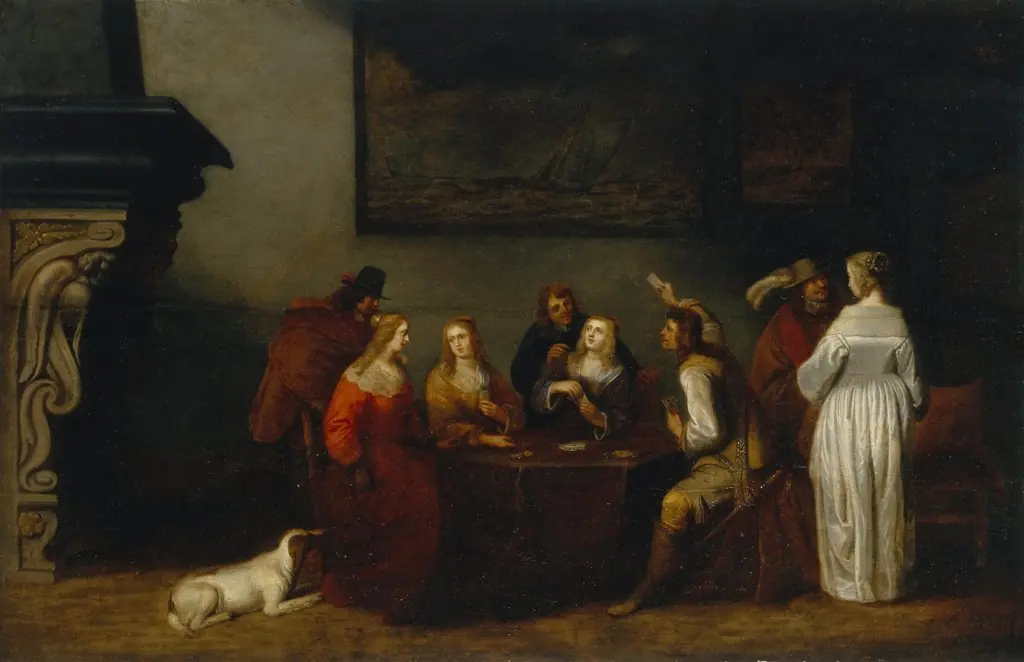
Christoffel Jacobsz van der Laemen or Christoffel van der Laemen (1607/1620 – c. 1651) was a Flemish painter who specialized in merry company scenes with elegant figures. His favorite themes were card and backgammon…

 Pereche tînără cu un copil
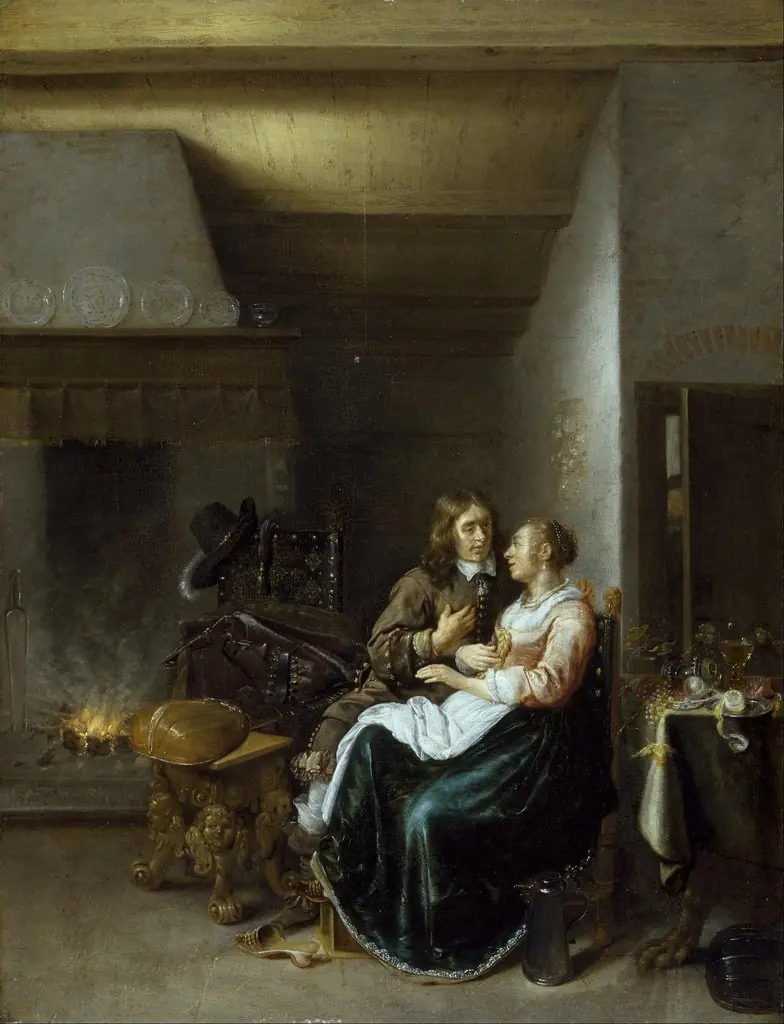 A Couple in an Interior
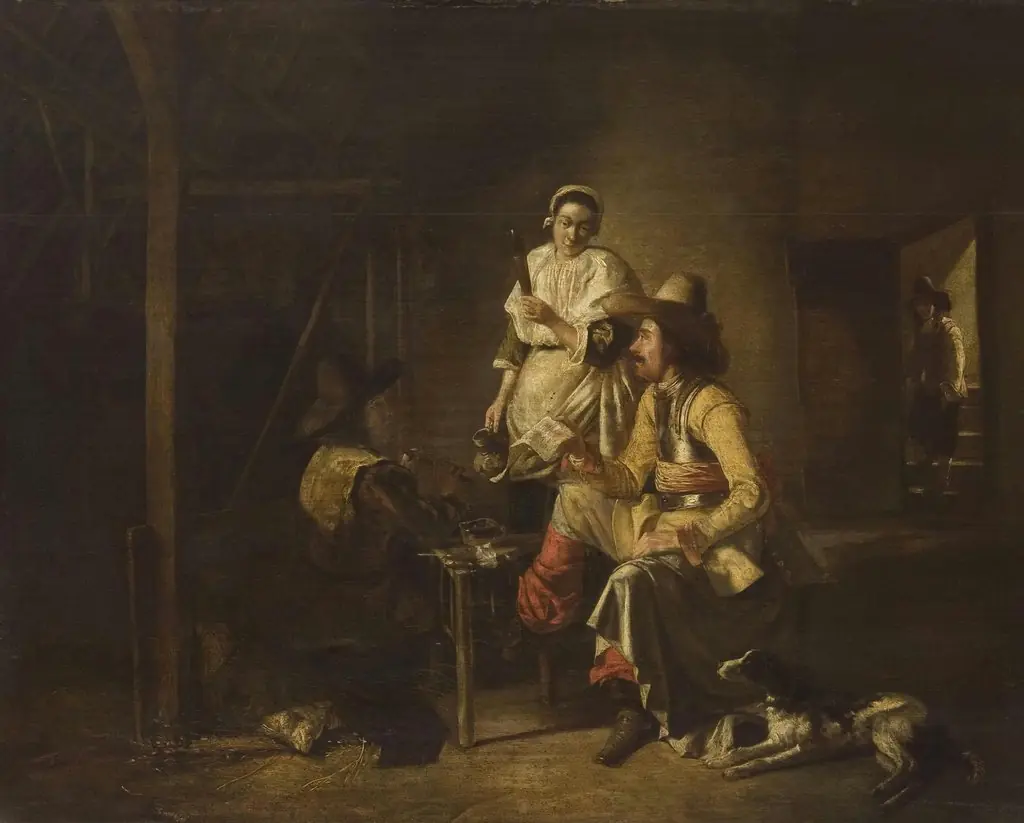 Soldiers with a Serving Maid in a Barn
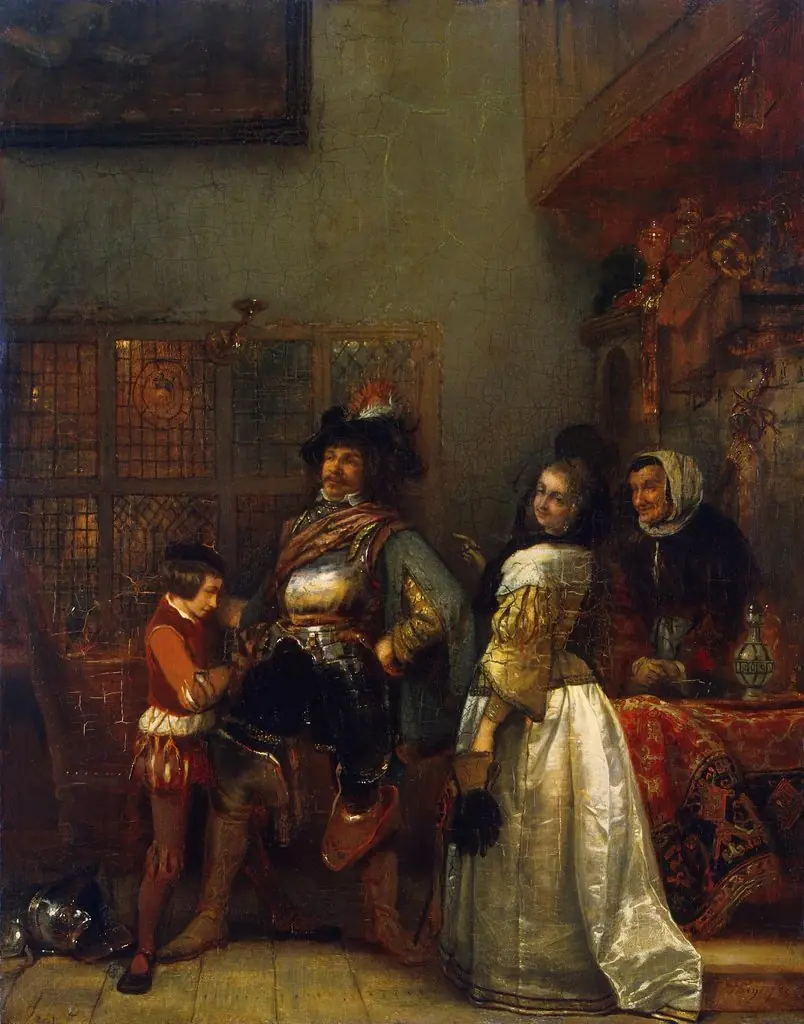 Home-Coming
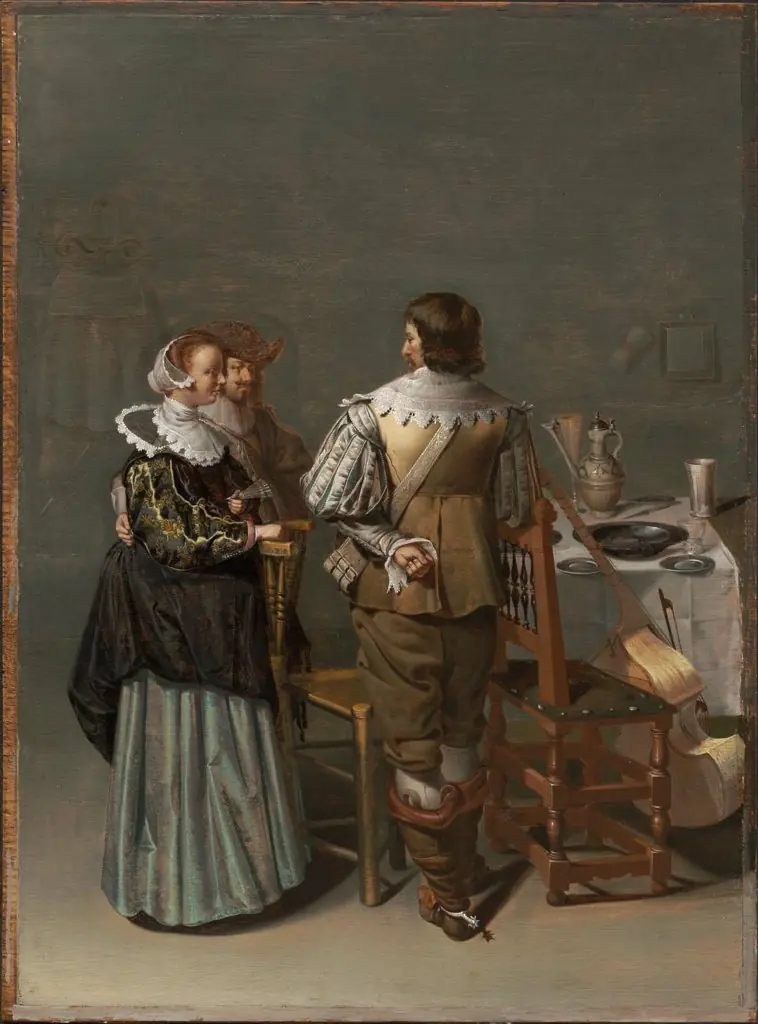 A Merry Company
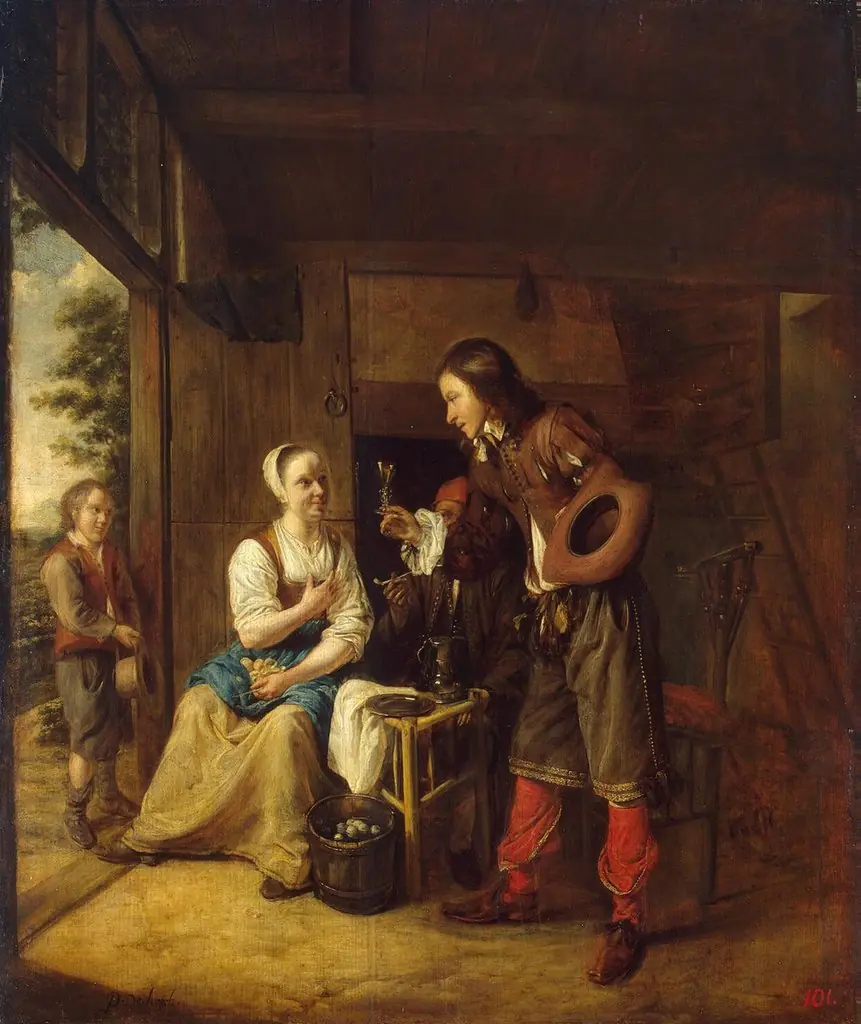 Soldier Offering a Woman a Glass of Wine
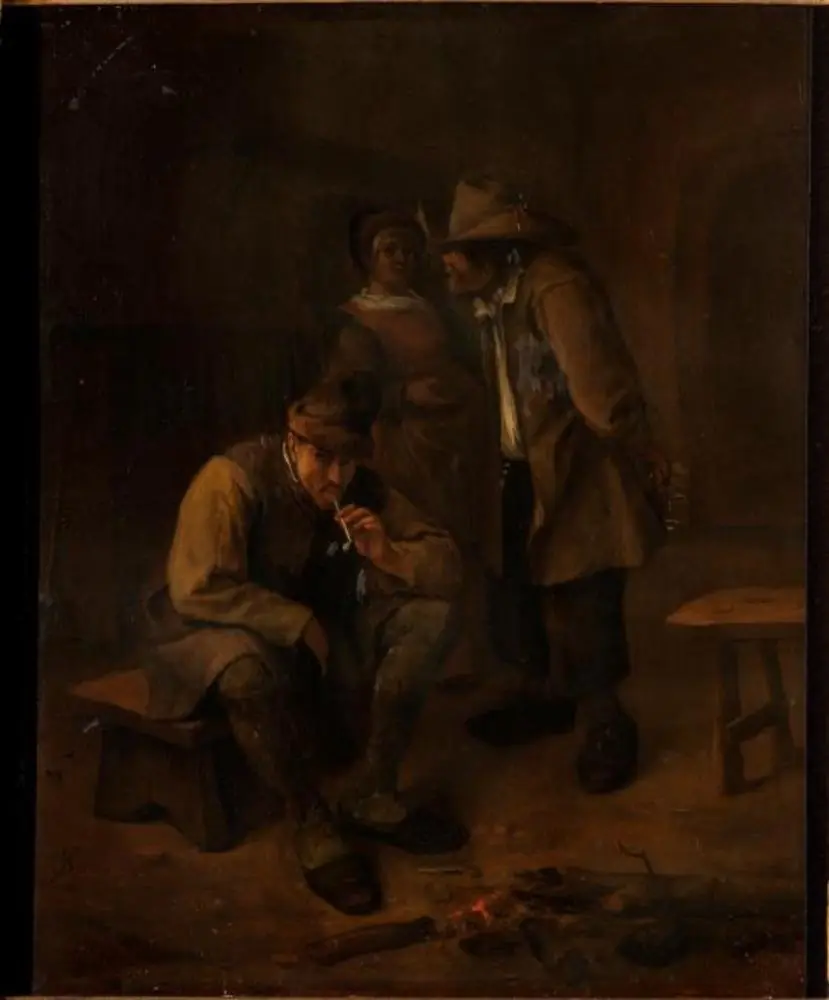 Smoker
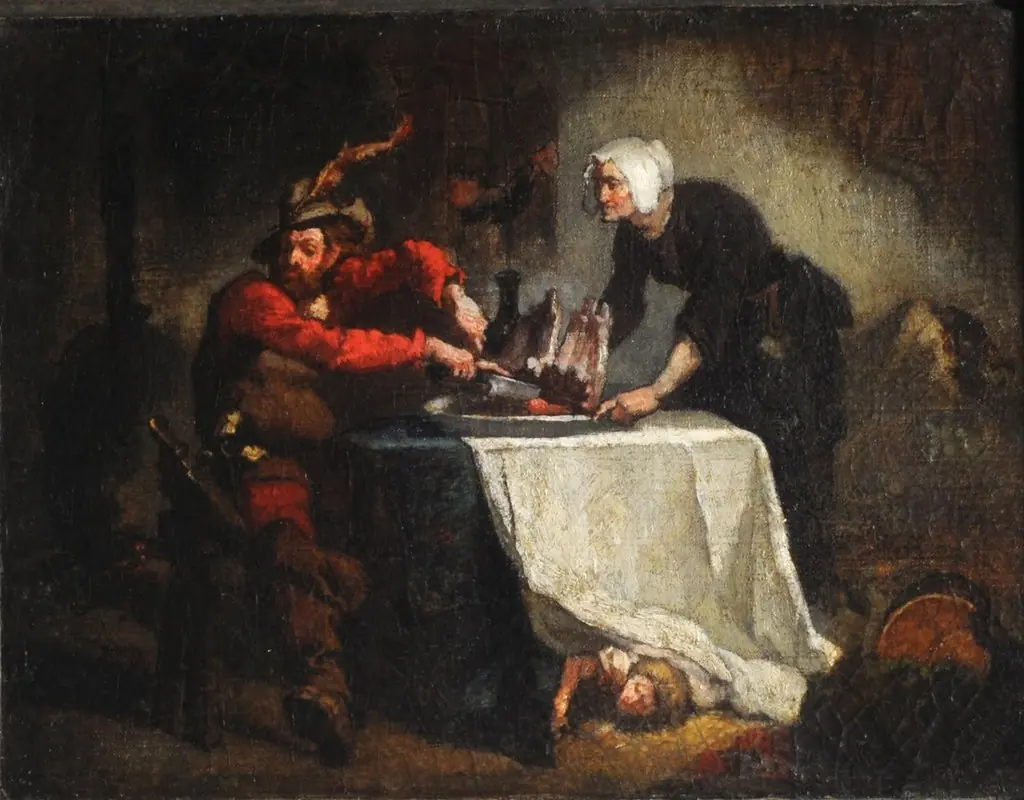 El ogro
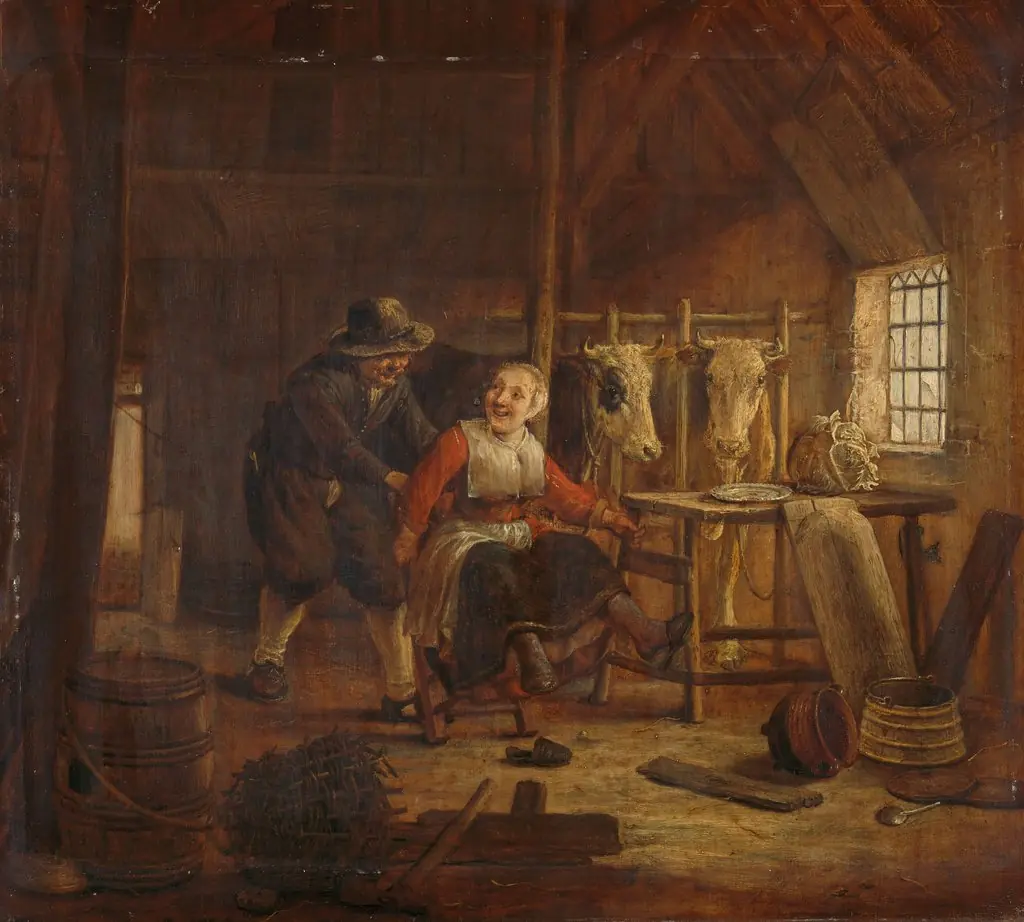 Flirtation in a cowshed
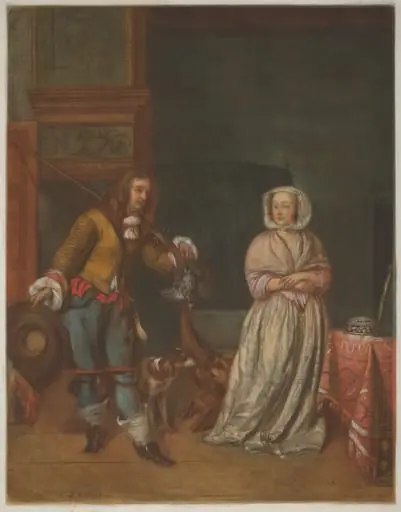 Huntsman Visiting a Lady
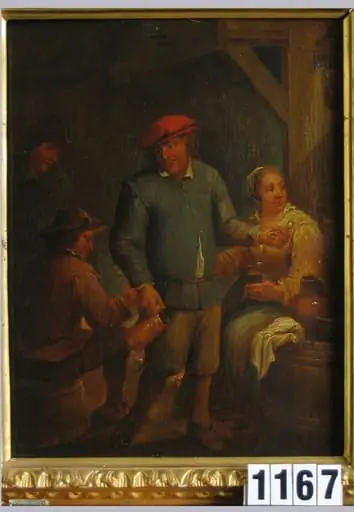 Interior țărănesc cu băutori (în registrul inventar: Oameni băuți într-o cârciumă de țară)
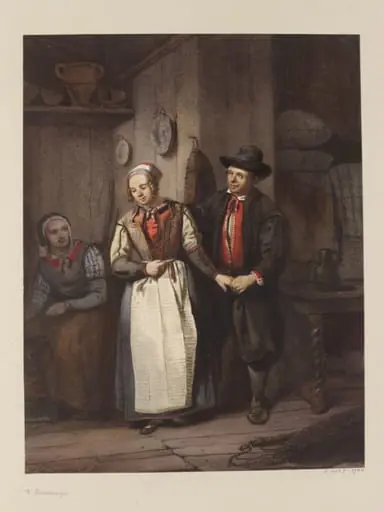 A Betrothal Scene. Interior with Dutch peasants