Artwork
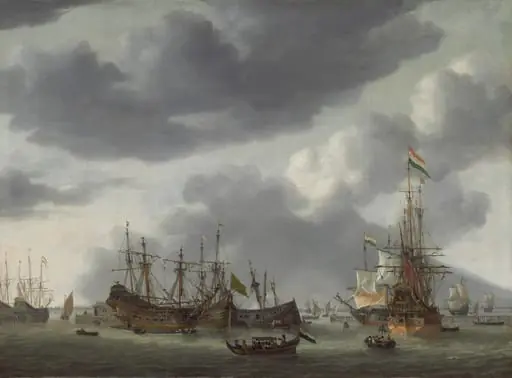
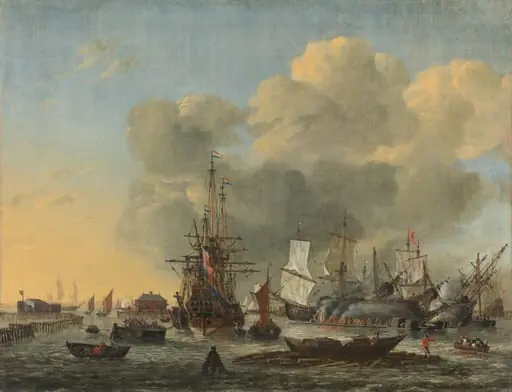
Caulking ships at the Bothuisje (flounder shed) on the Y at Amsterdam
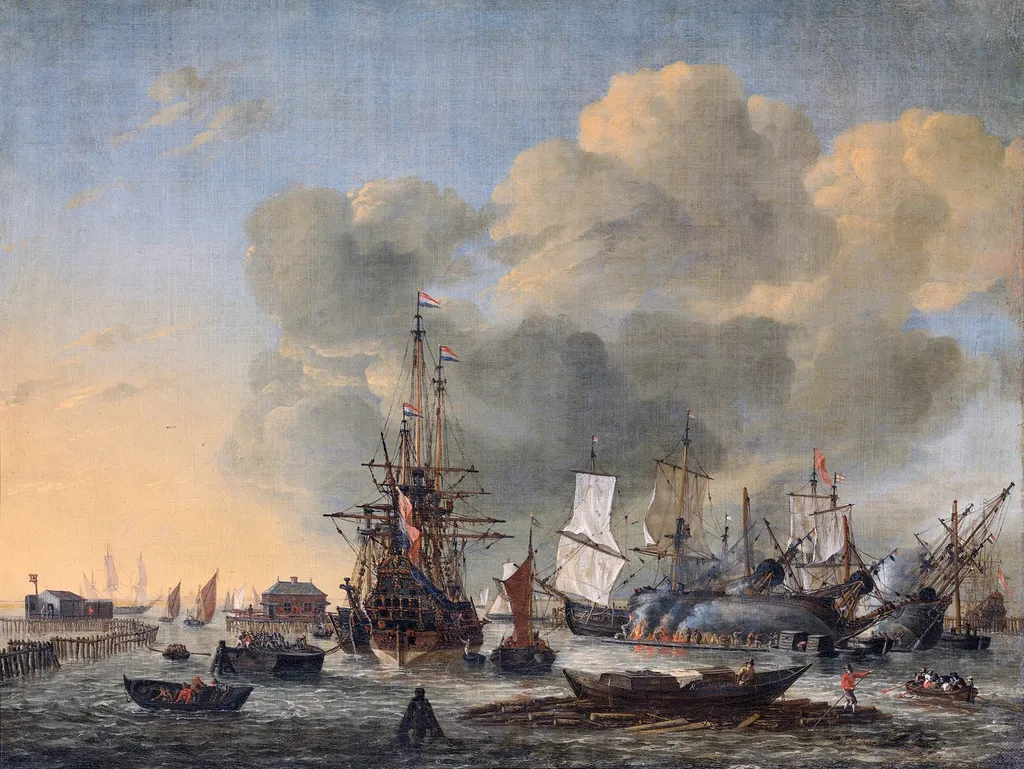
Caulking ships at the Bothuisje (flounder shed) on the Y at Amsterdam is an oil painting by the Dutch Golden Age artist Nooms, called Zeeman, Reinier. It dates from 1650 and is held in the collection of the Rijksmuseum. Reinier Nooms, known by the nickname Zeeman, painted this oil work around 1650.
About this work
Overview
Reinier Nooms, known by the nickname Zeeman, painted this oil work around 1650. It depicts a lively harbor at the Bothuisje, a flounder shed on the Y-shaped waterway of Amsterdam, and belongs to the Dutch Golden Age’s marine genre. The canvas is part of the Rijksmuseum’s collection.
Subject & Meaning
The scene concentrates on dockside labour, showing men applying tar to seal a ship’s hull—a process called caulking. Around them, a variety of vessels, from modest craft to larger ships with multiple masts, are either moored or moving out to sea, illustrating the bustling activity of Amsterdam’s commercial port.
Technique & Style
Nooms renders the harbor with meticulous attention to detail, employing a muted palette of grays and blues that convey a cloudy sky pierced by occasional blue patches. His handling of light and texture highlights the wet surfaces of the water and the rough timber of the ships, emphasizing the realism prized in 17th‑century marine painting.
History & Provenance
Created during a period when Nooms expanded from painting to etching topographical and nautical subjects, the work reflects his reputation for precise ship depictions. It entered the Rijksmuseum’s holdings, where it remains on display as part of the museum’s Dutch maritime collection.
Context
The painting captures a moment in mid‑17th‑century Amsterdam, when the city’s harbor was a hub of international trade. The Bothuisje served as a specialized shed for processing fish, and the presence of caulking workers underscores the constant maintenance required to keep the fleet seaworthy.
Own this work as a print
Artist & collection

Artist
Reinier Nooms (c. 1623 – 1664), also known as Zeeman or Seeman (Dutch for "sailor"), was a Dutch maritime painter known for his highly detailed paintings and etchings of ships. From the 1650s, Nooms started producing…