Artwork
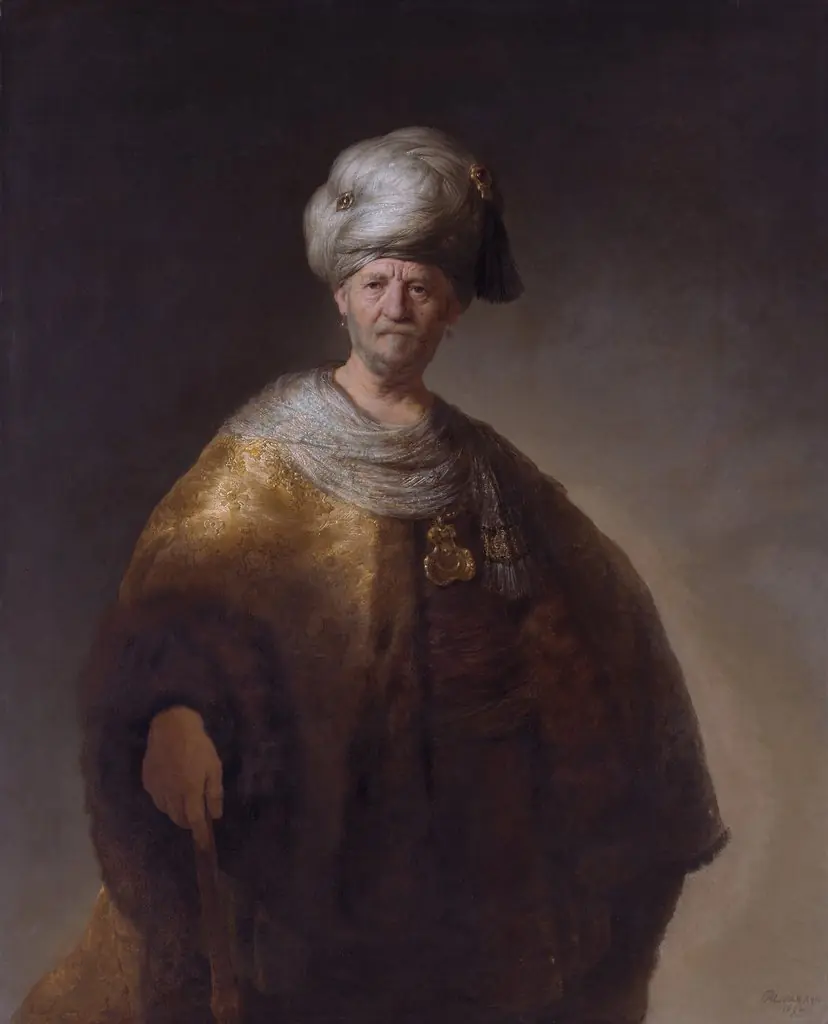
Man in Oriental Dress
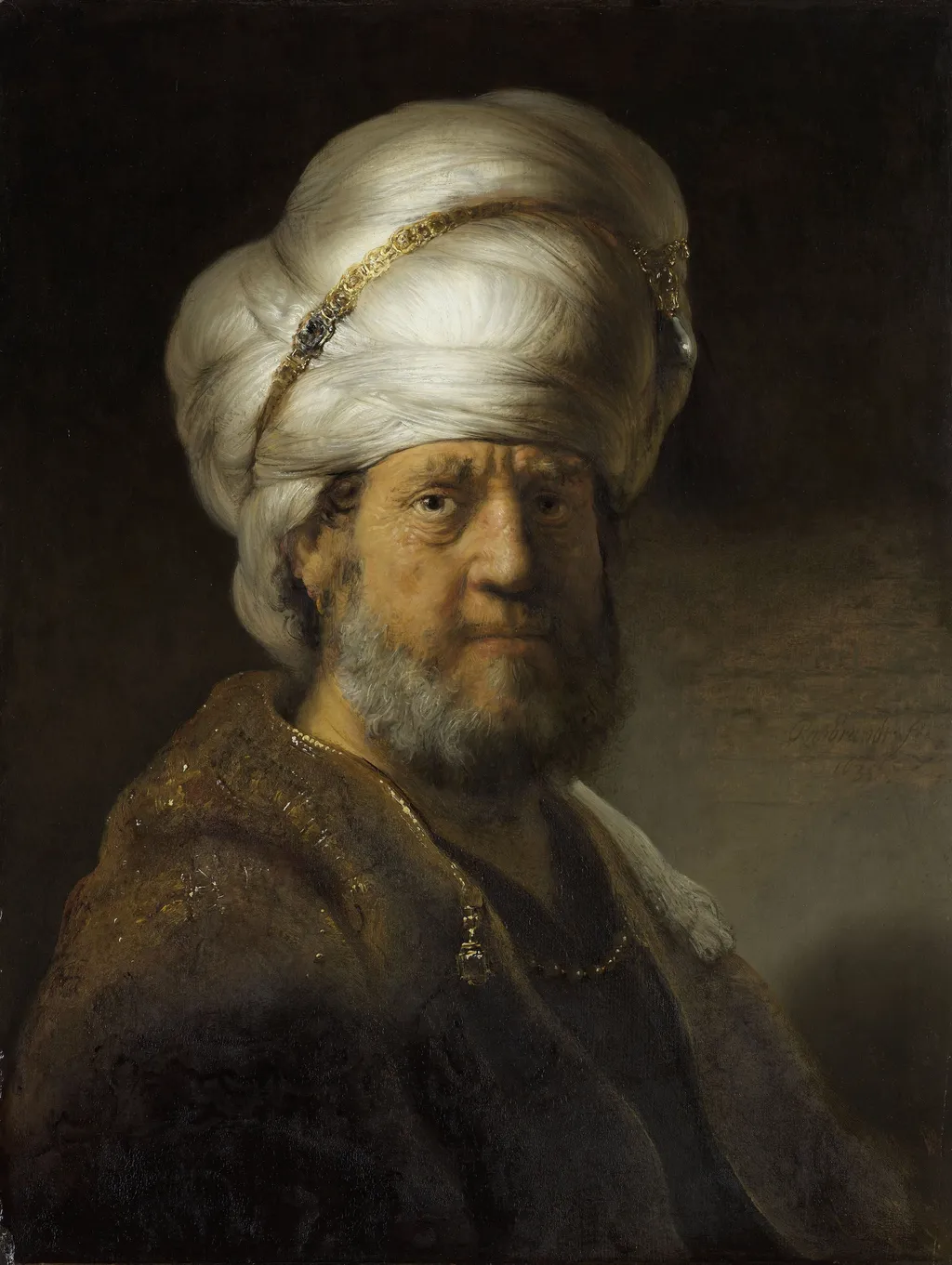
Man in Oriental Dress is an oil painting by the Dutch Golden Age artist Rembrandt. It dates from 1635 and is held in the collection of the Rijksmuseum.
About this work
Overview
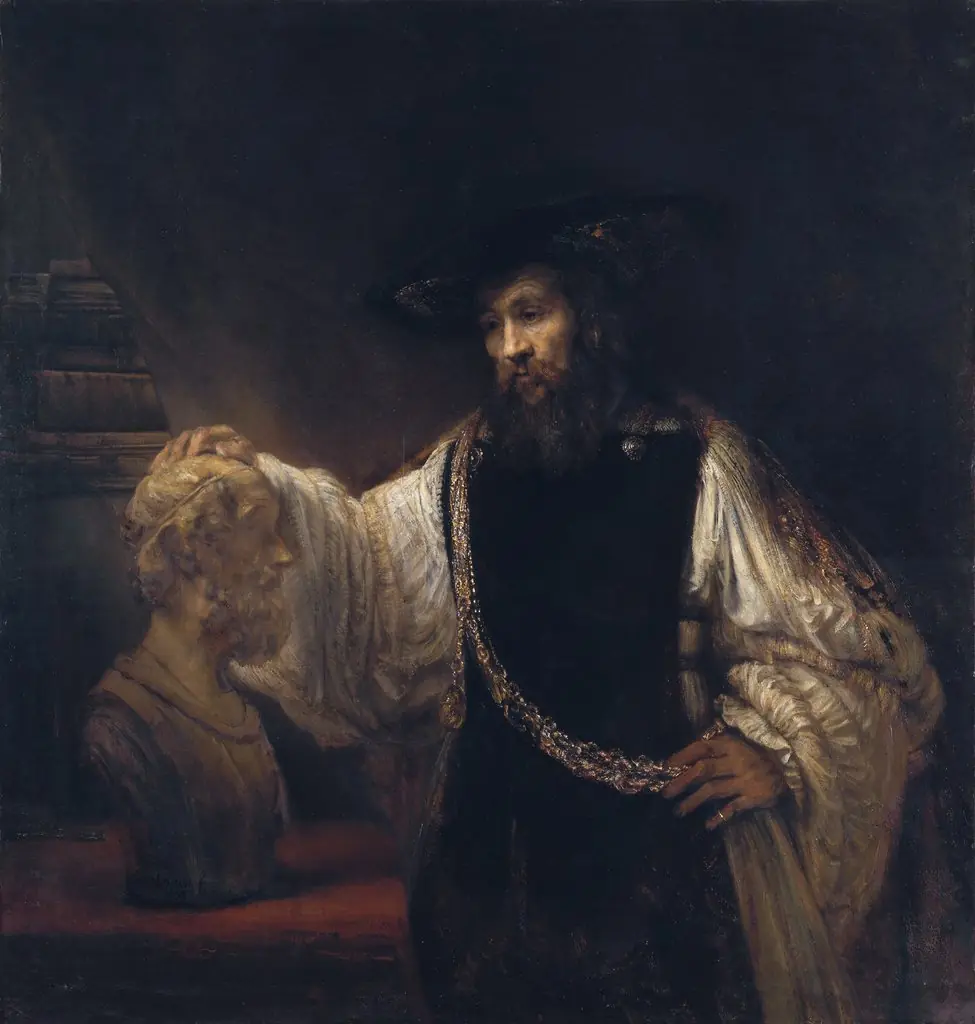
Man in Oriental Dress is a 1635 oil painting by Rembrandt van Rijn, characteristic of the Dutch Golden Age. The work features a solitary figure adorned in Near or Middle Eastern attire, set against a plain, dark background that emphasizes the subject's facial expression and ornate headwear.
Subject & Meaning
The portrait's subject is a bearded man with a gray beard, wearing a distinctive white turban adorned with jewels and a dark band, paired with a dark, fur-lined robe. The exotic costume reflects 17th-century European fascination with Eastern cultures.
Technique & Style
Rembrandt employed chiaroscuro to create deep shadows and sharp, highlighted details, particularly in the turban's folds and the subject's face. This mastery of light and dark generates a sense of depth and draws the viewer's focus to the figure's expression.
History & Provenance
Created in 1635, the painting is now part of the Rijksmuseum's collection in Amsterdam, testament to Rembrandt's prolific output of over 300 paintings, alongside numerous etchings and drawings.
Context
The painting was produced during the Dutch Golden Age, a period marked by increased interest in global cultures and trade, which likely influenced the choice of Oriental dress as a subject.
Own this work as a print
Artist & collection
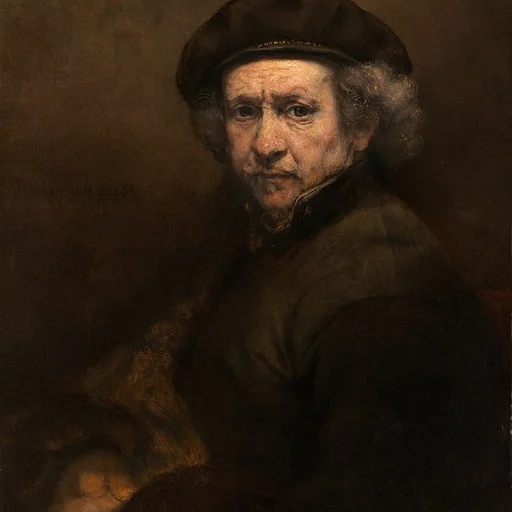
Artist
Rembrandt Harmenszoon van Rijn (15 July 1606 – 4 October 1669), known mononymously as Rembrandt, was a Dutch Golden Age painter, printmaker, and draughtsman.