Artwork
Minerva
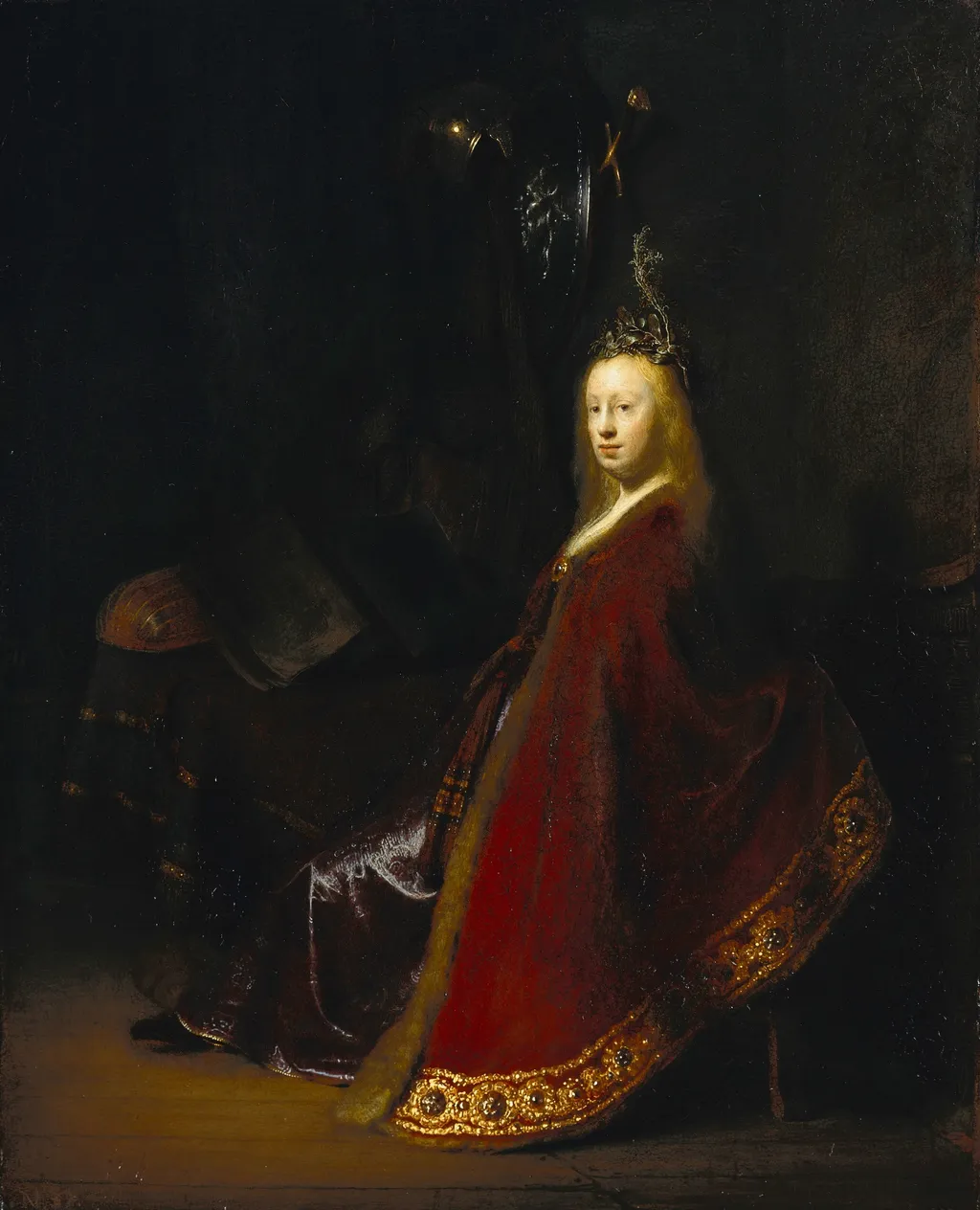
Minerva is an oil painting by the Early Baroque Italian artist Rembrandt. It dates from 1631 and is held in the collection of the Gemäldegalerie Berlin.
About this work
Overview
Created in 1631, this oil painting by Rembrandt Harmenszoon van Rijn portrays the Roman goddess Minerva. Executed in the early Baroque idiom, the work is part of the Gemäldegalerie Berlin’s collection and presents a single, mythological figure against a dark backdrop.
Subject & Meaning
The central figure, dressed in a vivid red garment and a gold‑trimmed cloak, wears a crown that identifies her as the goddess of wisdom and war. Her gaze looks leftward while her right hand rests on the hilt of a downward‑pointing sword, suggesting a moment of reflective contemplation rather than active combat.
Technique & Style
Rembrandt employs chiaroscuro to model the figure, allowing a soft, focused light to illuminate her face and upper torso against the surrounding darkness. The contrast emphasizes the texture of the fabrics and the subtle expression, while the limited palette reinforces the intimate, meditative mood.
History & Provenance
Since its completion, the painting has remained in European collections, eventually entering the holdings of the Gemäldegalerie in Berlin. Its attribution to Rembrandt has been consistently accepted by scholars, confirming its place within his early Baroque output.
Own this work as a print
Artist & collection
Artist
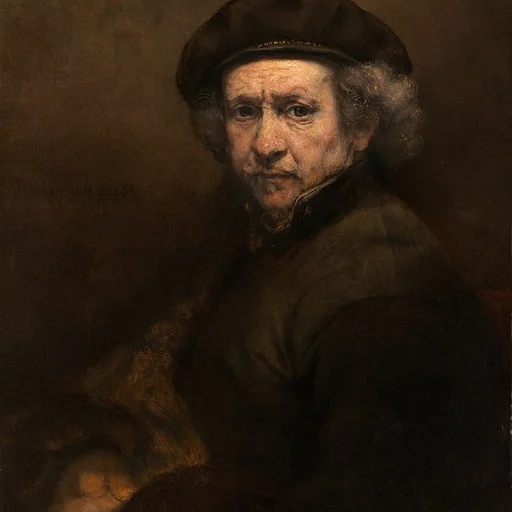
Rembrandt Harmenszoon van Rijn (15 July 1606 – 4 October 1669), known mononymously as Rembrandt, was a Dutch Golden Age painter, printmaker, and draughtsman.

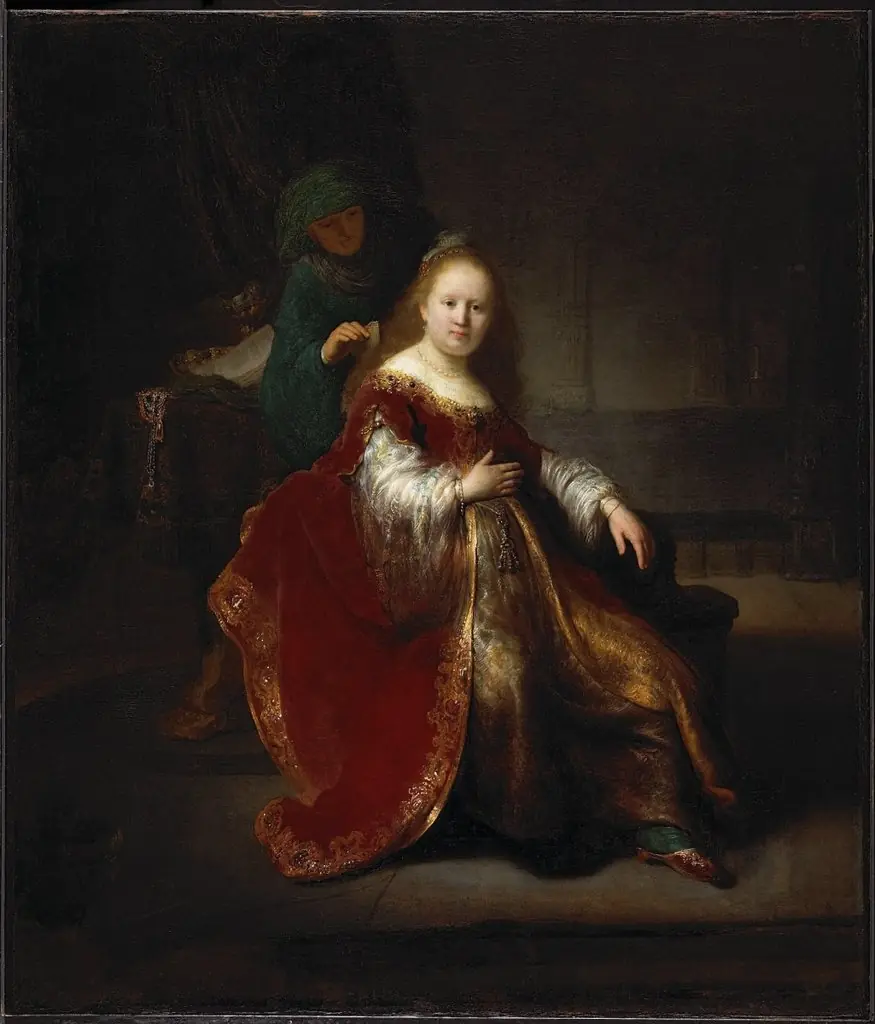 Heroine from the Old Testament
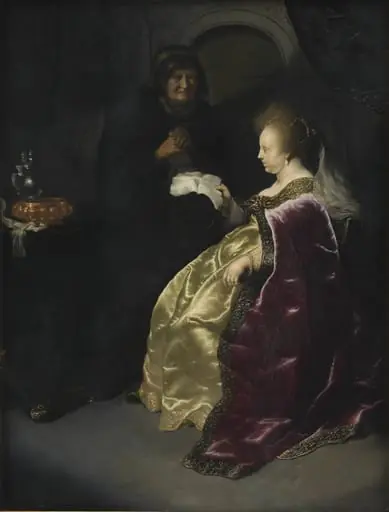 Esther reading Haman's Decree of the Extermination of the Jews
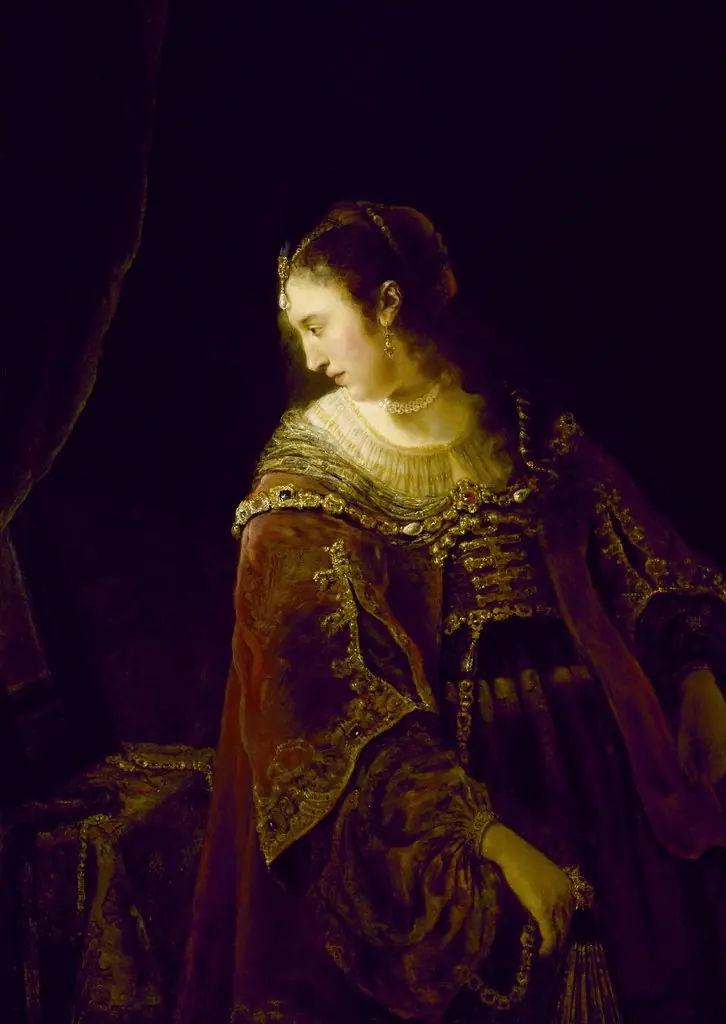 Woman at her Dressing Table
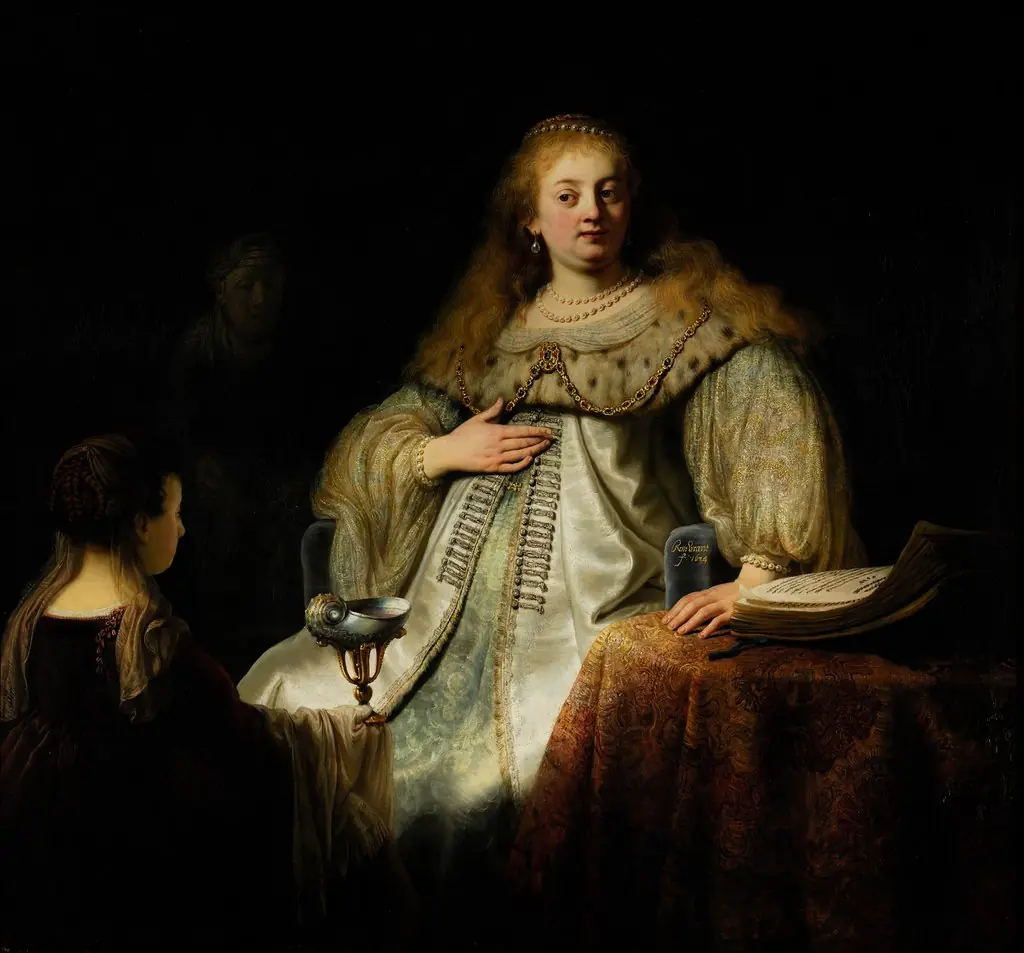 Judith at the Banquet of Holofernes
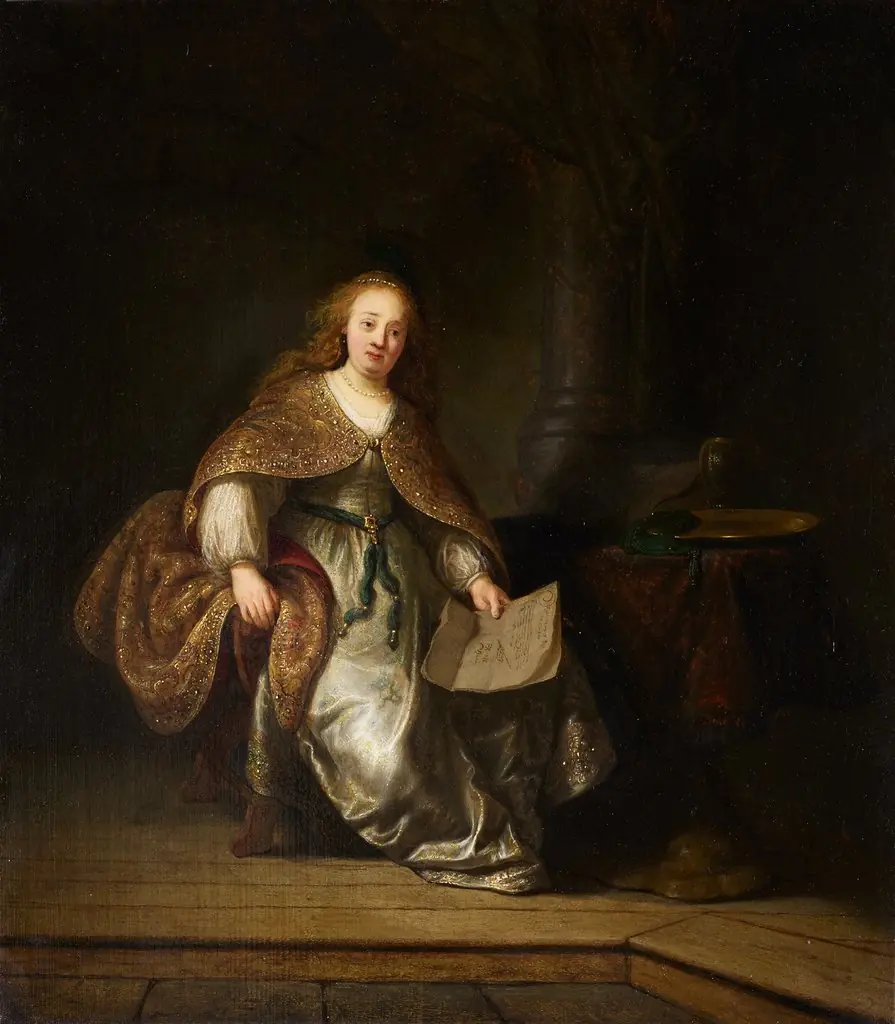 Esther
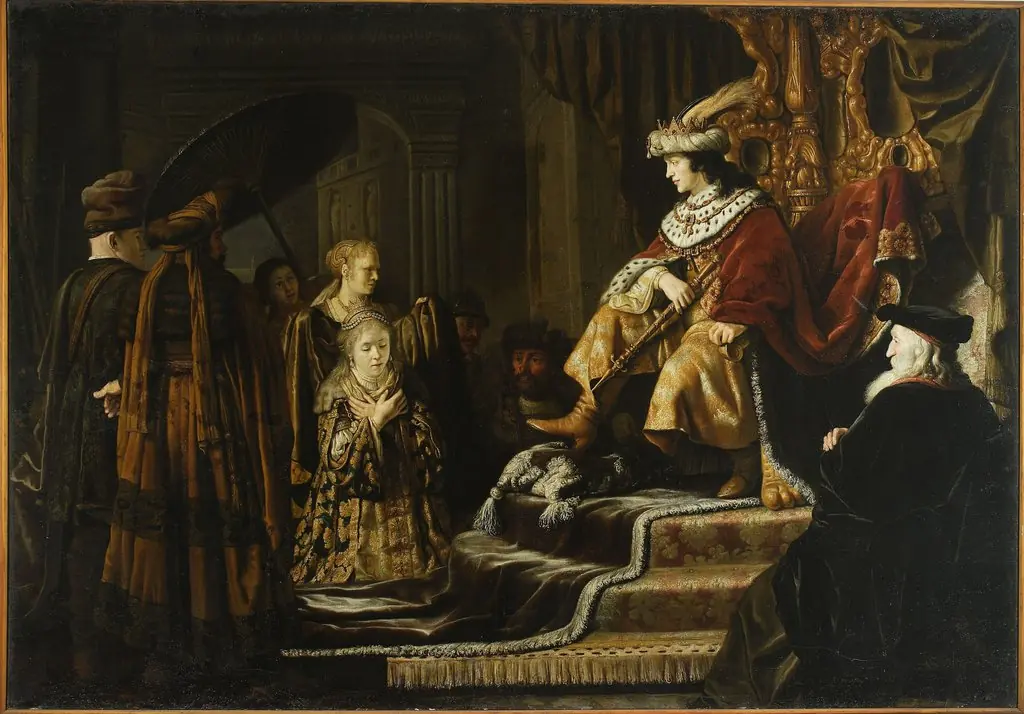 Esther before Ahasuerus (Esther 2:16)
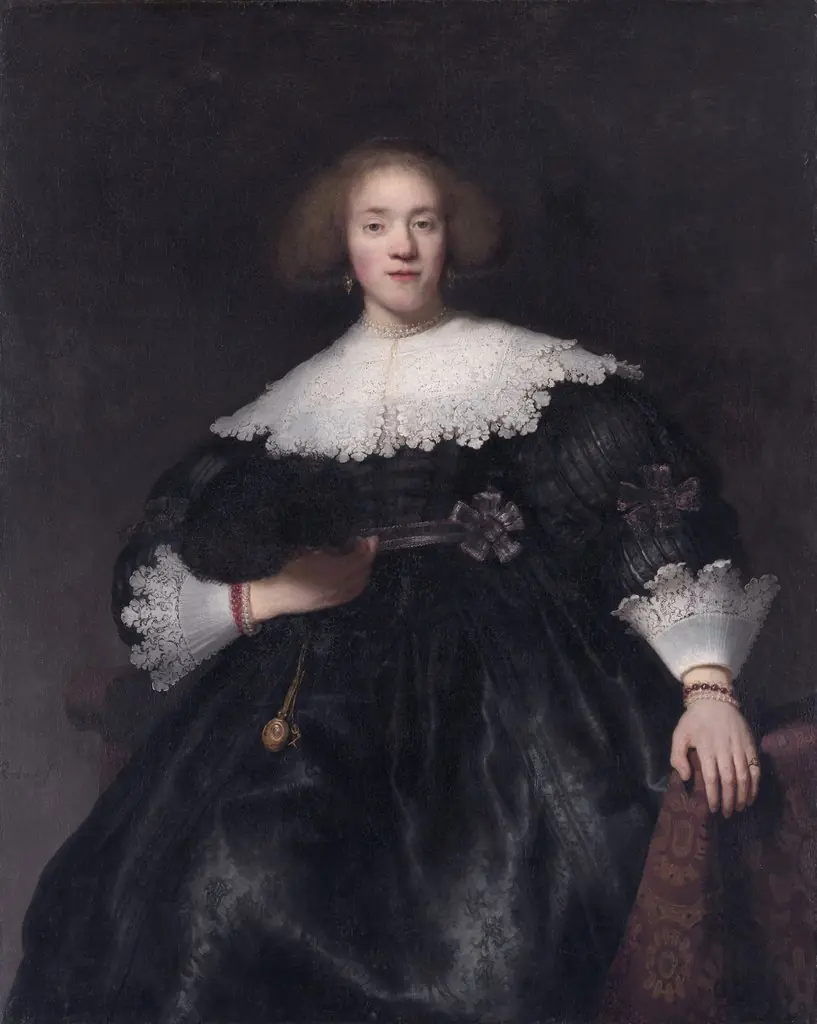 Portrait of a Young Woman with a Fan
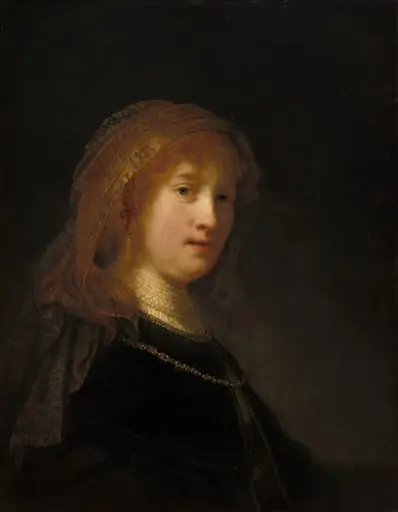 Saskia van Uylenburgh, the Wife of the Artist
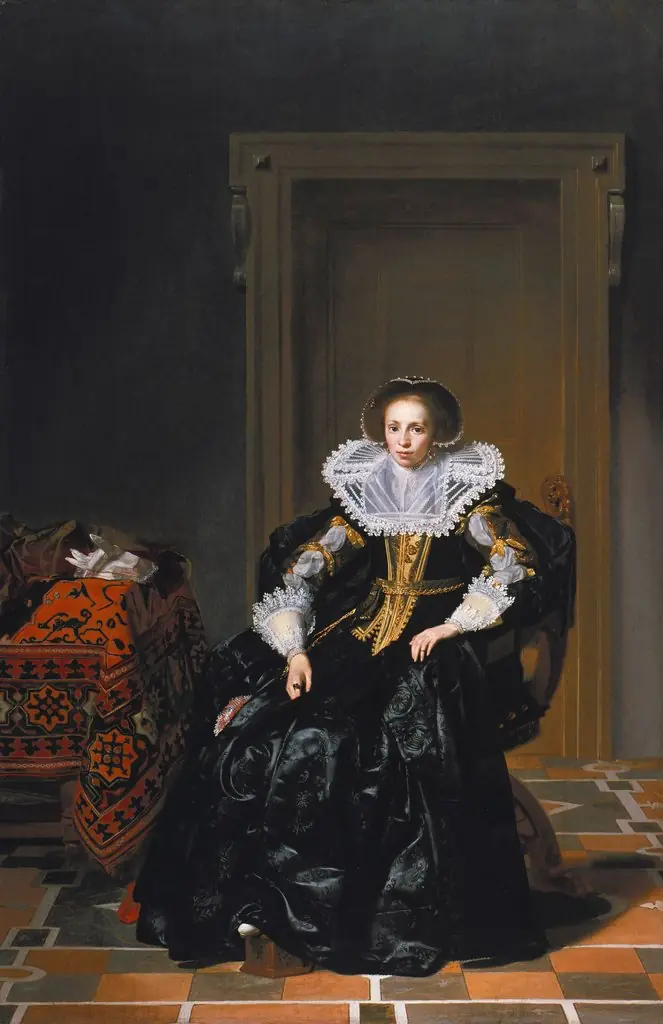 Portrait of a Lady
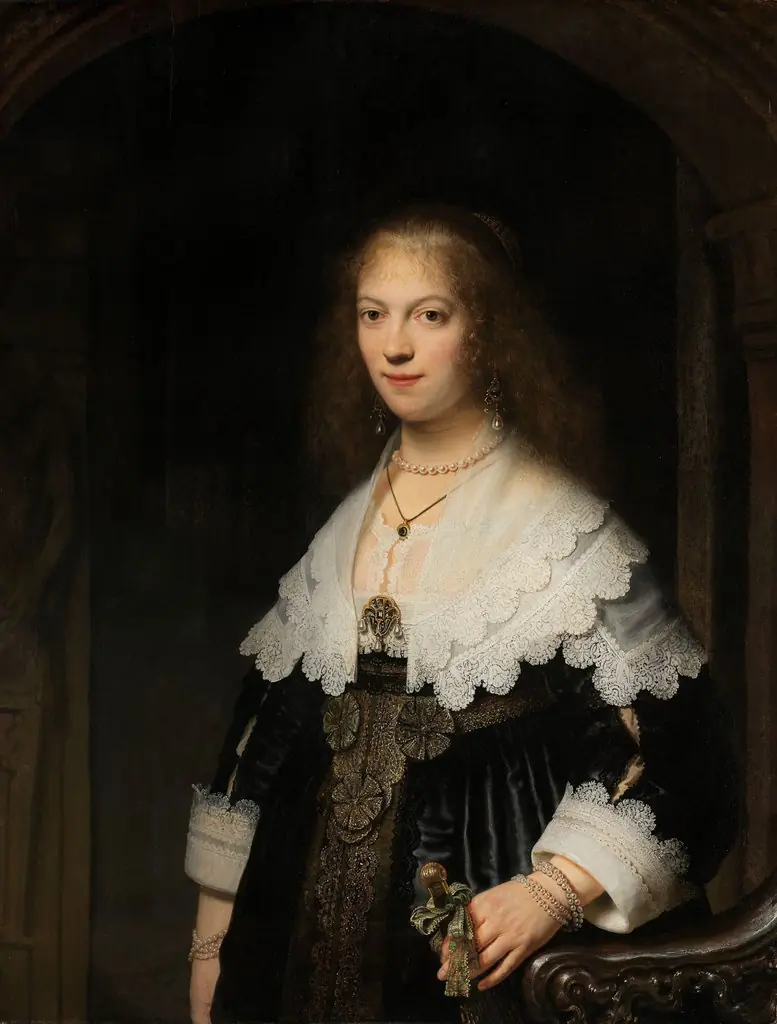 Portrait of Maria Trip
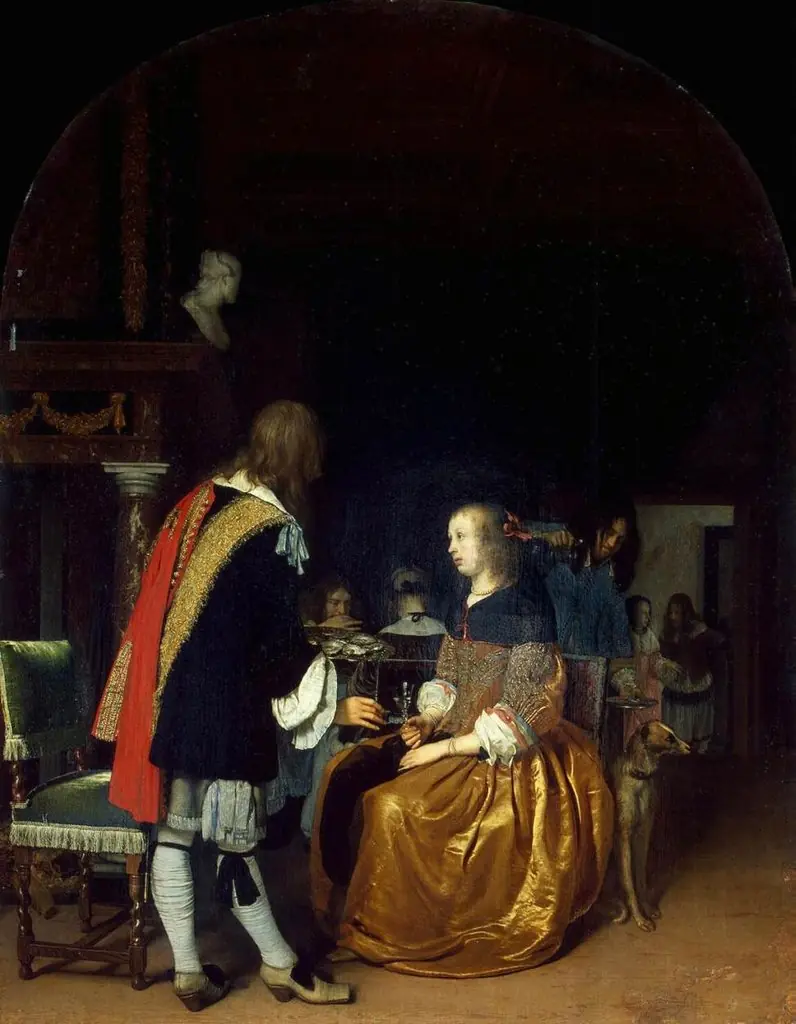 Oyster Eaters
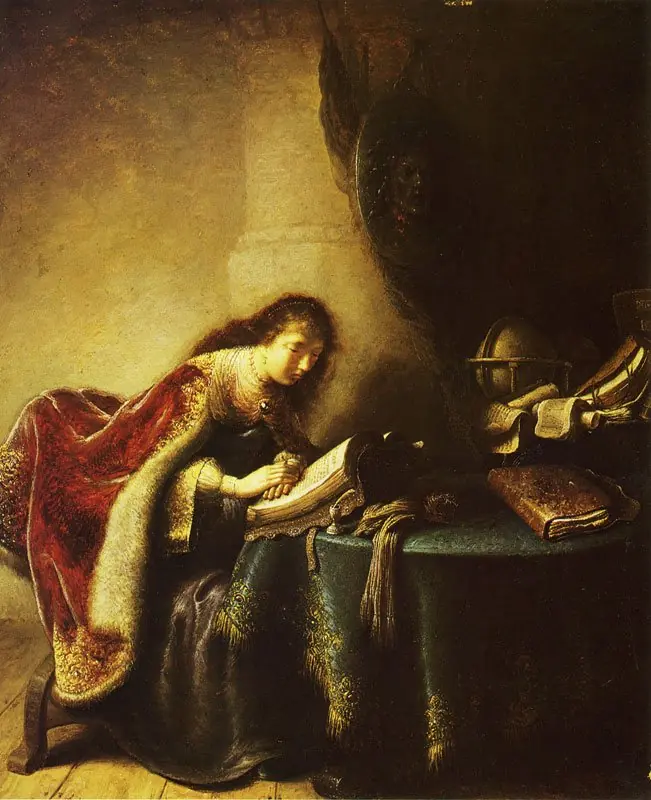 Minerva reading