Artwork
Self-portrait
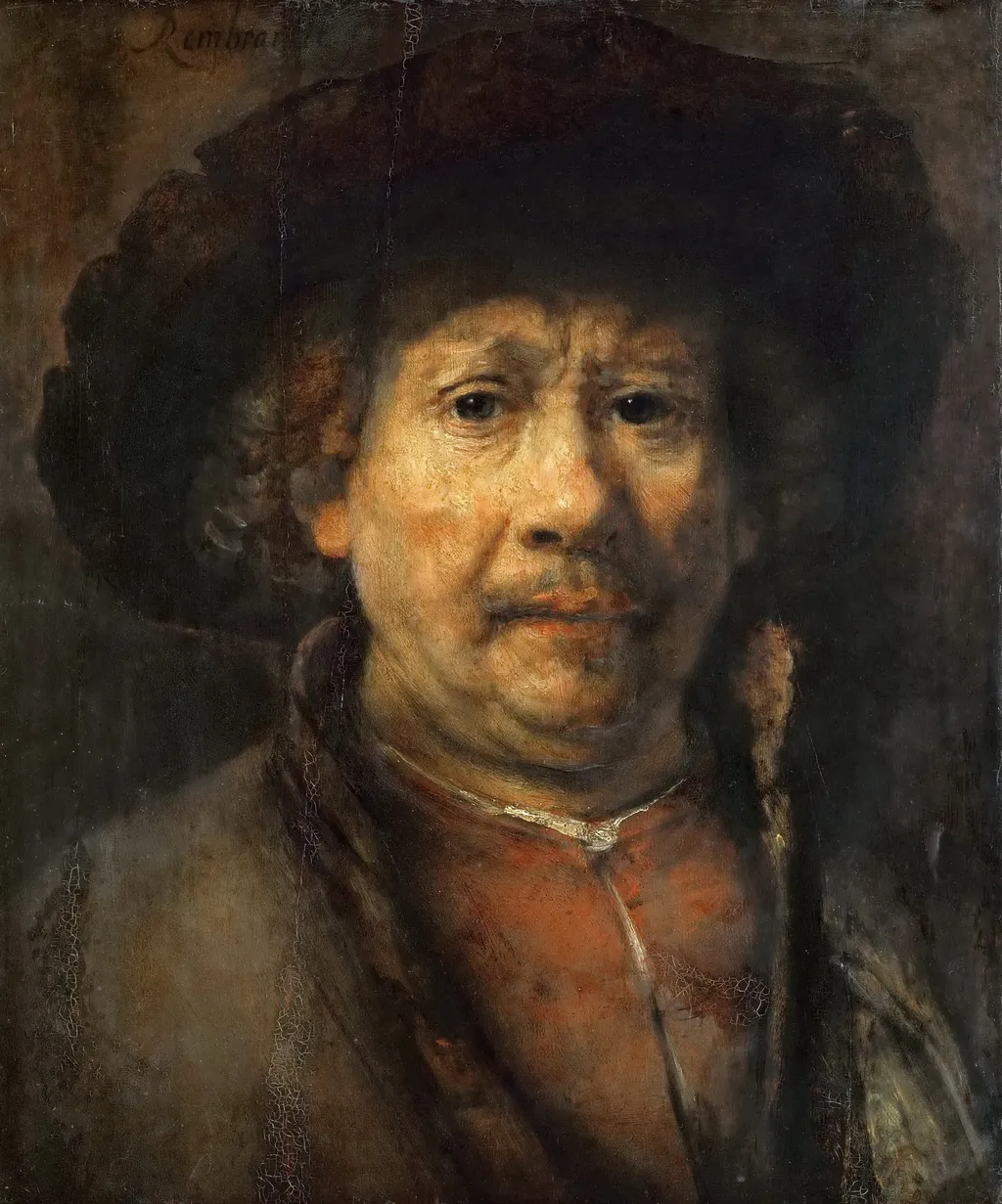
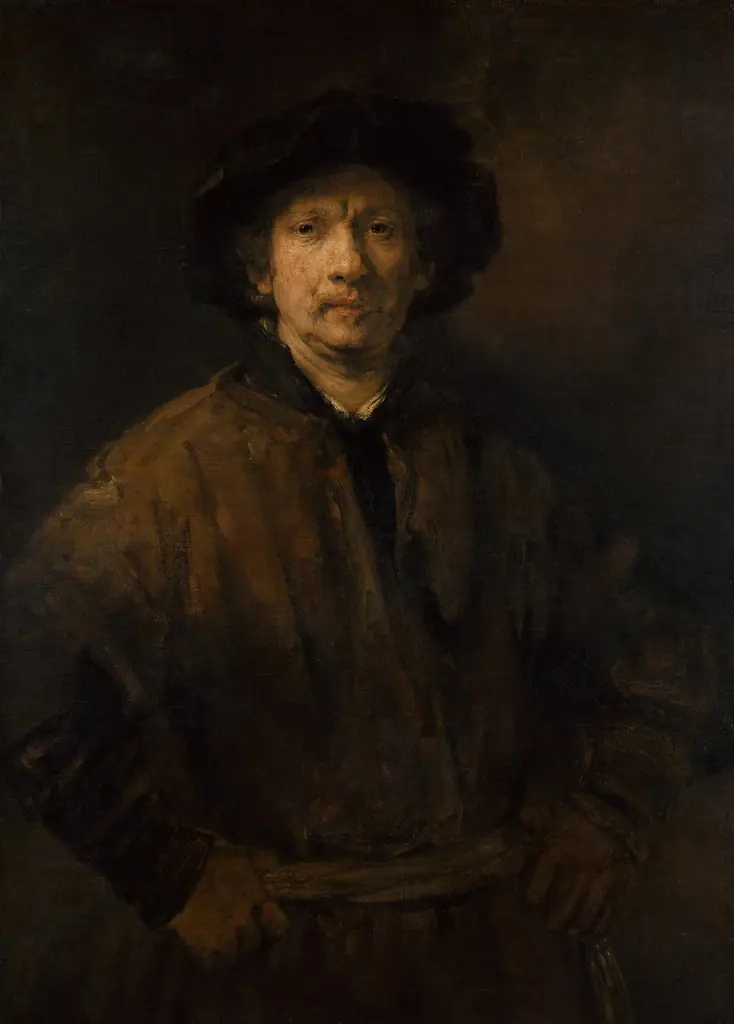
Self-portrait is an oil painting by the Dutch Golden Age artist Rembrandt. It dates from 1655 and is held in the collection of the Kunsthistorisches Museum.
About this work
Overview
Its intimate scale and unadorned setting reflect a personal, introspective approach to portraiture, characteristic of Rembrandt’s later years.
Painted in 1655, this oil-on-canvas work is one of many self-portraits by Rembrandt van Rijn, who consistently turned to his own image as a subject throughout his career. Unlike grand historical or mythological scenes common in his era, this piece focuses narrowly on the artist’s face and upper torso. Its intimate scale and unadorned setting reflect a personal, introspective approach to portraiture, characteristic of Rembrandt’s later years.
Subject & Meaning
The portrait presents the artist without idealization, capturing subtle signs of age and weariness. The direct gaze and minimal attire suggest an unvarnished self-examination. The absence of symbolic objects or elaborate surroundings shifts focus entirely to the expression and texture of skin, inviting contemplation of identity, time, and inner life rather than social status or achievement.
Technique & Style
Rembrandt employed thick, layered brushwork to model the face, creating a tactile sense of skin and shadow. The dark, indistinct background enhances the three-dimensionality of the figure through strong chiaroscuro—contrasting light and deep tones. The faded signature in the upper corner, barely legible, hints at the passage of time and the artist’s own evolving relationship with his public persona.
History & Provenance
The painting entered the collection of the Kunsthistorisches Museum in Vienna in the 18th century, likely through imperial acquisitions. It has remained there since, documented in museum inventories as part of a broader group of Dutch and Flemish works assembled by Habsburg patrons. Its continuous presence in the museum underscores its recognized significance within European art collections.
Context
In mid-17th century Amsterdam, self-portraiture was a common practice among artists seeking to demonstrate skill and personal identity. Rembrandt’s series stands apart for its psychological depth and technical experimentation. While contemporaries often portrayed themselves in fashionable attire, he chose restraint, aligning his self-representations with a broader cultural shift toward introspection and individuality.
Legacy
This portrait exemplifies Rembrandt’s influence on the evolution of psychological portraiture. His willingness to depict aging and vulnerability without embellishment paved the way for later artists to explore self-representation with greater honesty. The work continues to be studied for its technical mastery and its quiet, enduring human presence.
Own this work as a print
Artist & collection
Artist
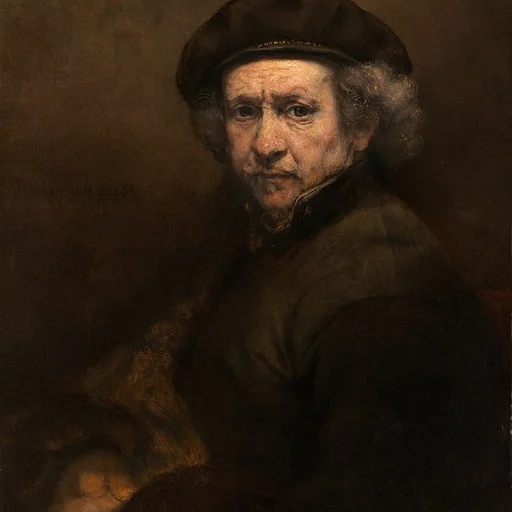
Rembrandt Harmenszoon van Rijn (15 July 1606 – 4 October 1669), known mononymously as Rembrandt, was a Dutch Golden Age painter, printmaker, and draughtsman.

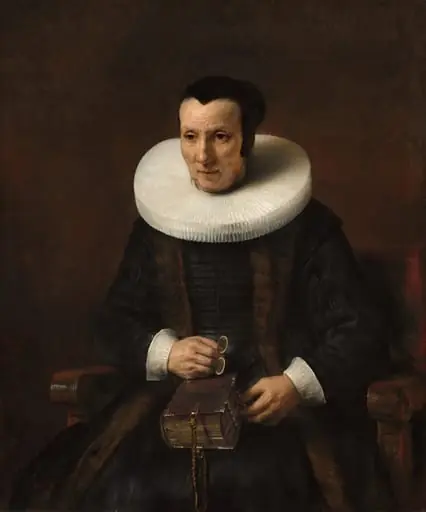
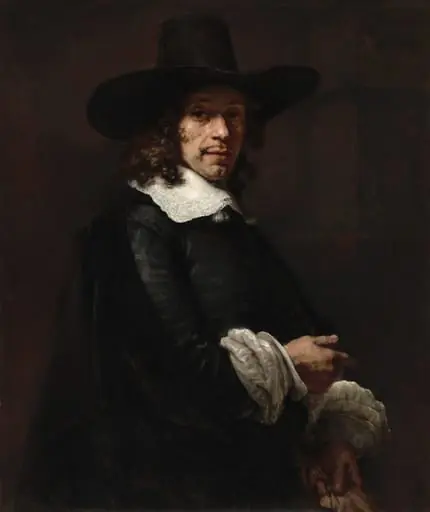
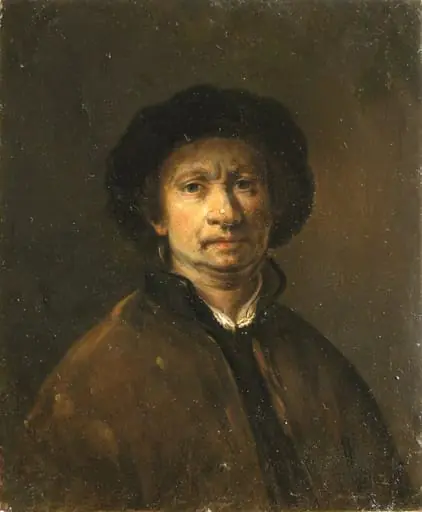 Autoportret
 Self Portrait
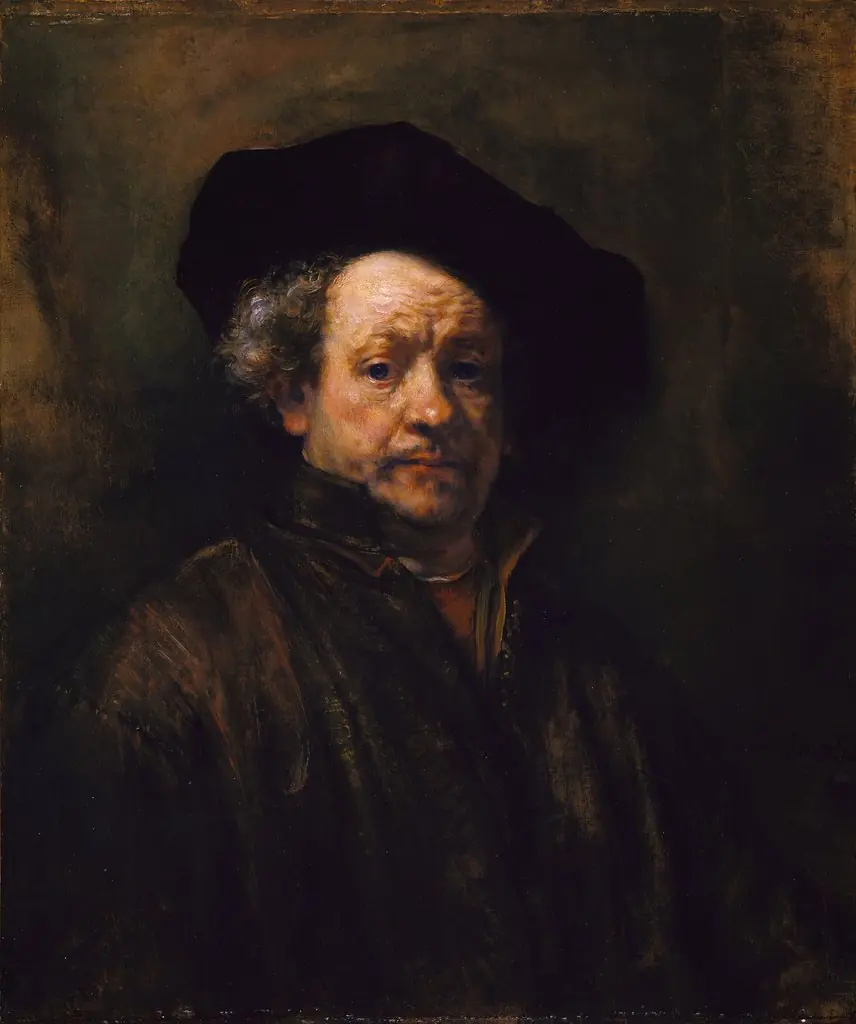 Self portrait
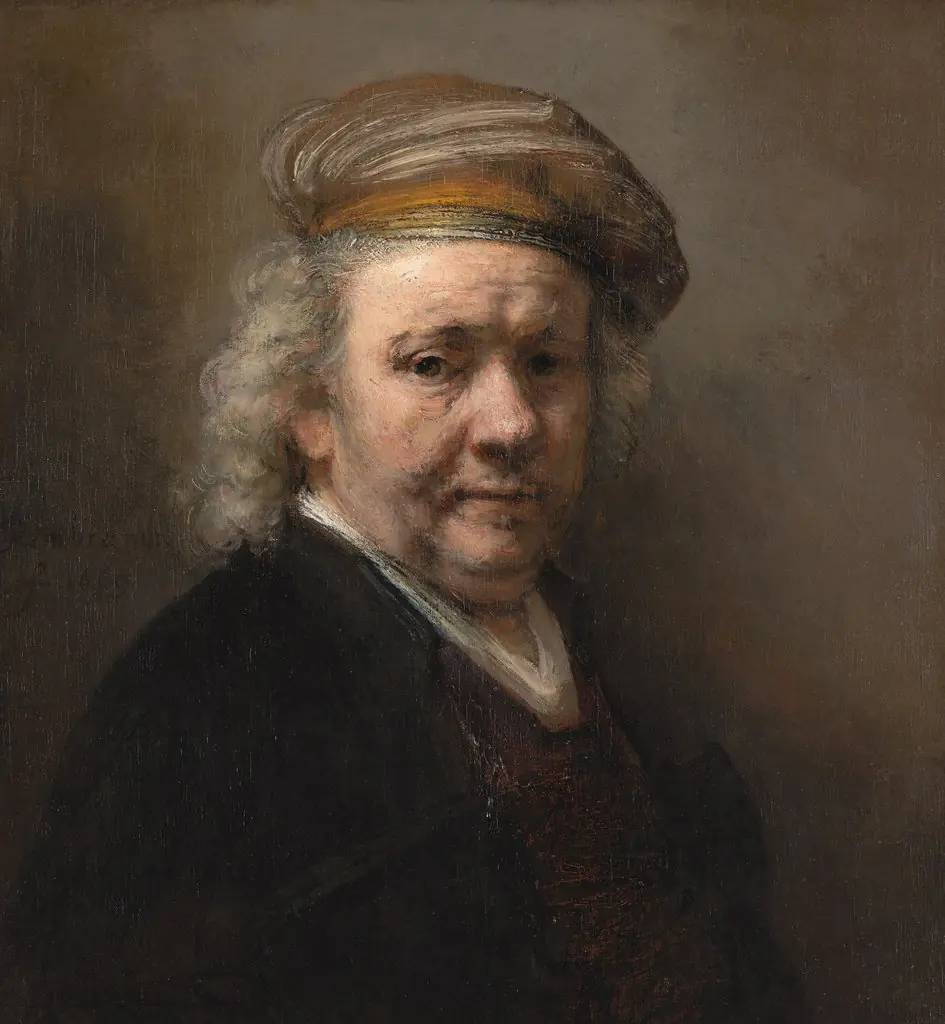 Self-portrait
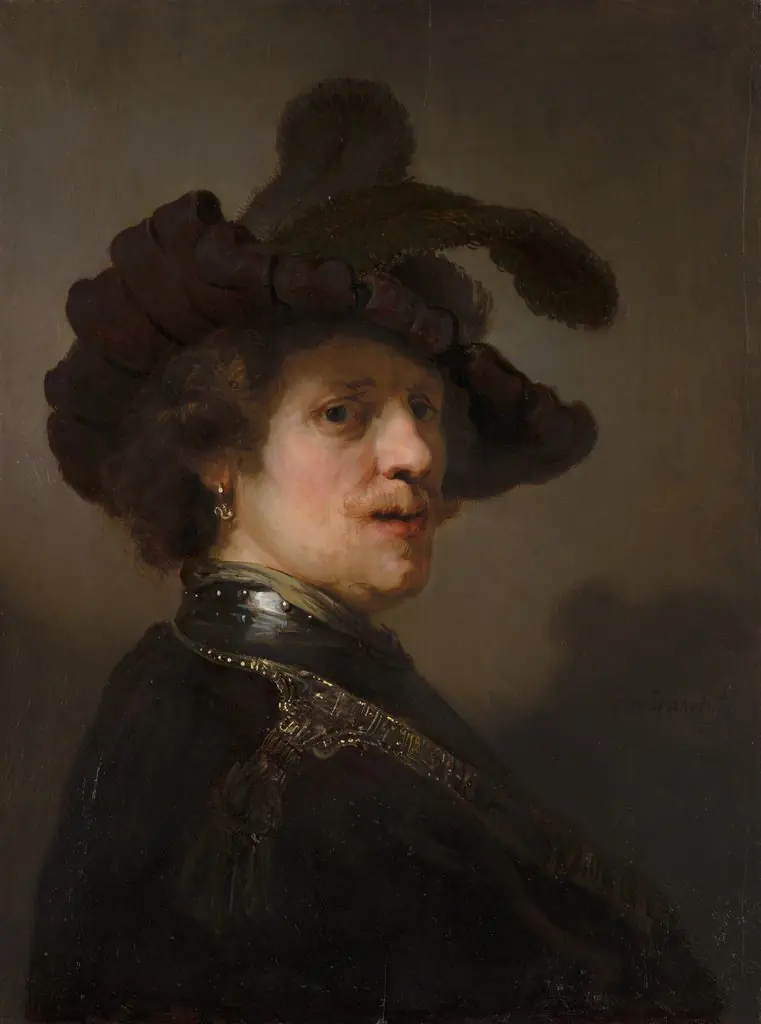 Portrait of a man in a plumed hat
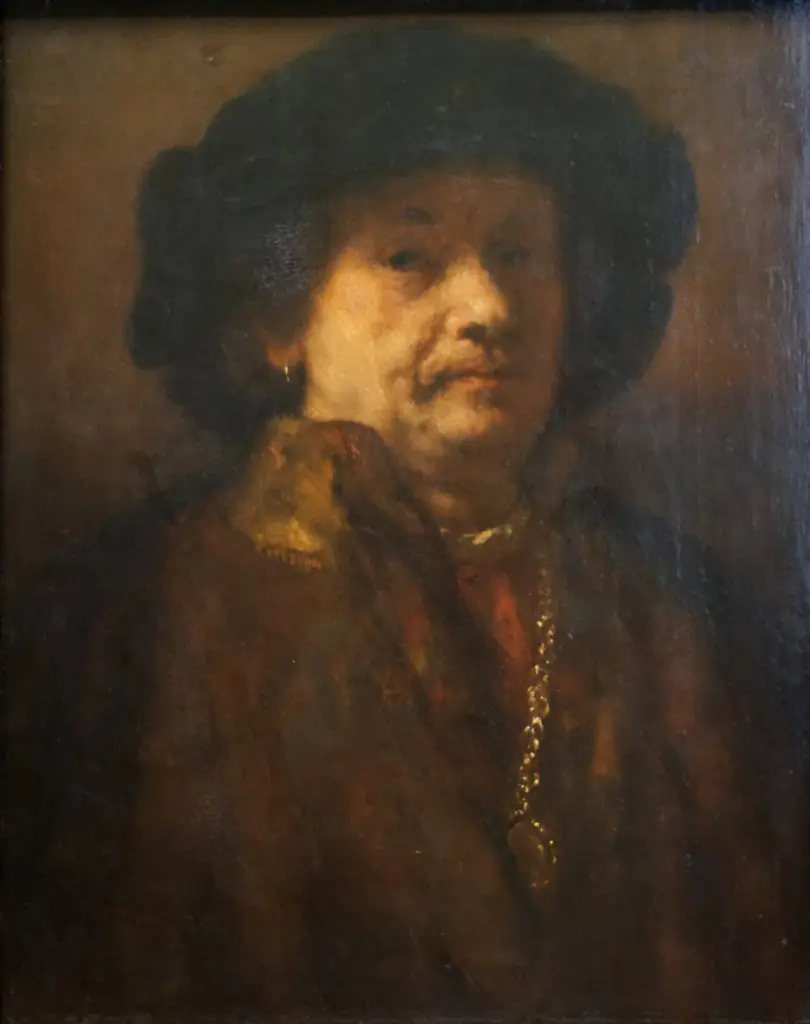 Self-portrait in a fur coat with gold chain and earring
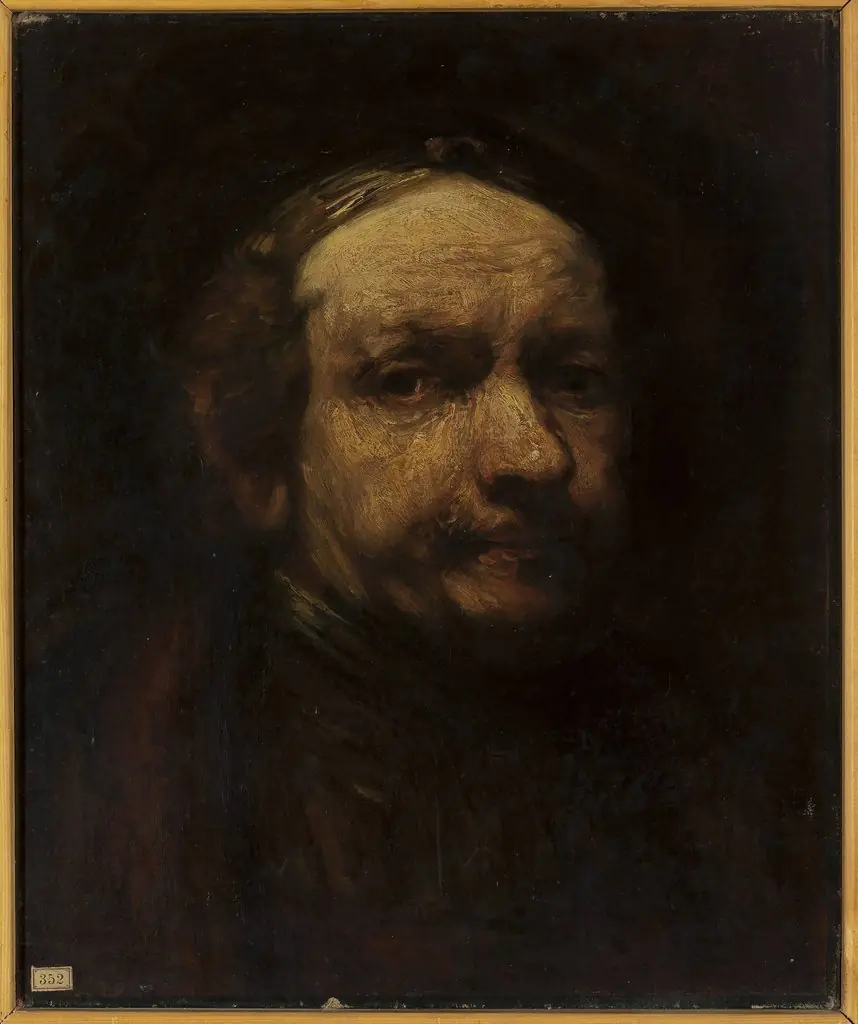 Copy of Rembrandt's “Self-portrait”
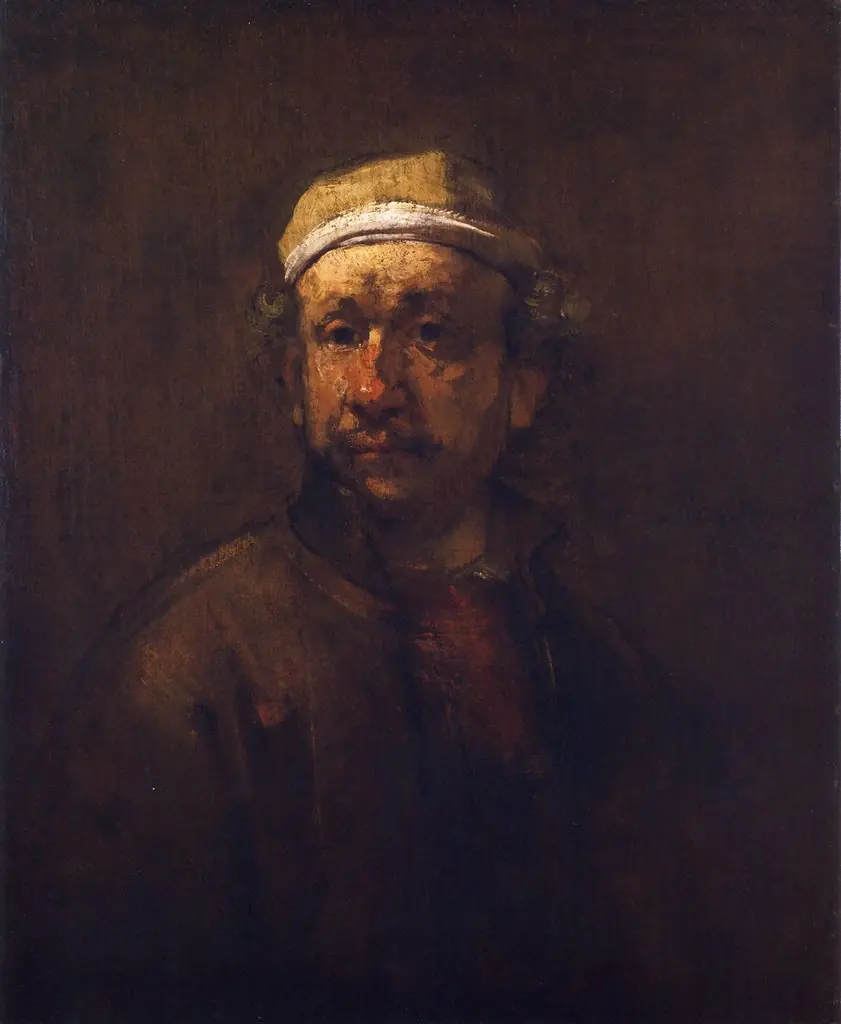 Portrait of Rembrandt
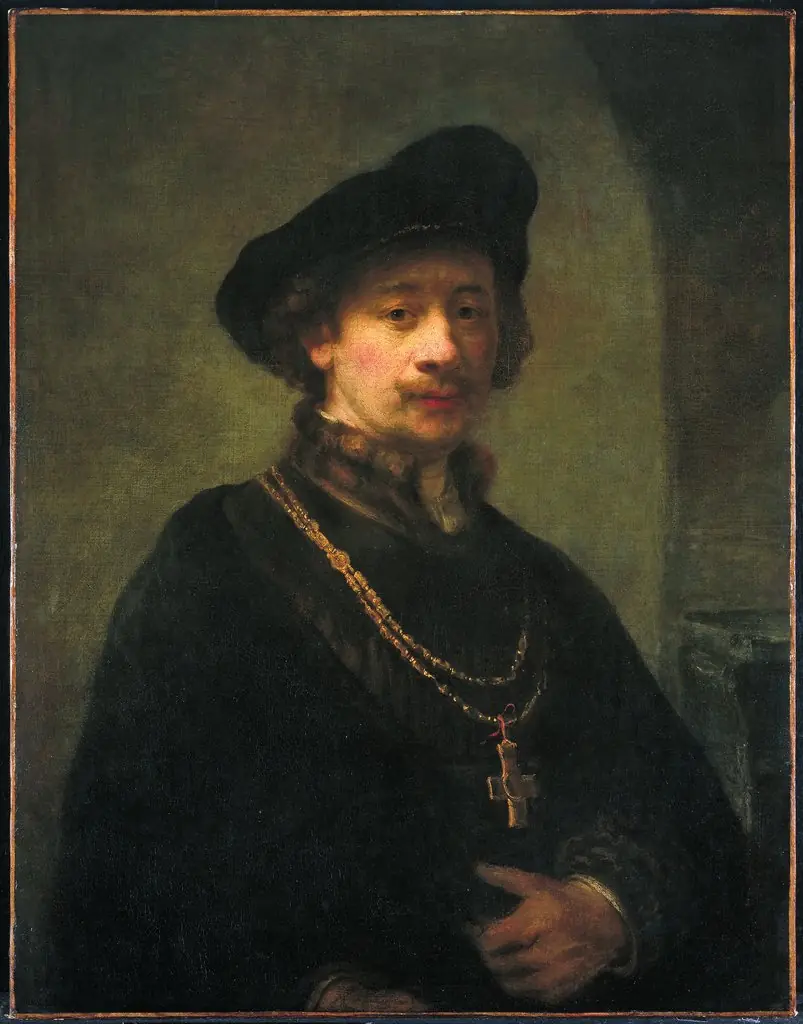 Self-portrait with beret, gold chain, and cross
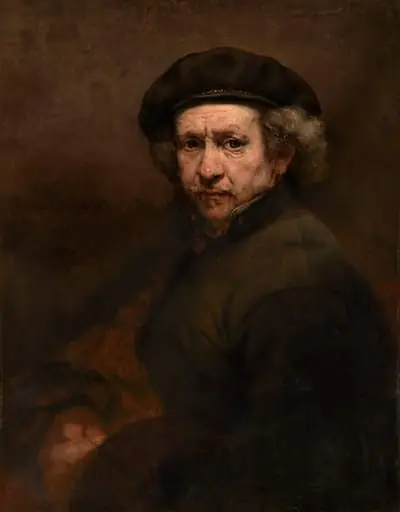 Self-Portrait
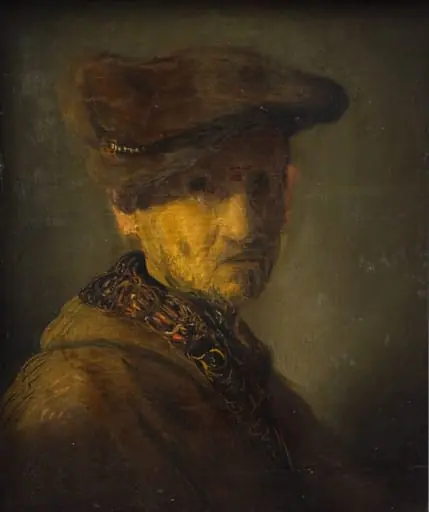 Man with a Hat. (Portrait of Rembrandt's Father)
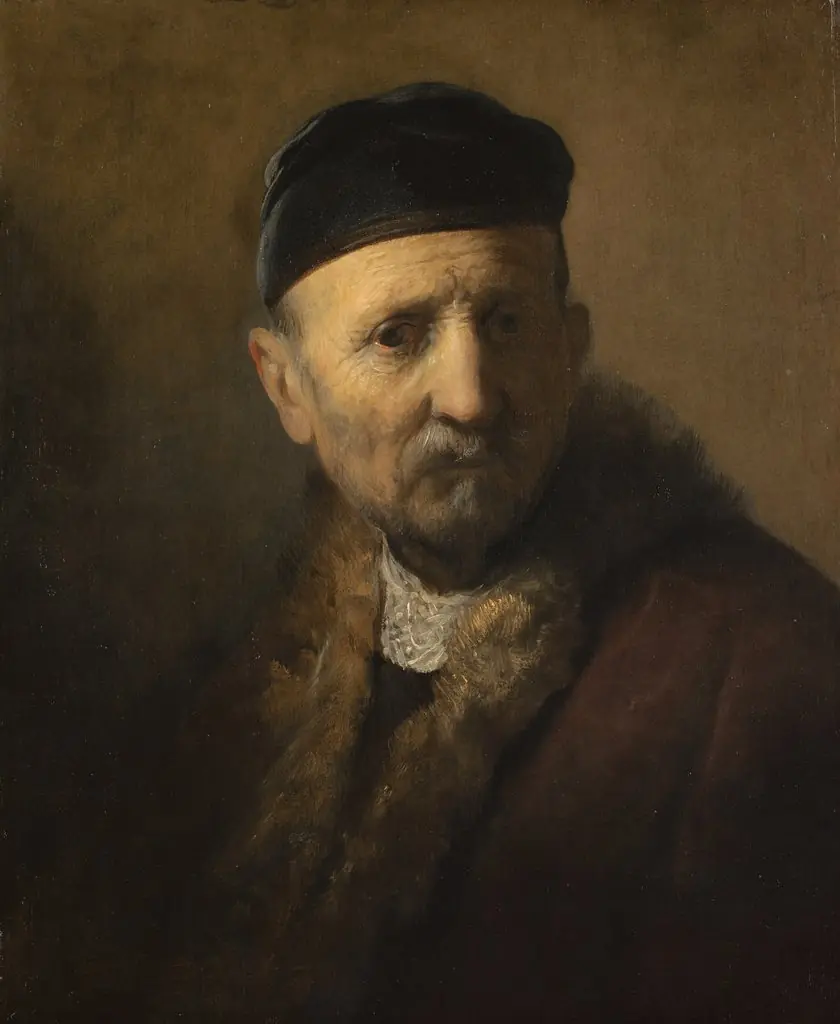 Study of an old man (Rembrandt's father)