Artwork
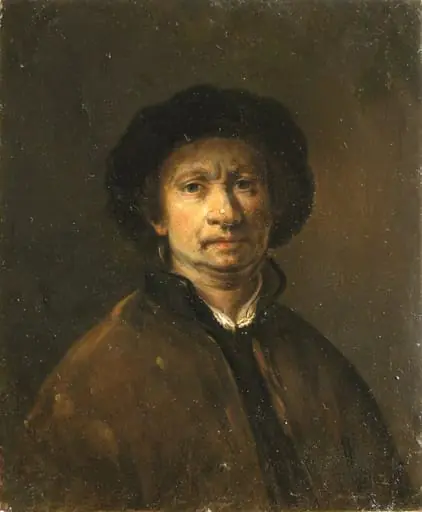
Copy of Rembrandt's “Self-portrait”
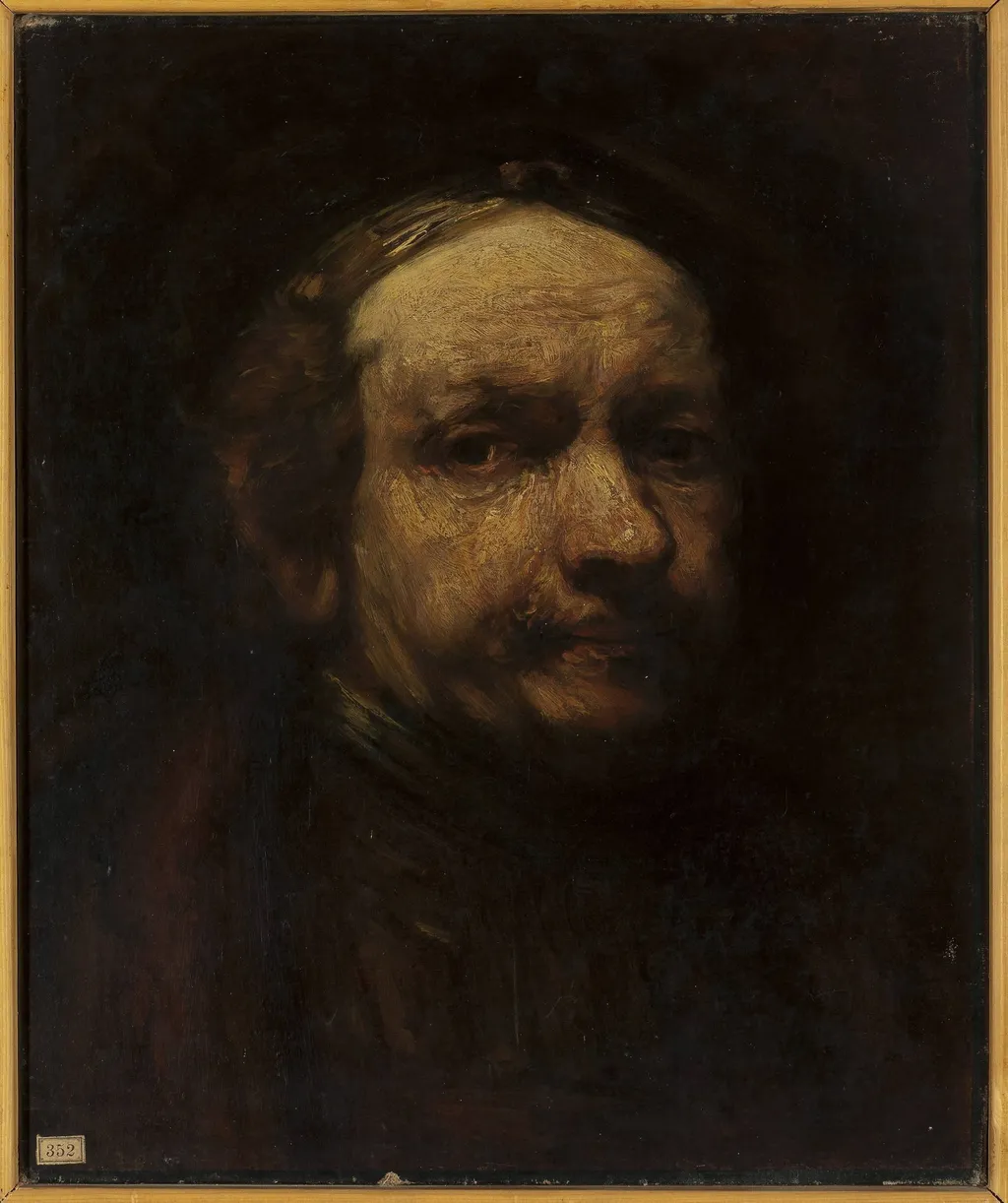
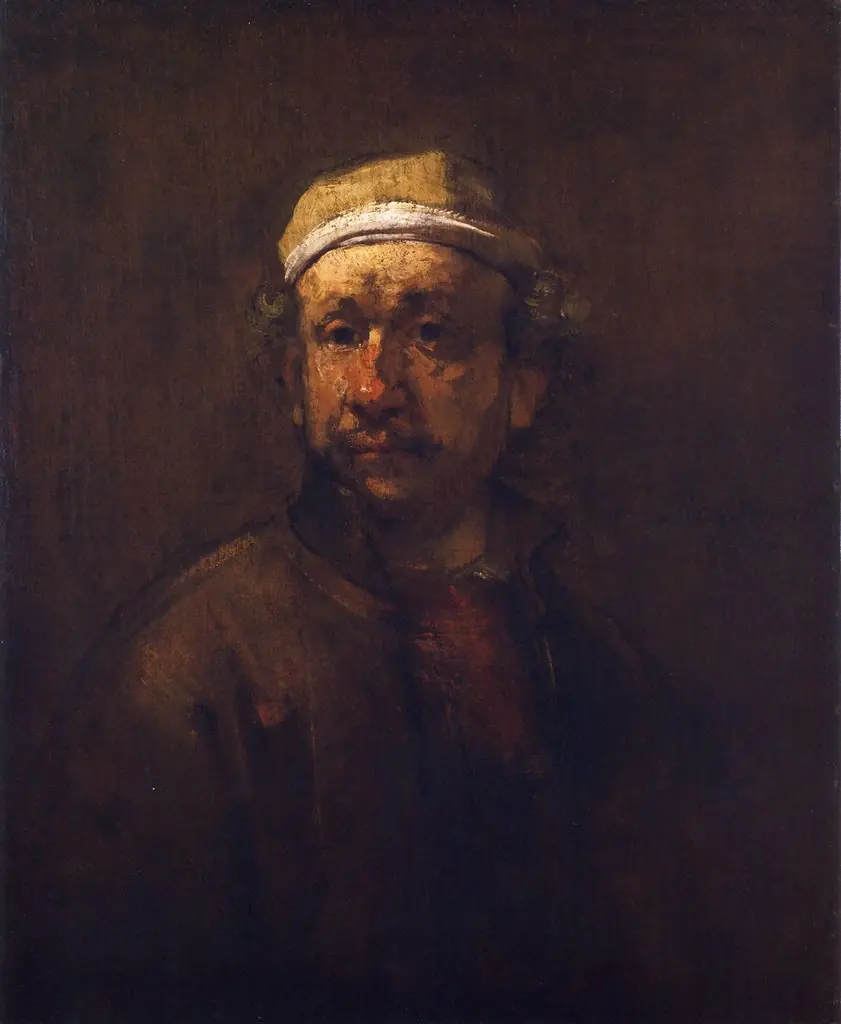
Copy of Rembrandt's “Self-portrait” is an oil painting by Kazimierz Mordasewicz. It dates from 1901 and is held in the collection of the National Museum in Warsaw.
About this work
Overview
Painted around 1901 by Kazimierz Mordasewicz, this oil portrait is a reinterpretation of Rembrandt’s self-portrait tradition.
Painted around 1901 by Kazimierz Mordasewicz, this oil portrait is a reinterpretation of Rembrandt’s self-portrait tradition. It presents the artist himself as an older man, rendered with deliberate emphasis on texture and light. The work resides in the National Museum in Warsaw, where it stands as a personal meditation rather than a direct replica, reflecting Mordasewicz’s engagement with Dutch Old Master techniques.
Subject & Meaning
The subject is the artist himself, portrayed without idealization. His bald head and white cap suggest age and introspection, while the strong chiaroscuro evokes a sense of inner solitude. The direct gaze and unadorned features convey a quiet dignity, aligning with the introspective tone found in Rembrandt’s later self-portraits, though rooted in Mordasewicz’s own lived experience.
Technique & Style
Thick applications of oil paint, particularly on the forehead and beard, create a tactile surface through impasto. The lighting is sharply directional, carving the face from a dark, undefined background. This sculptural use of paint enhances volume and depth, prioritizing emotional resonance over polished finish. The technique echoes Rembrandt’s methods but is applied with a late-19th-century sensibility toward materiality.
History & Provenance
Created circa 1901, the painting entered the collection of the National Museum in Warsaw, where it has remained since. Its origin as a personal study by Mordasewicz, rather than a commissioned work, suggests it was made for artistic reflection. No record of public exhibition prior to its museum acquisition exists, indicating its initial role as an internal artistic exercise.
Context
In early 20th-century Poland, artists often looked to Rembrandt as a model of psychological depth and technical mastery. Mordasewicz, working within this tradition, engaged with Dutch portraiture not as imitation but as dialogue. His version reflects broader European interest in Old Master techniques during a period of national cultural reawakening, blending historical reference with personal expression.
Legacy
The painting endures as a quiet testament to an artist’s lifelong study of his own image and the legacy of Rembrandt. It does not seek to rival its inspiration but to participate in its lineage. Within Polish art history, it represents a modest yet significant bridge between 17th-century realism and modern self-examination in portraiture.
Artist & collection