Artwork
The anatomy lesson of Dr. Joan Deijman
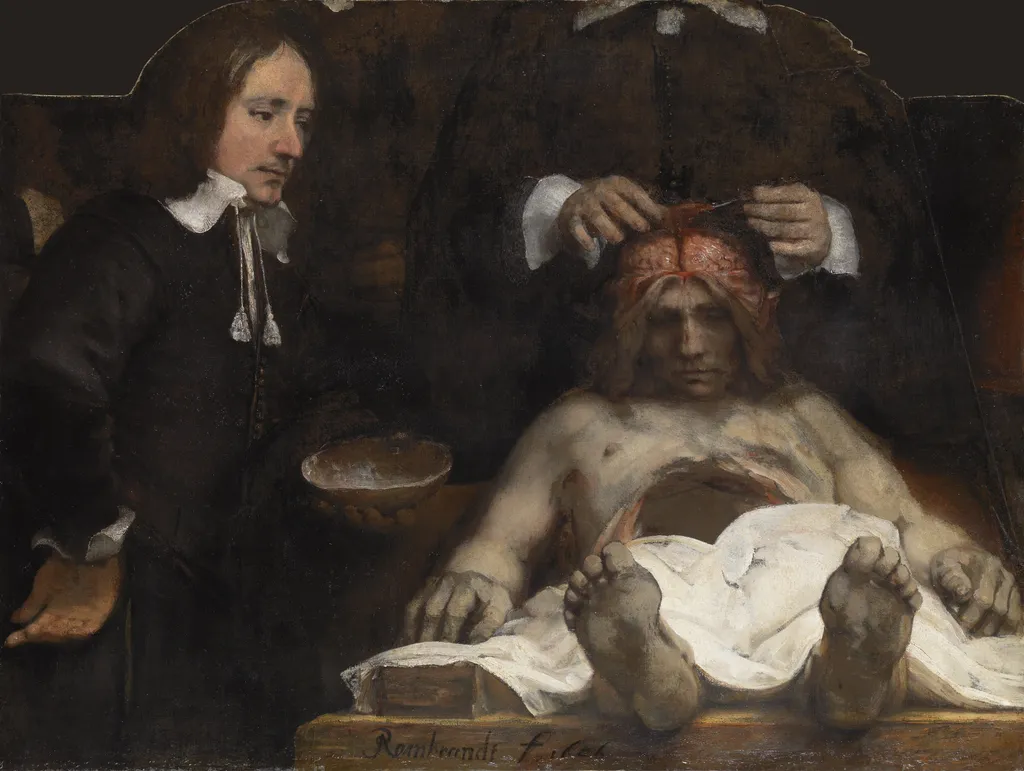
The anatomy lesson of Dr. Joan Deijman is an oil painting by the Dutch Golden Age artist Rembrandt. It dates from 1656 and is held in the collection of the Rijksmuseum.
About this work
Rembrandt painted a group portrait showing a brain dissection led by Dr. Jan Deijman. It was started in 1656 in oil paint. Most of the original canvas burned in 1723.
The artist left enough for a clear scene. A sketch shows what got lost. The surviving work still gives a strong sense of the moment.
Look up the technique called chiaroscuro next.
Overview
The work survives only as a reduced fragment; the original, larger composition was largely destroyed by fire in 1723 and later trimmed to its current size.
Rembrandt’s 1656 oil painting, now housed in the Amsterdam Museum, depicts a medical demonstration in which Dr. Jan Deijman conducts a brain dissection. The work survives only as a reduced fragment; the original, larger composition was largely destroyed by fire in 1723 and later trimmed to its current size. Despite its incomplete state, the remaining canvas conveys the intensity of the scientific gathering.
Subject & Meaning
The scene presents a group of physicians and scholars gathered around a cadaver as Dr. Deijman, a noted anatomist of the Dutch Republic, leads the examination of the brain. The composition emphasizes the collaborative nature of early modern medical research, highlighting the blend of observation, instruction, and the solemnity associated with dissecting human anatomy in the 17th century.
Technique & Style
Rembrandt employs his characteristic chiaroscuro, using stark contrasts of light and dark to model the figures and illuminate the central act of dissection. The limited palette and vigorous brushwork create a palpable sense of depth, while the focused lighting draws attention to the anatomical details, reinforcing the drama of the scientific moment.
History & Provenance
Commissioned in 1656, the painting suffered extensive damage when a fire engulfed the original canvas in 1723. The surviving portion was subsequently cut down to a smaller format, preserving only the core group. A preparatory drawing by Rembrandt reveals the composition’s original scale, confirming the extent of the lost sections. The fragment entered the Amsterdam Museum’s collection in the 20th century, where it remains on display.
Artist & collection
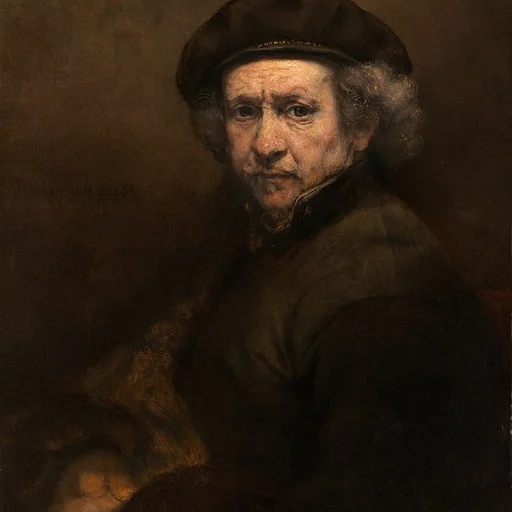
Artist
Rembrandt Harmenszoon van Rijn (15 July 1606 – 4 October 1669), known mononymously as Rembrandt, was a Dutch Golden Age painter, printmaker, and draughtsman.