Artwork
Titus as a Monk
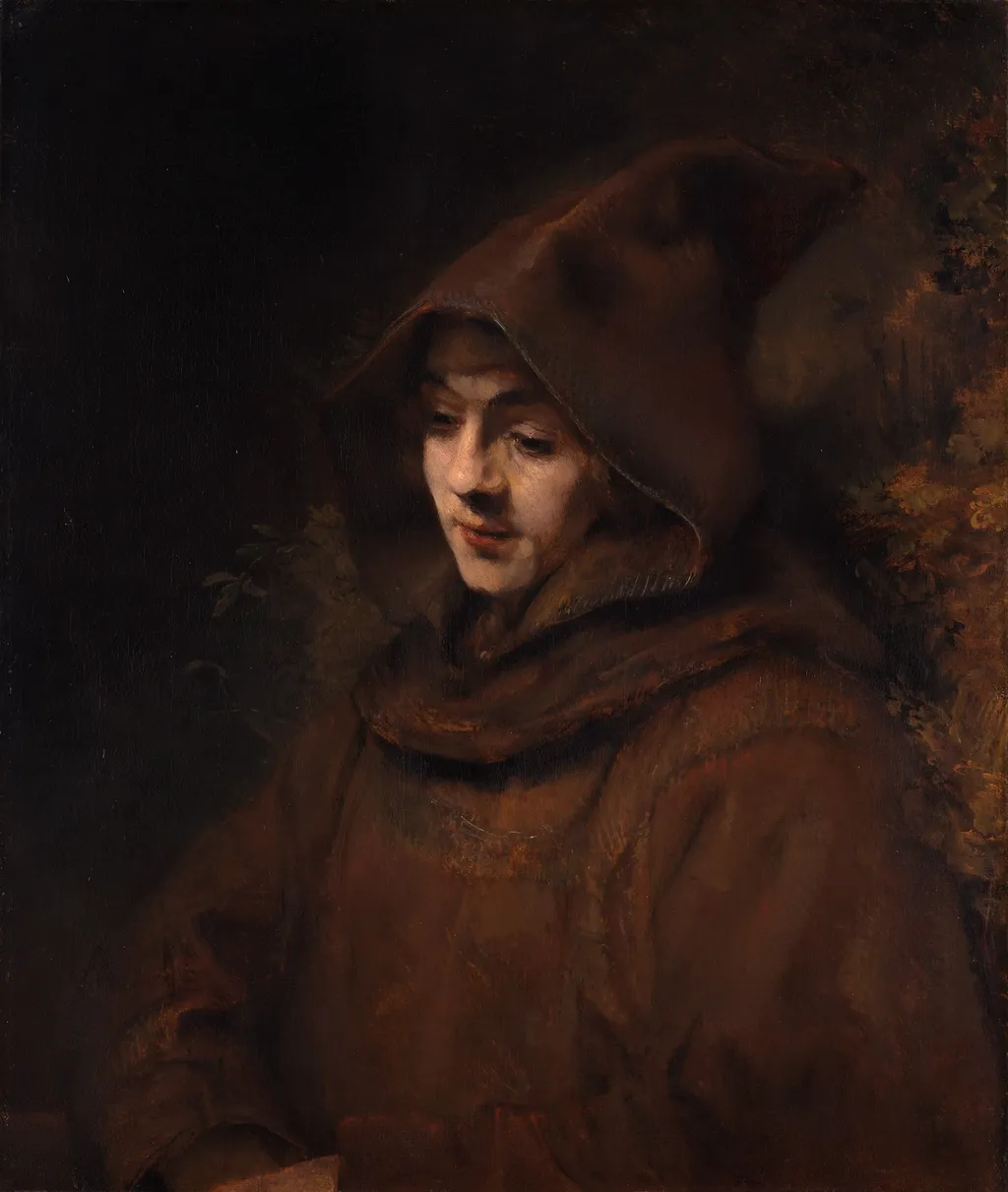
Titus as a Monk is an oil painting by the Dutch Golden Age artist Rembrandt. It dates from 1660 and is held in the collection of the Pushkin Museum of Fine Arts.
About this work
Overview
Created in 1660, this oil-on-canvas work by Rembrandt van Rijn portrays a young man dressed in the simple brown habit of a Franciscan monk. The figure is identified as the artist’s son, Titus, who appears contemplative within the muted setting. The painting is part of the permanent collection of the Rijksmuseum in Amsterdam.
Subject & Meaning
The portrait presents Titus in religious attire rather than a conventional portrait pose, suggesting an exploration of identity, piety, or familial affection. By clothing his son in a monastic habit, Rembrandt may be commenting on the virtues associated with the Franciscan order—humility, devotion, and simplicity—while also offering an intimate glimpse into his private life.
Technique & Style
Executed with Rembrandt’s characteristic handling of oil, the canvas displays a soft chiaroscuro that models the folds of the habit and the boy’s facial features. The palette is restrained, dominated by earth tones that enhance the sense of modesty. Brushwork is loose in the background, focusing attention on the figure’s illuminated face.
History & Provenance
After remaining in the artist’s family for several decades, the painting entered the Dutch national collection in the 19th century. It has been housed at the Rijksmuseum in Amsterdam since its acquisition, where it is displayed among other works from Rembrandt’s late period, offering scholars insight into his personal portraiture.
Own this work as a print
Artist & collection
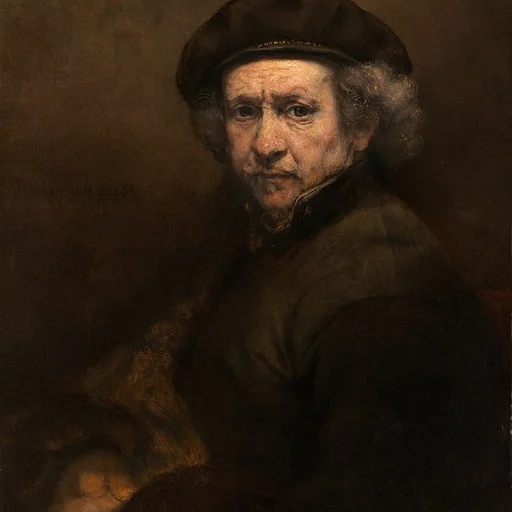
Artist
Rembrandt Harmenszoon van Rijn (15 July 1606 – 4 October 1669), known mononymously as Rembrandt, was a Dutch Golden Age painter, printmaker, and draughtsman.