Artwork
Christ before Pilate: Large Plate
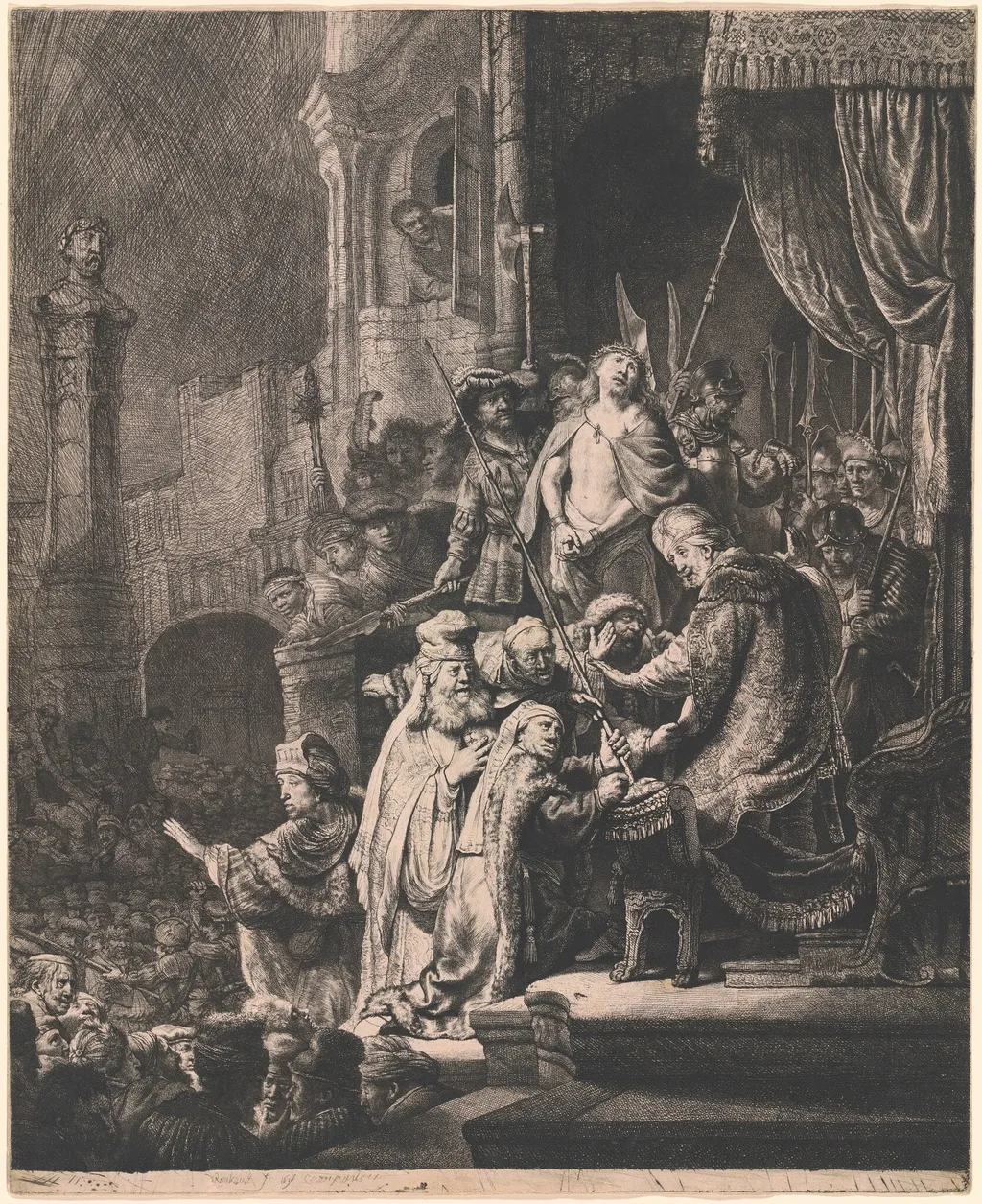
Christ before Pilate: Large Plate is an ink print by the Baroque artist Rembrandt. It dates from 1636 and is held in the collection of the National Gallery of Art.
About this work
Overview
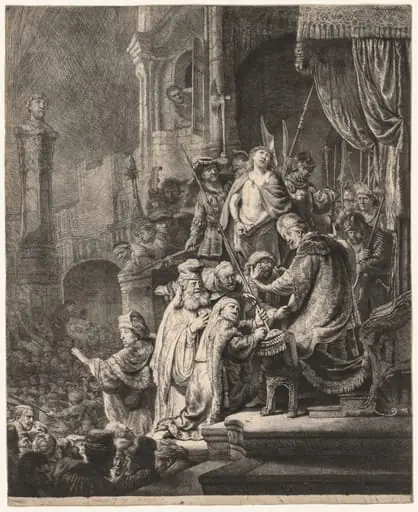
Christ before Pilate: Large Plate is an etching executed by Rembrandt van Rijn in 1636. The print presents a dramatic moment from the New Testament, showing the Roman governor Pontius Pilate’s tribunal where Jesus is judged. Rendered in the characteristic chiaroscuro of Rembrandt’s graphic work, the composition centers on a throne surrounded by a tumultuous assembly of figures.
Subject & Meaning
The crowded, chaotic atmosphere underscores the conflict between earthly authority and the spiritual significance of the trial.
The scene captures the tension of Pilate’s court, with a bearded, robed figure gesturing emphatically toward the central figure on the throne, while soldiers in armor and spears press forward. A half‑clothed man stands behind the throne, arms outstretched, suggesting both vulnerability and accusation. The crowded, chaotic atmosphere underscores the conflict between earthly authority and the spiritual significance of the trial.
Technique & Style
Rembrandt employed the etching process, incising lines into a copper plate and then printing them onto paper. The work is marked by deep, uneven shadows and a textured surface that creates a sense of depth. Strategic use of light highlights certain faces, allowing them to emerge from darkness, while other elements recede, a hallmark of Rembrandt’s mastery of tonal contrast in printmaking.
History & Provenance
Created in the mid‑1630s, the plate belongs to a series of religious prints that Rembrandt produced for a market eager for biblical subjects. The large format suggests it was intended for display in private collections or devotional settings. Surviving impressions have passed through various European collections, reflecting the enduring interest in Rembrandt’s graphic oeuvre.
Context
The etching emerges from a period when Rembrandt was exploring narrative depth in his prints, often focusing on moments of moral and theological tension. By depicting Pilate’s judgment, he engages with contemporary Protestant interest in the Passion narrative, while also showcasing his skill in rendering complex human emotions within a crowded composition.
Own this work as a print
Artist & collection
Artist
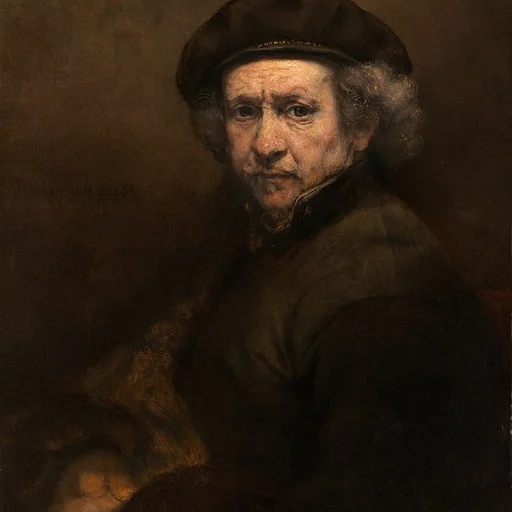
Rembrandt Harmenszoon van Rijn (15 July 1606 – 4 October 1669), known mononymously as Rembrandt, was a Dutch Golden Age painter, printmaker, and draughtsman.

 Christ before Herod
 Passion Set: Christ before Herod
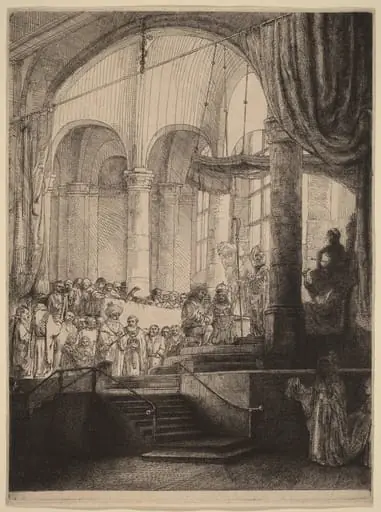 Medea, or the Marriage of Jason and Creusa
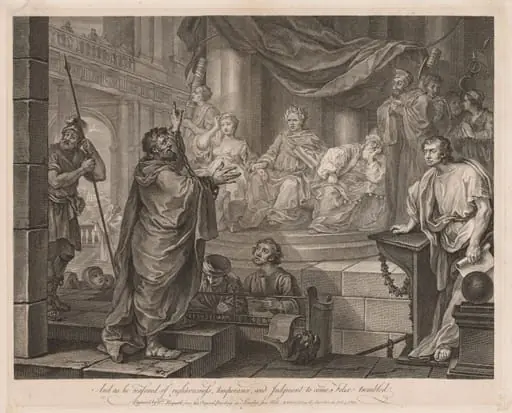 Paul before Félix (Large Plate)
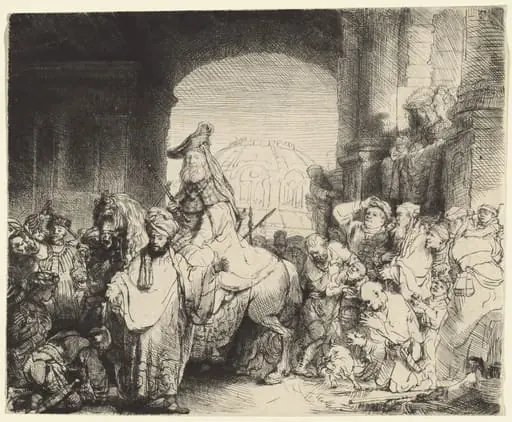 The Triumph of Mordecai
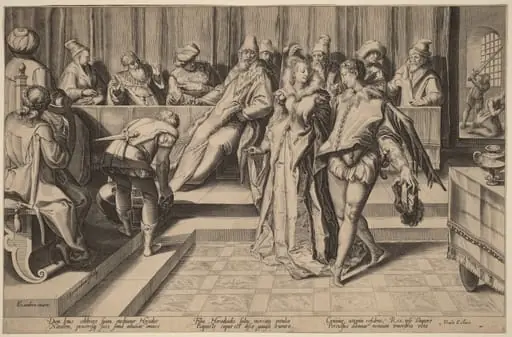 Salome Dancing Before Herod
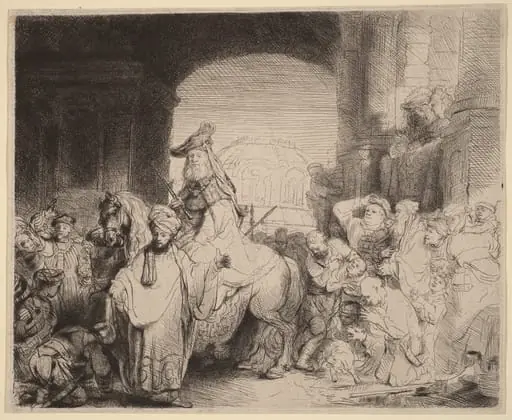 The Triumph of Mordecai
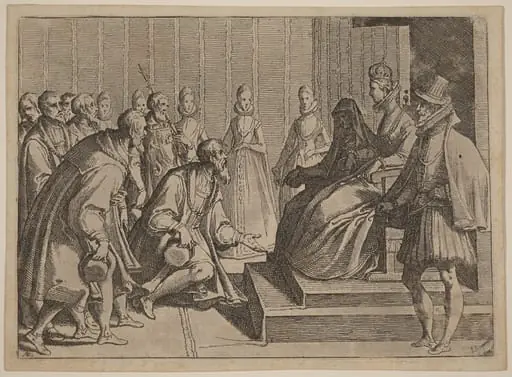 Margaret of Austria Giving Audience to a Nobleman
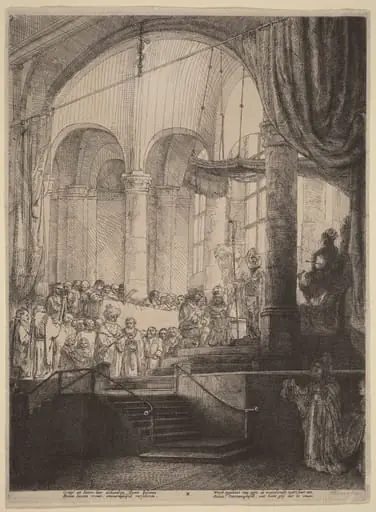 Medea, or the Marriage of Jason and Creusa
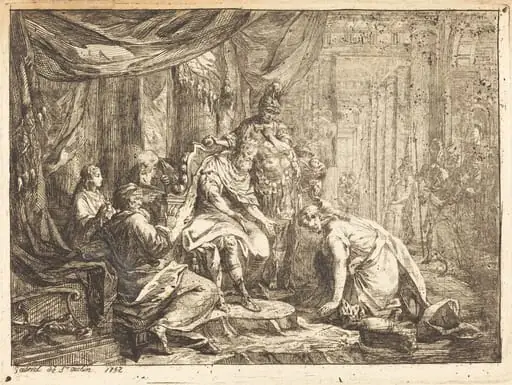 Reconciliation of Absalom and David (Réconciliation d'Absalom et de David)
 The Tribute Money
 Christ Before Pilate: Large Plate