Artwork
Medea, or the Marriage of Jason and Creusa
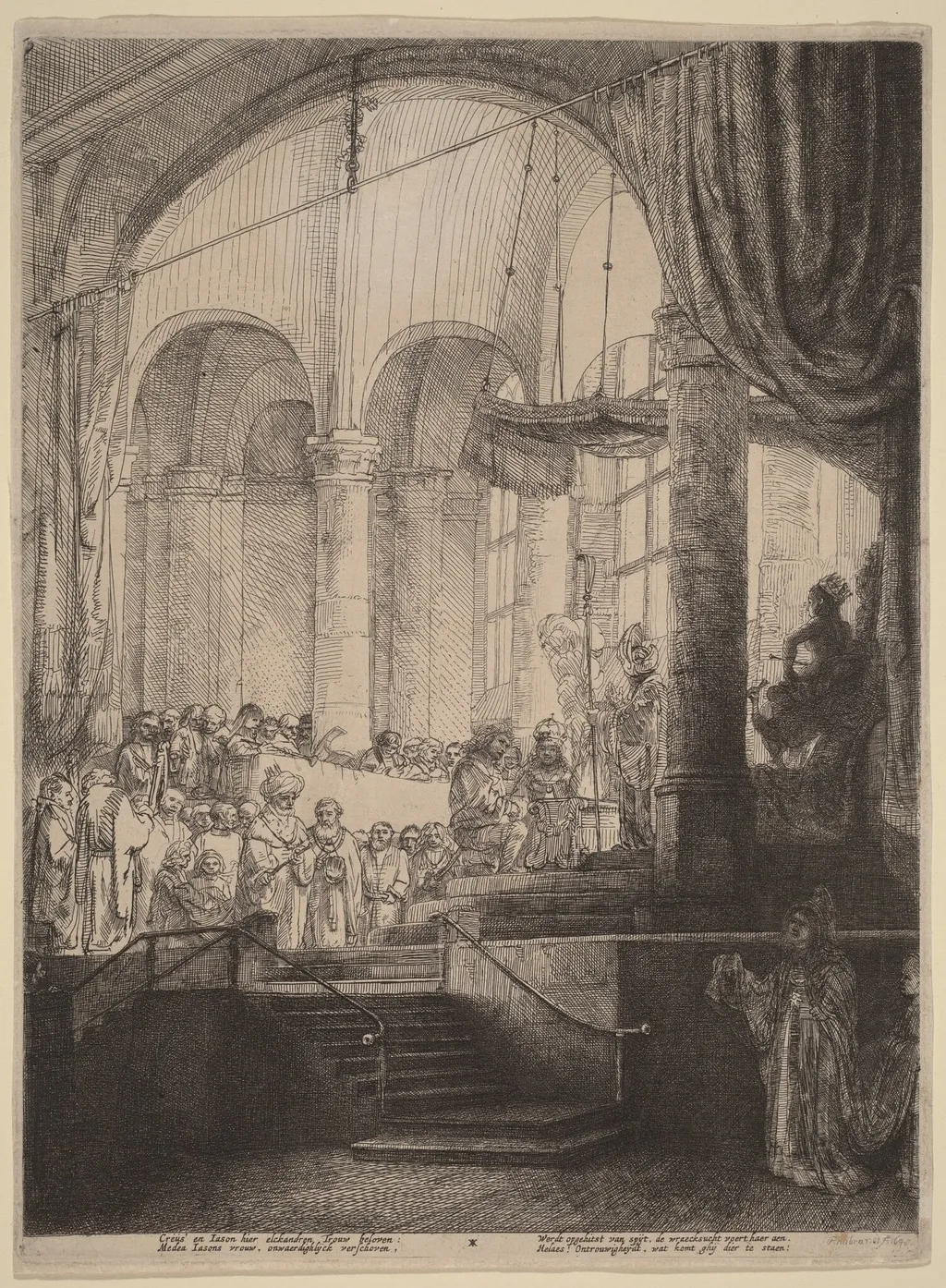
Medea, or the Marriage of Jason and Creusa is an ink print by the Baroque artist Rembrandt. It dates from 1648 and is held in the collection of the National Gallery of Art.
About this work
Overview
Created in 1648, this etching by Rembrandt van Rijn depicts a theatrical moment drawn from Greek myth, titled Medea, or the Marriage of Jason and Creusa.
Created in 1648, this etching by Rembrandt van Rijn depicts a theatrical moment drawn from Greek myth, titled Medea, or the Marriage of Jason and Creusa. Rendered in fine etched lines with selective drypoint, the print captures an interior scene filled with spectators observing a staged performance. The composition is tightly packed, emphasizing the tension between audience and performance, while the Dutch inscription at the base anchors the work in its cultural context.
Subject & Meaning
The scene illustrates a pivotal moment from the myth of Medea, where Jason’s marriage to Creusa triggers her vengeance. Rather than showing the central characters directly, Rembrandt focuses on the audience’s reactions—watchful, tense, or absorbed—suggesting the emotional weight of the unfolding drama. The ship model and climbing figures on stage allude to mythic journeys and divine intervention, reinforcing themes of betrayal and fate.
Technique & Style
Rembrandt employed etching with delicate drypoint accents to achieve rich tonal contrasts and intricate detail. The fine, varied lines model light and shadow, giving depth to the architectural space and the figures’ gestures. The crowd’s expressions are suggested rather than fully rendered, relying on subtle ink density and line weight to convey emotion. The paper’s laid texture subtly enhances the print’s tactile quality.
History & Provenance
The print was made during Rembrandt’s mature period, when he increasingly turned to mythological and biblical subjects through printmaking. It was likely produced for a private market of collectors interested in literary themes. Early impressions show strong contrast and detail, indicating careful inking and pressing. The work remained in European collections, with no record of public exhibition until the 19th century.
Context
In mid-17th century Amsterdam, theatrical performances were popular among the educated elite, and mythological stories were frequently staged. Rembrandt’s interest in capturing audience reactions reflects a broader cultural fascination with emotion and narrative. The Dutch inscription confirms the print’s local resonance, aligning it with contemporary interest in classical tales adapted for moral or psychological reflection.
Legacy
This print stands as an example of Rembrandt’s innovative approach to narrative in printmaking, shifting focus from the central myth to its emotional impact on observers. It influenced later artists exploring theatricality and psychological depth in etching. Though not widely reproduced in his lifetime, it is now recognized for its subtle storytelling and technical refinement within the broader canon of Dutch graphic art.
Artist & collection
Artist
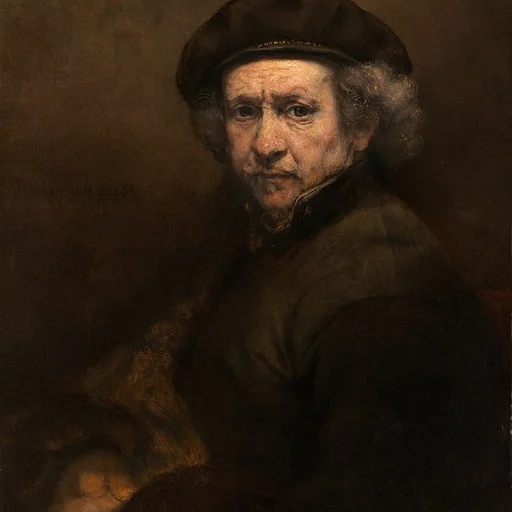
Rembrandt Harmenszoon van Rijn (15 July 1606 – 4 October 1669), known mononymously as Rembrandt, was a Dutch Golden Age painter, printmaker, and draughtsman.

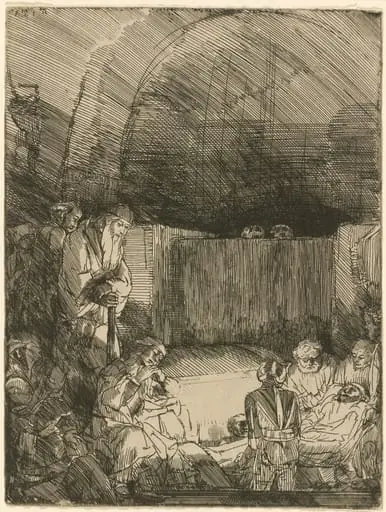 The Entombment
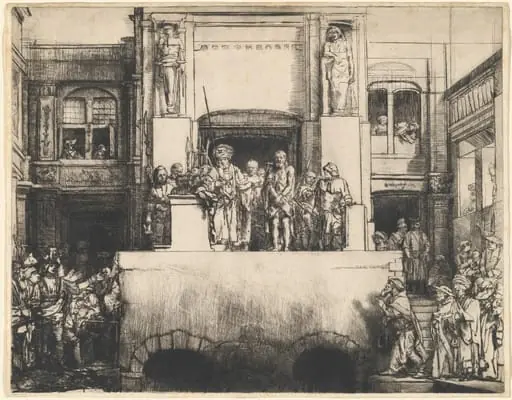 Christ Presented to the People: Oblong Plate
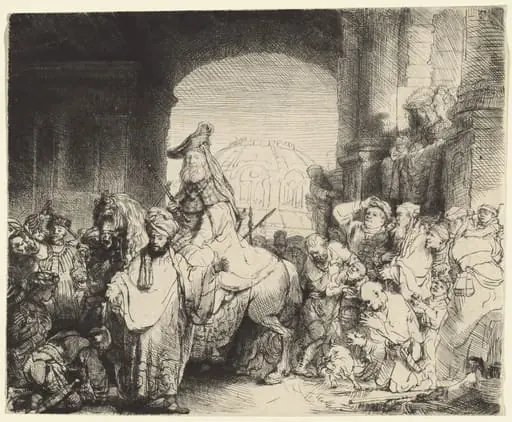 The Triumph of Mordecai
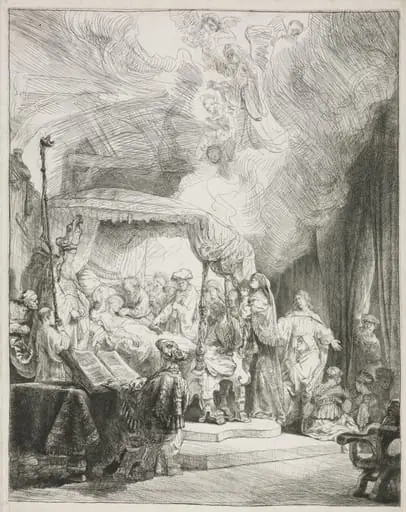 Death of the Virgin
 St. Mark's No. 2 (Venice) -- Interior
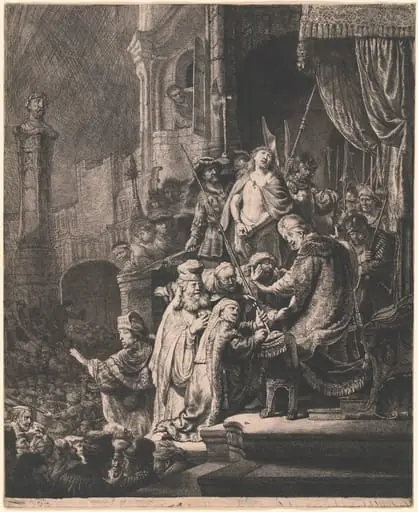 Christ before Pilate: Large Plate
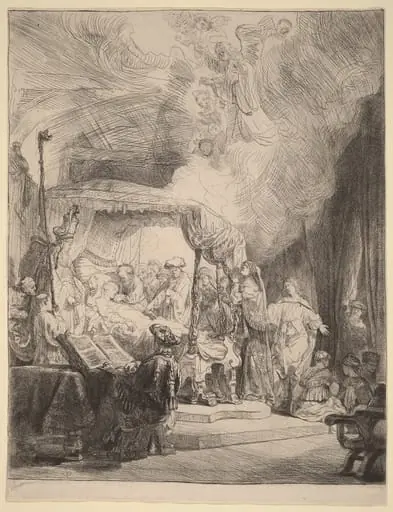 The Death of the Virgin
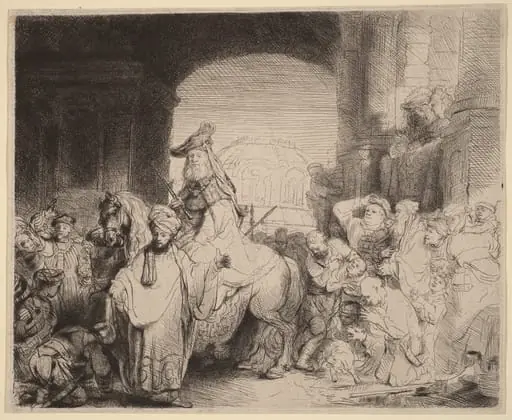 The Triumph of Mordecai
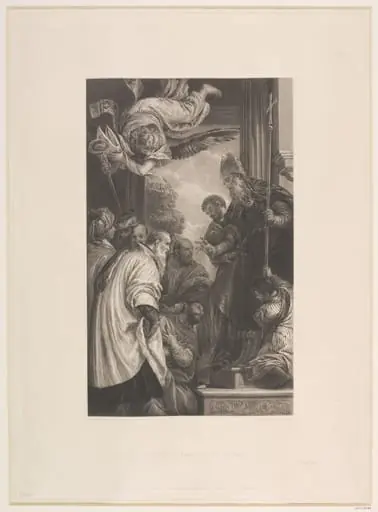 Consecration of St. Nicholas
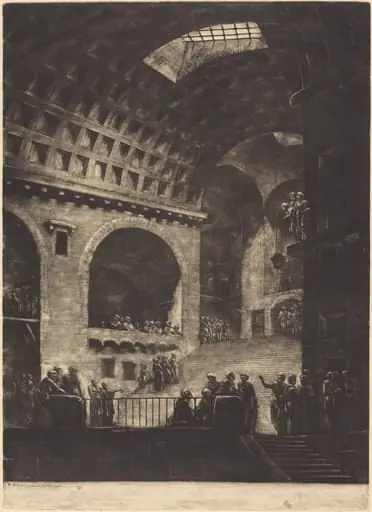 View of a Prison
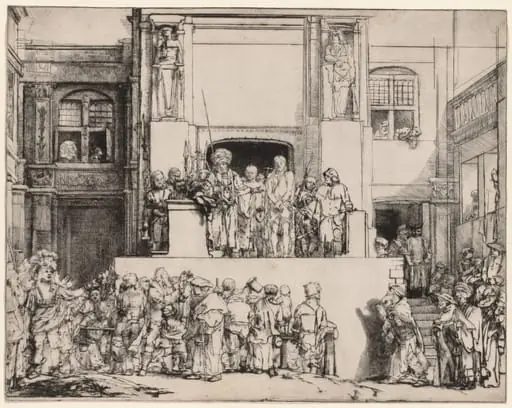 Ecce Homo. Christ Presented to the People
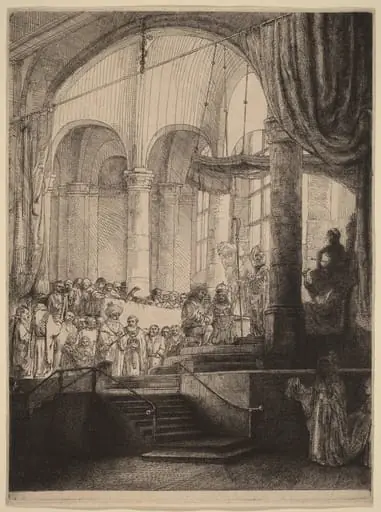 Medea, or the Marriage of Jason and Creusa