Artwork
Cottage beside a Canal
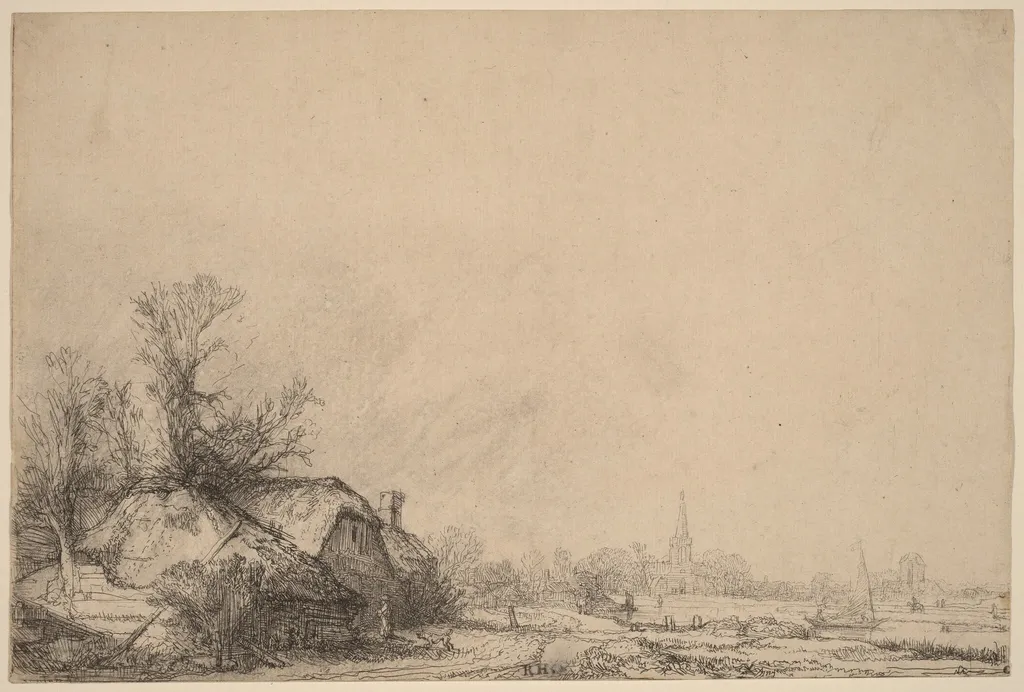
Cottage beside a Canal is an ink print by the Baroque artist Rembrandt. It dates from 1645 and is held in the collection of the National Gallery of Art.
About this work
Overview
Cottage beside a Canal is an etching executed by Rembrandt van Rijn around 1645. The work belongs to his printmaking output and exemplifies the artist’s interest in everyday Dutch landscapes during the mid‑seventeenth century.
Subject & Meaning
The image presents a modest dwelling set beside a narrow waterway, its roof shaded by overhanging, contorted trees. A low fence follows the canal’s edge, while a distant church tower and a few small boats punctuate the horizon, suggesting a tranquil, rural environment typical of the Dutch Golden Age.
Technique & Style
Rembrandt employed the etching process, drawing directly onto a copper plate with a needle that creates fine, irregular lines. The resulting marks are swift and somewhat rough, conveying light and shadow through a network of scribbled strokes—a method common among printmakers of the period for capturing atmospheric effects.
History & Provenance
The print is dated circa 1645, placing it within the middle phase of Rembrandt’s career when he produced numerous landscape etchings. While specific ownership records are scarce, the work has been documented in several catalogues of Rembrandt’s prints and is held in major museum collections that specialize in Dutch art.
Artist & collection
Artist
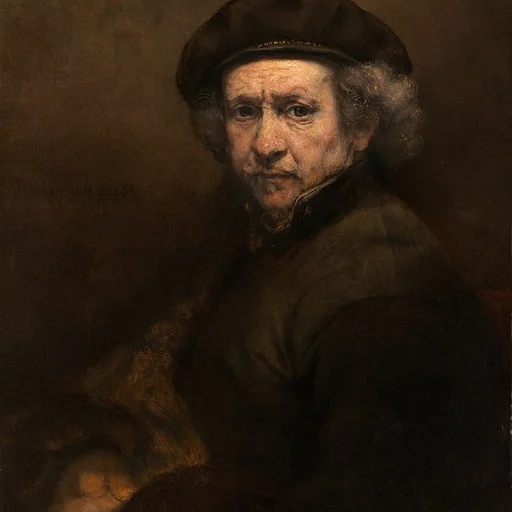
Rembrandt Harmenszoon van Rijn (15 July 1606 – 4 October 1669), known mononymously as Rembrandt, was a Dutch Golden Age painter, printmaker, and draughtsman.

![View of Houtewael near the Sint Anthoniespoort [recto], by Rembrandt](https://artifactworldgallery.com/img/rembrandt--view-of-houtewael-near-the-sint-anthoniespoort-recto--2919925de9060e70-w320.webp) View of Houtewael near the Sint Anthoniespoort [recto]
View of Houtewael near the Sint Anthoniespoort [recto]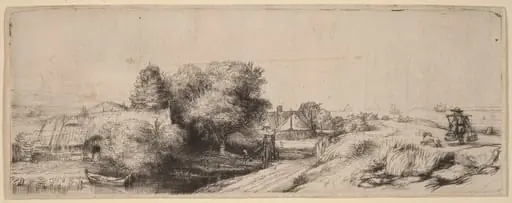 Landscape with a Milkman
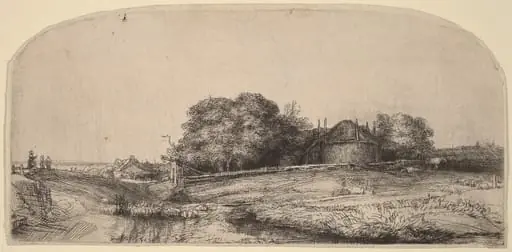 Landscape with a Hay Barn and a Flock of Sheep
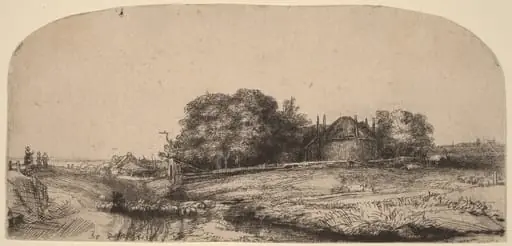 Landscape with a Hay Barn and a Flock of Sheep
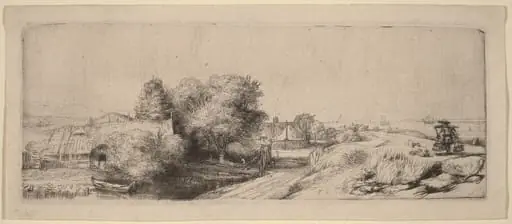 Landscape with a Milkman
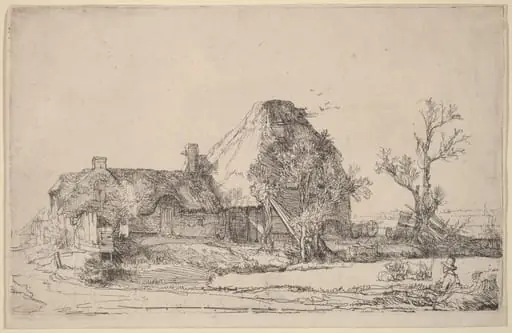 Cottages and Farm Buildings with a Man Sketching
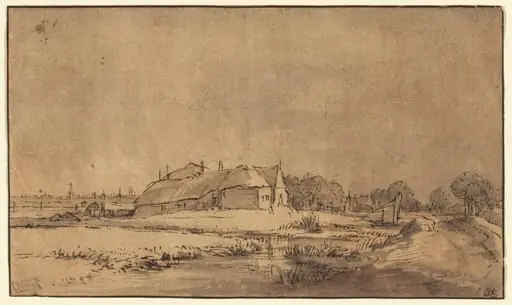 Cottages and Barn beside a Road
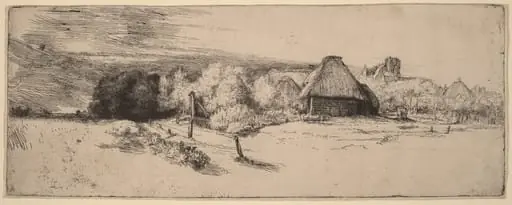 Landscape with Trees, Farm Buildings and a Tower
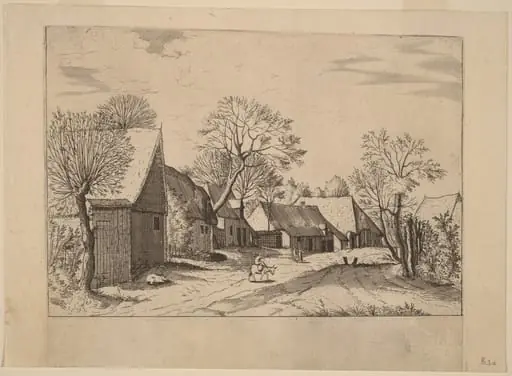 Farms and Shed
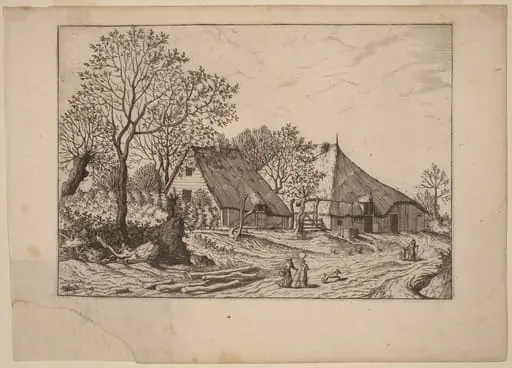 Farm with Shed and Draw Well