Artwork
Woman Bathing Her Feet in a Brook
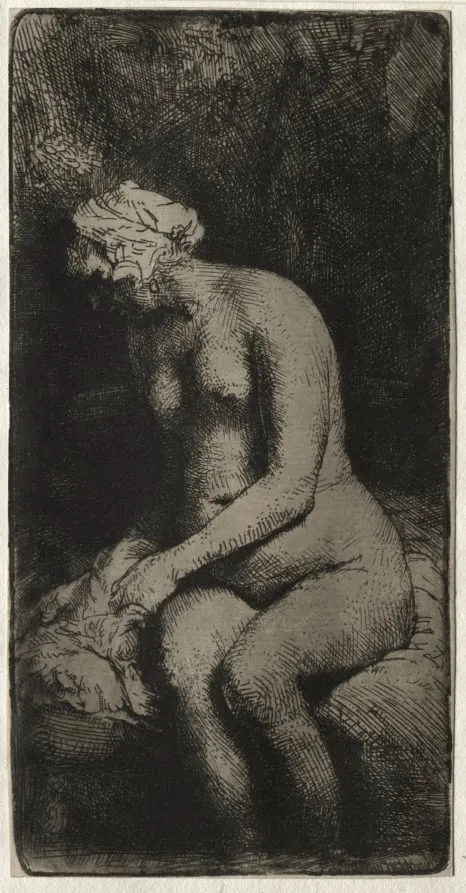
Woman Bathing Her Feet in a Brook is a print by the Baroque artist Rembrandt. It dates from 1658 and is held in the collection of the Cleveland Museum of Art. This etching depicts an older woman in a private moment, bending to wash her feet in a shallow brook.
About this work
Overview
This etching depicts an older woman in a private moment, bending to wash her feet in a shallow brook. Unlike Rembrandt’s more common portraits or biblical scenes, this work focuses on an unidealized, everyday act. One of only nine nude studies he produced in etching, it stands out for its intimacy and quiet realism, avoiding mythological or symbolic framing in favor of quiet human presence.
Subject & Meaning
The scene’s modesty and lack of narrative context emphasize the universality of bodily care, grounding the image in lived experience rather than allegory.
The woman’s weary posture and worn clothing suggest a life of labor, not idealized beauty. Her direct gaze invites the viewer into her private ritual, transforming a simple act into a moment of quiet dignity. Rembrandt avoids sentimentality, presenting her with unflinching honesty. The scene’s modesty and lack of narrative context emphasize the universality of bodily care, grounding the image in lived experience rather than allegory.
Technique & Style
Rembrandt achieved subtle tonal depth by meticulously wiping the etching plate, leaving a faint film of ink that unifies the composition. The soft gradations of shadow and light suggest atmosphere rather than define form rigidly. He printed this impression on beige Japanese paper, whose warm texture enhances the skin’s luminosity and deepens the sense of quiet intimacy, demonstrating his mastery over material and surface.
History & Provenance
This early impression was once part of the distinguished print collection of the Dukes of Devonshire at Chatsworth, known for its exceptional holdings of Old Master prints. Its preservation in such a refined context reflects its recognized technical and aesthetic significance among collectors. The choice of paper and careful inking suggest it was valued as a refined study, not merely a reproductive print.
Context
While Rembrandt is best known for portraits and biblical scenes, his few nude etchings reveal a distinct interest in the unadorned human form outside of myth or doctrine. This work aligns with his broader exploration of psychological depth and physical realism. In a period dominated by idealized nudes, his focus on an ordinary, aging woman marked a radical departure, reflecting his commitment to truth over convention.
Legacy
This etching influenced later artists drawn to intimate, non-heroic depictions of the body. Its quiet power lies in its refusal to elevate or dramatize, instead offering a contemplative view of daily life. The work remains a touchstone for understanding Rembrandt’s ability to convey humanity through minimal means, bridging the gap between observation and empathy in printmaking.
Artist & collection
Artist
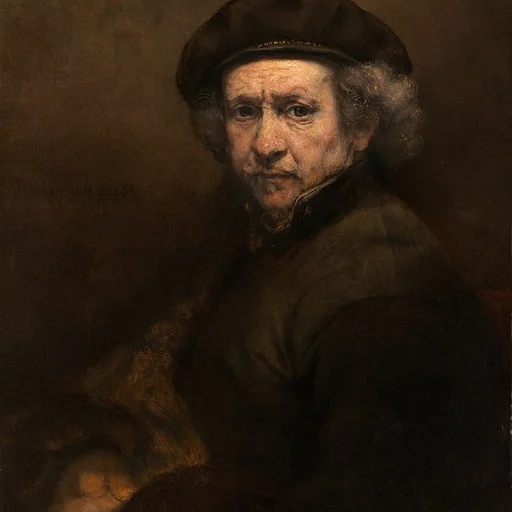
Rembrandt Harmenszoon van Rijn (15 July 1606 – 4 October 1669), known mononymously as Rembrandt, was a Dutch Golden Age painter, printmaker, and draughtsman.

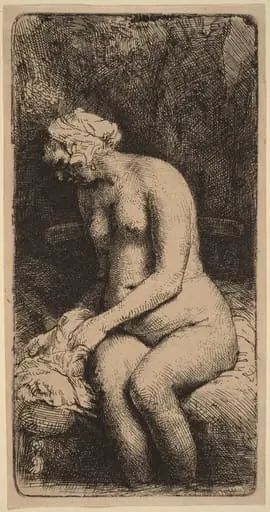 Nude Seated on a Bench with a Pillow (Woman Bathing Her Feet at a Brook)
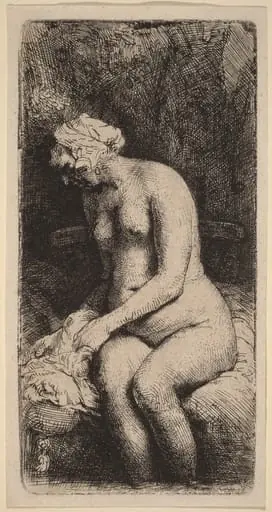 Nude Seated on a Bench with a Pillow (Woman Bathing Her Feet at a Brook)
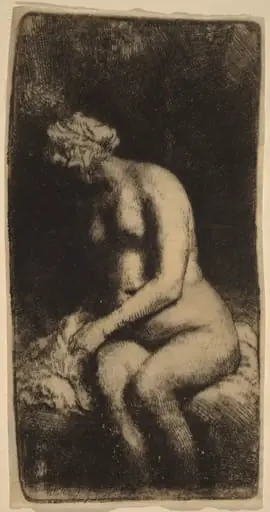 Nude Seated on a Bench with a Pillow (Woman Bathing Her Feet at a Brook)
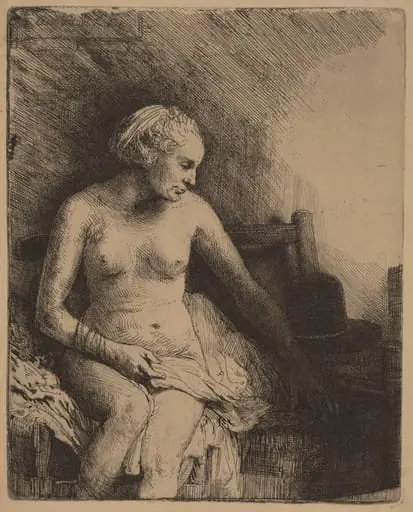 Woman at the Bath with a Hat beside Her
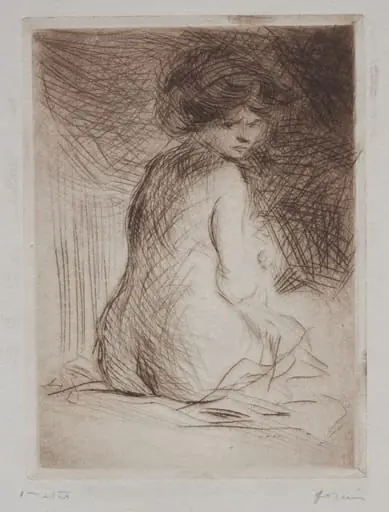 Seated Nude Woman from the Back
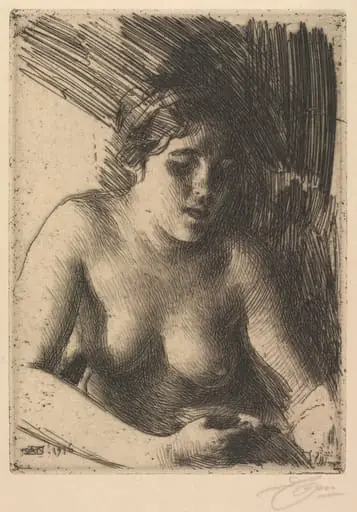 Bust
Bust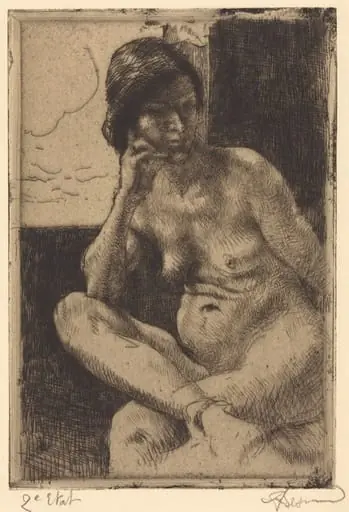 Seated Nude with Her Arm Resting on Her Leg (Femme nue assise, le bras appuyé sur la jambe)
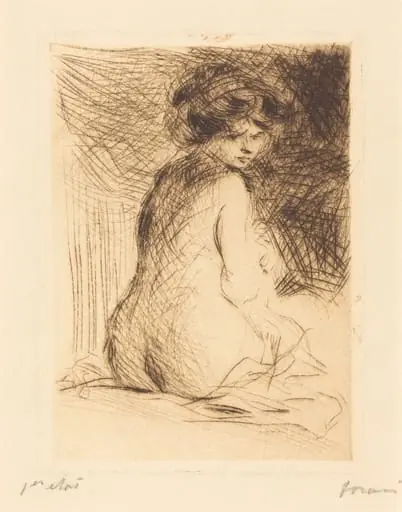 Femme nue vue de dos (Nude Woman Seen from the Back)
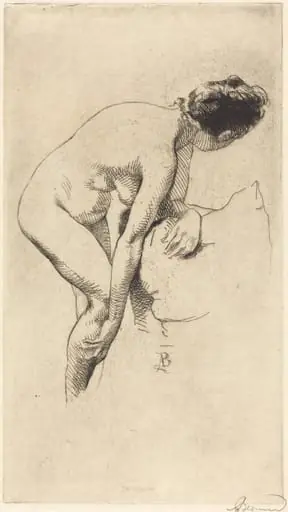 Nude Holding Her Leg (Femme nue se tenant la jambe)
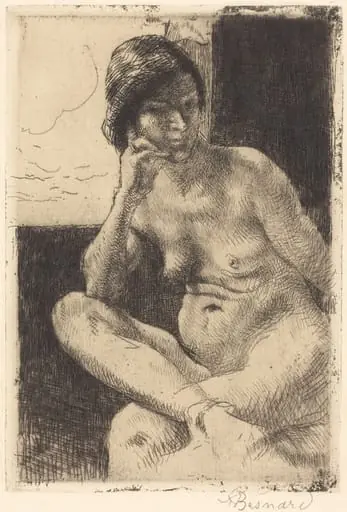 Seated Nude with Her Arm Resting on Her Leg (Femme nue assise, le bras appuyé sur la jambe)
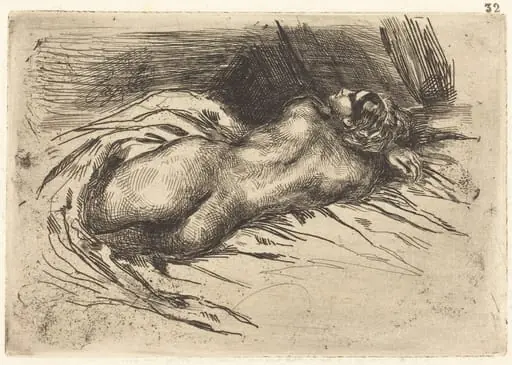 Study of a Woman, Viewed from the Back (Étude de femme vue de dos)
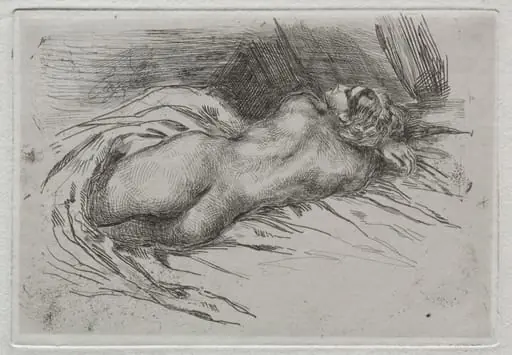 Study of a Woman Seen from the Back