Artwork
Jacob's Ladder
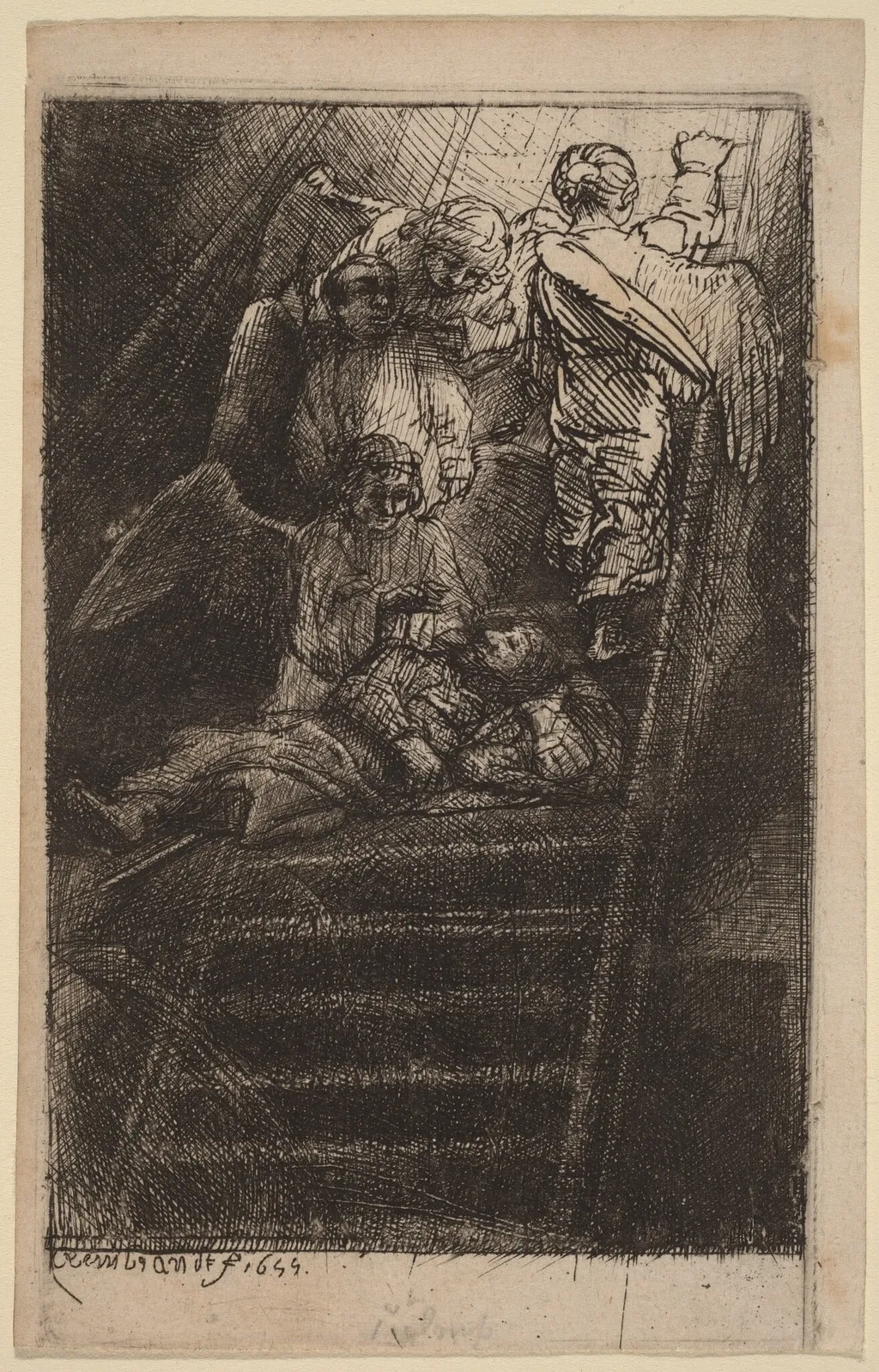
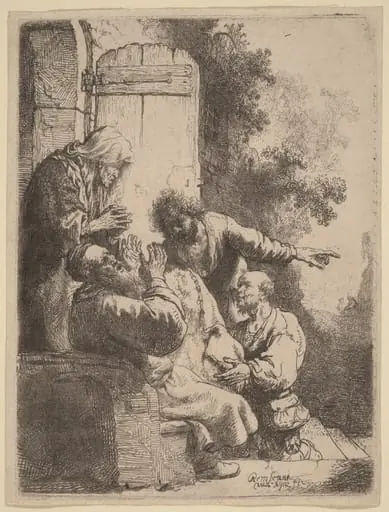
Jacob's Ladder is an ink print by the Baroque artist Rembrandt. It dates from 1655 and is held in the collection of the National Gallery of Art.
About this work
Notice how the artist used sharp, jagged lines to create texture—even the fabric and skin look like they’re made of quick, nervous strokes.
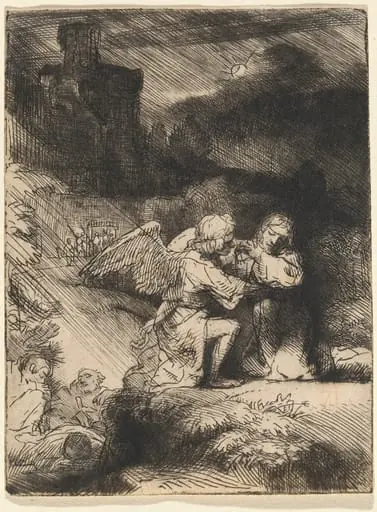
This black-and-white print shows a chaotic scene of three men tangled in a dark, swirling space. One man kneels, his head thrown back as if in pain or wonder, while another leans over him, gripping his shoulder. A third figure stands in the background, arms raised awkwardly, as if caught mid-motion. The lines are thick and scratchy, making the figures look rough and urgent.
Notice how the artist used sharp, jagged lines to create texture—even the fabric and skin look like they’re made of quick, nervous strokes. The date in the corner (1655) hints this was made when Rembrandt was experimenting with printmaking techniques.
Want to see more? Check out the technique: etching, drypoint, aquatint.
Overview
Jacob's Ladder is a print created by Rembrandt van Rijn in 1655, executed in etching, burin, and drypoint techniques.
Subject & Meaning
The print depicts a chaotic scene of three men entangled in a dark, swirling space, conveying a sense of turmoil or intense emotion. The figures' poses suggest a narrative, but the exact meaning remains ambiguous.
Technique & Style
Rembrandt employed a range of techniques, including etching and drypoint, to achieve a textured, expressive effect. The use of thick, scratchy lines and jagged strokes creates a sense of urgency and roughness, evident even in the rendering of fabric and skin.
Artist & collection
Artist
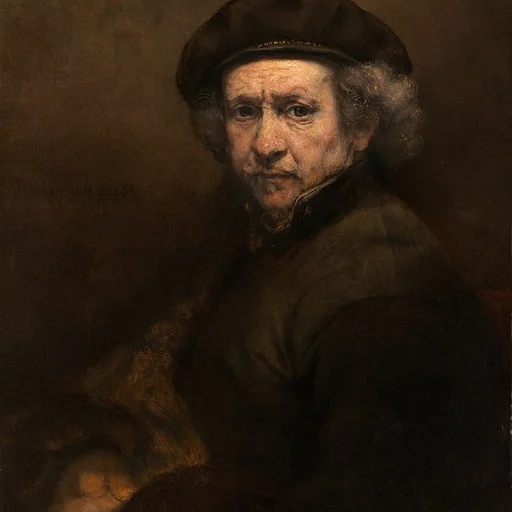
Rembrandt Harmenszoon van Rijn (15 July 1606 – 4 October 1669), known mononymously as Rembrandt, was a Dutch Golden Age painter, printmaker, and draughtsman.