Artwork
The Circumcision in the Stable
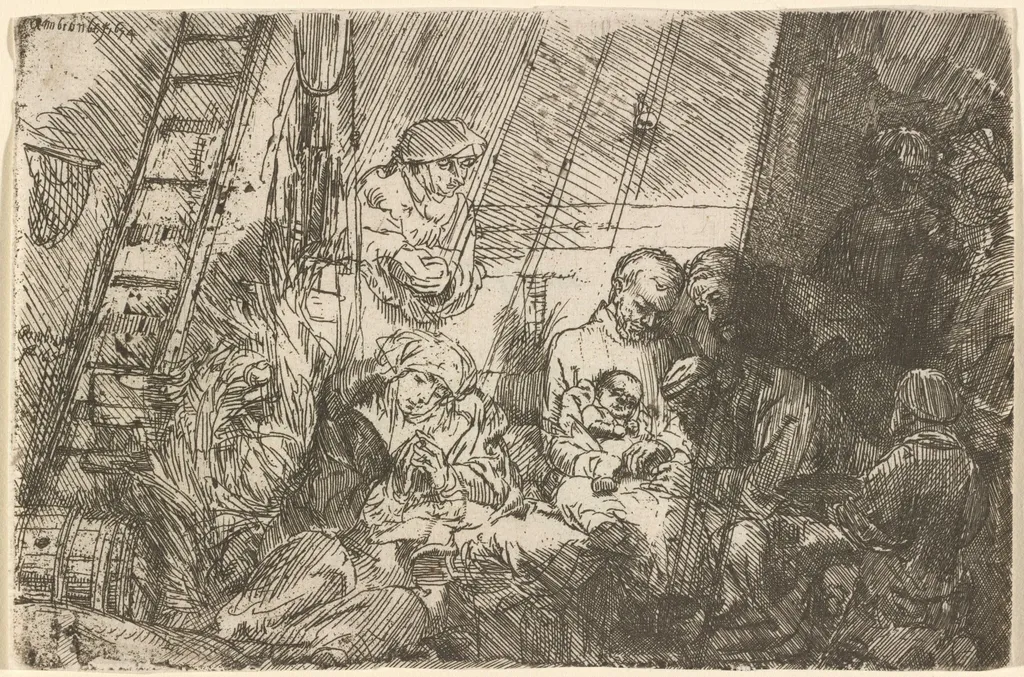
The Circumcision in the Stable is an ink print by the Baroque artist Rembrandt. It dates from 1654 and is held in the collection of the National Gallery of Art.
About this work
Overview
Created in 1654, this etching by Rembrandt van Rijn portrays the ritual circumcision of the infant Jesus within a humble stable. Unlike traditional depictions of the event, Rembrandt omits grandeur, focusing instead on a quiet, intimate moment. The composition centers on the child, surrounded by observers, with no overtly religious symbols to distract from the human gravity of the scene.
Subject & Meaning
The scene illustrates the circumcision of Jesus, an event described in the Gospel of Luke that signifies his entry into the covenant of Abraham.
The scene illustrates the circumcision of Jesus, an event described in the Gospel of Luke that signifies his entry into the covenant of Abraham. Rembrandt emphasizes the vulnerability of the child and the solemnity of the act, avoiding theatricality. The figures around the infant appear contemplative, their stillness underscoring the weight of ritual and the humanity of the moment rather than its theological significance.
Technique & Style
Using etching, Rembrandt employed fine, expressive lines and varied ink tones to model form and atmosphere. Deep shadows envelop the background, isolating the central group and enhancing the sense of enclosure. The texture of straw, fabric, and skin is suggested through delicate hatching and cross-hatching, lending the scene a tactile immediacy that draws the viewer into the quiet drama.
History & Provenance
The print was made during Rembrandt’s later years, a period marked by personal hardship and artistic introspection. It was likely produced for a private audience, as etchings were often distributed among collectors and fellow artists. The work remained in European collections through the 18th and 19th centuries, with several major institutions acquiring impressions in the 20th century.
Context
In mid-17th century Amsterdam, religious imagery was often subject to Protestant restraint. Rembrandt’s choice to depict a Jewish rite with such emotional depth reflects his interest in biblical humanity over doctrinal precision. His focus on ordinary settings and unidealized figures aligned with a broader trend toward psychological realism in Dutch art of the period.
Legacy
This etching is recognized for its emotional restraint and technical mastery, influencing later artists drawn to intimate biblical narratives. It stands as an example of Rembrandt’s ability to convey profound meaning through minimal means, prioritizing human presence over spectacle. Its quiet power continues to resonate in studies of printmaking and religious representation.
Artist & collection
Artist
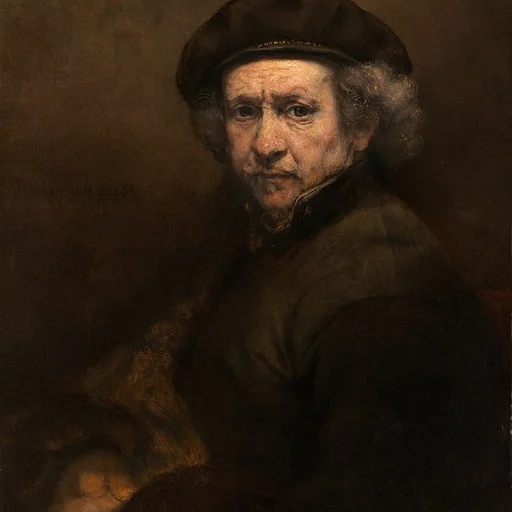
Rembrandt Harmenszoon van Rijn (15 July 1606 – 4 October 1669), known mononymously as Rembrandt, was a Dutch Golden Age painter, printmaker, and draughtsman.

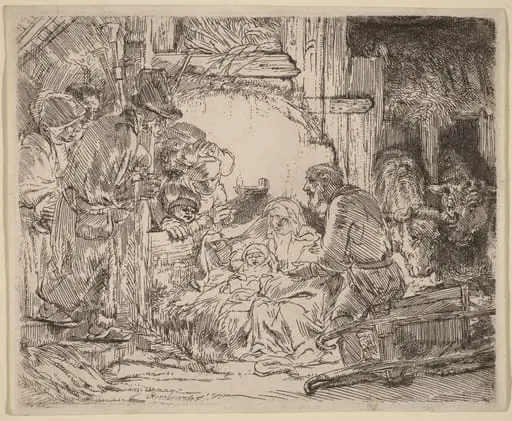 The Adoration of the Shepherds: with the Lamp
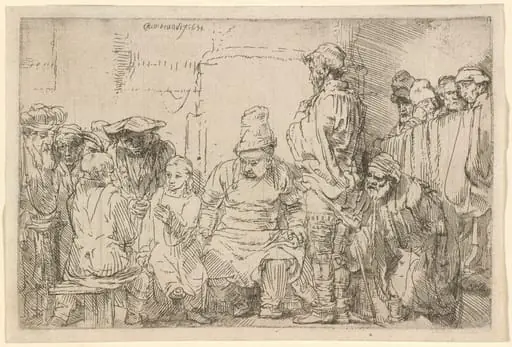 Christ Seated Disputing with the Doctors
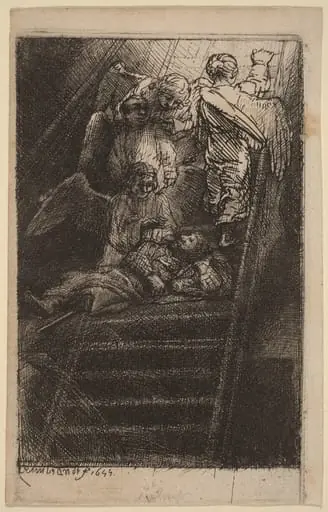 Jacob's Ladder
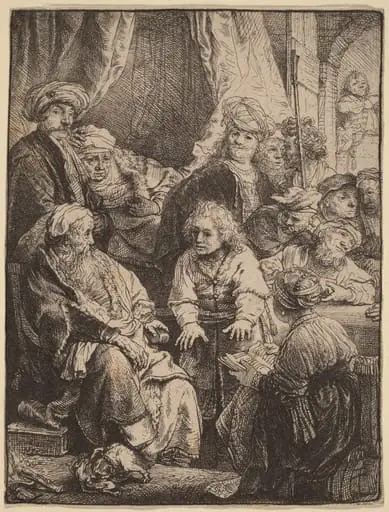 Joseph Telling His Dreams
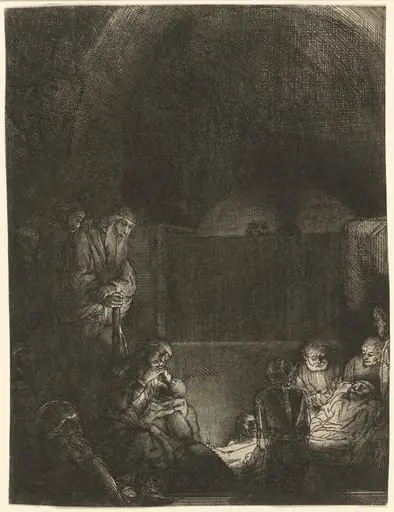 The Entombment
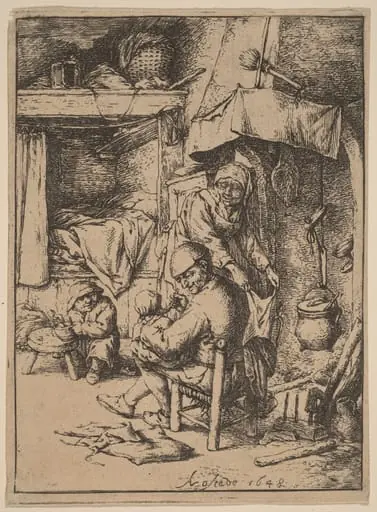 Peasant Family in an Interior wtih the Father Feeding a Child
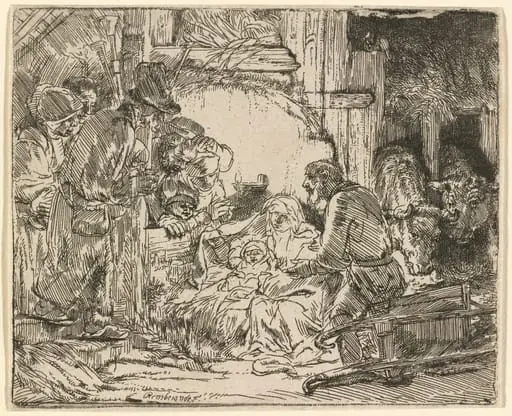 The Adoration of the Shepherds: with the Lamp
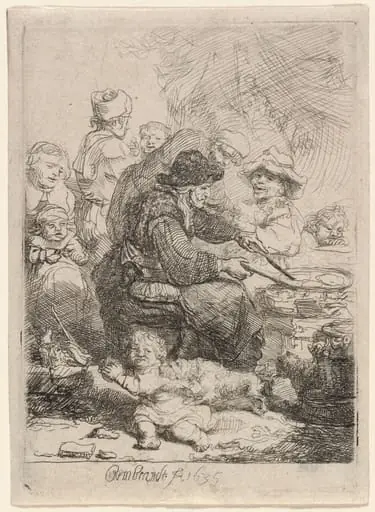 The Pancake Woman
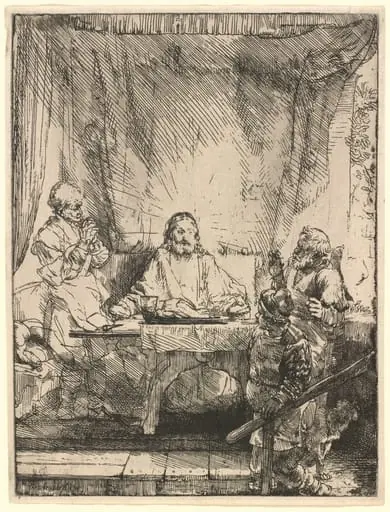 Christ at Emmaus: the Larger Plate
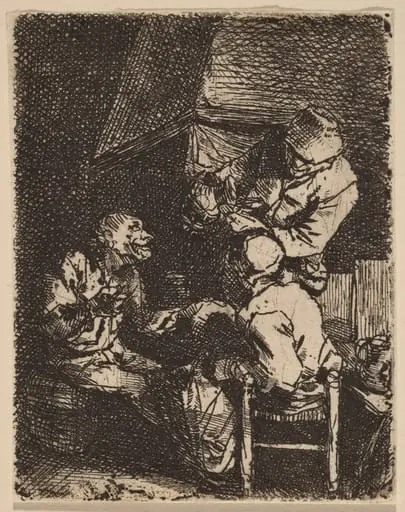 The Group at the Fireplace