Artwork
Jacob's Ladder
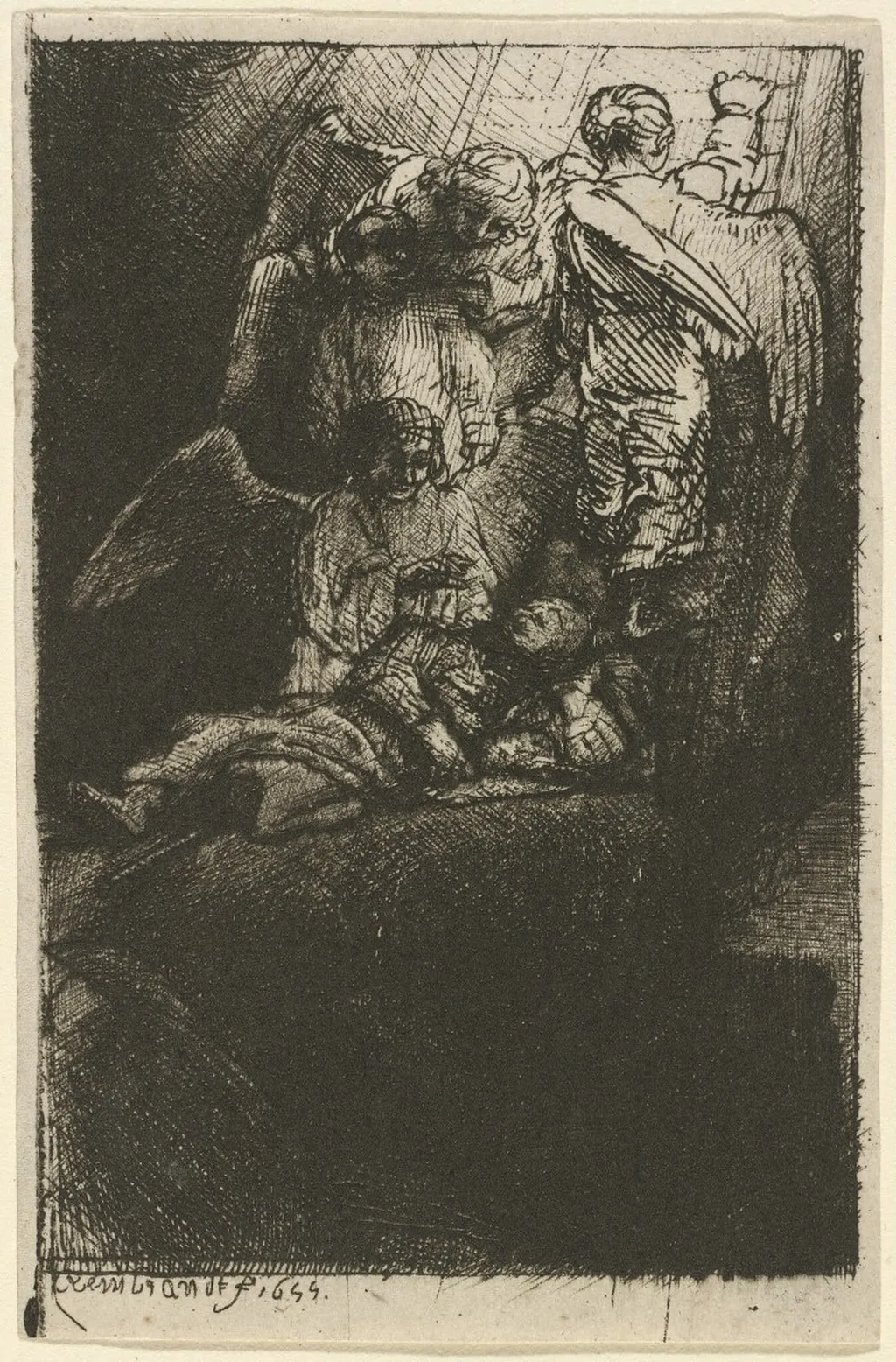
Jacob's Ladder is an ink print by the Baroque artist Rembrandt. It dates from 1655 and is held in the collection of the National Gallery of Art.
About this work
Overview
The composition channels spiritual tension through diagonal movement and contrasting tones, characteristic of Rembrandt’s mature graphic style.
Created in 1655, Jacob's Ladder is a print by Rembrandt van Rijn, executed in etching, burin, and drypoint. It captures a moment from the biblical story of Jacob’s dream, rendered with intense atmospheric depth. The composition channels spiritual tension through diagonal movement and contrasting tones, characteristic of Rembrandt’s mature graphic style. The work stands as a quiet meditation on divine encounter rather than a narrative illustration.
Subject & Meaning
The scene illustrates Jacob’s vision of a ladder connecting earth and heaven, as described in Genesis. A solitary figure at the summit reaches toward a hand descending from above, suggesting divine contact. Surrounding figures gaze upward, their postures conveying awe or uncertainty. The ambiguity of the figures’ identities invites contemplation rather than doctrinal clarity, emphasizing personal revelation over collective worship.
Technique & Style
Rembrandt employed etching, burin, and drypoint to achieve rich tonal variation and textured surfaces. The ladder emerges through bold, incised lines, while the figures are modeled with delicate hatching and soft, smudged shadows. Light gathers around the central figures, isolating them against a dimmer background. The interplay of sharp and blurred edges heightens the dreamlike quality, a hallmark of his late graphic work.
History & Provenance
The print was made during Rembrandt’s financially strained later years in Amsterdam, when he increasingly turned to intimate, personal subjects. It was likely produced for a small circle of collectors rather than public display. Early impressions were held by Dutch and German connoisseurs, and the work entered major collections in the 18th and 19th centuries, preserving its status as a key example of his printmaking.
Context
In mid-17th-century Amsterdam, religious imagery remained influential despite the rise of secular themes. Rembrandt’s approach diverged from conventional iconography, favoring psychological depth over doctrinal precision. Jacob’s Ladder reflects a broader trend among Dutch artists to explore inner spiritual states, aligning with Calvinist introspection while retaining a humanist sensitivity to emotion and gesture.
Legacy
The print influenced later generations of printmakers through its emotional resonance and technical innovation. Its emphasis on light, gesture, and psychological nuance became a reference point for artists seeking to convey transcendence without overt symbolism. Though not widely reproduced in its time, it is now studied as a pivotal work in the evolution of printmaking as a medium for personal expression.
Artist & collection
Artist
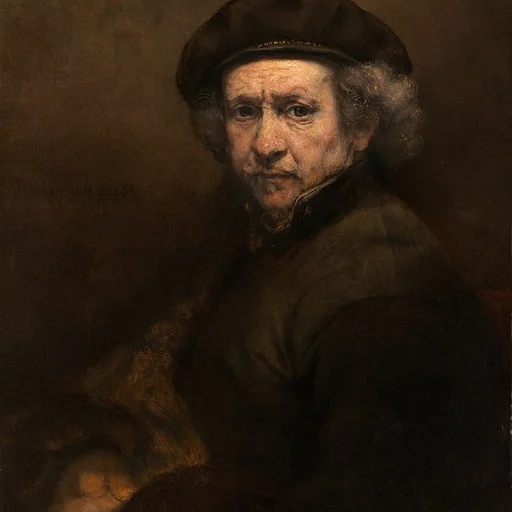
Rembrandt Harmenszoon van Rijn (15 July 1606 – 4 October 1669), known mononymously as Rembrandt, was a Dutch Golden Age painter, printmaker, and draughtsman.

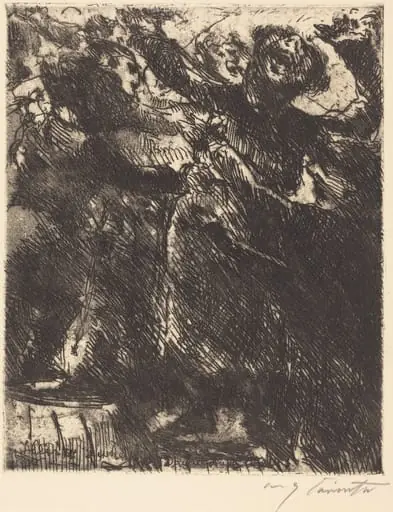 Kapuzinerpredigt—"Hetzt sich lieber herum mit der Dirn'" (The Capuchin's Sermon—"He Prefers to Run Around with a Girl")
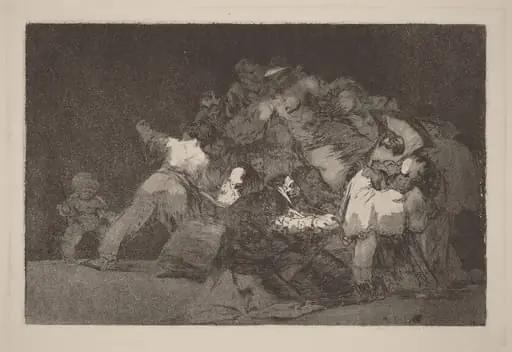 Disparate general (General Folly)
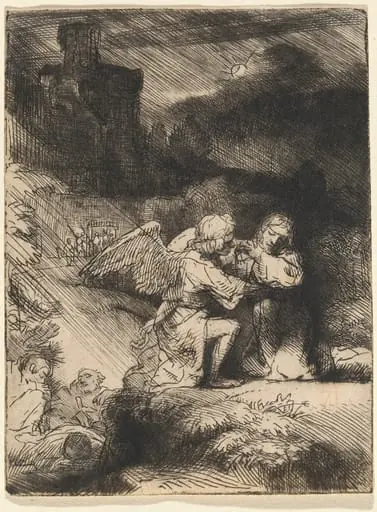 The Agony in the Garden
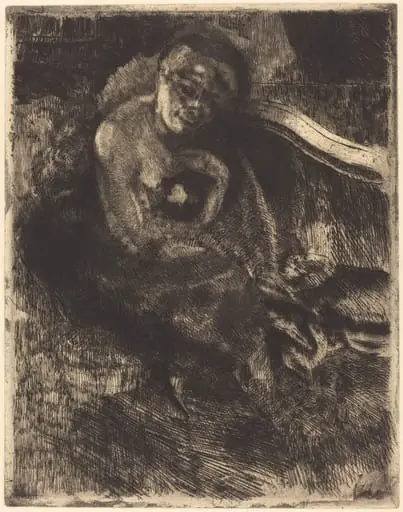 A Nude Woman in a Fur Wrap
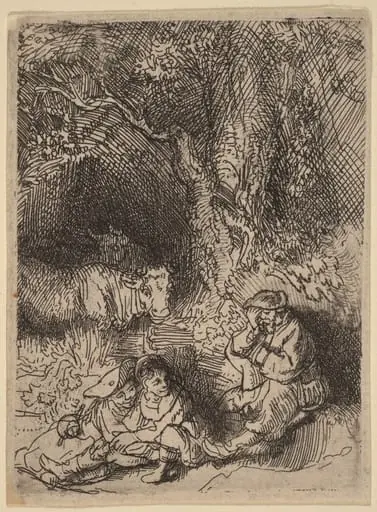 The Sleeping Herdsman
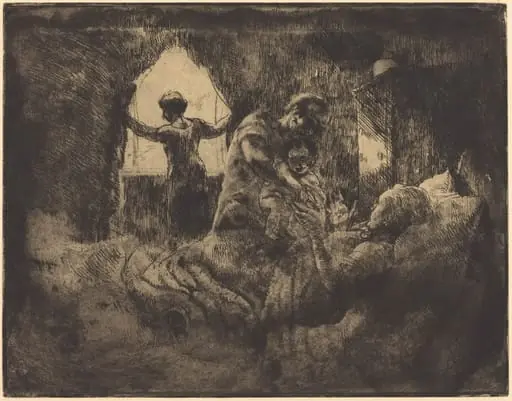 Greeting Grandmother (Le Bonjour à la Grand-mère)
 The Entombment
 The Entombment
 Mab and Cupid (Mab et Cupidon)