Artwork
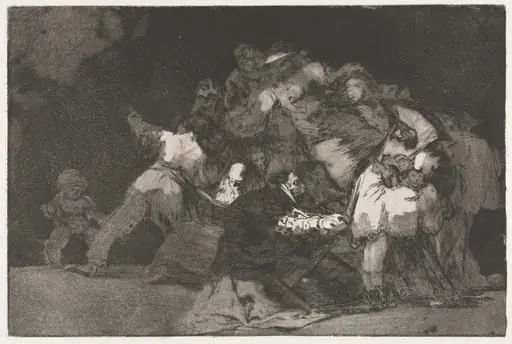
Disparate general (General Folly)
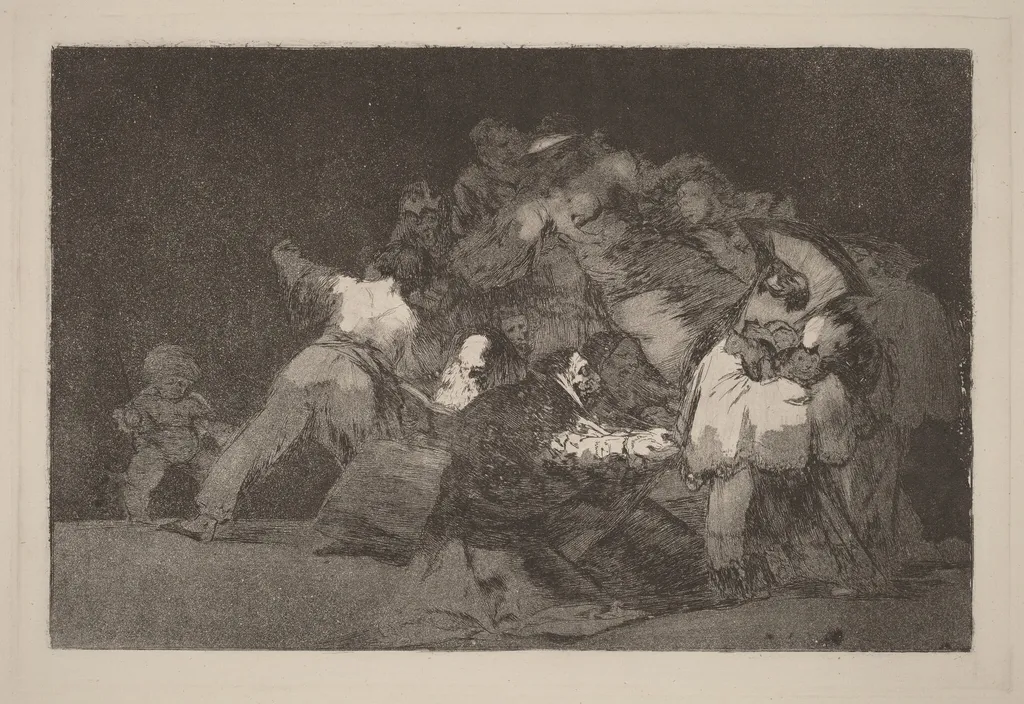
Disparate general (General Folly) is an ink print by the Romanticist artist Francisco Goya. It dates from 1816 and is held in the collection of the National Gallery of Art.
About this work
Overview
Disparate general (General Folly) is an etching and burnished aquatint created by Francisco Goya in 1816, first printed posthumously between 1854 and 1863. This print exemplifies Goya's satirical approach to societal critique.
Subject & Meaning
The composition centers on a man in a dark coat and hat, engulfed by a densely packed, chaotic crowd. Figures overlap in various poses, conveying confusion and disorder. The scene reflects Goya's critical perspective on human folly and societal ills.
Technique & Style
Goya employed bold lines and expressive shading to imbue the scene with dynamic energy and movement. The predominantly dark background, punctuated by faint light, enhances the sense of turmoil.
History & Provenance
Originally created in 1816, this etching was printed posthumously circa 1854-1863. It forms part of Goya's satirical print series, characteristic of his late work.
Context
As a leading late 18th- to early 19th-century Spanish artist, Goya's works, including this print, often addressed the social and political tensions of his era, offering scathing commentary through satire.
Artist & collection
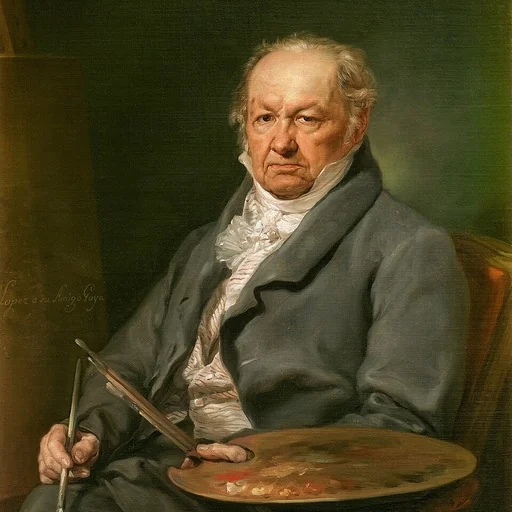
Artist
Francisco José de Goya y Lucientes (; Spanish: ; 30 March 1746 – 16 April 1828) was a Spanish romantic painter and printmaker.

 The Proverbs: General Folly
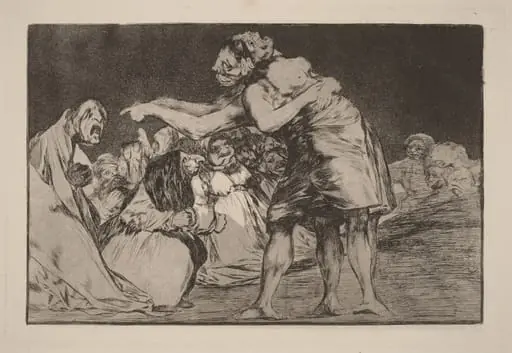 Disparate desordenado (Disorderly Folly)
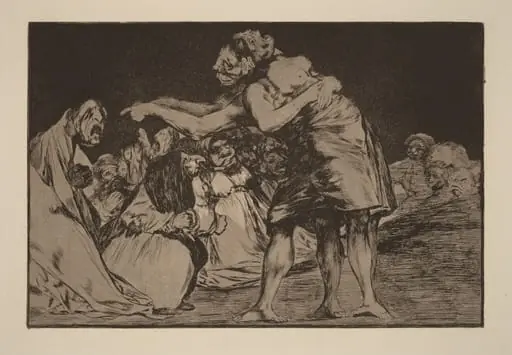 Disparate desordenado (Disorderly Folly)
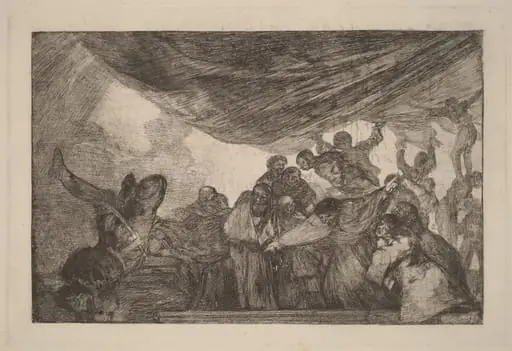 Disparate claro (Clear Folly)
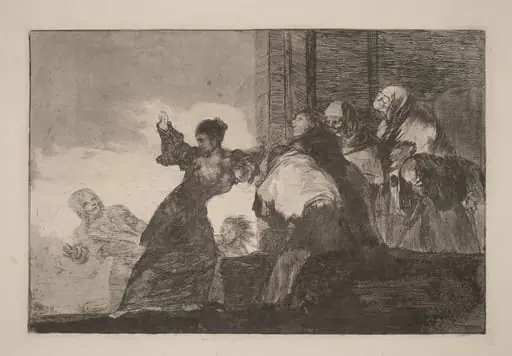 Disparate pobre (Poor Folly)
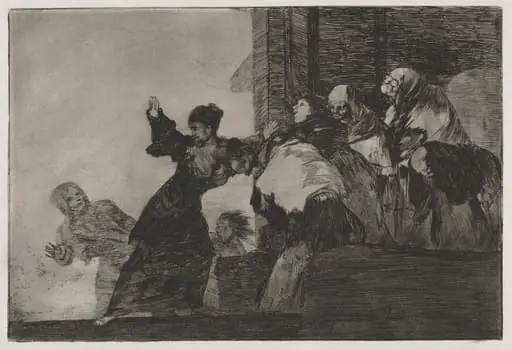 The Proverbs: Poor Folly
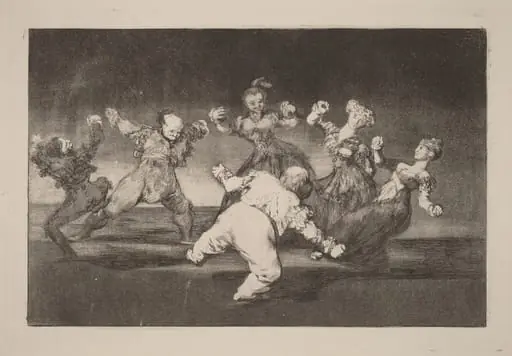 Disparate allegre (Merry Folly)
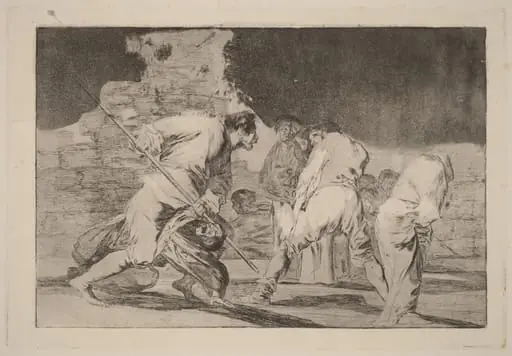 Disparate furioso (Furious Folly)
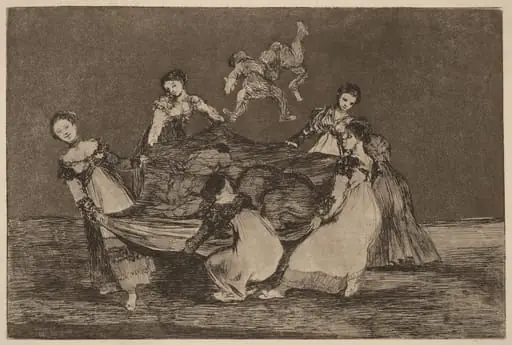 Disparate femenino (Feminine Folly)
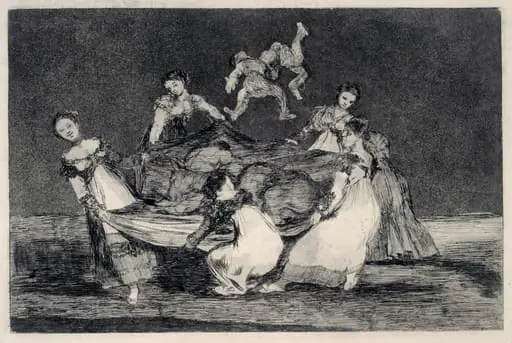 Disparate femenino (Feminine Folly)
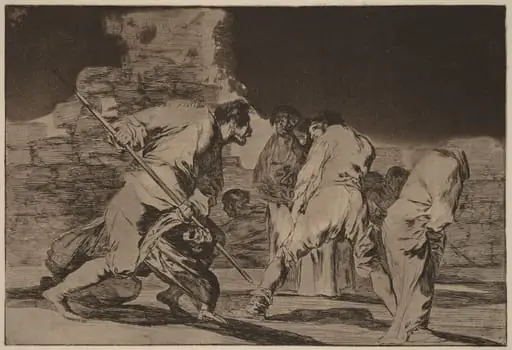 Disparate furioso (Furious Folly)
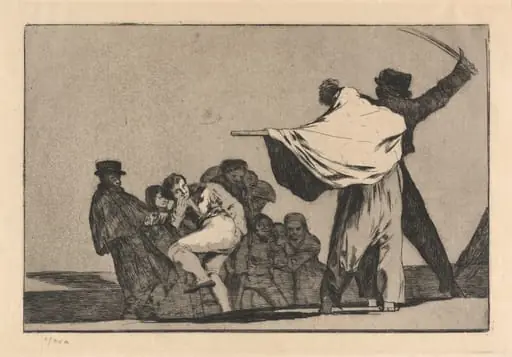 Disparate conocido (Well-Known Folly)