Artwork
Jan Six
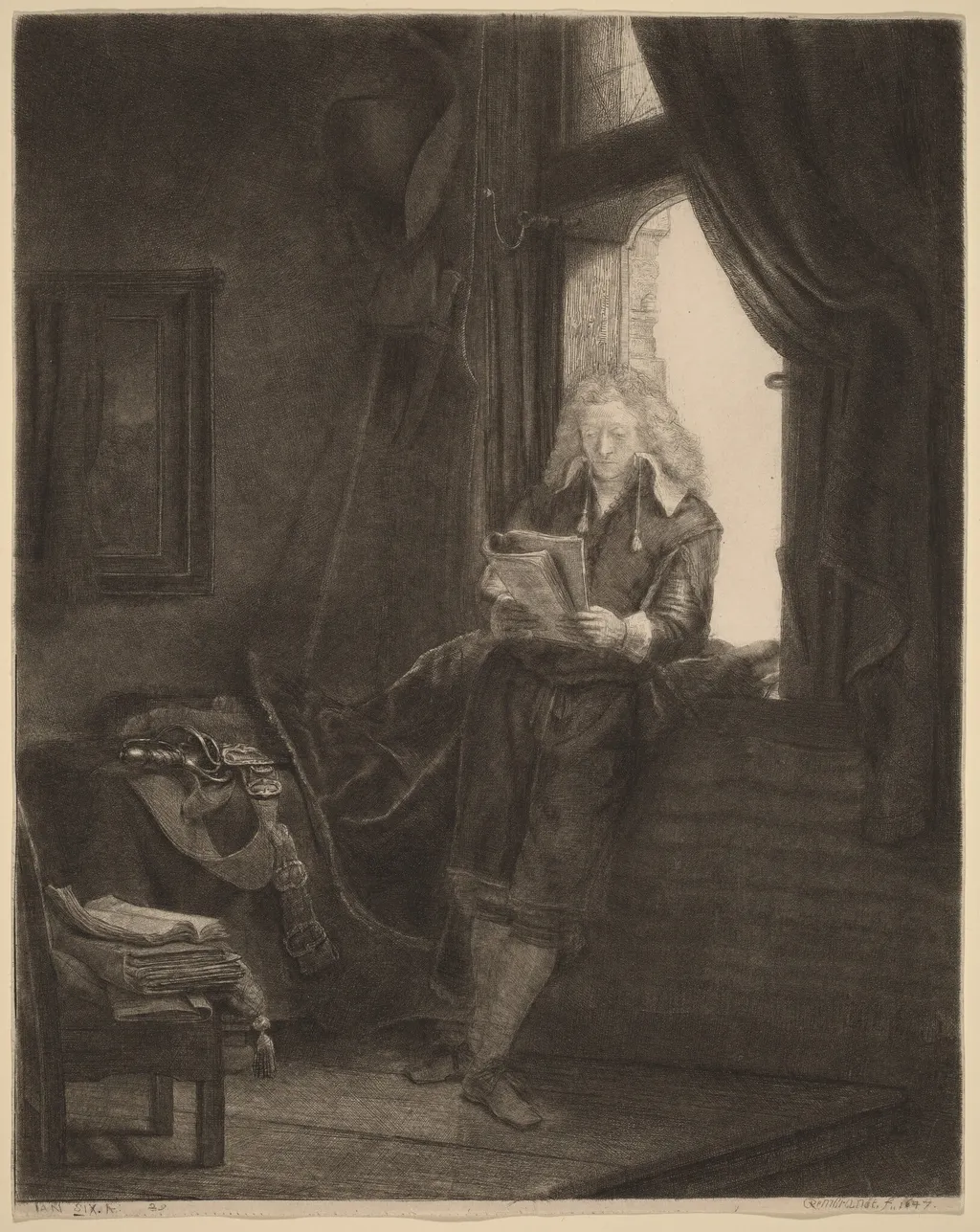
Jan Six is an ink print by the Baroque artist Rembrandt. It dates from 1647 and is held in the collection of the National Gallery of Art.
About this work
Overview
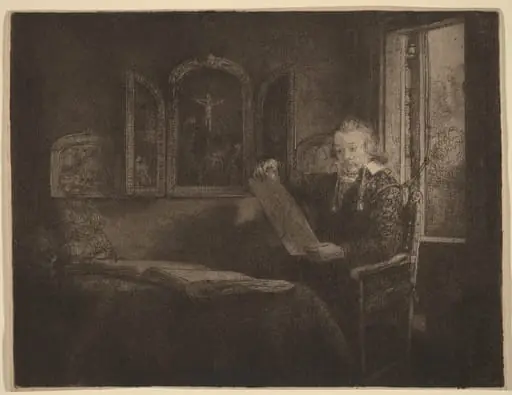
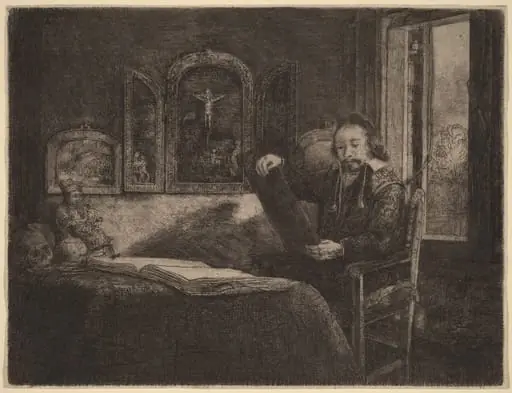
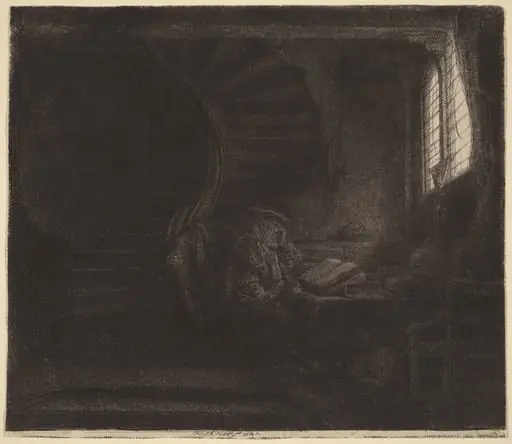
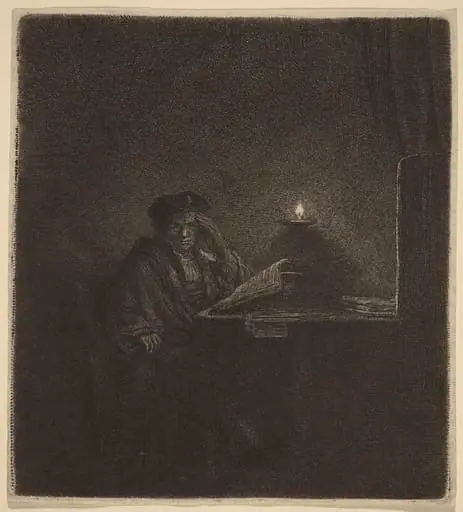
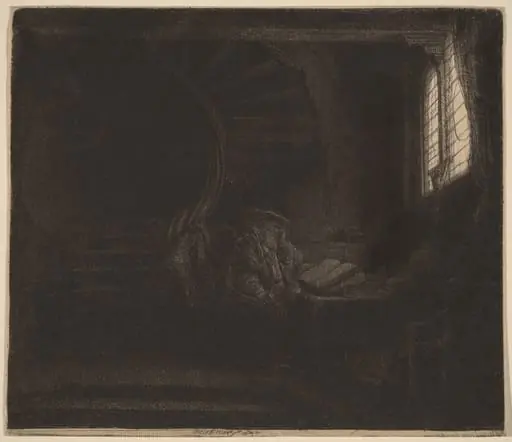
Rembrandt’s 1647 print portrays a solitary figure absorbed in a book within a modest interior. Rendered through a combination of etching, drypoint, and burin work, the image captures a moment of quiet study, illuminated by a narrow window that casts soft light across the scene.
Subject & Meaning
The central male sitter, dressed in dark garments and sporting long, curled hair, holds an open volume and gazes downward, suggesting deep contemplation. The surrounding objects—a chair, a stack of books, and the muted furnishings—reinforce themes of learning, introspection, and the solitary pursuit of knowledge.
Technique & Style
Rembrandt employs a layered printmaking process: acid‑etched lines define the broader composition, while drypoint and burin strokes add fine texture and tonal variation. The interplay of deep shadows and delicate highlights creates a three‑dimensional atmosphere, characteristic of his mature print work.
History & Provenance
Created in 1647, the etching bears the name of Jan Six, a prominent Amsterdam patron and friend of Rembrandt. Six’s ownership is documented in the artist’s records, linking the work directly to its original collector and situating it within the network of 17th‑century Dutch art patronage.
Context
The print emerges during a period when Rembrandt explored intimate, genre‑type subjects, moving away from grand historical narratives. Its focus on a learned individual reflects contemporary Dutch values that prized education, personal reflection, and the moral virtues associated with reading.
Artist & collection
Artist
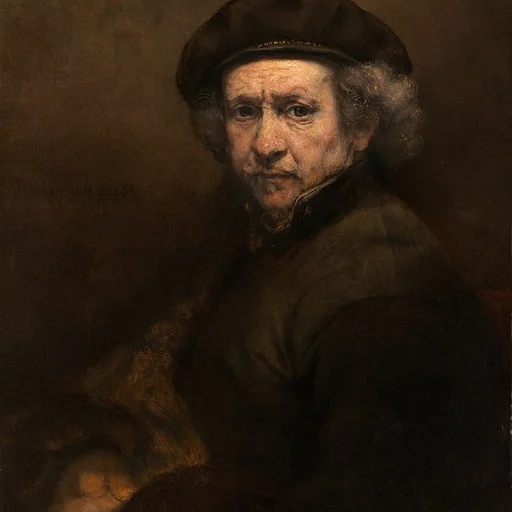
Rembrandt Harmenszoon van Rijn (15 July 1606 – 4 October 1669), known mononymously as Rembrandt, was a Dutch Golden Age painter, printmaker, and draughtsman.