Artwork
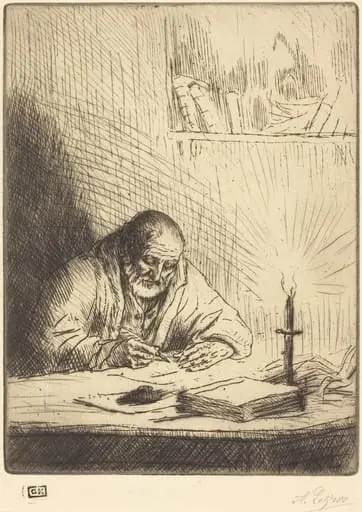
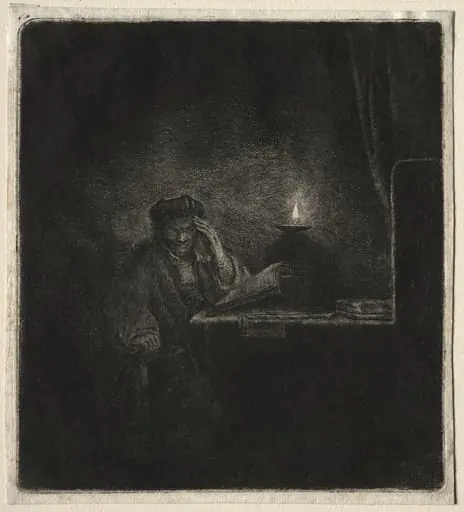
Student at a Table by Candlelight
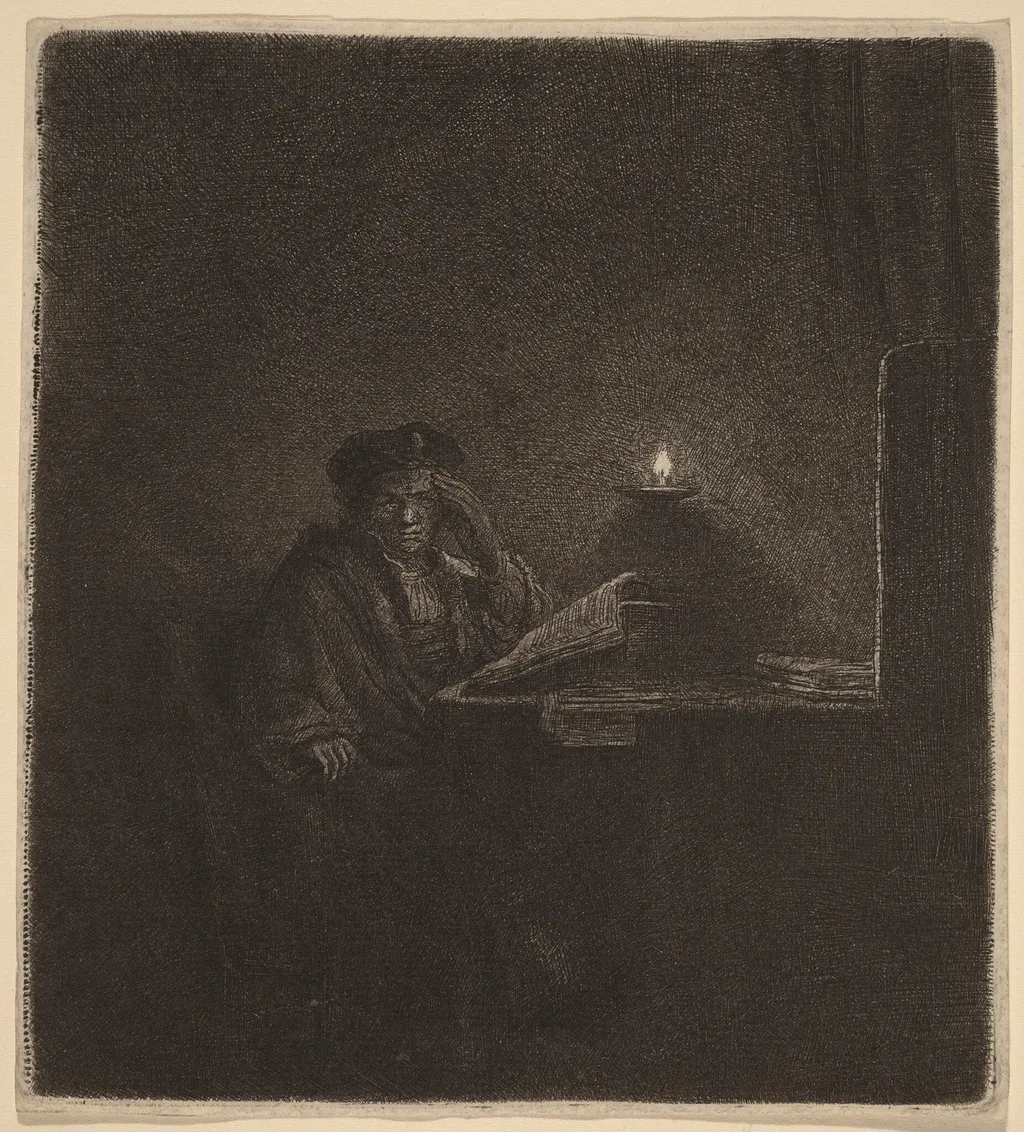
Student at a Table by Candlelight is an ink print by the Baroque artist Rembrandt. It dates from 1642 and is held in the collection of the National Gallery of Art.
About this work
Overview
The work belongs to the printmaking tradition of the Dutch Golden Age and is part of the National Gallery of Art’s collection in Washington, D.
Created around 1642, this etching by Rembrandt van Rijn depicts a solitary figure at a table, lit by a single candle. The work belongs to the printmaking tradition of the Dutch Golden Age and is part of the National Gallery of Art’s collection in Washington, D.C. Its intimate scale and subtle tonal contrasts reflect Rembrandt’s mastery of light and shadow in etching, capturing a moment of quiet focus rather than narrative action.
Subject & Meaning
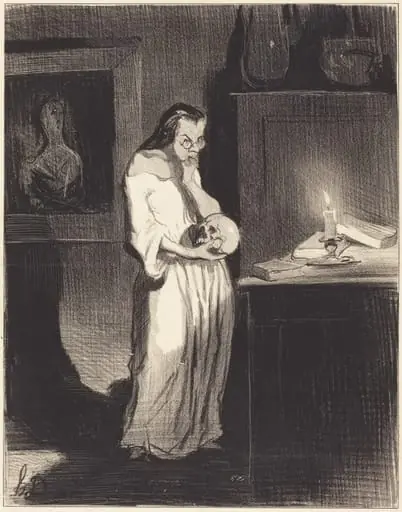
The figure, dressed in dark clothing, sits with his right hand resting on his forehead and a book held in his left. His posture suggests deep thought, possibly studying or reflecting. The absence of identifying details invites interpretation as a universal image of intellectual solitude. The candle’s glow emphasizes inner contemplation, transforming the scene into a meditation on concentration and the private life of the mind.
Technique & Style
Rembrandt employed fine, varied etching lines to model form and atmosphere, using the candle’s light as the primary source of contrast. Darker areas are built with dense hatching, while the illuminated surfaces are rendered with delicate, sparse strokes. The technique avoids sharp outlines, allowing tones to blend naturally. This approach heightens the sense of intimacy and psychological depth, characteristic of his mature printmaking style.
History & Provenance
The etching was produced during Rembrandt’s time in Amsterdam, a period marked by personal and professional shifts. It entered the National Gallery of Art’s collection in the 20th century through the A.W. Mellon Bequest, alongside other works by the artist. Its preservation in good condition reflects careful handling and scholarly interest in Rembrandt’s graphic oeuvre.
Context
In 17th-century Dutch society, scholarly and religious introspection were valued themes in art. Etchings like this one circulated among collectors and intellectuals, serving as affordable yet profound images of quietude. Rembrandt’s focus on solitary figures reading or thinking aligned with broader cultural ideals of self-reflection, distinguishing his work from more theatrical Baroque subjects.
Legacy
This etching exemplifies Rembrandt’s influence on the depiction of inner life in printmaking. Later artists admired his ability to convey emotion through minimal means. While not widely reproduced in his lifetime, its enduring presence in major collections underscores its role as a quiet but significant example of his exploration of human solitude through light and line.
Artist & collection
Artist
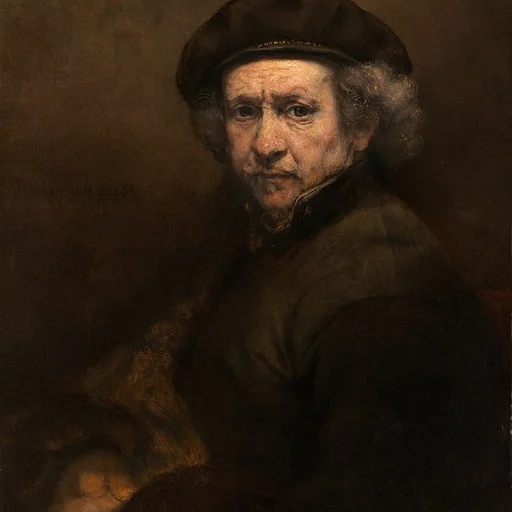
Rembrandt Harmenszoon van Rijn (15 July 1606 – 4 October 1669), known mononymously as Rembrandt, was a Dutch Golden Age painter, printmaker, and draughtsman.